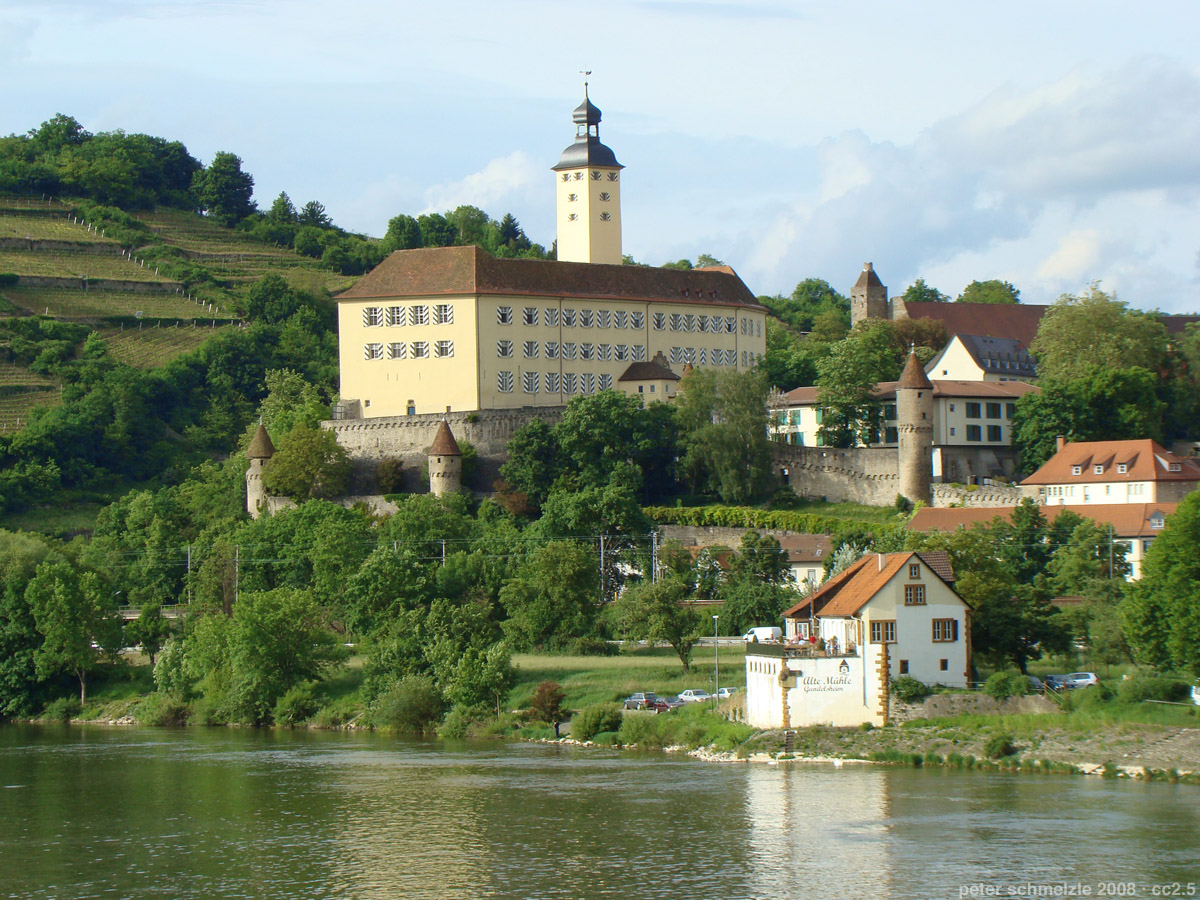
Domeneck Castle is a notable medieval hill castle located in the municipality of Möckmühl in the German state of Baden-Württemberg. Established originally in the late 13th century, the castle's history is closely intertwined with the shifting feudal allegiances and noble families of southwestern Germany. Its strategic position on a gently inclined spur between two small streams offered natural defenses and access to water, crucial for sustaining the castle's inhabitants and fortifications.
Early history and noble ownership
The earliest documented reference to Domeneck Castle dates to 1270, when it was owned by the Tumminge family of Domeneck, a medieval noble lineage. Over the following centuries, the castle changed hands multiple times, reflecting the complex political landscape of the region. In the 15th century, ownership frequently shifted among prominent noble families and regional powers, illustrating the fluid nature of territorial control during the late medieval period.
In 1420, the castle came under the possession of Engelhard von Berlichingen, a member of a notable knightly family. However, just four years later, it was sold to the Stumpff von Schweinberg family, who maintained influence in the area. By around 1450, the Electorate of the Palatinate held control, but after the Landshut War of Succession ended in 1504, the castle passed to Duke Ulrich of Württemberg. This transition mirrored the broader political realignments occurring in southwestern Germany during the early 16th century.
Fragmented ownership and feudal complexities
Throughout the 15th century, Domeneck Castle's ownership became increasingly divided. The estate was split between affiliations with the Palatinate and Württemberg on one side and the Bishopric of Würzburg on the other. Various noble families, including descendants of Bishop Friedrich von Domeneck and the Stumpff von Schweinberg lineage, held shares of the property. This division exemplifies the nuanced feudal relationships and territorial disputes common in the region during the late medieval period.
Destruction and reconstruction in the 16th century
The castle suffered significant damage during the German Peasants' War of 1525, when rebellious peasants attacked and set fire to the fortress. Following the extinction of the Stumpff von Schweinberg family, Duke Ulrich granted the fief in 1534 to Bernhard and Hans von Hartheim. Bernhard von Hartheim was charged with the castle's reconstruction, leading to a renewed phase of occupation and use. This rebuilding phase incorporated both defensive and residential architectural elements, adapting the medieval fortress into a more comfortable manor house suited to the early modern period.
Later proprietors and changes through the early modern era
In the centuries that followed, Domeneck Castle experienced further changes in ownership. A notable event occurred in 1600 when a violent incident involving Georg Wolf von Hardheim led to the temporary seizure of the estate by Württemberg authorities. Subsequently, the property passed through the hands of several noble families, including the Freiherren von Ellrichshausen, the Freiherren Leutrum von Ertingen, and the von Raßler family.
In 1830, the castle was acquired by General Franz Karl von Troyff, who elevated it to the status of a knight's estate (Rittergut) in 1831. This designation reflected the estate's importance within the regional nobility and its continued role as a landed property rather than a military fortress.
Architectural features and surviving structures
The castle complex today reveals a multi-winged structure arranged around a rectangular courtyard, with the main entrance oriented to the west. The southern wing is dominated by the manor house, which served as the primary residential building within the estate. This wing exemplifies the transition from medieval fortress to noble residence, with architectural features reflecting both defensive needs and domestic comfort.
The longest wing runs along the east side of the courtyard and is distinguished by a round tower at its northeast corner, topped with a sharply pointed roof. This tower likely served both defensive and symbolic roles, marking the castle's prominence and providing a vantage point over the surrounding landscape.
The north and west wings contain several economic buildings such as stables, storage rooms, and service quarters, illustrating the estate's function as a self-sustaining noble residence with agricultural and administrative operations.
One notable feature is the press house bearing the coat of arms of the Hartheim family. This structure dates to the post-1534 reconstruction period and highlights the estate’s role in local agricultural production, possibly including wine or oil pressing.
Medieval ruins adjacent to the main complex
Immediately northwest of the main buildings lie the remains of the original medieval castle. The most prominent surviving element is the keep (bergfried), which now remains only as a stump approximately eight meters high. This tower would have served as the last refuge during sieges and was a central defensive feature of the original fortress.
To the east of the keep ruins stand remnants of a round tower, providing further evidence of the castle’s early fortifications. These ruins offer valuable insight into the castle’s medieval defensive architecture and its evolution over time.
Strategic location and natural defenses
Domeneck Castle occupies a strategic site on a gently inclined spur between two small streams that flow from the northwest and northeast. These waterways converge near the castle's base before joining the nearby Jagst River. This natural setting provided effective defensive advantages, as the streams acted as natural moats and barriers against attackers.
The elevated position also allowed for surveillance of the surrounding terrain, controlling important local routes and asserting the castle's dominance in the region. The combination of natural and man-made defenses typifies medieval castle siting strategies in the Germanic lands.
Cultural heritage and preservation status
Today, Domeneck Castle stands as a partially preserved historic site that reflects centuries of architectural and social history. The surviving structures and ruins document the castle's transformation from a medieval fortress into a noble manor estate. The site offers valuable insights into the feudal dynamics, architectural adaptations, and noble lifestyles of southwestern Germany from the late medieval through the early modern periods.
Preservation efforts have maintained the integrity of the manor house and key defensive features, while the ruins of the original castle remain an important archaeological resource. Visitors can explore the layered history of Domeneck through its architectural remains, heraldic symbols, and landscape setting.
Frequently asked questions (FAQ)
- How do I get to Domeneck Castle?
- Domeneck Castle is located in the picturesque region of Germany, easily accessible by car or public transport. If you're traveling by train, the nearest station is just a short bus ride away from the castle.
- What is the historical significance of Domeneck Castle?
- Domeneck Castle dates back to the 12th century and played a vital role in the region's defense during medieval times. It has witnessed numerous historical events and has been well-preserved, making it a fascinating site for history enthusiasts.
- When was Domeneck Castle built?
- Construction of Domeneck Castle began in 1150 and was completed in the late 12th century. Over the centuries, it has undergone several renovations and expansions, reflecting various architectural styles.
- Can I take guided tours of Domeneck Castle?
- Yes, guided tours are available and highly recommended to fully appreciate the castle's rich history and architectural details. Tours are conducted by knowledgeable guides who share insightful stories about the castle's past.
- Why is Domeneck Castle a popular tourist attraction?
- Domeneck Castle attracts visitors due to its stunning architecture, picturesque views, and rich historical background. It offers a unique glimpse into medieval life and the chance to explore beautifully preserved interiors.
- Is it possible to host events at Domeneck Castle?
- Yes, Domeneck Castle offers facilities for private events, including weddings and corporate gatherings. The unique setting and historical ambiance make it a memorable venue for any occasion.
- What are the opening hours for Domeneck Castle?
- Domeneck Castle is open to visitors daily from 10 AM to 6 PM during the summer months and from 10 AM to 4 PM in the winter. It’s advisable to check the official website for any seasonal changes or special closures.
- What are the ticket prices for visiting Domeneck Castle?
- Tickets for Domeneck Castle are priced at €10 for adults and €5 for children between the ages of 6 and 12. Family packages and group discounts are also available, making it affordable for all visitors.
- When is the best time to visit Domeneck Castle?
- The best time to visit Domeneck Castle is during the spring and early autumn months when the weather is pleasant and the gardens are in full bloom. Additionally, special events and festivals often take place during these seasons, enhancing the visitor experience.
- Are there any nearby attractions to visit along with Domeneck Castle?
- Yes, there are several attractions near Domeneck Castle, including beautiful parks, historical villages, and other castles. A visit to the nearby town offers charming shops and local cuisine, perfect for a day of exploration.
Information
Website
Visit websiteSources & official resources
Verify the information above using these authoritative references.
Loading map...
Visitor reviews
No reviews yet. Been here? Write the first review and help other travelers!
Write the first reviewVisited this castle? Share your experience
Your review helps other travelers and adds first-hand knowledge to our encyclopedia.