Divín Castle Ruins — Slovakia castle

Divín Castle Ruins

Divín Castle ruins in Slovakia
Divín, Slovakia
High Medieval (11th–13th c.)
Ruins

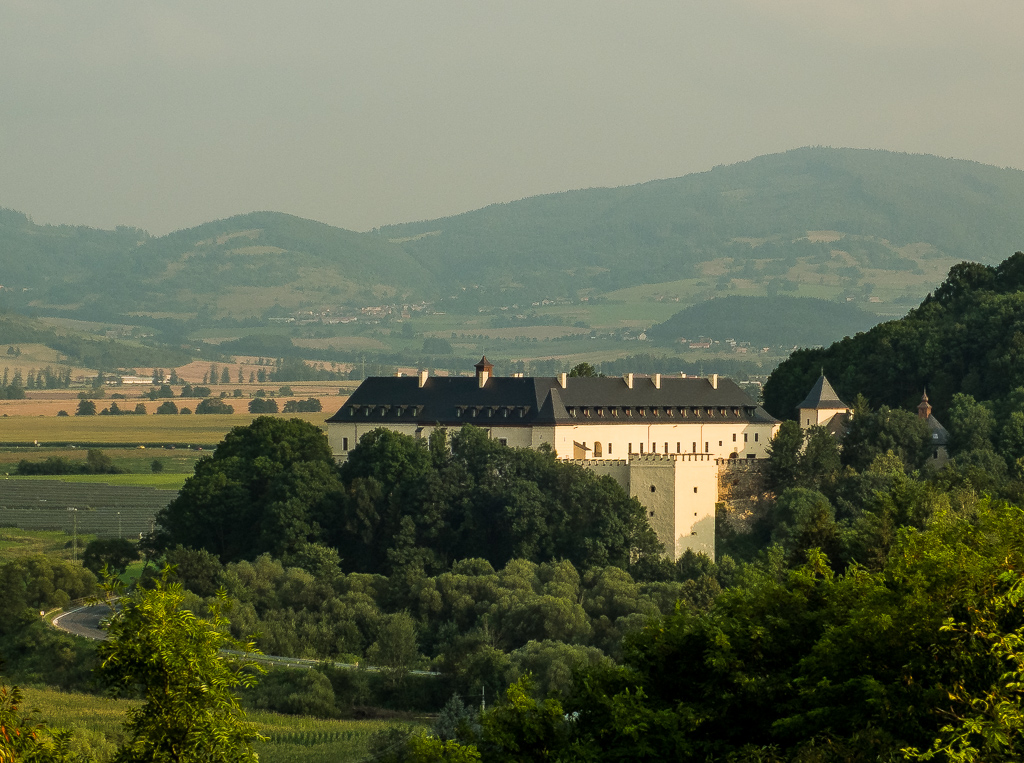
Divín Castle stands as a compelling relic of medieval fortification in southern Slovakia, perched prominently on a low hill overlooking the village of Divín. Constructed by the end of the 13th century, this hill castle played a pivotal role in regional defense and control, particularly during the turbulent High Medieval and early modern periods. Its strategic location at the confluence of the Krupina Upland and the Lučenec Basin allowed it to oversee key routes leading to the valuable mining districts of central Slovakia, underscoring its military and economic significance.

The castle's origins trace back to the medieval Hungarian nobility, with the first documented mention in 1329. The initial builders were likely the influential Lošonci family, whose power extended through the region until their downfall following a failed conspiracy against King Matthias Corvinus in the late 15th century. Ownership then passed through various noble hands, including Michal Orság and Ján Nádašdy Ongor, before coming under the control of the Balaša family, who would leave a lasting mark on the castle's architecture and history.

Architectural evolution and strategic enhancements

Under the Balaša family's stewardship in the 16th century, Divín Castle underwent significant fortification to meet the challenges posed by evolving military technology and the expanding Ottoman threat. In 1559, an outer bailey was constructed, incorporating a bastion and two angular corner towers. These features reflect contemporary Renaissance military architectural trends aimed at improving artillery defense and creating overlapping fields of fire. The bastion, projecting outward from the main walls, allowed defenders to better repel attackers and protect vulnerable sections of the fortress.

The core of the castle retained its Gothic masonry, characterized by robust stone walls and defensive towers typical of High Medieval fortresses. Although detailed decorative elements have not survived, the structural remnants reveal a complex layout designed for both defense and residence.

Historical significance and military engagements

Divín Castle's history is marked by its role as a bulwark against Ottoman incursions during the 16th century. Despite its reinforced defenses, the castle endured a prolonged siege and was captured by Ottoman forces in 1575. The Turkish occupation lasted nearly two decades, a testament to the fortress's strategic importance in controlling the region.

The castle was reclaimed in 1593 by royal troops aided by Bálint Balaša, restoring Christian control and reaffirming the castle's defensive role. However, the turbulent 17th century brought decline. The notorious Imrich Balaša, known as a robber knight, used the castle as a base for raids, destabilizing the surrounding area. His death precipitated a decisive response from the Habsburg imperial forces, who seized and deliberately damaged Divín Castle in 1683 to prevent further misuse.

Current condition and surrounding heritage

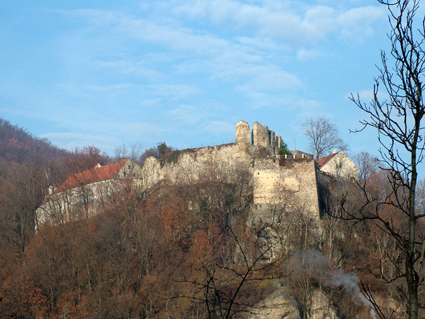
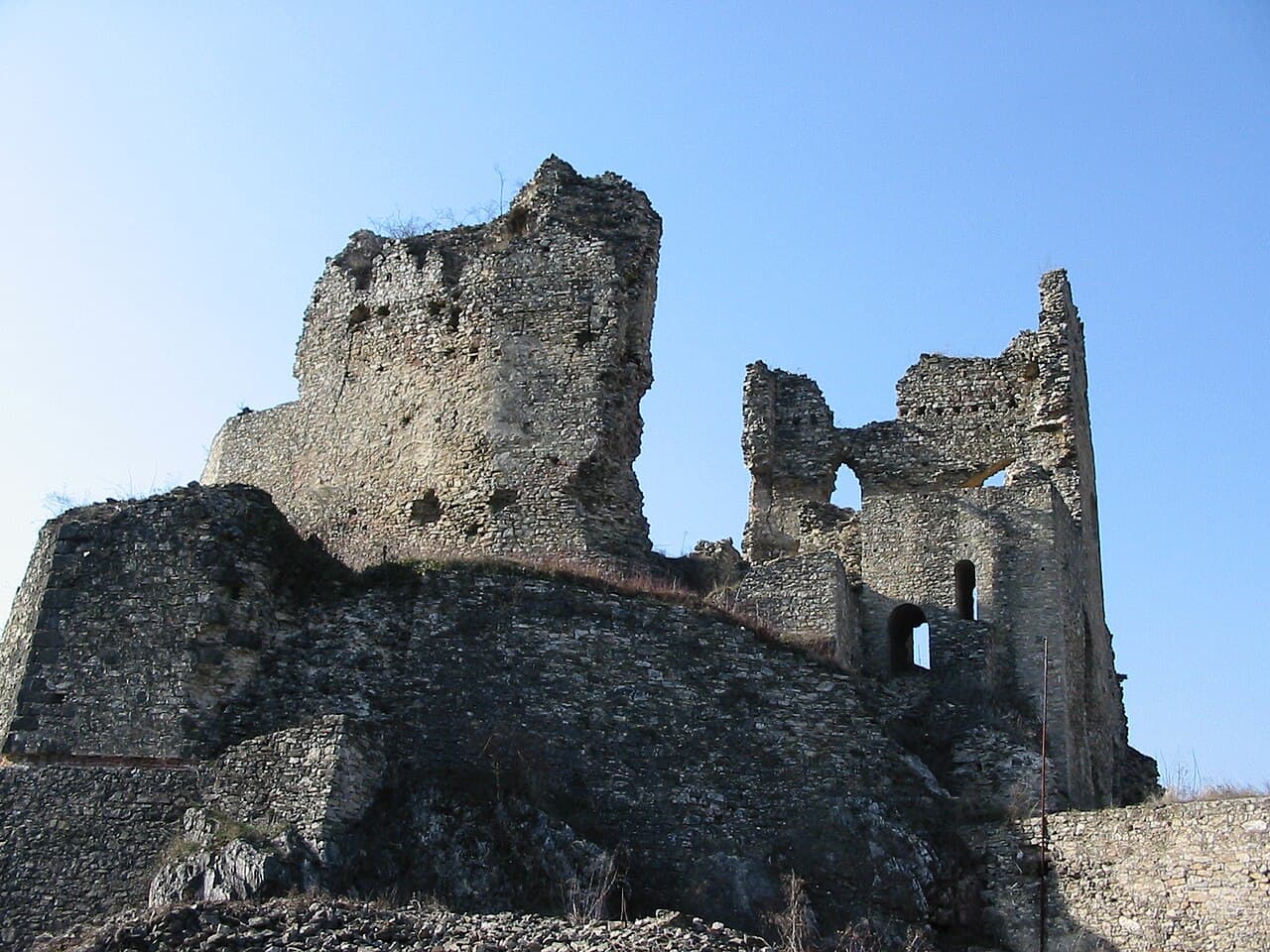
Today, Divín Castle exists primarily as ruins, with only fragments of its walls, bastion, and towers surviving. The site offers a tangible connection to its medieval past and the military conflicts that shaped the region. Visitors can explore the remnants of the outer bailey and observe the strategic layout that once made Divín a formidable fortress.

In the village below, other historical structures complement the castle's legacy. A Renaissance manor house, now fortified yet abandoned, stands alongside a Baroque church and a parsonage notable for housing the oldest sundial in the Novohrad region. These buildings enrich the cultural landscape and provide insight into the area's architectural evolution beyond the medieval period.

Events and cultural importance

Divín Castle ruins serve as a venue for various cultural events during the summer months, attracting visitors interested in history, architecture, and regional traditions. These events help preserve the castle's heritage and promote awareness of its historical role as a strategic fortress and symbol of local identity.

Despite its ruined state, Divín Castle remains a significant monument within Slovakia's network of medieval fortifications, offering both educational value and a dramatic setting that reflects the complex history of Central Europe during the Middle Ages and early modern era.

Frequently asked questions (FAQ)

How do I get to Divín Castle ruins?
Divín Castle ruins are located above the village of Divín in the Banská Bystrica Region of Slovakia. Visitors can reach the site by car or local transport to Divín village, followed by a short hike uphill to the castle ruins.
What is the historical significance of Divín Castle?
Divín Castle was a strategic medieval fortress built in the 13th century to protect key routes to central Slovakia's mining areas. It played an important role in resisting Ottoman advances during the 16th century and was associated with notable noble families such as the Balaša.
Can I explore the interior of Divín Castle?
As Divín Castle is in ruins, only fragments of walls, towers, and the outer bailey remain. Visitors can explore the site externally and appreciate the layout, but there are no preserved interiors or rooms accessible.
When is the best time to visit Divín Castle ruins?
The best time to visit Divín Castle ruins is during the summer months when the weather is favorable and cultural events are held at the site, providing a richer visitor experience.
Are there any nearby attractions to see along with Divín Castle?
Nearby attractions include the Renaissance manor house, Baroque church, and the parsonage with the oldest sundial in the Novohrad region, all located in the village of Divín, offering insight into the area's architectural heritage.

Photo gallery

Divín Castle Ruins
Click to view

Photo by Richard Rusnák (Rios)•Public domain

1 photo • Click any image to view in full screen

Information

Hill Castle

Current owner

Municipality of Divín

Sources & official resources

Verify the information above using these authoritative references.

Loading map...

Visitor reviews

No reviews yet. Been here? Write the first review and help other travelers!

Write the first review

Visited this castle? Share your experience

Your review helps other travelers and adds first-hand knowledge to our encyclopedia.

Write a review

(5/5)

0/2000 characters

Your review will be visible after admin approval

Nearby castles

10.6 km

Halic Castle

Halič, Slovakia

Halic Castle is a significant late medieval fortress located in the village of Halič, Slovakia. First documented in 1450, the castle has witnessed a turbulent history marked by sieges, reconstructions, and ownership by prominent Hungarian aristocratic families. Its strategic position and unique architectural features reflect the military and residential needs of the region from the 15th century onward. Early history and ownership The earliest record of Halic Castle dates back to 1450. Initially, it belonged to the Jiskras during the years 1450-51, before passing into the hands of János Hunyady, a notable Hungarian military leader. By 1462, the castle was inhabited by King Matthias Corvinus, underlining its importance as a royal stronghold. In the early 16th century, ownership transferred to Istvan Losonczy from Lučenec. Losonczy undertook reconstruction efforts without royal permission, which led to conflict and damage during a siege in 1544. The forgách family and architectural evolution After the death of Štefan Lučenský, his daughter Anne inherited the county and married Zsigmund Forgách. The Forgách family was one of the oldest Hungarian aristocratic families, descending from the Great Moravian family Poznam. They maintained ownership of the castle until 1945. Zsigmond Forgách initiated significant rebuilding on land that was part of the county estate since 1598. The site was chosen for its strategic advantages and natural fortifications. Hexagonal design and fortifications In 1612, the castle underwent careful repairs and the foundations of an irregular hexagon were laid. This architectural plan was innovative for its time, providing enhanced defense capabilities. A multi-storied building with six corner bastions was constructed atop this foundation, surrounded by a protective ditch and earthen mounds. The wings of the hexagon enclosed a courtyard with plain walls, which were later adorned with murals depicting figures of Roman emperors and Hungarian kings between the windows and entrances, adding an artistic and symbolic dimension to the fortress. Sieges and military history Halic Castle endured several sieges during its history, reflecting the turbulent political landscape of the region. At the end of the 17th century, Imre Thököly, a Hungarian nobleman and leader of anti-Habsburg uprisings, attempted to capture the castle but was unsuccessful. In 1678, under the ownership of Adam Forgách, the castle faced a siege by the Turks, which was repelled by the defenders. Another siege occurred in 1703, also unsuccessful in capturing the fortress. Rákóczi war of independence During the Rákóczi War of Independence, Ferenc II Rákóczi managed to overrun the castle in 1709. Subsequently, the imperial forces led by General Sigbert Heister laid siege and inflicted significant damage, including the destruction of the roof and parts of the interior. This marked a turning point in the castle's military significance and structural integrity. 18th-century reconstruction and architectural significance Recognizing the need for a representative seat in the region, the Forgách family commissioned a comprehensive reconstruction of Halic Castle in 1762. The Austrian architect Andre Meyerhoffer, known for his work on palaces in Bratislava, oversaw the restoration. The reconstruction focused on restoring the castle's residential and defensive functions, enhancing its status as a noble residence while preserving its historic fortifications. Current condition and heritage status Today, Halic Castle remains largely abandoned and awaits restoration. Despite its deteriorated state, the castle stands as a valuable cultural and architectural monument in Slovakia. Its unique hexagonal layout, bastions, and historical murals provide insight into the military architecture and aristocratic life of the late medieval and early modern periods. Preservation efforts are crucial to safeguard this heritage site for future generations. Architectural features and layout The castle's irregular hexagonal plan is a distinctive feature, designed to maximize defensive capabilities. Each of the six corner bastions allowed for overlapping fields of fire, a common feature in early modern fortifications. The surrounding ditch and mounds added layers of protection against siege engines and infantry assaults. The internal courtyard, originally plain, was later enhanced with decorative murals, reflecting the castle's dual role as a fortress and noble residence. Murals and artistic elements The murals depicting Roman emperors and Hungarian kings between windows and entrances are notable for their historical symbolism. They emphasize the castle's connection to the broader European heritage and Hungarian royal lineage, reinforcing the status of the Forgách family as prominent aristocrats. Historical context and regional importance Located in the historical region of Upper Hungary (now Slovakia), Halic Castle played a strategic role in the defense against Ottoman incursions and internal conflicts during the 16th to 18th centuries. Its ownership by influential families like the Forgáchs highlights its importance as a political and military center. The castle's repeated sieges reflect the contested nature of the region during the Turkish wars and the Rákóczi uprising. The forgách family legacy The Forgách family maintained control of the castle for nearly four centuries, shaping its architectural evolution and historical trajectory. Their noble lineage and political influence were intertwined with the castle's history, making it a symbol of aristocratic power in the region. Visiting halic castle Although currently in a state of abandonment, Halic Castle attracts visitors interested in medieval and early modern military architecture. The castle's location in Halič village offers access to the surrounding countryside and other historical sites in the Banská Bystrica Region. Restoration efforts may improve visitor facilities in the future, enhancing the castle's role as a cultural landmark. Accessibility and tourism Visitors should be aware that the castle is not fully restored and may have limited access to some areas due to safety concerns. Guided tours and informational displays would enrich the visitor experience when available. The castle's historical significance and architectural uniqueness make it a worthwhile destination for enthusiasts of Slovak history and fortifications.

Late Medieval (14th–15th c.)
Details
20.9 km
Víglas Castle — Slovakia castle

Víglas Castle

Vígľaš, Slovakia

Víglas Castle, perched on a rocky promontory overlooking the Slatina River in the municipality of Vígľaš, Slovakia, is a remarkable example of a high medieval hill castle with a rich history spanning several centuries. Its origins trace back to the early medieval period when Slavic fortifications occupied the site, later evolving through monastic, military, and royal functions to become a significant fortress and noble residence. The earliest known use of the site was as a Slavic fortification, strategically located on hillsides commanding views over the river valley. This defensive position was further developed in the 13th and 14th centuries when a monastery, likely operated by the Templar Knights, was established here. Subsequently, the property passed to the Johannite Order (later known as the Maltese Knights), marking its importance within the network of medieval military-religious orders. The medieval origins and royal patronage The castle's transformation into a royal stronghold began under King Karol Robert of Anjou, who was instrumental in establishing the Order of Saint George the Dragon Slayer in 1318, recognized as the first secular knighthood in Europe. His son, King Louis I of Hungary (Ludovit the Great), expanded this legacy, overseeing the initial construction of the castle residence at Vígľaš. This period laid the foundations of the castle's architectural and strategic significance. The Roman and German Emperor Sigismund of Luxemburg later completed the castle, transforming it into a hunting lodge favored by the royal family. In 1408, Sigismund and his wife, Barbara Celjská, made Vígľaš their home, further enhancing its status. Sigismund founded the Order of the Dragon here, modeled after the earlier Order of Saint George, emphasizing the castle's role as a center of chivalric and royal power. Queen Barbara managed the castle until her death, underscoring its importance as a royal residence. Architectural evolution and military significance Medieval layout and Gothic features The original castle design featured a rectangular courtyard enclosed by three residential wings, with the eastern wing rising two stories high. A tower on the northwest side and fortified walls on the southern side provided strong defensive capabilities. The presence of a Gothic chapel within the complex, confirmed by archaeological investigations, highlights the religious and ceremonial functions of the castle during its early phase. 16th-century fortifications and Ottoman threats During the turbulent 16th century, following the Battle of Mohács in 1526, Vígľaš Castle assumed a critical defensive role against the advancing Ottoman Empire. It housed a permanent garrison led by royal captains, tasked with protecting the region. To bolster its defenses, the castle underwent significant fortification enhancements, including the addition of four corner towers and bastions, as well as a moat on the southern side. The main entrance was fortified with a quadrangular tower equipped with a drawbridge, emphasizing the castle's military readiness. The castle successfully withstood an Ottoman siege in 1577, after which further reinforcements were added, including expanded bastions and an enlarged western outer bailey. The natural cliffs on three sides of the castle complemented its man-made defenses, creating a formidable fortress in the region. Noble ownership and Baroque transformation In 1636, the castle briefly fell into the hands of Stefan Bockay's rebels during an uprising, reflecting its continued strategic importance. Soon after, it became private property, passing to the Csáky family and later to the influential Esterházy family in 1690, who maintained ownership until the end of feudalism. The Esterházys transformed Vígľaš from a military fortress into a Baroque manor house during the 18th century. This renovation removed many of the original medieval military elements, preserving primarily the Gothic chapel and parts of the 16th-century fortifications on the northeast side. The castle's character shifted to reflect the tastes and residential needs of the nobility rather than defensive concerns. Modern history and restoration In the late 19th century, under Colonel Mikuláš Kiss de Nemeskér, the estate saw modernization in agricultural and forestry operations, including cheese production. Ownership passed to Archduke Friedrich of Austria in 1905. After World War I and the formation of Czechoslovakia, the castle was nationalized in 1921 and repurposed for state forestry administration and agricultural education. The castle suffered heavy damage in 1945 during World War II battles between Nazi German forces and advancing Soviet troops. A devastating fire left the structure mostly in ruins. Partial restoration efforts began in 1980 but were incomplete. A comprehensive reconstruction project commenced in 2009 following acquisition by a private investor, with collaboration from European heritage authorities. This extensive restoration, completed in 2013, rebuilt the castle's main structures, fortifications, and bastions, preserving its historic fabric. Today, Vígľaš Castle stands as a blend of restored medieval, Renaissance, and Baroque elements, integrated with modern amenities. It operates as a luxury hotel and congress center, allowing visitors to experience its rich history and architectural splendor firsthand. The castle's Gothic chapel and some 16th-century fortifications remain visible, while much of the current appearance reflects careful 21st-century conservation and reconstruction efforts. Architectural highlights and visitor experience Visitors to Vígľaš Castle can explore the restored courtyard and the imposing corner towers that once guarded the fortress. The castle's location on a rocky hill offers commanding views over the surrounding forests and the Slatina River valley, evoking its historic role as a royal hunting retreat and defensive stronghold. The castle's blend of architectural styles—from its Gothic origins through Renaissance fortifications to Baroque residential modifications—provides a unique window into Central European castle evolution. The modern adaptive reuse as a hotel ensures the preservation of this heritage site while offering a distinctive cultural and historical experience.

High Medieval (11th–13th c.)
Details
27.1 km
Modrý Kamen Castle — Slovakia castle

Modrý Kamen Castle

Modrý Kameň, Slovakia

Modrý Kameň Castle stands prominently on a rocky hilltop above the town of Modrý Kameň in Slovakia, offering a compelling glimpse into the region's medieval and early modern history. Established in the 13th century, this hill castle was originally constructed by the ancestors of the Balassa noble family, whose influence shaped much of the castle's turbulent past. The castle's name, meaning 'Blue Rock,' reflects its dramatic natural setting, perched on a steep rock pinnacle that provided strategic defensive advantages. The earliest historical records trace the castle's origins to the late 13th century, with a commemorative plaque suggesting a founding date of 1237. Initially owned by Peter Forró, the castle soon passed through the hands of the Hunt-Poznan clan before becoming a stronghold of the Balassa family. Their tenure was marked by conflict, including a notable siege in 1290 when the Balassas recaptured the castle from the sons of Casimir of the Hunt-Poznan family. The castle also briefly fell under the control of the powerful magnate Matúš Čák Trenčiansky before returning to Balassa hands. Medieval origins and strategic significance Constructed during the high medieval period, Modrý Kameň Castle exemplifies the typical defensive priorities of hill castles of this era. Its location atop a rocky outcrop provided commanding views of the surrounding landscape, essential for early warning and defense against invaders. The castle's thick stone walls and elevated position made it a formidable fortress during the medieval conflicts that shaped the region. The castle's medieval architecture included key features such as battlements, a moat, and a fortified gatehouse, which were essential for withstanding sieges. The strategic importance of Modrý Kameň was underscored during the late 13th century conflicts when control of the castle was contested between noble families. Turkish occupation and renaissance reconstruction In the latter half of the 16th century, the castle faced significant challenges as the expanding Ottoman Empire advanced into Central Europe. Around 1576, Ottoman troops captured the castle after its guards fled, leading to a period of occupation that lasted until 1593. The Ottomans subsequently destroyed much of the fortress, marking a turning point in its history. Following the Ottoman withdrawal, the castle was rebuilt between 1609 and 1612 under the direction of Sigismund Balassa. This reconstruction introduced Renaissance architectural elements and modernized the fortress with artillery platforms designed to accommodate cannons, reflecting the evolution of military technology and tactics. These enhancements aimed to bolster the castle's defenses against future sieges. Despite these improvements, the castle remained vulnerable during the turbulent 17th century. It was besieged multiple times, including a royal siege in 1616 when Zalco Balassa's alliance with the Turks led to the castle's capture and his imprisonment. Further assaults by Ottoman forces in 1659 and rebel troops in 1683 inflicted severe damage, leaving the castle partially ruined and eventually abandoned. Baroque transformation and later history In the early 18th century, the Balassa family shifted their focus from the medieval fortress to a more comfortable residence by constructing a Baroque manor house on the lower castle courtyard. This manor incorporated stones from the ruined castle, blending the old with the new. The upper castle area was converted into a garden, a transformation that remains a protected cultural monument today. The manor complex also features a chapel dedicated to Saint Anne, built in 1759, which adds a religious dimension to the estate. An archaeological find within the chapel—a bronze vessel containing a cattle heart—reveals the intertwining of local folk rituals and religious practices, likely intended to protect livestock during an 18th-century plague. Ownership of the castle and manor passed through several noble families over the centuries, including the Forgáč and Almásy families. The latter sold the estate to the Czechoslovak state in 1923. Since 1991, the site has housed the Museum of Puppets and Toys, the only one of its kind in Slovakia, featuring exhibitions such as 'From the Life of Dwarfs' and a unique display of historical dental technology. Architectural remains and cultural significance Today, visitors to Modrý Kameň Castle can explore the ruins of its Gothic-Renaissance structures, including remnants of the thick defensive walls, the moat, and the bridge that once spanned it. The Baroque manor and chapel remain well-preserved, offering insight into the estate's evolution from a medieval fortress to a noble residence. The castle's layout illustrates the adaptation of medieval military architecture to changing warfare demands, particularly during the Renaissance reconstruction with artillery platforms. The surrounding gardens and protected cultural monuments highlight the site's ongoing historical and cultural importance. Modrý Kameň Castle stands as a testament to the region's complex history, reflecting the shifts in power, architectural styles, and cultural practices over several centuries. Its combination of medieval fortifications, Renaissance military innovations, and Baroque residential elegance makes it a unique heritage site in Slovakia. Visitor experience and museum The castle complex today serves as a vibrant cultural center, hosting various events and festivals that celebrate local traditions and history. The Museum of Puppets and Toys offers a distinctive attraction, drawing visitors interested in folk art and childhood heritage. Additionally, the museum's dental technology exhibition provides a rare glimpse into Central European medical history. Visitors can explore the castle ruins, the Baroque manor, the chapel, and the gardens, all while learning about the castle's storied past through informative displays and guided tours. The site is accessible year-round, making it a valuable destination for history enthusiasts and tourists alike.

High Medieval (11th–13th c.)
Details