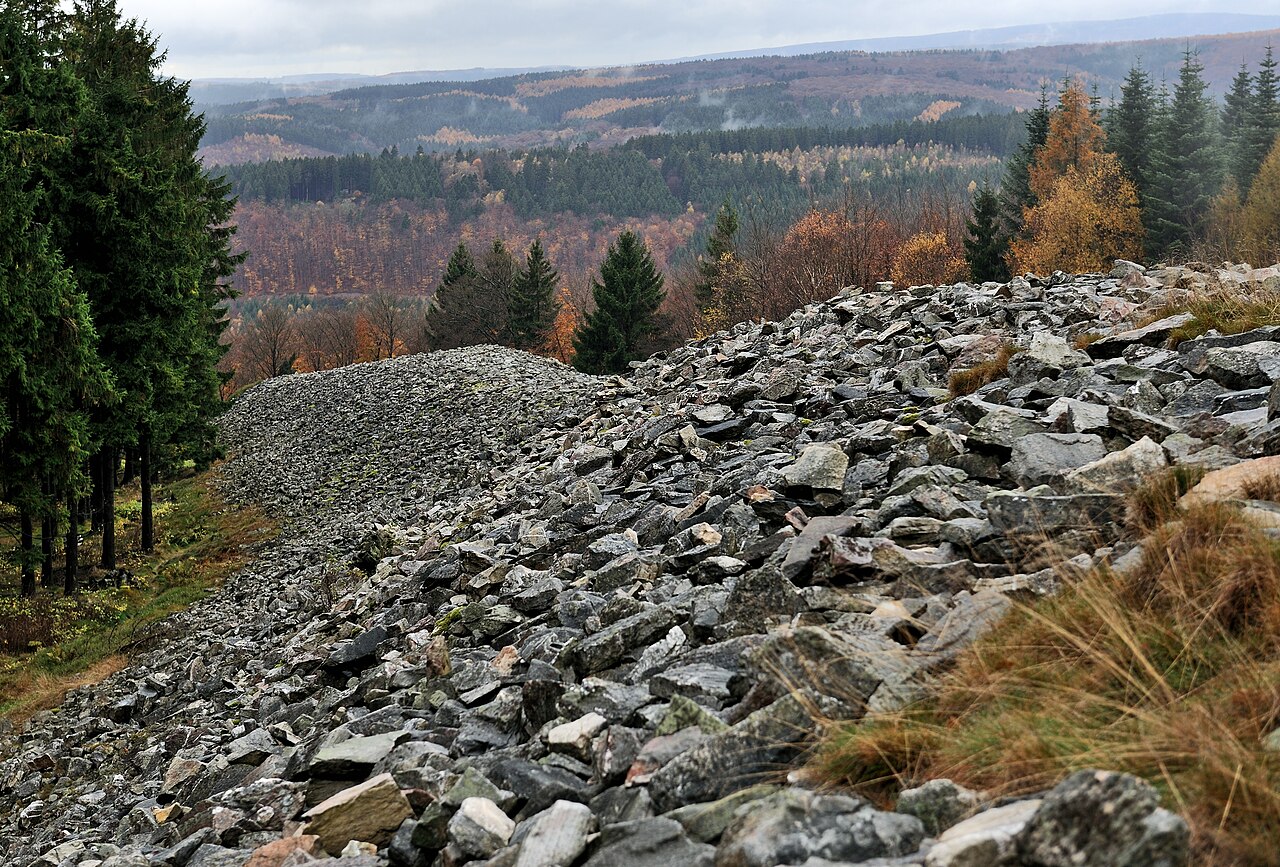
Dhronecken Castle
Dhronecken Castle, located in the municipality of Dhronecken, Germany, stands as a significant example of a high medieval hill castle with a rich history dating back to the 13th century. The castle's origins are somewhat obscured, but it is first documented around 1300 in association with a knight named Conrad von Tronecken. Known historically as the "Feste Troneck," the fortress is believed to be older than this first mention, possibly linked to the legendary Hagen von Tronje from the medieval epic Nibelungenlied, who is traditionally considered to have ancestral ties to the site.
Medieval origins and historical significance
The castle was constructed as a defensive stronghold typical of high medieval Germanic fortifications. Its strategic location on a hill provided commanding views and natural defenses, essential for controlling the surrounding territory. Throughout the early 14th century, Burg Dhronecken served as the administrative center for the local Amt Dhronecken or Mark Thalfang. This role underscored its importance in regional governance and military oversight.
One of the castle's most notable historical associations is with Friedrich Wildgraf von Kyrburg, who retired to the castle from 1309. He was the last grand master and provincial head of the Knights Templar in Upper Germany, linking the castle to this influential religious and military order. This connection enhances the castle's historical significance, reflecting its role in the broader context of medieval European military-religious institutions.
Sieges, destruction, and changing roles
In 1403, the castle endured a siege by the Elector of Trier, although the assault was unsuccessful. Despite this, Burg Dhronecken faced multiple episodes of destruction over the centuries, inflicted by forces from Cologne, imperial armies, and French troops. These repeated military actions weakened the fortress, contributing to its gradual decline.
Additionally, the castle suffered damage from a significant earthquake, further compromising its structural integrity. By the late 18th century, the castle's administrative function as the residence of the Amtmann ended amid the political upheavals of the French Revolutionary period. In 1817, the site was repurposed as the office for a Prussian senior forest official, marking a shift from military to civil and land management use.
Architectural remains and modern adaptations
Today, only remnants of the original Burg Dhronecken survive. The most prominent surviving feature is a corner tower that visitors can still climb, providing a tangible connection to the castle's medieval past and its defensive architecture. The tower exemplifies typical medieval construction techniques and the strategic design of hill castles.
On the foundations of the old fortress, modern buildings have been erected, including a large, tall structure known as the Schloss. This building currently serves as the headquarters for the local forest administration, Forstamt Hochwald, illustrating the adaptive reuse of historic sites for contemporary administrative functions.
Adjacent to the Schloss is a traditional timber-framed barn, which has been converted into the village community center. This structure reflects regional vernacular architecture and integrates community life within the historic castle grounds.
Landscaping and recreational features
Since 1985, the castle grounds have been enhanced with attractively laid-out castle gardens, which are continuously planted and tended to preserve the site's historical ambiance. These gardens offer visitors a cultivated natural environment that complements the ruins and enriches the cultural heritage experience.
Below the castle, a thoughtfully designed nature play area has been developed along both sides of a brook. This recreational space includes a ford with stepping stones, a forum-like seating area made of large stone blocks on a slope, wooden footbridges over wetlands, playhouses, a suspension bridge, and a monorail slide. These features creatively engage with the natural terrain, providing interactive opportunities for children and adults alike while respecting the ecological setting.
Cultural heritage and visitor experience
Dhronecken Castle offers a unique blend of historical intrigue and natural beauty. Its connections to the Knights Templar and medieval German nobility, combined with its survival through sieges and natural disasters, make it a site of considerable cultural heritage. Visitors can explore the surviving tower, enjoy the serene gardens, and engage with the innovative play areas that bring the historic landscape to life.
The castle's location in the scenic Hunsrück region adds to its appeal, providing opportunities for hiking and exploring the surrounding countryside. The adaptive reuse of the site ensures that it remains a vibrant part of the local community, balancing preservation with practical modern use.
Frequently asked questions (FAQ)
- When was Dhronecken Castle first mentioned in historical records?
- Dhronecken Castle was first mentioned around the year 1300 in documents referring to a knight named Conrad von Tronecken and the fortress called Feste Troneck.
- What is the connection between Dhronecken Castle and the Knights Templar?
- From 1309, Friedrich Wildgraf von Kyrburg, the last grand master and provincial head of the Knights Templar in Upper Germany, retired to Dhronecken Castle, linking it to this historic military-religious order.
- Can visitors climb any part of Dhronecken Castle today?
- Yes, visitors can climb the surviving corner tower of Dhronecken Castle, which offers insight into the medieval defensive architecture and views of the surrounding area.
- What modern uses does the castle site have?
- The castle site includes a large building called the Schloss, used as the local forest administration office, and a timber-framed barn serving as the village community center.
- Are there recreational facilities at Dhronecken Castle?
- Yes, below the castle there is a nature play area with features like a ford with stepping stones, a forum-like seating area, wooden footbridges, playhouses, a suspension bridge, and a monorail slide, suitable for all ages.
Information
Loading map...
Visitor reviews
No reviews yet. Been here? Write the first review and help other travelers!
Write the first reviewVisited this castle? Share your experience
Your review helps other travelers and adds first-hand knowledge to our encyclopedia.