Deva
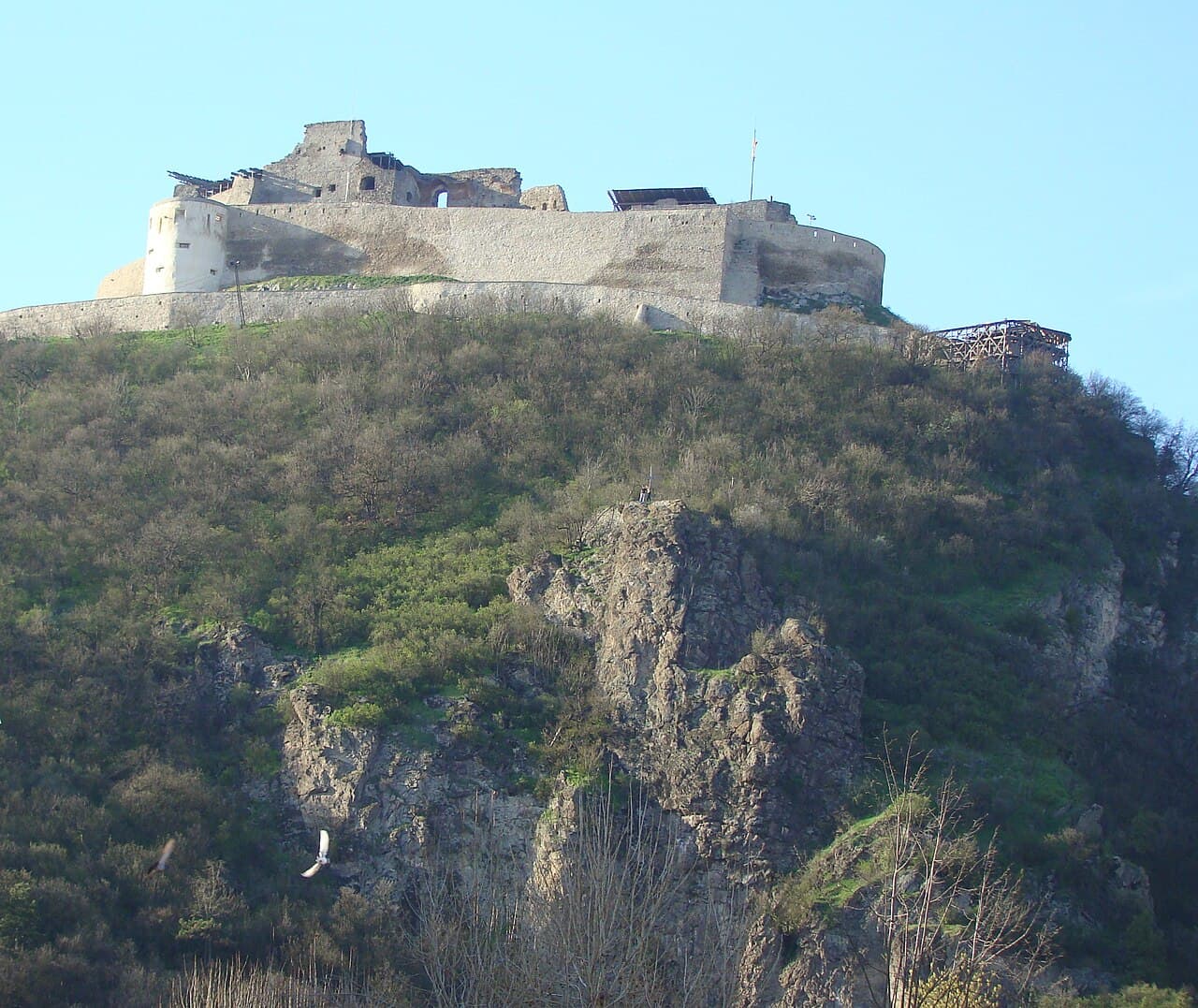
Deva fortress, located in the city of Deva, Romania, is a remarkable example of a late medieval bastioned fortress perched atop a volcanic hill. This strategic location has been fortified since ancient times, tracing back to the Dacian period, with subsequent Roman military presence. The fortress as it stands today primarily dates from the 15th century, reflecting centuries of military evolution and historical significance in the region of Transylvania.
Historical significance and origins
The site of Deva fortress has been recognized as a critical military vantage point since antiquity. Originally fortified by the Dacians, it later hosted a Roman military outpost, underscoring its strategic importance overlooking the Mureș River valley. After the devastating Mongol invasion of 1242, King Béla IV of Hungary initiated the construction of a new fortress on this volcanic cone to secure the region.
The fortress is first mentioned in written records between 1264 and 1269. Its initial design featured an oval plan approximately 90 meters long and between 18 to 35 meters wide, crowned with a rectangular building flanked by two towers on the eastern and western ends. By the late 13th century, it had already proven its defensive worth by repelling attacks from the Cumans in 1273.
Medieval expansion and political role
Throughout the 14th and 15th centuries, Deva fortress evolved into a significant seat of power. It became the residence of the voivodes of Transylvania and was controlled by notable figures such as John Hunyadi and John Zápolya. In 1443, it passed into the hands of the wealthy Hungarian magnate and voivode János Hunyadi, who transformed it into his family seat.
During this period, the fortress underwent substantial architectural development, including the addition of a northern wing, reinforcement of the old palace with buttresses, and construction of buildings adjacent to the western tower. These expansions reflected the growing military and administrative importance of the site.
Renaissance and early modern fortifications
In the early 16th century, under the rule of John Zápolya, the fortress saw extensive renovations likely motivated by the rising threat of the Ottoman Empire. A second ring of walls was added, spaced 2 to 20 meters from the original, enhancing its defensive capabilities.
The 17th century brought further modifications, including the construction of a semicircular bastion on the southern side and a large artillery platform on the eastern side, adapting the fortress to the era's evolving military technology. These works were part of the fortress's transformation into a modern bastioned fortress, capable of withstanding artillery sieges.
Throughout this time, the fortress also functioned as a prison and site of political intrigue. Notable prisoners included Francis David, the first Unitarian bishop of Transylvania, who died in captivity in 1579, highlighting the fortress's role in the region's religious and political conflicts.
Conflict and decline in the 18th and 19th centuries
The fortress played a role in several conflicts, including the Rákóczi War of Independence in the early 1700s, when it changed hands between Kuruc and imperial forces. After 1713, a third ring of walls was constructed with bastioned platforms and reinforced gates, marking the last major military upgrade.
Despite these efforts, the fortress gradually lost its military relevance. In 1784, it served as a refuge for local nobility during peasant revolts, but by the 19th century, it had fallen into ruin. Emperor Francis I ordered restoration beginning in 1817, completed over 12 years, but a catastrophic explosion in 1849 destroyed much of the structure and caused significant loss of life.
Modern restoration and tourism
In the 20th century, the fortress remained in ruins but became a symbol of regional heritage. Restoration efforts in the 1950s stabilized the ruins and improved visitor access. A major conservation and restoration project launched in 2008 culminated in the fortress reopening to the public in 2016.
Today, the fortress is accessible via a steep hiking path passing through three gates or by a funicular railway. Visitors can explore the ruins, which include remnants of all phases of construction from medieval to modern bastioned fortifications. The site offers panoramic views over Deva and the surrounding Transylvanian landscape, making it a popular destination for heritage tourism.
Architectural features and layout
Deva fortress is characterized by its multi-layered defensive design adapted to the volcanic hill's topography. The fortress comprises three main enclosures arranged in tiers: the lowest oval enclosure, the irregular middle enclosure, and the semicircular summit enclosure. This tiered layout provided strategic defense and control over the surrounding area.
Construction materials include stone blocks with dovetail cuts, a technique inherited from the earlier Dacian fortifications. The fortress walls, bastions, and towers reflect a blend of medieval and early modern military architecture, including adaptations for artillery defense in the bastioned walls and platforms.
The fortress also contains the ruins of a Renaissance palace, known as Magna Curia, built in the 17th century by Prince Gabriel Bethlen. This palace contrasted with the austere military structures, providing more comfortable residential quarters.
Cultural significance and heritage status
The fortress is listed as a historic monument in Romania, recognized for its cultural, historical, and architectural value. It embodies the layered history of Transylvania, from ancient Dacian times through Roman, medieval, and early modern periods.
Its preservation and restoration have made it a focal point for cultural tourism in the region, offering insights into the military history and architectural evolution of fortifications in Eastern Europe.
Visitor experience
Visitors to Deva fortress can enjoy walking the fortress grounds, exploring the remains of walls, towers, and bastions, and learning about the site's history through interpretive signage. The funicular railway provides an accessible option to reach the summit, while the hiking path offers a more immersive experience through the fortress's defensive gates.
The panoramic views from the summit are a highlight, offering sweeping vistas of the city of Deva and the surrounding Transylvanian landscape. The site is open year-round, attracting history enthusiasts, hikers, and tourists seeking a less crowded alternative to more famous nearby castles.
Frequently asked questions (FAQ)
- What is the historical significance of Deva Castle?
- Deva Castle, perched atop a volcanic hill, dates back to the 13th century and served as a strategic military fortress throughout its history. It played a crucial role in defending the region against invasions and has witnessed numerous historical events, making it a key landmark in Romanian heritage.
- When is the best time to visit Deva Castle?
- The best time to visit Deva Castle is during the spring and early autumn months, from April to October. During this period, the weather is pleasant, allowing for enjoyable exploration of the castle and its surrounding scenery.
- Can I access Deva Castle by public transportation?
- Yes, Deva Castle is accessible by public transportation. Visitors can take a train or bus to Deva city and then use local taxis or walk to the castle, which is located a short distance from the city center.
- What are the opening hours for Deva Castle?
- Deva Castle is typically open to visitors from 9 AM to 7 PM during the summer months and from 9 AM to 5 PM in the winter. It is advisable to check for any seasonal changes or special holiday hours before planning your visit.
- Is it possible to take guided tours of Deva Castle?
- Yes, guided tours are available at Deva Castle, offering visitors in-depth insights into the castle's history and architecture. These tours can enhance your experience by providing context and stories that aren't available through self-guided exploration.
- What are the ticket prices for Deva Castle?
- Ticket prices for Deva Castle are quite affordable, usually ranging from 10 to 15 lei for adults, with discounts available for students and children. Special rates may apply for guided tours, so it's best to inquire upon arrival.
- Are there any nearby attractions to visit while in Deva?
- Yes, while in Deva, visitors can explore nearby attractions such as the Deva Citadel and the beautiful Corvin Castle in Hunedoara, which is only a short drive away. Additionally, the picturesque landscapes of the Retezat National Park offer great opportunities for hiking and nature walks.
- What architectural features should I look for at Deva Castle?
- Deva Castle showcases a mix of Gothic, Renaissance, and Baroque architectural styles, reflecting its long history and various renovations. Key features include the impressive stone walls, the medieval towers, and the remnants of the original fortifications that provide stunning views of the surrounding area.
Photo gallery

Information
Loading map...
Visitor reviews
No reviews yet. Been here? Write the first review and help other travelers!
Write the first reviewVisited this castle? Share your experience
Your review helps other travelers and adds first-hand knowledge to our encyclopedia.