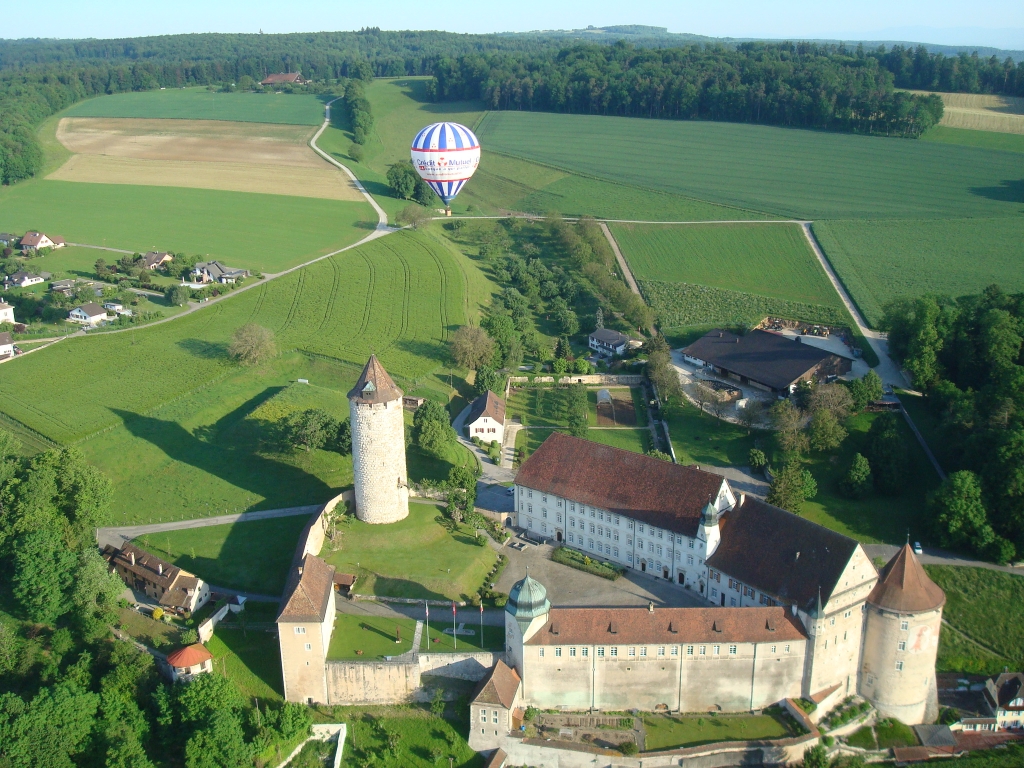
Delle Castle
Delle Castle stands as a remarkable example of a 13th-century hill castle located in the town of Delle within the Bourgogne-Franche-Comté region of eastern France. Although now in a state of ruins, the castle's remains offer valuable insights into the high medieval period fortification architecture and feudal history of the region. Its strategic position atop a hill provided commanding views of the surrounding landscape, serving both defensive and administrative functions during its active years.
The historical significance of Delle Castle
Constructed during the high medieval period, specifically the 13th century, Delle Castle was part of a network of fortifications that protected the territories of the region against rival lords and external threats. The castle played a key role in local power dynamics, acting as a military stronghold and a symbol of feudal authority. Over the centuries, it witnessed various conflicts and changes in ownership that reflect the turbulent history of medieval France.
Architectural features and layout
As a hill castle, the design of Delle Castle capitalized on the natural elevation to maximize defense capabilities. The castle likely featured a keep or donjon as its central stronghold, surrounded by curtain walls with battlements for archers and defenders. The remnants suggest the presence of towers strategically placed to cover vulnerable approaches and provide flanking fire. Although much of the superstructure has not survived intact, archaeological studies indicate a complex layout including courtyards, gatehouses, and possibly a moat or other water defenses adapted to the hilltop terrain.
Construction materials and techniques
The castle was primarily built using locally sourced stone, which was typical for the period and region, providing both durability and a formidable appearance. The masonry work reflects medieval construction methods with thick walls designed to withstand siege engines and attacks. The use of stone vaulting in certain chambers would have enhanced the castle's fire resistance and structural strength.
Role in regional conflicts and ownership
Throughout its history, Delle Castle was a focal point in the feudal struggles that characterized the Bourgogne-Franche-Comté area. It likely changed hands multiple times due to inheritance, marriage alliances, or military conquest. The castle's defenses were tested during regional conflicts, including skirmishes related to the broader power struggles between local nobility and external forces such as the Holy Roman Empire or the Kingdom of France.
Present condition and preservation efforts
Today, Delle Castle remains as evocative ruins that attract historians, archaeologists, and visitors interested in medieval architecture and history. Although the castle is no longer intact, efforts have been made to preserve the surviving structures and stabilize the site to prevent further deterioration. Interpretive signage and guided tours help contextualize the castle's historical importance and architectural features for visitors.
Access and visitor information
The castle site is accessible to the public, offering a unique opportunity to explore the remains of a high medieval hill castle in a scenic natural setting. Visitors can appreciate the panoramic views from the hilltop and gain insight into the defensive strategies employed in medieval fortifications. While facilities may be limited due to the castle's ruinous state, the site remains a significant cultural landmark in the Bourgogne-Franche-Comté region.
Frequently asked questions (FAQ)
- What is the historical significance of Delle Castle?
- Delle Castle, located in the picturesque region of France, dates back to the 13th century and played a crucial role in local defense during the medieval period. Its strategic location allowed it to serve as a stronghold against invasions, making it a vital part of the region's history.
- When was Delle Castle built?
- Delle Castle was constructed in the early 1200s, showcasing the architectural style of the time. Over the centuries, it has undergone various renovations, reflecting the changing tastes and needs of its inhabitants.
- Can I visit Delle Castle?
- Yes, Delle Castle is open to visitors, offering guided tours that delve into its rich history and architectural features. Be sure to check the castle's official website for any specific visitor guidelines or requirements.
- What are the opening hours of Delle Castle?
- Delle Castle generally opens its doors to visitors from 10 AM to 5 PM, with extended hours during the peak tourist season. It's advisable to confirm current opening hours before planning your visit, as they may vary depending on the time of year.
- Is it possible to access Delle Castle by public transport?
- Yes, Delle Castle is accessible by public transport, with regular bus services connecting it to nearby towns and cities. Additionally, there are designated parking areas for visitors who choose to drive.
- What is the best time to visit Delle Castle?
- The best time to visit Delle Castle is during the spring and early fall when the weather is mild, and the gardens are in full bloom. These seasons also tend to attract fewer crowds, allowing for a more enjoyable experience.
- What are the ticket prices for Delle Castle?
- Ticket prices for Delle Castle are generally affordable, with discounts available for students, seniors, and children. Special rates may apply for group visits, so it's a good idea to check the castle's website for the most current pricing information.
- Are there any nearby attractions to Delle Castle?
- Yes, there are several attractions near Delle Castle, including beautiful parks, local museums, and charming villages that reflect the area's rich culture. Exploring these nearby sites can enhance your visit and provide a deeper understanding of the region's history.
- How do I get a guided tour of Delle Castle?
- Guided tours of Delle Castle can typically be booked in advance through the castle's official website or on-site at the visitor center. It's recommended to reserve your spot, especially during peak tourist seasons, to ensure availability and a more personalized experience.
Information
Address
A côté de la place François-Mitterrand
Loading map...
Visitor reviews
No reviews yet. Been here? Write the first review and help other travelers!
Write the first reviewVisited this castle? Share your experience
Your review helps other travelers and adds first-hand knowledge to our encyclopedia.