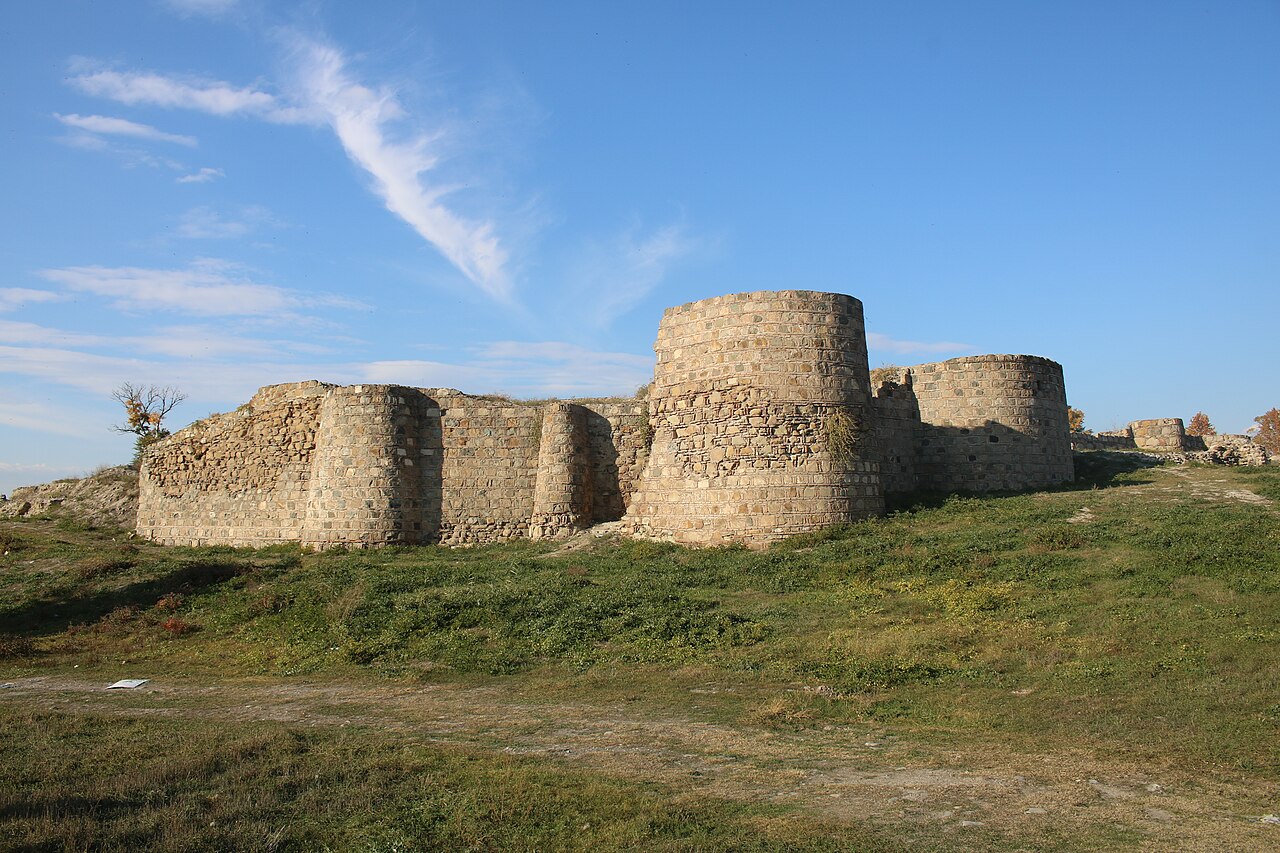
David Gareja Monastery
The David Gareja Monastery is a remarkable religious complex carved into the semi-desert slopes of Mount Gareja, located within the Sagarejo municipality in the Kakheti region of Georgia. Founded in the 6th century by St. David Garejeli, one of the revered 13 Assyrian Fathers, this monastery stands as a significant monument of early medieval Georgian monastic architecture and spiritual life. Its location, almost on the border with Azerbaijan, adds to its unique geographical and cultural significance.
Historical foundation and early development
The monastery's origins trace back to the 6th century, when St. David Garejeli established it as a center for Christian asceticism and religious study. The complex expanded notably in the 9th century under the guidance of St. Hilarion, who contributed to its architectural and spiritual growth. Throughout the medieval period, the monastery enjoyed the patronage of Georgian royal and noble families, underscoring its importance in the region's religious and cultural landscape.
One notable historical episode occurred in 1154, when King Demetrius I of Georgia sought refuge at David Gareja after being compelled to abdicate by his son. This event highlights the monastery's role not only as a religious sanctuary but also as a place of political refuge during turbulent times.
Architectural layout and features
The David Gareja Monastery complex is distinguished by its irregular ground plan that conforms to the natural contours of the rocky valley where it is situated. This organic integration with the landscape is a defining characteristic of the site. The complex consists largely of rock-hewn churches, chapels, monastic cells, and refectories, all carved directly into the soft volcanic rock formations.
A prominent feature encountered upon arrival is the large square watchtower known as Chichkhitury, perched atop the ridge that marks the border between Georgia and Azerbaijan. This tower historically served as a defensive and observation point, emphasizing the strategic importance of the site.
Rock-cut architecture
The monastery's rock-cut architecture demonstrates remarkable craftsmanship and adaptation to the harsh environment. The interiors of the churches are adorned with frescoes dating from the late 10th to early 13th centuries, depicting religious scenes and Georgian saints. These paintings are valuable for understanding the development of Georgian ecclesiastical art and iconography.
Monastic cells and communal spaces
The complex includes numerous monastic cells where monks lived in solitude, as well as communal spaces such as refectories and chapels used for worship and daily activities. The layout reflects the monastic ideals of isolation combined with community life.
Historical challenges and restoration
Despite its remote location in a semi-desert area, the monastery was a vibrant center of religious and cultural activity, reaching its peak between the late 11th and early 13th centuries. However, it faced significant challenges over the centuries. In 1265, the complex suffered damage during the Mongol invasions, and again in 1615 during incursions by the Safavid Empire. Each time, the monastery was restored, reflecting its enduring importance.
In the 20th century, the monastery's fortunes declined dramatically. Following the 1921 Soviet invasion of Georgia, David Gareja was closed and left uninhabited. During the Soviet-Afghan War (1979-1989), the site was repurposed as a military firing range by the Soviet army, causing extensive damage to the delicate rock-cut structures and frescoes. Despite public protests, military exercises resumed until finally ceasing in the late 1980s.
After Georgia regained independence in 1991, monastic life was revived at David Gareja. However, military exercises near the monastery resumed briefly in the mid-1990s under the Georgian army, prompting renewed protests and eventual withdrawal of military presence.
Current status and visitor experience
Today, the David Gareja Monastery remains a functioning religious site and is open to visitors during designated hours. The complex's partially preserved state offers a glimpse into early medieval Georgian monastic life and artistic traditions. Visitors can explore the rock-hewn churches, ancient frescoes, and monastic cells, as well as the imposing Chichkhitury watchtower.
Access to the monastery requires traveling on a challenging dead-end road best suited for 4WD vehicles, due to the rugged terrain of the semi-desert region. Despite the difficult journey, the site attracts pilgrims, historians, and tourists interested in Georgian culture and medieval architecture.
One ongoing issue is the monastery's location near the border with Azerbaijan, which has led to a border dispute that remains unresolved. This geopolitical tension adds complexity to the site's management and accessibility but has not diminished its cultural and spiritual significance.
Visiting tips
- Plan your visit during daylight hours when the monastery is open to the public.
- Use a suitable vehicle, preferably a 4WD, to navigate the rough access road.
- Respect the active monastic community and follow any guidelines during your visit.
- Explore the frescoes and rock-cut architecture with a knowledgeable guide to fully appreciate the site's historical and artistic value.
Frequently asked questions (FAQ)
- How do I get to David Gareja Monastery?
- David Gareja Monastery is located approximately 70 km southeast of Tbilisi, Georgia. You can reach it by car or take a guided tour from the capital, which often includes transportation. The journey offers stunning views of the surrounding landscape, making it a delightful experience.
- What is the historical significance of David Gareja Monastery?
- David Gareja Monastery is a complex of rock-hewn churches and monasteries founded in the 6th century by St. David, one of the thirteen Assyrian monks. It played a crucial role in the spread of Christianity in Georgia and has been a center of monastic life for centuries. The monastery is also notable for its beautiful frescoes and unique architectural style.
- When was David Gareja Monastery established?
- David Gareja Monastery was established in the 6th century, making it one of the oldest monastic complexes in Georgia. It has been a significant site for religious and cultural activities throughout its history, contributing to the region's spiritual heritage. The monastery complex has undergone various restorations over the years to preserve its historical integrity.
- Can I visit David Gareja Monastery year-round?
- Yes, David Gareja Monastery is open to visitors year-round, but the best time to visit is during the spring and autumn months when the weather is mild. Summer can be quite hot, and winter may bring snow, which can limit accessibility. Regardless of when you visit, the scenery around the monastery is breathtaking.
- Why is David Gareja Monastery considered an architectural wonder?
- David Gareja Monastery is renowned for its unique rock-hewn architecture, with many churches and cells carved directly into the cliffs. This style reflects a harmonious blend of nature and human creativity, showcasing the ingenuity of early Christian builders. The intricate frescoes within the caves also add to its architectural significance.
- Is it possible to hike around David Gareja Monastery?
- Yes, there are several hiking trails around David Gareja Monastery that offer stunning views of the surrounding landscape and the nearby Azerbaijan border. Hiking is a popular activity, but visitors should be prepared with appropriate footwear and water. Guided tours often include hiking options to enhance the experience.
- What are the opening hours for David Gareja Monastery?
- David Gareja Monastery is typically open from 9 AM to 6 PM, but it’s advisable to check for any seasonal changes in hours before planning your visit. The monastery may close earlier during the winter months. Make sure to arrive with enough time to explore the various sites within the complex.
- Are there any ticket prices for visiting David Gareja Monastery?
- There is no entrance fee to visit the David Gareja Monastery complex, making it an accessible destination for all. However, if you opt for a guided tour, there may be associated costs. It's recommended to check with local tour operators for more details on any potential fees.
- What nearby attractions can I explore after visiting David Gareja Monastery?
- After visiting David Gareja Monastery, you can explore the scenic landscapes of the surrounding nature reserve or visit the nearby town of Udabno, which offers a glimpse into local culture. The ancient city of Sighnaghi, known for its charming architecture and wine, is also a short drive away and makes for a perfect day trip.
Information
Loading map...
Visitor reviews
No reviews yet. Been here? Write the first review and help other travelers!
Write the first reviewVisited this castle? Share your experience
Your review helps other travelers and adds first-hand knowledge to our encyclopedia.