Daulatabad Fort
Daulatabad Fort, originally known as Devagiri Fort, is a prominent bastioned fortress located near Aurangabad in Maharashtra, India. This historic citadel played a crucial role in the political and military history of the Deccan region, serving as the capital of the Yadava dynasty from the 9th to the 14th century CE. It was later briefly the capital of the Delhi Sultanate under Muhammad bin Tughluq and subsequently a secondary capital of the Ahmadnagar Sultanate during the 15th and 16th centuries.
The site of Daulatabad Fort has a history dating back to the 6th century CE when the town of Devagiri emerged as an important upland settlement along key caravan trade routes connecting western and southern India. The strategic location atop a conical hill provided natural defenses that were enhanced by man-made fortifications. The original fortress was constructed around 1187 CE by Bhillama V, the first monarch of the Yadava dynasty, marking the beginning of the fort's significant architectural and military development.
Architectural features and fortifications
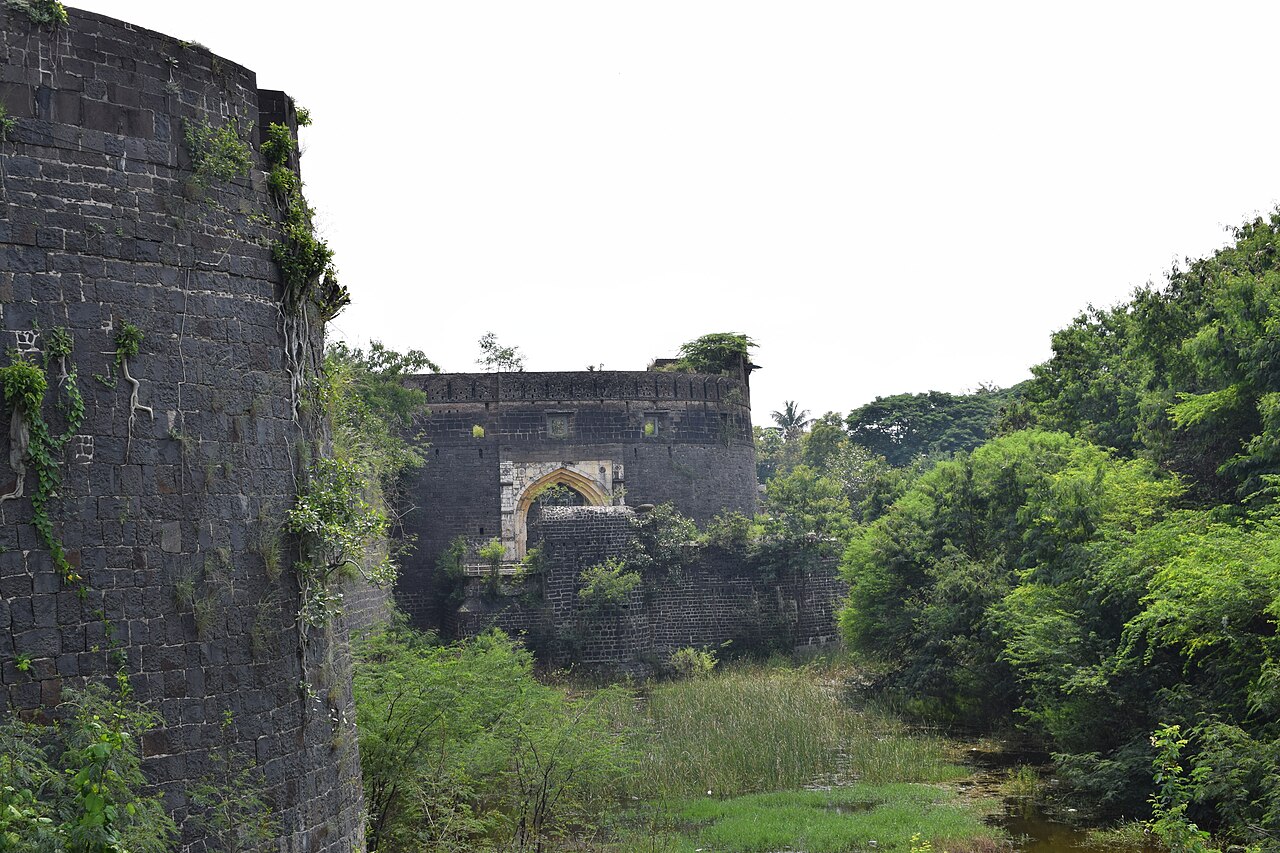
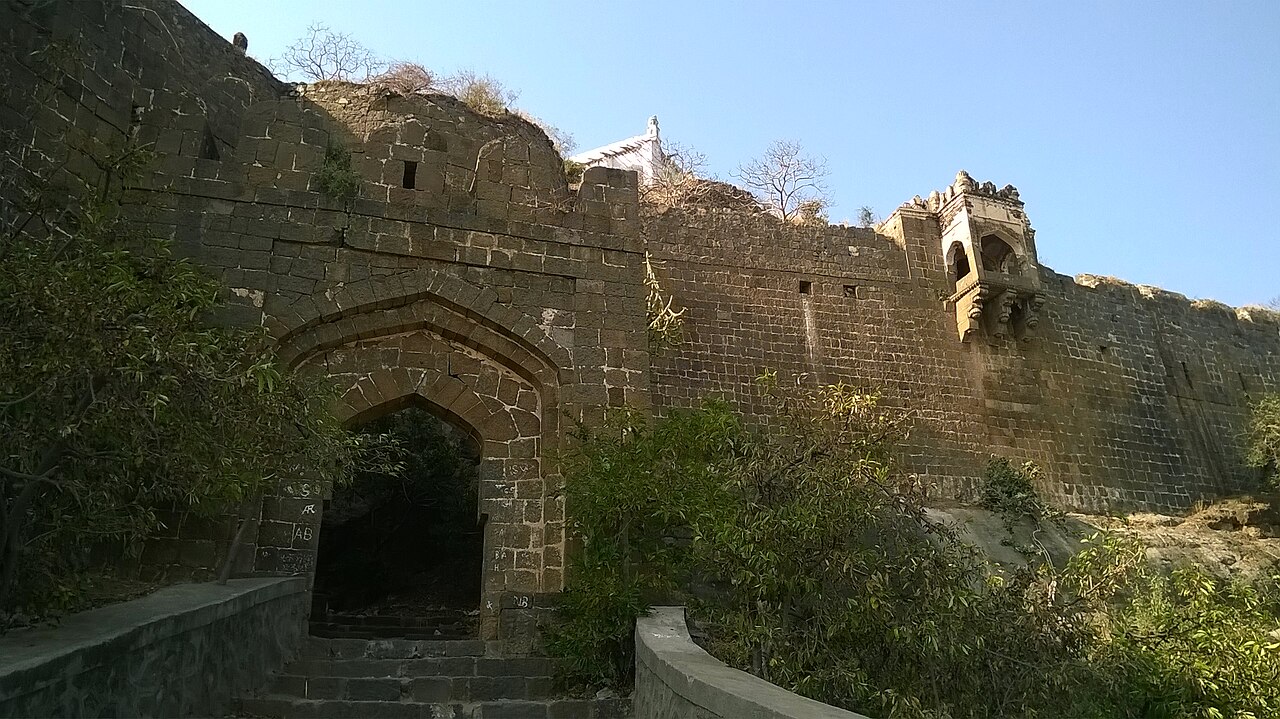
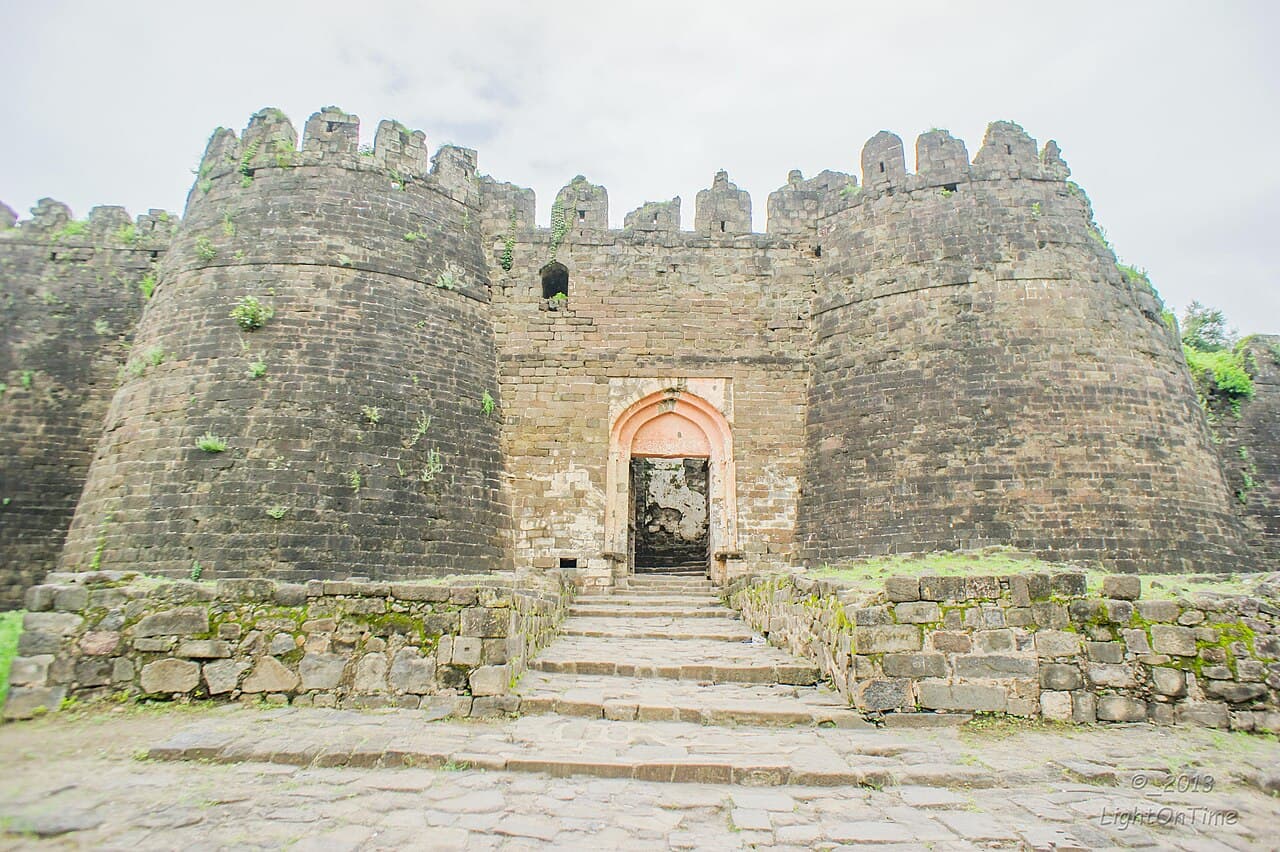
Daulatabad Fort is renowned for its complex defensive architecture that incorporates natural topography with extensive man-made structures. The fortress is built on a steep, conical hill approximately 200 meters high, which makes it naturally impregnable. The fortifications include massive stone walls that rise up to 30 feet high, equipped with bastions and battlements designed to repel invaders.
One of the most remarkable features is the series of double fortification walls that encircle the hill, creating multiple layers of defense. The walls are punctuated with strategically placed gateways that were heavily fortified and designed to confuse and trap attackers. The main entrance, known as the Delhi Darwaza, is a massive gate with robust iron spikes to deter elephant charges.
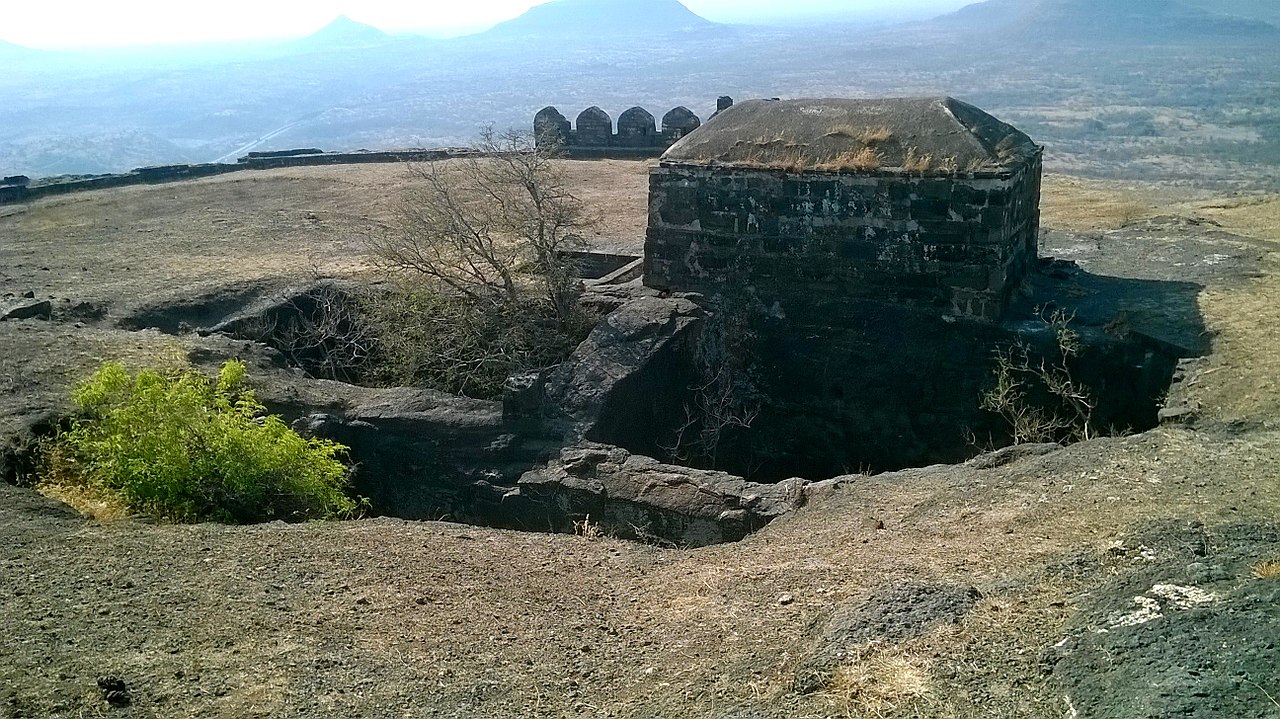
The fort also includes a deep moat carved into the rock, which further enhances its defensive capabilities. Inside the walls, there are several palatial structures, water reservoirs, granaries, and underground passages that were used for communication and escape during sieges.
Unique defensive mechanisms
Daulatabad Fort's design incorporates innovative defensive mechanisms. The fort's entrances are arranged in a zigzag pattern, forcing attackers to make sharp turns under fire from defenders positioned on the walls above. Additionally, the fort has a system of hidden traps and spiked pits to thwart invaders.
The fort's water management system is also notable, with a series of underground channels and reservoirs that ensured a supply of water during prolonged sieges. This feature was vital given the fort's hilltop location and limited access to external water sources.
Historical significance and rulers
The fort's history is closely tied to the Yadava dynasty, who made Devagiri their capital and expanded the fortress to secure their realm in the Deccan. The Yadavas were influential patrons of architecture and culture, and Daulatabad Fort reflects their strategic military thinking and aesthetic sensibilities.
In 1308, the fort was captured by Alauddin Khalji of the Delhi Sultanate, marking the beginning of Muslim rule in the region. The fort's strategic importance was recognized by Muhammad bin Tughluq, who in 1327 renamed Devagiri as Daulatabad and controversially shifted his capital from Delhi to this fortress. This move was part of his attempt to consolidate control over the Deccan but was ultimately reversed in 1334 due to logistical difficulties and local resistance.
Following the decline of the Delhi Sultanate's influence, Daulatabad came under the control of the Ahmadnagar Sultanate in 1499. The sultanate used the fort as a secondary capital and undertook significant fortification works, enhancing its bastioned defenses to withstand artillery attacks. The fort remained strategically important during the Deccan Sultanates period, witnessing various conflicts and power struggles.
Malik ambar and aurangabad
Near Daulatabad, the city of Aurangabad was founded in 1610 by Malik Ambar, an Ethiopian military leader and prime minister of the Ahmadnagar Sultanate. Malik Ambar is credited with revitalizing the region's defenses and administration. Aurangabad's establishment shifted some political focus away from Daulatabad, but the fort continued to serve as a military stronghold.
Cultural and heritage importance
Today, Daulatabad Fort stands as a significant monument reflecting the military architecture and historical transitions of medieval India. The fort is an important heritage site attracting scholars, historians, and tourists interested in the Deccan Sultanates and medieval fortifications. Its preservation offers valuable insights into the defensive techniques and urban planning of the period.
The fort's imposing presence and intricate design continue to inspire admiration for the ingenuity of its builders and the complex history it witnessed. It remains a testament to the strategic importance of the Deccan plateau in Indian history.
Frequently asked questions (FAQ)
- What is the historical significance of Daulatabad Fort?
- Daulatabad Fort, built in the 12th century, is an architectural marvel that showcases the military prowess of its time. It served as a strategic location for various dynasties, including the Yadavas and the Mughals, and played a crucial role in the region's history.
- When is the best time to visit Daulatabad Fort?
- The best time to visit Daulatabad Fort is during the winter months, from October to February. The weather is pleasant and ideal for exploring the fort's vast grounds and intricate architecture without the discomfort of extreme heat.
- Can I access Daulatabad Fort with a wheelchair?
- While Daulatabad Fort has some accessibility options, the terrain can be challenging due to steep paths and stairs. Visitors with mobility concerns should plan ahead and may want to bring assistance for a more comfortable experience.
- What are the opening hours for Daulatabad Fort?
- Daulatabad Fort is open to visitors from 9:00 AM to 6:00 PM every day. It is advisable to arrive early to fully explore the fort's impressive structures and enjoy the panoramic views from the top.
- How much is the ticket price for Daulatabad Fort?
- The entry ticket for Daulatabad Fort is quite affordable, with prices typically around INR 25 for Indian citizens and INR 300 for foreign tourists. This nominal fee grants you access to the fort's historical sites and beautiful surroundings.
- Is it possible to take guided tours of Daulatabad Fort?
- Yes, guided tours are available at Daulatabad Fort, providing visitors with in-depth knowledge about its history and architecture. Hiring a local guide can enhance your experience, as they can share fascinating stories and insights that you might miss on your own.
- Are there any nearby attractions to visit after Daulatabad Fort?
- Yes, several attractions are located near Daulatabad Fort, including the famous Ajanta and Ellora Caves, which are UNESCO World Heritage Sites. Additionally, the city of Aurangabad offers various historical sites and local markets to explore.
Photo gallery

Information
Loading map...
Visitor reviews
No reviews yet. Been here? Write the first review and help other travelers!
Write the first reviewVisited this castle? Share your experience
Your review helps other travelers and adds first-hand knowledge to our encyclopedia.