Daugavpils Fortress
Daugavpils Fortress, also historically known as Dinaburg Fortress and Dvinsk Fortress, is a remarkable example of an early 19th-century bastioned fortress located in Daugavpils, Latvia. This fortress stands out as the only military fortification of its kind in Northern Europe to have been preserved without significant alterations, making it an invaluable site for understanding the military architecture and geopolitical history of the region during the post-Renaissance period.
The origins of Daugavpils Fortress date back to 1772, following the First Partition of Poland when the territory of present-day Latvia was incorporated into the Russian Empire. The fortress was commissioned by Tsar Alexander I of Russia as part of a strategic initiative to fortify the empire's western frontier. Although initial planning began in 1772, the construction of the fortress itself commenced in 1810, amidst rising tensions and the looming threat of Napoleon's invasion of Russia in 1812.
Architectural design and construction
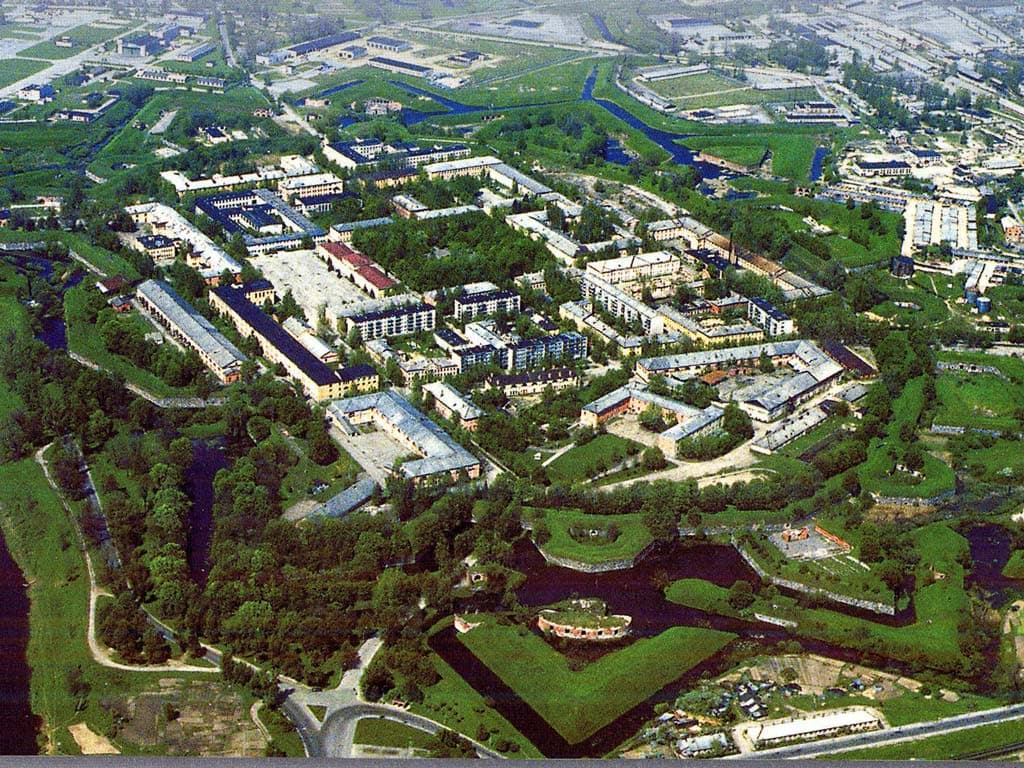
The fortress is a classic example of a bastioned fortress, a style of fortification that evolved during the post-Renaissance period to counter the increasing power of artillery. Its design features a complex system of star-shaped bastions, curved curtain walls, and dry moats that provided overlapping fields of fire and enhanced defensive capabilities. The layout was intended to maximize the fortress's ability to withstand sieges and artillery bombardment.
Construction faced numerous challenges, including lengthy delays, serious flooding, and generally slow progress. Despite these obstacles, the fortress was gradually completed over several decades, with final completion achieved in 1878. The extended construction period reflects both the technical difficulties of building such a large fortification and the shifting political and military priorities of the Russian Empire during the 19th century.
Structural features
The fortress encompasses multiple bastions arranged in a star pattern, connected by curtain walls designed to deflect cannon fire. The defensive perimeter includes dry moats that hindered enemy advances and allowed defenders to control access points effectively. Inside, the fortress contained artillery arsenals, barracks, command posts, and storage facilities, reflecting its role as a comprehensive military base.
Historical significance and military role
Daugavpils Fortress played a crucial role in the defense of the western borders of the Russian Empire. During the Napoleonic Wars, the fortress was still under construction when it faced a significant test in 1812. The French Army, numbering approximately 24,000 men, attacked the fortress. Despite being defended by only 3,300 men and equipped with around 200 cannons, the fortress resisted the siege, demonstrating the effectiveness of its design and the determination of its defenders.
Following the completion of construction, the fortress remained a key military installation throughout the 19th century. After Latvia declared independence in 1918 and secured recognition from Soviet Russia in 1920, the fortress became a base for the Latvian army between 1920 and 1940. This period marked a transition from imperial Russian control to Latvian national defense.
World war ii and later use
During World War II, the fortress was repurposed as a hostage camp known as Stalag 340, where prisoners of war were held. This dark chapter reflects the fortress's continued strategic importance through multiple conflicts and regimes.
In the post-war era, the fortress's military functions diminished, and it gradually transitioned towards cultural and historical preservation. Today, the fortress houses the Daugavpils Mark Rothko Art Centre, located in the former artillery arsenal. This center celebrates the legacy of the abstract expressionist painter Mark Rothko, who was born in Daugavpils, linking the fortress's historical significance with contemporary cultural life.
Preservation and cultural heritage
The fortress is recognized for its well-preserved condition, retaining much of its original structure and layout. Its preservation without significant alterations provides historians, architects, and visitors with a rare opportunity to study early 19th-century military architecture in situ. The fortress's star-shaped bastions and defensive works remain largely intact, offering insights into the evolution of fortification design during the era.
As a cultural landmark, Daugavpils Fortress attracts tourists interested in military history, architecture, and art. The integration of the Mark Rothko Art Centre within the fortress complex enhances its appeal, combining historical exploration with artistic appreciation.
Visitor experience
Visitors to the fortress can explore the extensive grounds, including the bastions, moats, and internal buildings. The art center provides exhibitions and educational programs related to Mark Rothko's work and the fortress's history. The site serves as a venue for cultural events and historical reenactments, enriching the visitor experience.
Frequently asked questions (FAQ)
- What is the historical significance of Daugavpils Fortress?
- Daugavpils Fortress is one of the largest and most well-preserved fortifications in Latvia, built in the 19th century. It played a crucial role in the defense strategies of the Russian Empire and is a significant example of military architecture in the Baltic region.
- When was Daugavpils Fortress constructed?
- Construction of Daugavpils Fortress began in 1810 and was completed in 1878. The fortress was designed to protect the region from potential invasions and has since become a symbol of the city's rich history.
- Can I visit Daugavpils Fortress?
- Yes, Daugavpils Fortress is open to visitors, offering a unique glimpse into its military past. Guided tours are available, allowing guests to explore various parts of the fortress and learn about its history.
- What are the opening hours for Daugavpils Fortress?
- Daugavpils Fortress is typically open for visitors from 10 AM to 6 PM, but hours may vary seasonally. It’s advisable to check the official website or contact the visitor center for the most current information before your visit.
- Is Daugavpils Fortress accessible for individuals with mobility challenges?
- Yes, Daugavpils Fortress has made efforts to improve accessibility for all visitors. Some areas may have limited access due to the fortress's historical structure, but there are paths and facilities designed to accommodate those with mobility challenges.
- What is the best time to visit Daugavpils Fortress?
- The best time to visit Daugavpils Fortress is during the late spring and summer months when the weather is pleasant and outdoor activities are more enjoyable. Additionally, many cultural events and festivals take place during this time, enhancing the visitor experience.
- Are there any nearby attractions to explore after visiting the fortress?
- Yes, nearby attractions include the Daugavpils Mark Rothko Art Centre and the Daugavpils Lead Shot Factory. These sites offer a rich cultural experience and are easily accessible from the fortress.
- How much does it cost to enter Daugavpils Fortress?
- Ticket prices for Daugavpils Fortress are generally affordable, with discounts available for students and seniors. It is recommended to check the fortress's official website for current pricing and any special promotions or group rates.
Photo gallery

Photo by Peteraleks•Public domain
Information
Loading map...
Visitor reviews
No reviews yet. Been here? Write the first review and help other travelers!
Write the first reviewVisited this castle? Share your experience
Your review helps other travelers and adds first-hand knowledge to our encyclopedia.