Dardagny Castle — Switzerland castle

Dardagny Castle

Dardagny Castle in Geneva, Switzerland
Dardagny, Switzerland
High Medieval (11th–13th c.)
Restored

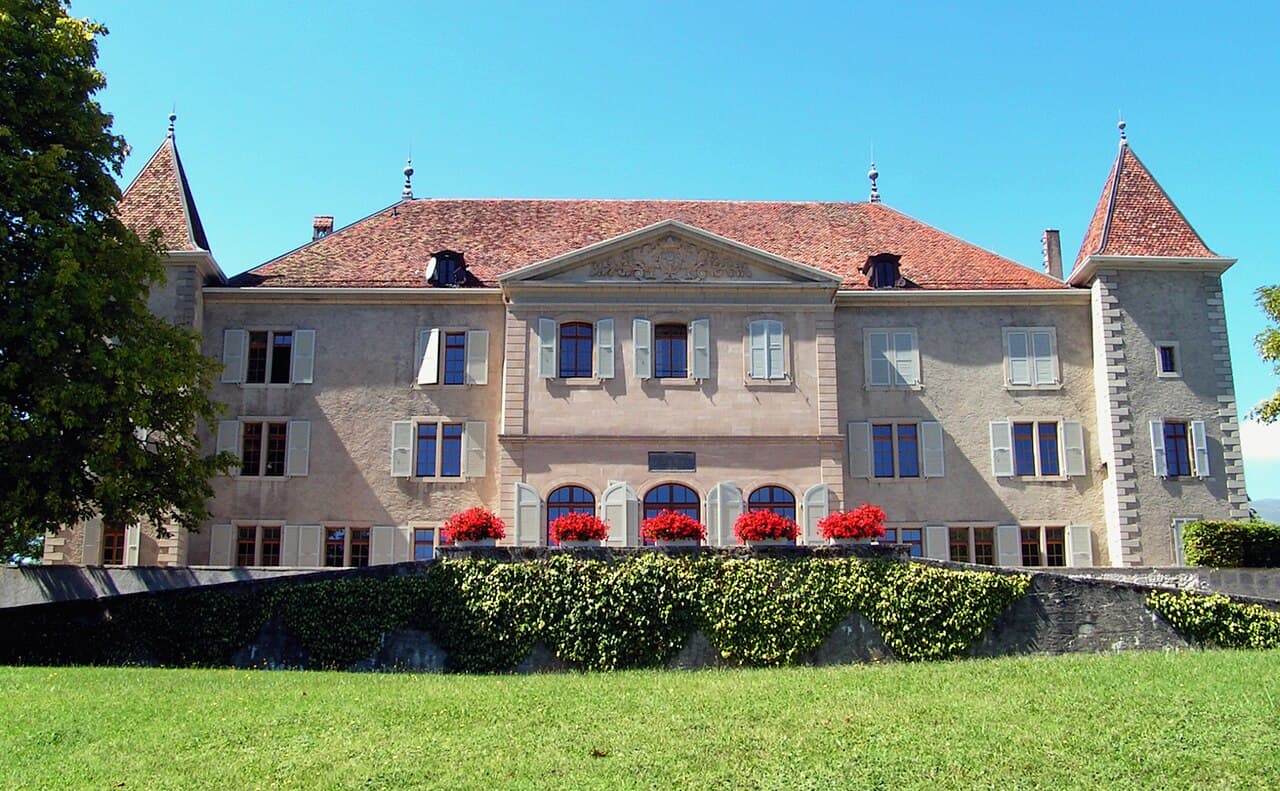
Dardagny Castle, located in the municipality of Dardagny in the canton of Geneva, Switzerland, is a notable example of a hill castle with origins dating back to the 13th century. This castle played a significant role in the medieval defense system of the region, forming part of a strategic ring of fortifications that secured the western boundary of the lands controlled by the Bishop of Geneva. Alongside other castles such as Bruel, La Corbière, and Malval, Dardagny Castle contributed to the protection and control of this important border area during the high medieval period.

Medieval origins and early structure

Historical records from 1298 indicate that there were originally two separate castles in Dardagny, divided by a small road. Each castle was owned by one of the two noble families residing in the village, reflecting the fragmented feudal ownership common in the region during the high medieval era. The southern castle, which survives as the principal structure today, was notable in the 14th century for being over two stories tall and featuring a prominent tower, a typical defensive and residential feature of medieval castles.

Expansion and architectural development in the 17th and 18th centuries

The castle underwent significant changes in the 17th century when the Favre family inherited both feudal domains of Dardagny in 1646. Daniel Favre was instrumental in unifying the two castles in 1655 by constructing a connecting gallery, thereby creating a larger and more cohesive residence. He also added three additional towers and expanded the overall footprint of the castle, enhancing both its defensive capabilities and residential comfort.

In the early 18th century, the castle passed to Jean Vasserot in 1721. Vasserot made notable modifications, including roofing over the courtyard to create a feast hall adorned with Italian paintings. These artistic enhancements reflect the castle's transition from a purely defensive stronghold to a more refined noble residence. Around 1740, a new staircase was constructed in the small central tower, giving the castle much of its present-day appearance.

Modern history and preservation

By the early 20th century, the castle's function had shifted from private noble residence to public use. It was acquired by the municipality in 1904, which initially considered demolishing the structure. However, restoration efforts were undertaken in 1926 and 1932 to preserve this important historic monument. Since then, Dardagny Castle has served as a center for local government and education, housing municipal offices and a school.

Architectural features and significance

Dardagny Castle displays architectural elements characteristic of its long history, including multiple towers, a gallery connecting former separate structures, and a courtyard that was transformed into an elegant feast hall. The castle's evolution from a medieval fortification to a noble residence with artistic interiors illustrates the broader architectural and social changes in Swiss castles over several centuries.

The castle is recognized as a Swiss heritage site of national significance, underscoring its importance in the cultural and historical landscape of the canton of Geneva. Its preservation allows visitors and scholars to explore the layered history of feudal power, architectural adaptation, and community use.

Frequently asked questions (FAQ)

How do I get to Dardagny Castle?
Dardagny Castle is located in the picturesque village of Dardagny, Switzerland. You can reach the castle by taking public transportation from Geneva, with regular bus services available. For those driving, there is parking available near the castle.
What is the historical significance of Dardagny Castle?
Dardagny Castle dates back to the 14th century and is a fine example of medieval architecture in Switzerland. It played a crucial role in local defense and served as a residence for noble families throughout its history. The castle is a testament to the region’s rich heritage and historical importance.
When was Dardagny Castle built?
Dardagny Castle was constructed in the 1300s, showcasing the defensive architectural style of the period. Over the centuries, it has undergone various renovations, preserving its historical character while adapting to modern needs. The castle's age adds to its charm and intrigue for visitors.
Can I take guided tours of Dardagny Castle?
Yes, guided tours are available for visitors interested in learning more about the history and architecture of Dardagny Castle. These tours typically provide in-depth insights and access to areas not open to the general public. It's recommended to check the castle's official website for tour availability and booking information.
Why is the architecture of Dardagny Castle notable?
The architecture of Dardagny Castle features elements typical of medieval fortifications, including thick walls and a strategic layout designed for defense. Its design reflects the transition from military stronghold to residential castle, showcasing both functionality and aesthetic appeal. The blend of historical styles makes it a fascinating subject for architectural enthusiasts.
Is it possible to host events at Dardagny Castle?
Yes, Dardagny Castle can be rented for private events, including weddings, corporate functions, and cultural gatherings. The stunning backdrop of the castle provides a unique atmosphere for memorable occasions. Interested parties should contact the castle administration for details on availability and services offered.
What are the opening hours for Dardagny Castle?
Dardagny Castle is typically open to visitors from April to October, with varying hours depending on the season. It's advisable to check the castle's official website for the most current information regarding opening hours and any special events that may affect access. Planning your visit during these months ensures the best experience.
What are the ticket prices for visiting Dardagny Castle?
Ticket prices for Dardagny Castle are generally affordable, with discounts available for students and seniors. Children under a certain age may enter for free. For the latest pricing information and any special promotions, it’s best to visit the castle's official website before your visit.
When is the best time to visit Dardagny Castle?
The best time to visit Dardagny Castle is during the spring and summer months when the weather is pleasant, and the surrounding gardens are in full bloom. This is also when the castle hosts various events and activities, enhancing the visitor experience. Early mornings or late afternoons are ideal for fewer crowds and a more intimate exploration.
Are there any nearby attractions to Dardagny Castle?
Yes, Dardagny is surrounded by beautiful landscapes and charming villages, making it a great base for exploring the region. Nearby attractions include the scenic vineyards of the Geneva region and the picturesque Lake Geneva. Visitors can also enjoy hiking trails that offer stunning views of the Swiss countryside.

Photo gallery

Dardagny Castle
Click to view

Photo by Romano1246•CC BY-SA 3.0

1 photo • Click any image to view in full screen

Information

Hill Castle

Loading map...

Visitor reviews

No reviews yet. Been here? Write the first review and help other travelers!

Write the first review

Visited this castle? Share your experience

Your review helps other travelers and adds first-hand knowledge to our encyclopedia.

Write a review

(5/5)

0/2000 characters

Your review will be visible after admin approval

Nearby castles

9.8 km

Compesieres Commandry

Bardonnex, Switzerland

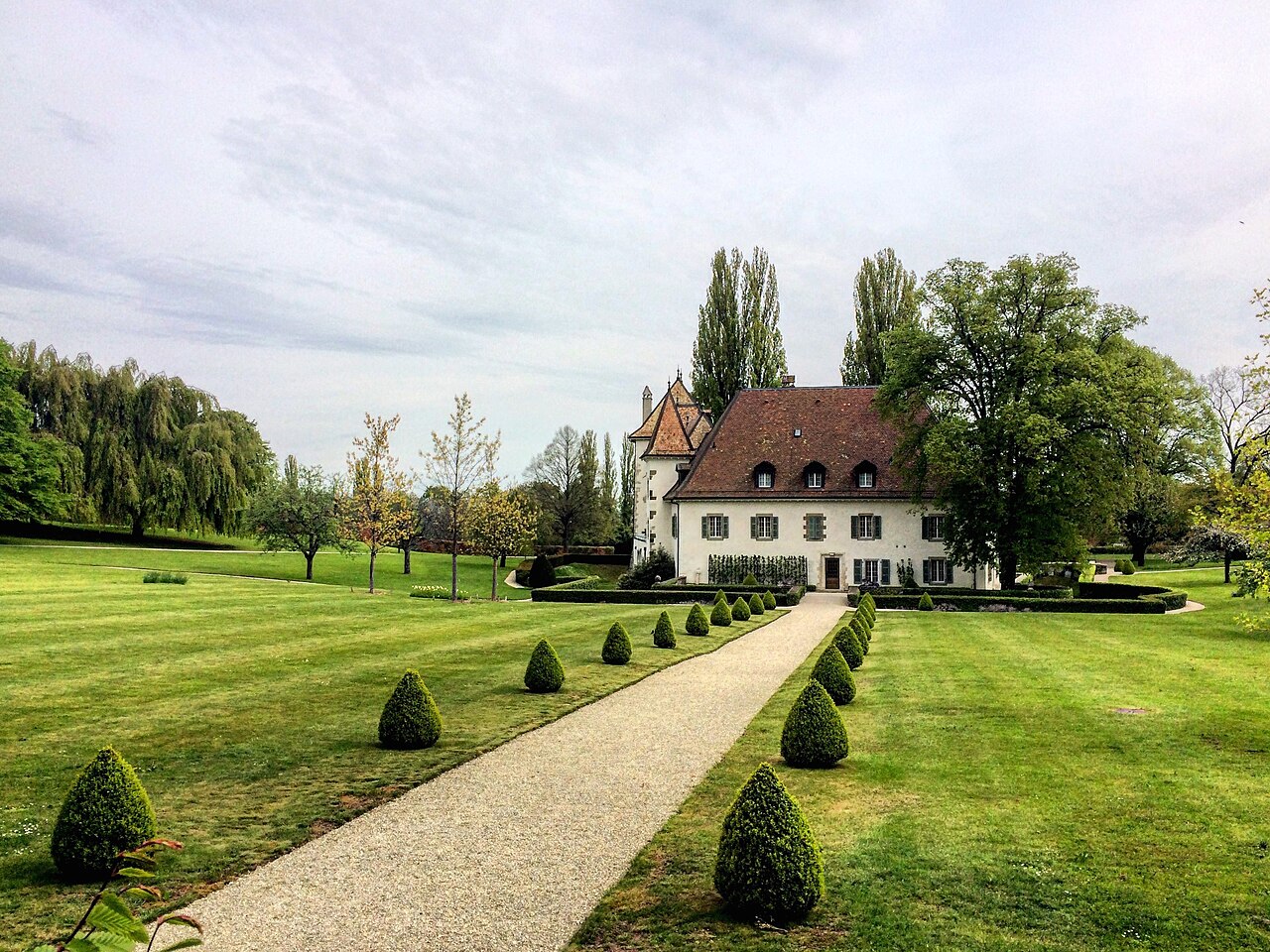
The Compesières Commandry stands as a significant late medieval hill castle in Bardonnex, Switzerland, renowned as the principal headquarters of the Order of Saint John, later known as the Order of Malta, in the Geneva region. Constructed primarily in the 15th century, the castle embodies the Order's multifaceted role as a religious, military, and hospitaller institution. Originally established on the site of a Romanesque church dedicated to Saint Sylvester, which itself was founded on earlier Roman foundations, the Commandry evolved from a hospice for pilgrims and the sick into a fortified administrative and military complex. The church and castle together illustrate the medieval ecclesiastical architecture and the strategic importance of the site within the Genevois territory. Early history and foundation The earliest records of the site date back to 1270, when Aymon de Cruseilles, the Bishop of Geneva, donated the Romanesque church to the Order. This marked the beginning of the Order's presence in the region, which expanded over the following centuries. The Order established a hospice to care for travelers and pilgrims, reflecting its mission of hospitality and medical care. In addition to the hospice, the Order operated a hospital and a fortified house with a tower at Hautevillette in the County of Geneva until 1576, demonstrating its wider regional influence. Between the late 14th and early 15th centuries, a fortified house was constructed adjacent to the church, which became the administrative center for the Commandry. Architectural development and fortifications The 15th century saw the construction of the main castle structure, characterized by typical medieval defensive features suitable for a hill castle. The complex included a fortified residence and a church, both integrated within a defensive enclosure. In the 17th century, the Commandry was further fortified with the addition of a defensive wall featuring round towers, reflecting the military tensions of the period. These fortifications were designed to protect the site during regional conflicts, notably those involving the Duchy of Savoy and the city of Geneva. The knights’ hall and heraldic ceiling One of the most remarkable interior features is the knights’ hall, which boasts a heraldic ceiling composed of 165 painted wooden coffers. These panels, dating from the late 16th century, display religious and heraldic symbols arranged in five sections defined by the nave's main beams. This ceiling is a rare example of late Renaissance decorative art within a military-religious context. Historical conflicts and changes in ownership During the Protestant Reformation (1536-1567), the Commandry was seized and repurposed as the residence of the Bernese bailiff. Although the Order was dispossessed during this period, it returned in 1564. However, full possession was only restored after a treaty in 1598, following years of control by Protestant Geneva and Bern. The Commandry was threatened during the late 16th-century conflicts between the Duchy of Savoy, led by Charles Emmanuel I, and Geneva. Intervention by King Henry IV of France prevented its destruction, underscoring its political and strategic significance. French occupation and later uses In 1792, during the French Revolutionary Wars, French troops occupied the Commandry, converting it into national property. The defensive towers and the church bell tower were destroyed, and all Order insignia were removed. The building was repurposed as a saltpeter factory, reflecting its adaptation to industrial uses. Subsequently, the Commandry passed into private ownership before being acquired by the municipality of Bardonnex. From 1822, it served multiple civic functions including the town hall, school, and parish church. The church underwent significant reconstruction in 1834-1835, which altered much of its medieval fabric. The defensive enclosure was demolished in the early 20th century to accommodate a new school building, further changing the site’s historic layout. Renovations in the mid-20th century and again in 1971 helped preserve the remaining structures. Current status and cultural significance Today, the Compesières Commandry remains a well-preserved cultural heritage site, protected as a property of national importance in Switzerland. It continues to serve as the municipal town hall and parish church, maintaining its role as a community center. A dedicated museum room within the castle honors the legacy of the Order of Malta, displaying artifacts such as a 15th-century painted cross from the Mouxy chapel. This museum provides visitors with insights into the Order’s history, the castle’s architectural evolution, and its significance in regional history. The castle's combination of Romanesque and late medieval architectural elements, along with its rich historical associations, make it a unique example of a military-religious complex that has adapted through centuries of political and social change.

Late Medieval (14th–15th c.)
Details
10.9 km
Château de Voltaire — France castle

Château de Voltaire

Ferney-Voltaire, France

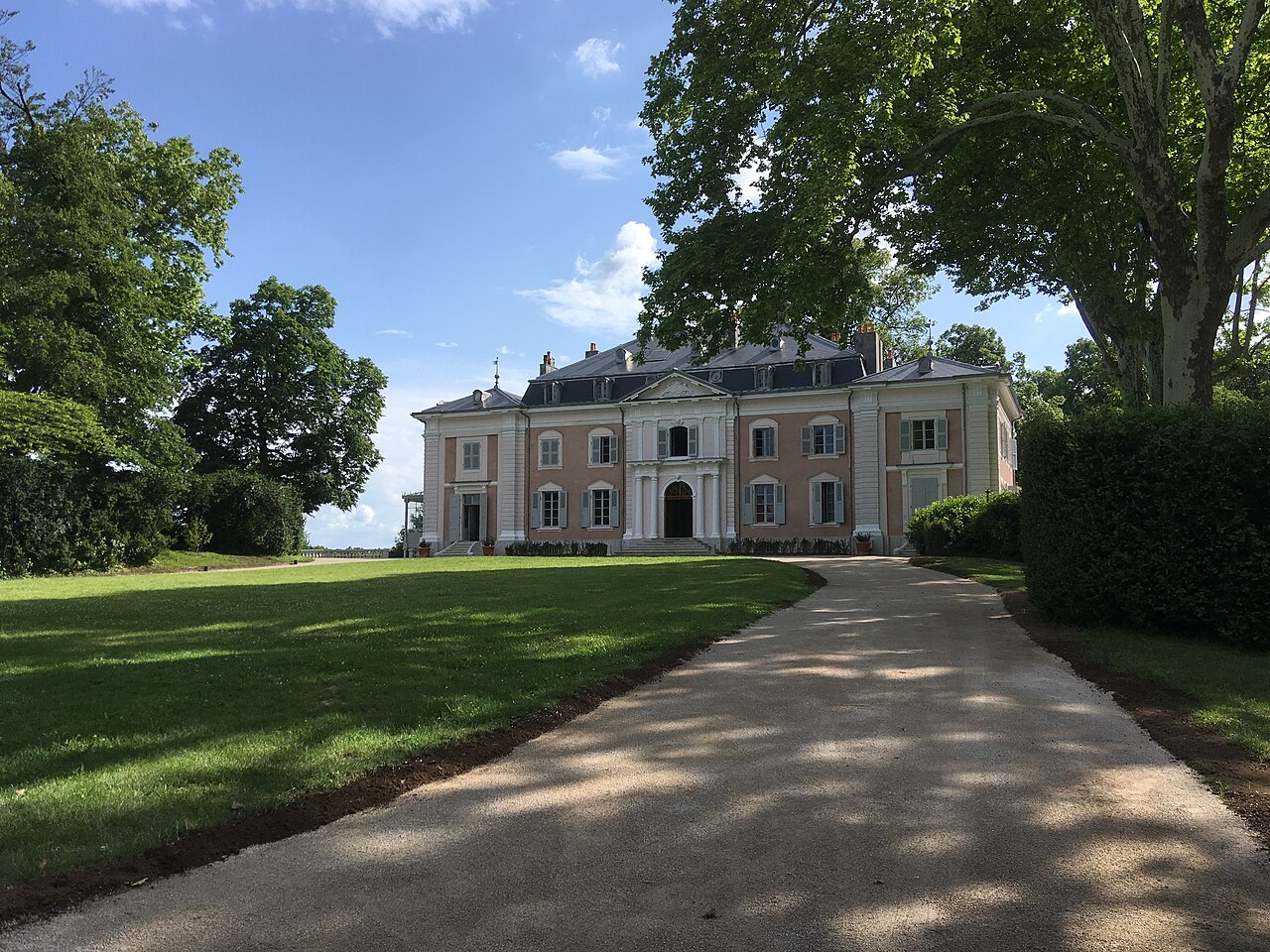
The Château de Voltaire stands prominently in Ferney-Voltaire, a town in the Ain department of France near the Swiss border and the city of Geneva. This 18th-century hill castle is renowned primarily for being the residence of the influential Enlightenment writer and philosopher Voltaire from 1761 to 1778. The château's location close to Switzerland allowed Voltaire to enjoy a degree of freedom from French censorship while remaining near the intellectual and political hubs of Europe. Historical background and Voltaire's residence The château was acquired by Voltaire in the early 1760s, and he undertook significant renovations to transform the existing manor into a comfortable and elegant home that reflected his status and tastes. During his residence, Voltaire expanded the estate, adding gardens and outbuildings, and made the château a center of intellectual activity. The castle was not only a private retreat but also a place where Voltaire entertained prominent figures of the Enlightenment and corresponded extensively with European leaders and thinkers. Architectural features and style The Château de Voltaire exemplifies post-Renaissance architecture with its restrained classicism and elegant proportions typical of the 18th century. The building is situated on a hill, which provides commanding views of the surrounding landscape, including the Jura Mountains and Lake Geneva. The château features a symmetrical façade, large windows, and a pitched roof, all characteristic of the period's refined aesthetic. The interior of the château was designed to combine comfort with the grandeur befitting a man of Voltaire's stature. Several rooms retain period furnishings and decoration that evoke the Enlightenment era. The grounds surrounding the château include formal gardens, which Voltaire himself helped to design, reflecting the period's interest in landscape architecture and nature. Preservation and current status Recognized for its cultural and historical significance, the Château de Voltaire was listed as a historical monument in 1958. This designation has helped preserve the château's structure and grounds. In 1999, the château was acquired by the French State, which has overseen its maintenance and public accessibility. Today, the château serves as a museum dedicated to Voltaire's life and work, attracting visitors interested in the Enlightenment and French history. The site offers guided tours, exhibitions, and educational programs that highlight Voltaire's contributions to literature, philosophy, and political thought. Voltaire's influence and legacy at the château The château is more than just an architectural landmark; it is a symbol of the Enlightenment and the intellectual freedom that Voltaire championed. His time at Ferney was marked by prolific writing, including plays, essays, and correspondence that shaped European thought. The château's preservation allows visitors to connect with this pivotal period and understand the environment that inspired Voltaire's work. The château as a cultural hub During Voltaire's residence, the château was a gathering place for notable figures such as diplomats, writers, and philosophers. This made it a vibrant center for exchanging ideas and advancing the causes of reason, tolerance, and reform. The castle's architecture and setting reflect the Enlightenment ideals of harmony, clarity, and order. Architectural legacy The château's design influenced later residences in the region, blending functional comfort with aesthetic elegance. Its preservation offers insight into 18th-century aristocratic life and the adaptation of traditional castle forms into more modern, refined homes.

Post-Renaissance (17th–18th c.)
Details
12 km
Chateau de Tournay — Switzerland castle

Chateau de Tournay

, Switzerland

Chateau de Tournay, located in the municipality of Pregny-Chambésy in the Canton of Geneva, Switzerland, is a notable example of a late-medieval hill castle. Classified as a Cultural Property of National and Regional Significance, this castle offers a fascinating glimpse into the region's turbulent history and architectural evolution. Origins and early history The exact origins of Chateau de Tournay remain somewhat obscure due to the absence of contemporary written records. It is generally accepted that the castle was constructed in the 15th century, a period marked by significant military and political strife in the region. The castle's strategic position atop a hill provided a commanding view of the surrounding landscape, typical of hill castles designed for defense and surveillance during the late medieval period. Architectural features and layout The castle's architecture reflects the defensive priorities of its time. Its stone walls and battlements were built to withstand sieges and attacks. The structure includes a central keep or donjon, which served as the last line of defense and the residence of the lord. Surrounding the keep, the castle likely featured a courtyard enclosed by curtain walls, with towers at key points to provide flanking fire against attackers. While detailed architectural plans are not widely documented, typical features of such castles include narrow arrow slits for archers, a fortified gatehouse, and possibly a moat or natural defensive barriers enhanced by man-made fortifications. Historical events and ownership In 1583, the castle came under the ownership of the Brosses family. The late 16th century was a tumultuous era for the region, and in 1590, the castle suffered significant damage when it was burned and pillaged by Genevan soldiers. This event reflects the ongoing conflicts between local powers during the period. A notable chapter in the castle's history began in 1758 when the famous Enlightenment writer and philosopher Voltaire acquired the castle and its countal title under a lifetime lease. Voltaire used the castle as a venue for theatrical performances, which, while culturally significant, caused friction with the local populace who disapproved of these activities. This tension illustrates the complex social dynamics of the time. Following the upheavals of the French Revolution, the castle was seized and subsequently sold in 1794. This transfer marked a shift from aristocratic to private ownership, a common fate for many such estates in post-revolutionary Europe. In the 20th century, the castle was purchased by Alfred Baur, a noted merchant and collector, in 1915. After his death, ownership passed to the Baur Foundation, which maintained the property until 2009. Since then, it has been privately owned, ensuring its preservation and continued significance. Significance and preservation Today, Chateau de Tournay stands as a well-preserved example of a late-medieval hill castle in Switzerland. Its classification as a Cultural Property of National and Regional Significance highlights its importance in Swiss heritage. The castle's survival through centuries of conflict, ownership changes, and social transformation makes it a valuable site for understanding regional history and medieval architecture. The castle's architectural features, including its defensive walls, towers, and possible remnants of the keep, provide insight into the military engineering of the period. Its association with prominent historical figures like Voltaire adds cultural depth, linking the site to broader European intellectual history. Visiting Chateau de Tournay While the castle is privately owned and not regularly open to the public, its exterior and surrounding landscape can be appreciated from nearby vantage points in Pregny-Chambésy. The region itself offers a rich context of Swiss history and natural beauty, making it a worthwhile destination for enthusiasts of medieval architecture and history. Visitors interested in the castle's history can explore local archives and museums in Geneva, which provide additional context on the castle's role in regional conflicts and its cultural significance during the Enlightenment. Nearby attractions The city of Geneva, with its historic old town and numerous museums. The nearby Lake Geneva, offering scenic views and recreational opportunities. Other medieval sites in the canton, providing a broader understanding of the area's heritage.

Late Medieval (14th–15th c.)
Details