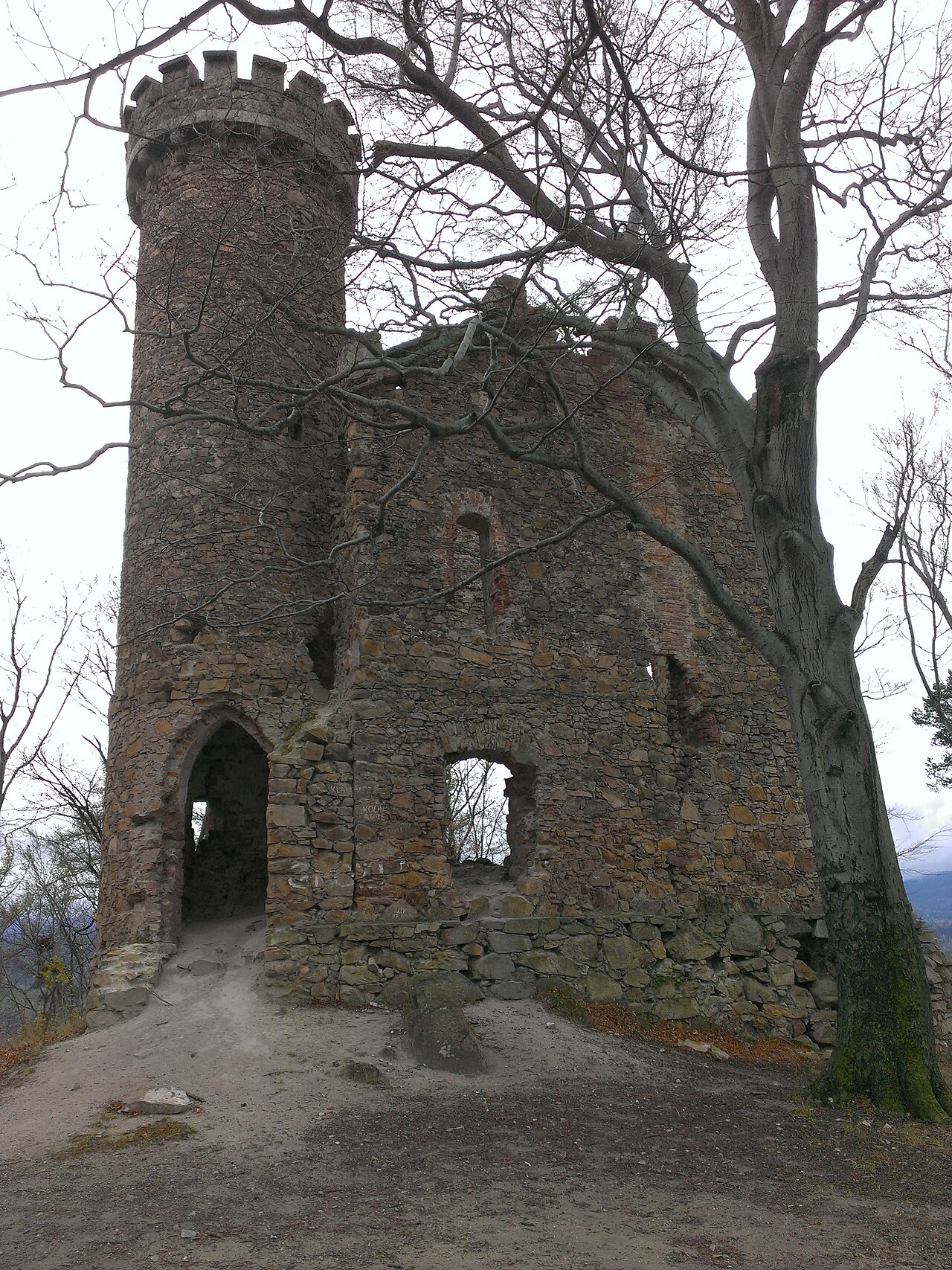
Czarne Castle stands as a testament to the turbulent history of northern Poland, reflecting the region's strategic importance from the High Medieval period through the early modern era. Located in the town of Czarne, the castle's origins date back to the 13th century, with the first written mention in 1305. Initially a ducal possession, it later became a significant stronghold and noble residence shaped by various ruling families and the shifting political landscape of Pomerania.
Early history and foundation
The settlement of Czarne originated in the 13th century, with documented ownership by the ducal house before passing to the knight Gotsche II Schoff in 1384 through a grant by Duchess Agnieszka, widow of Duke Bolko II the Small of Świdnica. The Schoff family established their lineage here, with Caspar I Schoff founding the Karpnicka line. Upon his death in 1534, his estate was divided among his five sons, with the eldest, Watzal the Elder, receiving Czarne and initiating the construction of a manor house intended as the family seat.
Architectural development of the manor house
The initial manor was a modest rectangular building measuring approximately 29 by 30 meters, surrounded by a stone curtain wall and a water-filled moat. Along the southern wall, a one-story residential building extended 14 by 30 meters. The southern curtain wall featured a gatehouse designed as a shell tower open towards the courtyard, projecting beyond the wall line with a square plan. Later modifications extended and heightened the gatehouse to the southeast, creating a short eastern wing.
In 1559, Watzal's son Caspar expanded the manor into a four-winged complex enclosing an inner courtyard. The original southern residential building was demolished and rebuilt outside the southern curtain wall, with a tower placed at its western end. The other three two-story wings were constructed inside the curtain walls, reducing the courtyard to 11 by 14 meters. A gallery supported by wooden posts ran along the courtyard's upper level. The eastern gatehouse wing was extended northward, forming a two-tract layout. The main gate was relocated to the southern wing, adorned with a Renaissance portal.
Ownership changes and decline
The Schoff family branch in Czarne died out in 1594, after which the estate passed to another family until 1601. Friedrich von Nimptsch acquired it, and his grandson Ernst sold the manor and village to the town of Jelenia Góra in 1679. The property remained municipally owned until 1945, undergoing few significant changes except the demolition of the eastern gatehouse wing after a fire in 1883. Post-World War II, the manor housed a state agricultural enterprise (PGR), which unfortunately led to its deterioration.
In 1991, the town transferred the manor to the Foundation of Ecological Culture, which undertook renovations funded by the European Union. The manor was repurposed as the Euroregion Nysa Training and Conference Center, hosting cultural events, exhibitions, and a restaurant. However, administrative changes in 2011 triggered disputes over management, resulting in a period of neglect. Recent legal resolutions offer hope for revitalizing this historic site.
Czarne castle: teutonic fortress and strategic role
Distinct from the manor house, the original Czarne Castle was constructed between 1395 and 1403 by the Teutonic Knights on a small hill by the river Czernica (formerly Czarna). This hill castle guarded the western border of the Teutonic Order's Człuchów commandery and controlled a vital route connecting Western and Gdańsk Pomerania. Built on a trapezoidal plan, it featured a stone curtain wall made from local stone, an inner residential building abutting the wall, and a tower in the southern corner. The entrance, likely a gate tower, was located on the southeast side. The castle was surrounded by a water-filled moat and possibly earthworks.
Later expansions in the 15th century are difficult to reconstruct due to terrain alterations. The castle played a pivotal role during the Polish-Teutonic conflicts. After the 1410 Battle of Grunwald, King Władysław Jagiełło granted the castle and town to Duke Bogusław VIII of Pomerania, though it soon reverted to the Teutonic Knights. In 1454, during the Thirteen Years' War, Polish forces captured the castle, which was subsequently handed to Duke Eric II of Pomerania. However, a Teutonic counterattack recaptured and plundered it, resulting in the death of the Polish commander Konrad Massow.
The Second Peace of Toruń in 1466 incorporated Czarne into the Kingdom of Poland as a starosty seat. In the mid-16th century, the Konarski brothers expanded the castle northward, adding a residential building and a tower, possibly a bastion. The castle witnessed battles during the Polish-Swedish wars, including a 1627 victory by Polish forces under Hetman Koniecpolski and destruction by Swedish troops in 1659 during the Deluge.
Later history and current remains
Following the First Partition of Poland in 1772, Czarne fell under Prussian control. The castle lost military significance and fell into disrepair. In 1830, Prussian authorities ordered the demolition of the castle ruins. Mid-19th century construction of a neo-Gothic palace on the castle hill and post-World War II renovations further damaged remaining castle structures.
Today, only modest remnants of the castle survive. These include foundational sections of the curtain walls, except for the northern wall, and a southern corner tower standing up to 6 meters high. This tower, cylindrical on the exterior and square inside, is built of stone and brick. Traces of the moat are still visible along the eastern and southern sides. The site offers a glimpse into the layered history of military architecture and regional power struggles in Pomerania.
Architectural significance and cultural heritage
Czarne Castle and manor house illustrate the evolution of defensive and residential architecture in Poland from the High Medieval through the Renaissance and into the 19th century neo-Gothic revival. The Teutonic fortress exemplified typical border fortifications with strategic placement, robust stone walls, and water defenses. The manor house reflects noble residential trends with Renaissance stylistic elements such as the portal and courtyard galleries.
The site’s layered history—from Teutonic stronghold to Polish royal starosty, noble family seat, municipal property, and modern cultural center—makes it a valuable cultural and historical landmark. Ongoing preservation efforts aim to restore its architectural heritage and revitalize its role as a community hub.
Frequently asked questions (FAQ)
- How do I get to Czarne Castle?
- Czarne Castle is located in the picturesque town of Czarne, Poland. You can reach it by car or public transport, with frequent bus services connecting it to nearby cities. If you are traveling by car, ample parking is available near the castle.
- What is the historical significance of Czarne Castle?
- Czarne Castle dates back to the 14th century and has been a pivotal structure in the region's history. It served as a defensive fortress and has witnessed various historical events, making it a fascinating site for history enthusiasts. The castle reflects the architectural style of the time and tells the story of the local nobility.
- When was Czarne Castle built?
- Construction of Czarne Castle began in the mid-14th century, with various renovations and expansions occurring over the centuries. The castle's architecture showcases the evolution of defensive structures from the medieval period to the Renaissance. It stands today as a testament to the region's rich history.
- Can I take a guided tour of Czarne Castle?
- Yes, guided tours of Czarne Castle are available for visitors who want to learn more about its history and architecture. These tours are led by knowledgeable guides who provide fascinating insights into the castle's past. It’s advisable to check the schedule and book in advance during peak tourist seasons.
- Why is Czarne Castle a popular tourist attraction?
- Czarne Castle is popular due to its stunning architecture and rich history, making it an ideal destination for tourists and history buffs alike. The castle's beautiful surroundings and well-preserved structures provide a captivating experience. Additionally, it serves as a cultural hub, hosting various events throughout the year.
- Is it possible to visit Czarne Castle year-round?
- Yes, Czarne Castle is open for visitors year-round, although opening hours may vary by season. It is best to check the official website or local tourist information for current hours and any seasonal events. Visiting during the warmer months allows you to enjoy the surrounding gardens and scenic views.
- What are the ticket prices for Czarne Castle?
- Ticket prices for Czarne Castle are typically affordable, with discounts available for students and seniors. The cost may vary depending on whether you opt for a guided tour or a self-guided visit. It’s advisable to check the official website for the most current pricing and any special offers.
- What is the best time to visit Czarne Castle?
- The best time to visit Czarne Castle is during the spring and summer months when the weather is pleasant, and the gardens are in full bloom. However, autumn also offers beautiful scenery with colorful foliage. Visiting during weekdays can help you avoid the larger crowds typically seen on weekends.
- Are there any nearby attractions to Czarne Castle?
- Yes, there are several nearby attractions, including beautiful parks, lakes, and other historical sites. The surrounding area offers hiking and biking trails that provide stunning views of the Polish countryside. Visitors can also explore traditional local eateries and shops to experience the local culture.
Information
Loading map...
Visitor reviews
No reviews yet. Been here? Write the first review and help other travelers!
Write the first reviewVisited this castle? Share your experience
Your review helps other travelers and adds first-hand knowledge to our encyclopedia.