Czarne Castle
Czarne Castle is a significant historical fortress located in the town of Czarne, Poland. Constructed by the Teutonic Order between 1396 and 1403, it was strategically positioned to protect vital trade and military routes connecting Człuchów and Szczecinek, as well as to defend the border with the Duchy of Western Pomerania. This castle formed part of a defensive network including fortifications at Biały Bór and Lędyczek. It also served as the residence of a Teutonic komornik, an official responsible for local administration.
Medieval origins and teutonic significance
The castle's original design followed a trapezoidal layout with uneven sides, a common feature in medieval military architecture aimed at maximizing defensive capabilities. The shortest side, measuring 38 meters, faced the town and was protected by a deep, water-filled moat instead of strong walls. A large square tower with nine-meter sides extended beyond the main defensive wall, providing enhanced surveillance and defense over the town approaches.
The eastern wall, running 80 meters parallel to the road to Bytów, housed the main entrance gate, allowing controlled access to the fortress. In the northern corner stood a rectangular tower opening inward to the courtyard, serving defensive and residential functions. Attached to the northwest side was the outer bailey, a secondary courtyard measuring approximately 65 by 60 meters, surrounded by its own walls. By the 16th century, twelve houses were constructed within this bailey, reflecting the castle's evolving role from a purely military stronghold to a residential and administrative center.
Role in regional conflicts and politics
Following the Polish-Teutonic War of 1410, the castle briefly came under the control of Duke Bogusław VIII of Pomerania, granted by King Władysław Jagiełło of Poland. However, the duke could not maintain control, and the castle reverted to the Teutonic Order. In 1448, Grand Master Konrad von Erlichshausen stayed at the castle, underscoring its importance within the Order's territory. The fortress also hosted diplomatic negotiations, such as the 1454 talks between the Teutonic Knights and Duke Eric I regarding mercenary forces.
During the Thirteen Years’ War (1454–1466), Czarne Castle was defended twice by forces loyal to the Prussian Confederation, a coalition supporting the Polish king against the Teutonic Knights. The castle withstood sieges by 1,500 mercenaries and later 1,900 soldiers, demonstrating its robust fortifications and strategic value.
Transition to polish sovereignty and architectural evolution
The Second Peace of Toruń in 1466 transferred Czarne Castle to Polish sovereignty. It became the seat of a starosta, a royal official managing local affairs. Although the castle's military importance declined, significant architectural additions were made in the 16th century. Starosta Mikołaj Konarski constructed a wooden two-story palace, stables, and outbuildings within the castle grounds, signaling a shift toward residential use.
Later in the 16th century, an octagonal bastion tower was added near the river on the northeastern side of the outer bailey. This bastion reflected advances in military architecture, adapting the fortress to the era of artillery warfare.
Sieges and military engagements in the early modern period
The castle's strategic position made it a target during the early 17th century conflicts. In 1626, Swedish forces captured Czarne Castle after a siege, overcoming the defenses held by the starosta Sapieha. However, Polish troops recaptured the fortress the following year after winning a nearby battle. The Swedes occupied the castle again in 1659 under Adolf John, brother of King Charles X Gustav.
Following the Treaty of Oliwa in 1660, hostilities ceased, and the earlier wooden manor was replaced by a Baroque palace constructed in the late 17th century by starostas from prominent Polish families such as the Sapiehas and the Wejhers.
19th-century transformations and neo-gothic reconstruction
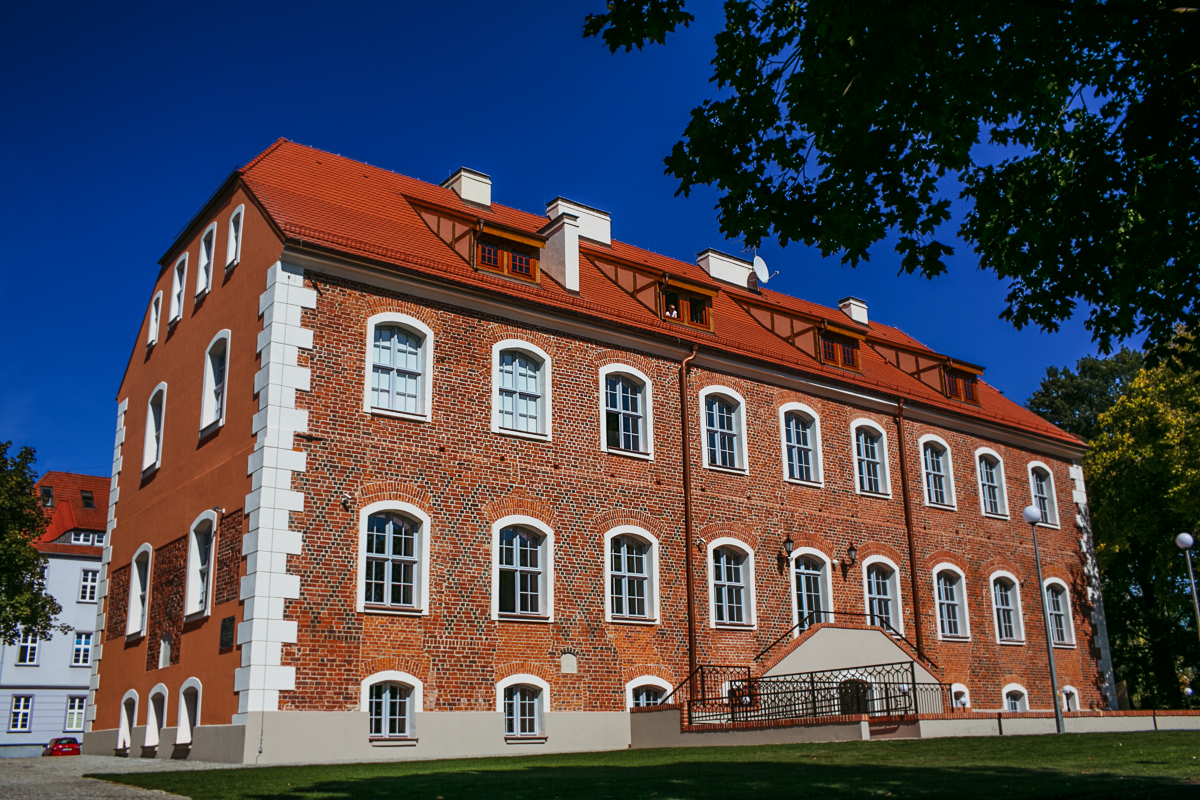
After the partitions of Poland placed the region under Prussian control, much of the original medieval castle was dismantled around 1830. Between 1847 and 1850, the von Livonius family built a new Neo-Gothic palace on the site, which remains a prominent feature today. This palace reflects the 19th-century Romantic revival of medieval architectural forms, characterized by pointed arches, decorative tracery, and battlement motifs.
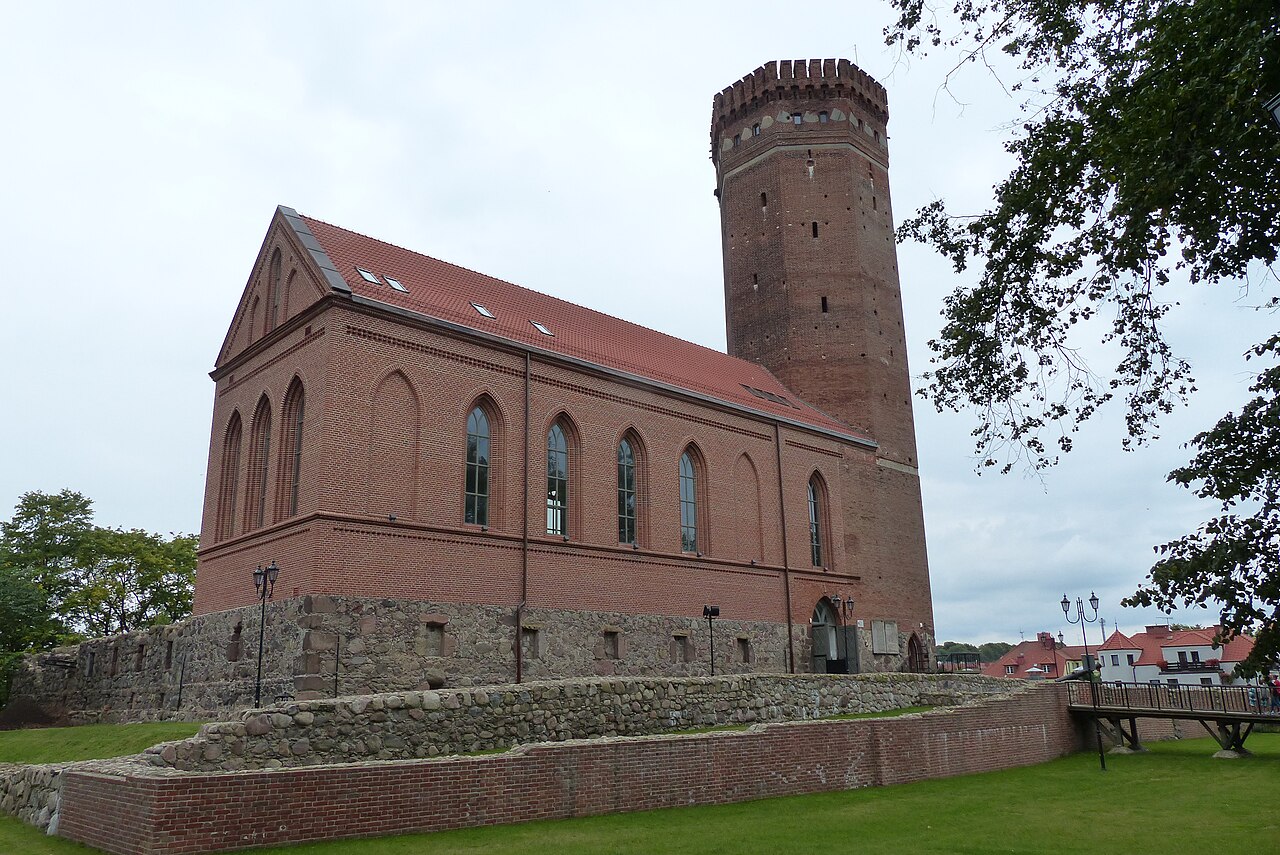
In 1961, during the era of the Polish People’s Republic, a 75-meter section of the castle’s northeastern walls was demolished, further reducing the medieval fabric. Today, only fragments of the original defensive walls survive, providing valuable insights into the castle's medieval construction and layout.
Architectural features and surviving elements
The castle's trapezoidal plan was designed to maximize defensive coverage, with a deep moat protecting the town-facing side. The large square tower extending beyond the curtain wall allowed defenders to monitor and repel attacks from the town side. The main gate on the eastern wall controlled access along the road to Bytów, a critical route for trade and military movements.
The outer bailey served as a functional space for residential and administrative buildings, reflecting the castle's adaptation over centuries. The octagonal bastion tower near the river is a notable late addition that illustrates the castle's response to evolving military technology, particularly the increased use of artillery.
While the original medieval castle largely disappeared in the 19th century, the surviving walls and the Neo-Gothic palace constructed by the von Livonius family offer a layered historical narrative. The site today represents a blend of medieval military architecture and 19th-century revivalist design.
Cultural and historical significance
Czarne Castle stands as a testament to the complex history of the Pomeranian region, reflecting the shifting control between the Teutonic Order, Polish crown, and Prussian authorities. Its architectural evolution from a medieval fortress to a Renaissance residence and later a Neo-Gothic palace encapsulates broader trends in European castle development.
The castle's role in significant historical events, including the Polish-Teutonic conflicts, the Thirteen Years’ War, and the Swedish invasions, underscores its strategic importance over several centuries. Today, the surviving structures and archaeological remains provide valuable opportunities for historical study and tourism, contributing to the cultural heritage of northern Poland.
Frequently asked questions (FAQ)
- What is the historical significance of Czarne Castle?
- Czarne Castle has a rich history dating back to the 14th century, serving as a strategic stronghold in the region. It reflects the architectural styles of various periods and has witnessed numerous historical events, making it an important cultural landmark in Poland.
- When was Czarne Castle built?
- Czarne Castle was originally constructed in the late 1300s, with various renovations and expansions taking place throughout the centuries. Its enduring structure showcases the evolution of defensive architecture in Poland.
- What are the opening hours for Czarne Castle?
- Czarne Castle is typically open to visitors from 10 AM to 6 PM during the summer months, and from 10 AM to 4 PM in the winter. It's advisable to check the official website for any changes in hours due to special events or holidays.
- Can I purchase tickets online for Czarne Castle?
- Yes, tickets for Czarne Castle can be purchased online through the official website or at the castle entrance. Online purchases can help you skip the queue and ensure a smoother entry, especially during peak tourist seasons.
- Is Czarne Castle accessible for visitors with disabilities?
- Czarne Castle is committed to providing accessibility for all visitors. While some areas of the castle may have limited access due to their historical nature, there are efforts in place to accommodate those with mobility challenges.
- When is the best time to visit Czarne Castle?
- The best time to visit Czarne Castle is during the late spring and early autumn months when the weather is mild and pleasant. Additionally, these seasons offer beautiful surroundings, making your visit more enjoyable.
- What nearby attractions can I explore while visiting Czarne Castle?
- While visiting Czarne Castle, you can explore the picturesque town of Czarne and nearby natural parks that offer hiking and outdoor activities. The region is also home to several other historical sites that provide a deeper understanding of the area's heritage.
- How do I get to Czarne Castle from major cities in Poland?
- Czarne Castle is accessible by car and public transportation from major cities such as Gdańsk and Szczecin. Regular bus services connect these cities to Czarne, making it convenient for visitors to reach the castle.
- What are the ticket prices for Czarne Castle?
- Ticket prices for Czarne Castle are generally affordable, with discounts available for students and seniors. Family packages are also offered, making it a budget-friendly option for visitors looking to explore the castle and its grounds.
Information
Loading map...
Visitor reviews
No reviews yet. Been here? Write the first review and help other travelers!
Write the first reviewVisited this castle? Share your experience
Your review helps other travelers and adds first-hand knowledge to our encyclopedia.