Cyriaksburg Fortress — Germany castle

Cyriaksburg Fortress

Cyriaksburg Fortress in Erfurt: a bastioned late medieval fortress with historic towers
Erfurt, Germany
Late Medieval (14th–15th c.)
Partially Preserved

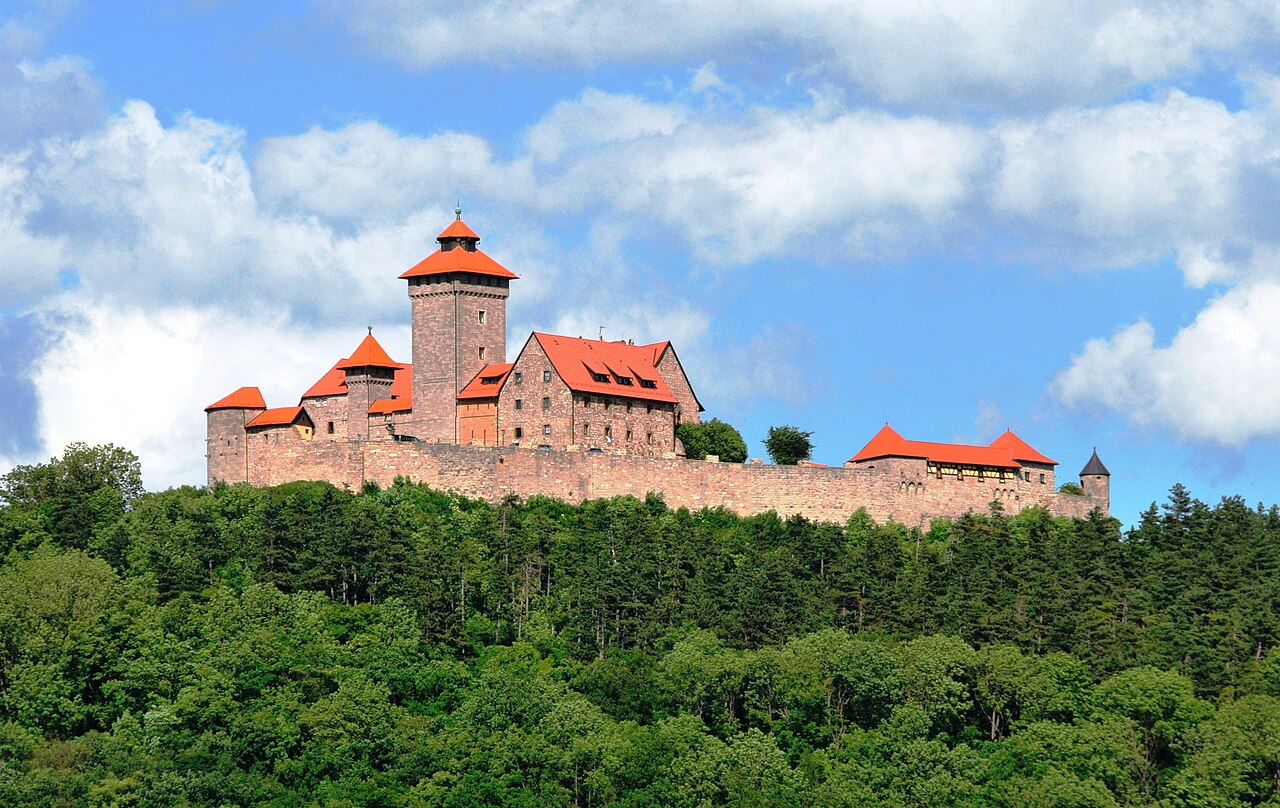
The Cyriaksburg Fortress stands prominently on a hill outside the historic city gates of Erfurt, Germany. This late medieval bastioned fortress began construction in 1480 and was completed over a century later around 1604. Its foundation forms a distinctive rectangular layout with unequal sides, a typical design feature for fortifications adapting to the terrain and defensive needs of the period.

Architectural features and defensive structures

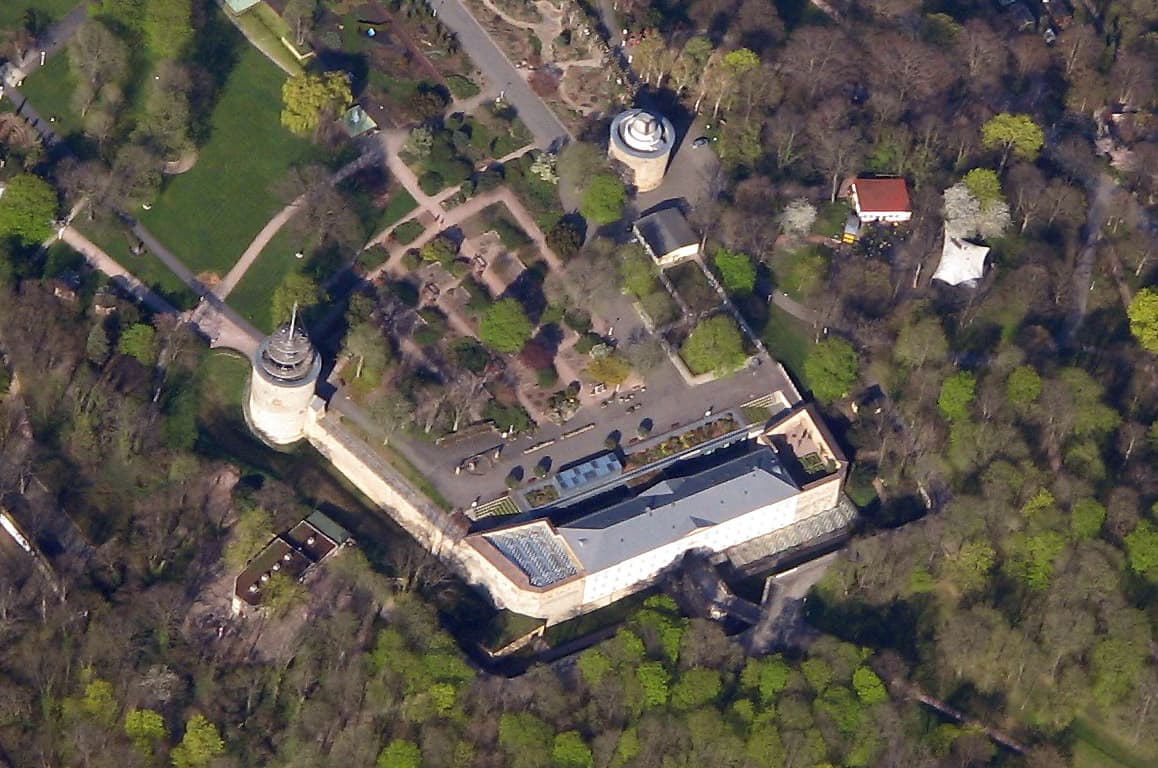
The fortress is characterized by its two strong round towers dating from 1528, which remain well preserved to this day. One tower functions as a viewing platform, offering panoramic views of the surrounding landscape, while the other houses a modern observatory. The presence of these towers reflects the military architectural style of the late medieval period, emphasizing robust, circular bastions to better deflect artillery fire.

Part of the original moat surrounding the fortress is still visible, underscoring the defensive measures employed to protect the stronghold. The moat, combined with the bastioned walls, would have formed a formidable obstacle to attackers during the fortress's active military use.

One of the fortress’s most notable features is its underground well, approximately 40 meters deep, constructed around 1530. This well provided a reliable source of drinking water and was crucial for firefighting efforts within the fortress. The brick vaults above the well date from 1829, indicating continued maintenance and adaptation of the fortress infrastructure into the 19th century.

Historical context and military significance

During the Thirty Years' War (1618–1648), the Cyriaksburg Fortress was occupied by Swedish forces from 1631 to 1649. This period was marked by intense military activity in the region, and the fortress played a strategic role in the defense of Erfurt. It is recorded that the renowned physicist Otto von Guericke, famous for his work on vacuum and air pressure, contributed to fortifying parts of the castle during this time, highlighting the fortress's importance in military engineering advancements.

In the early 19th century, specifically between 1824 and 1830, the fortress underwent significant reconstruction under Prussian control. The Prussians converted Cyriaksburg into a modern fortress, adapting it to the evolving military technologies and strategies of the period. However, parts of the fortress were dismantled between 1874 and 1900, reflecting changes in military needs and urban development.

Later use and preservation

Following the dismantling of some fortifications, the surrounding areas of Cyriaksburg Fortress were gradually transformed into landscaped gardens with shrubs and flowers, making the site accessible and inviting to the public. Today, the fortress serves a cultural function rather than a military one.

The interior rooms of Cyriaksburg Fortress now house the permanent exhibition of the German Museum for Horticulture. This museum showcases the history and art of gardening, linking the fortress’s historical transformation with its current role in public education and cultural preservation.

Architectural style and condition

The fortress exhibits features typical of a bastioned fortress from the late medieval period, with adaptations made during the 19th century under Prussian influence. Its current condition is best described as partially preserved, with significant elements like the towers, moat, and well still intact. The site offers valuable insights into the evolution of military architecture from the late medieval era through the early modern period.

Visiting Cyriaksburg Fortress

Visitors to Erfurt can explore the fortress grounds, including the viewing tower and the museum exhibitions. The site provides a unique combination of historical military architecture and horticultural heritage, appealing to a wide range of interests. The preserved well and the observatory add to the educational value of the visit.

Frequently asked questions (FAQ)

What is the historical significance of Cyriaksburg Fortress?
Cyriaksburg Fortress, located in Erfurt, Germany, is a remarkable example of medieval military architecture. Built in the 14th century, it served as a strategic defense point and reflects the political and military history of Thuringia. The fortress played a key role during various conflicts and has been a prominent landmark in the region for centuries.
When was Cyriaksburg Fortress built?
Construction of Cyriaksburg Fortress began in the 14th century, specifically around the year 1350. It was completed in subsequent decades and has undergone several renovations throughout its history. The fortress stands as a testament to the architectural styles of the medieval period and continues to attract visitors today.
How do I get to Cyriaksburg Fortress?
Cyriaksburg Fortress is conveniently located in the heart of Erfurt, easily accessible by public transport. Visitors can take trams or buses that connect to the city center, followed by a short walk to the fortress. There are also parking facilities nearby for those traveling by car.
What are the opening hours for Cyriaksburg Fortress?
Cyriaksburg Fortress is open to visitors year-round, with varying hours depending on the season. Typically, the fortress opens at 10 AM and closes between 5 PM and 7 PM, depending on the time of year. It's advisable to check the official website for the most current hours before planning your visit.
Can I buy tickets in advance for Cyriaksburg Fortress?
Yes, tickets for Cyriaksburg Fortress can be purchased in advance online, providing a convenient option for visitors. This can help you avoid long lines and ensure entry on busy days. Additionally, there are options for guided tours that can be selected at the time of ticket purchase.
Is it possible to explore the interior of Cyriaksburg Fortress?
Yes, visitors can explore the interior of Cyriaksburg Fortress, which includes various historical exhibits and displays about its significance. Guided tours are available, offering insights into the fortress's architecture and history. Self-guided exploration is also encouraged, allowing guests to enjoy the site at their own pace.
What is the best time to visit Cyriaksburg Fortress?
The best time to visit Cyriaksburg Fortress is during the spring and early autumn months when the weather is mild and pleasant. Additionally, these seasons tend to attract fewer tourists, allowing for a more enjoyable experience. Summer can be busy, so planning your visit during weekdays may help avoid crowds.
Are there any nearby attractions to visit while in Erfurt?
Yes, Erfurt is home to several nearby attractions, including the famous Erfurt Cathedral and the Krämerbrücke bridge. The city boasts a rich history and charming medieval architecture, making it perfect for a day of exploration. Consider combining your visit to Cyriaksburg Fortress with a stroll through the historic old town to enhance your experience.
What are the ticket prices for Cyriaksburg Fortress?
Ticket prices for Cyriaksburg Fortress are generally affordable, with discounts available for students and seniors. As of the latest information, adult tickets are priced around €5, while children under a certain age can enter free of charge. It's advisable to check their official website for any seasonal promotions or changes in pricing.

Photo gallery

Cyriaksburg Fortress
Click to view

Photo by TomKidd•CC BY-SA 3.0

1 photo • Click any image to view in full screen

Information

Bastioned Fortress

Current owner

German Museum for Horticulture

Loading map...

Visitor reviews

No reviews yet. Been here? Write the first review and help other travelers!

Write the first review

Visited this castle? Share your experience

Your review helps other travelers and adds first-hand knowledge to our encyclopedia.
Write a review

(5/5)

0/2000 characters

Your review will be visible after admin approval

Nearby castles

1.5 km
Petersberg Citadel — Germany castle

Petersberg Citadel

Erfurt, Germany

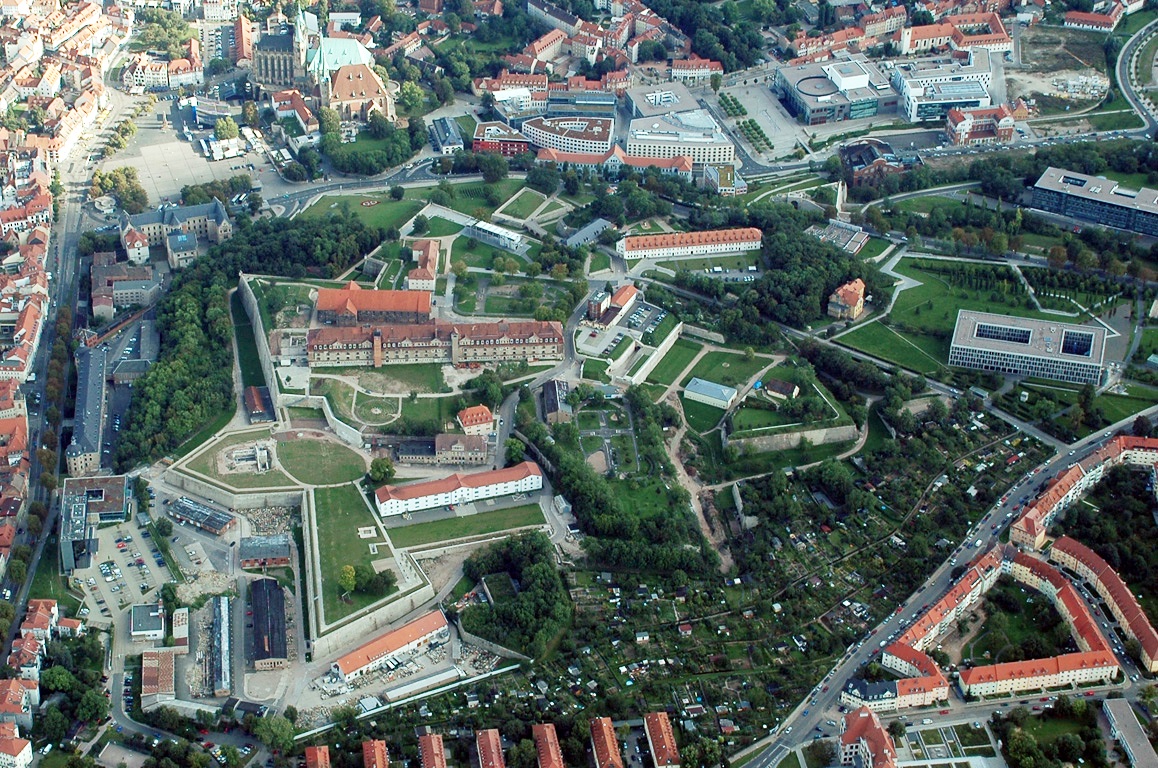
Petersberg Citadel (German: Zitadelle Petersberg) is a prominent 17th-century bastioned fortress located on the Petersberg hill in Erfurt, central Germany. It stands as one of the largest and best-preserved town fortresses in Europe, covering an area of approximately 36 hectares and enclosed by over two kilometres of stone walls. This extensive fortification reflects the military architectural advancements of the Renaissance period and the Baroque era, combining strategic design with imposing scale to defend the city and control the surrounding region. Historical background and strategic importance The construction of Petersberg Citadel began in 1665 under the governance of the Electorate of Mainz, a significant ecclesiastical principality within the Holy Roman Empire. The site was originally occupied by a medieval Benedictine monastery dating back to the 12th century, remnants of which influenced the early phases of the fortress's development. The citadel's location on a hill provided a commanding vantage point over Erfurt and the surrounding landscape, making it a critical military asset through multiple regimes. Over the centuries, Erfurt and the citadel came under the control of various powers including Sweden, Prussia, Napoleonic France, the German Empire, Nazi Germany, and the Soviet Union during the post-World War II occupation. Each of these regimes contributed to the fortress’s evolution, adapting its defenses to contemporary military needs and technologies. Architectural features and fortification design The Petersberg Citadel is a prime example of a bastioned fortress, a style that emerged in the Renaissance and was widely adopted in the Baroque period to counter advances in artillery. Its design includes angular bastions projecting outward from the curtain walls, enabling defenders to cover adjacent walls with overlapping fields of fire, minimizing blind spots. The fortress’s extensive stone walls and deep moats enhanced its defensive capabilities. The fortress complex contains numerous military buildings such as barracks, powder magazines, and storage facilities. The former lower barracks (Untere Kaserne) now serve a civilian function as the archive for the Stasi Records Agency, illustrating the adaptive reuse of historic military architecture. One of the citadel’s notable features is its network of underground passageways, which provided protected movement for troops and supplies during sieges. These tunnels are accessible to visitors today and offer insight into the fortress’s operational logistics. The fortress bakery, built in 1832, has been restored to working order, demonstrating the daily life aspects of the garrison. Napoleonic era and later military use During the Napoleonic occupation from 1806 to 1814, the citadel was known by its French name, Citadelle Petersberg. Napoleon Bonaparte visited Erfurt multiple times, and the fortress underwent further development to strengthen its defenses. Despite these efforts, parts of the citadel sustained damage during the 1813 Battle of Erfurt, reflecting the turbulent military conflicts of the Napoleonic Wars. Following the Napoleonic period, the fortress remained in military use through the Prussian era, the German Empire, the Nazi regime, and the Soviet occupation after World War II. It was actively used for military purposes until 1963, marking nearly three centuries of continuous strategic importance. Restoration and public access since reunification Since the German reunification in 1990, Petersberg Citadel has undergone extensive restoration to preserve its historical and architectural integrity. The site is now open to the public as a historic monument and cultural venue. Visitors can explore the fortress’s vast courtyards, ramparts, and underground tunnels, gaining a comprehensive understanding of its military architecture and history. The citadel also hosts various cultural events and exhibitions, integrating its heritage into contemporary community life. Its preservation contributes to Erfurt’s rich historical landscape and serves as a tangible link to the city’s multifaceted past. Relationship with cyriaksburg citadel In addition to Petersberg Citadel, Erfurt is home to the smaller Cyriaksburg Citadel located to the south-west of the city center. Dating from 1480, this fortress now houses the German Horticulture Museum. During the Napoleonic period, a hidden trench was constructed to connect the two citadels, providing a secret defensive link. Remnants of this trench remain visible at Cyriaksburg Citadel, illustrating the strategic integration of Erfurt’s fortifications.

Renaissance (15th–17th c.)
Details
13.1 km
Wachsenburg Castle — Germany castle

Wachsenburg Castle

Amt Wachsenburg, Germany

Wachsenburg Castle stands as a remarkable example of a medieval hill castle in the heart of Thuringia, Germany. Originally constructed in the 10th century, this fortress has witnessed centuries of tumultuous history, architectural evolution, and cultural significance. Perched strategically on a hill near Arnstadt, it was initially established by the imperial abbey of Hersfeld to protect its lands during a period marked by feudal conflicts and territorial disputes. The castle’s long history is marked by phases of construction, destruction, and restoration. Notably, it was extensively rebuilt in the 17th and 19th centuries, incorporating neo-Romanesque and neo-Gothic architectural styles that reflect the tastes and defensive needs of those periods. Today, Wachsenburg Castle is well-preserved and serves multiple functions including a museum, hotel, and restaurant, welcoming visitors who come to explore its rich heritage and panoramic views. Early history and strategic importance Founded around 930 AD, Wachsenburg Castle was a vital stronghold for the imperial abbey of Hersfeld. The abbey’s intent was to secure its extensive landholdings in the region, which were vulnerable to raids and local feuds. The castle’s location on a hill provided a commanding view of the surrounding landscape, allowing its occupants to monitor and control key routes. Between 1090 and 1098, the castle was home to Abbot Friedrich of Hersfeld, who undertook restoration efforts to reinforce its defenses amid ongoing disputes. Around 1100, ownership transitioned from ecclesiastical to secular hands when the Landgraves of Thuringia took control, marking a significant shift in the castle’s role and governance. Medieval conflicts and ownership changes The castle first appears in written records in 1140, with a knight named Adelher von Wassenburg documented as its castellan. Earlier, in 1120, the fortress endured a siege aimed at expelling imperial knights who had become bandits, using the castle as a base for raids. This early incident highlights the castle’s role in regional power struggles. During the 12th and 13th centuries, Wachsenburg was embroiled in conflicts between rival imperial factions. It served as a refuge for the pro-Welf Archbishop of Cologne and changed hands multiple times. A notable event occurred in 1204 when Philip of Swabia captured the castle amid these disputes. From 1306, the castle came under the possession of the Schwarzburg-Blankenburg family. Count Günther XII initiated expansions and fortifications, enhancing the castle’s defensive capabilities. However, financial pressures led to its sale in 1366 to cover war debts. Robber baron era and military use In 1441, the castle was seized by the infamous robber baron Apel Vitzthum, who used it as a base for raiding merchants from Erfurt. The castle was besieged until 1451, when defenders successfully undermined the shield wall, forcing Vitzthum’s surrender. This episode underscores the castle’s strategic importance and robust defenses. Following this turbulent period, Wachsenburg Castle declined and fell into disrepair. In 1640, Duke Ernst I acquired the property with intentions to transform it into a palace. Notable improvements included the drilling of a deep well in 1651 to secure a reliable water supply, a critical feature for any fortress. The castle’s function evolved over the centuries, serving as a military prison and an orphanage. The last commandant died in 1856, marking the end of its military administrative role. 19th and 20th century renovations and museum development In 1861, the castle became home to a castellan and innkeeper, signaling a shift toward civilian use. Extensive renovations in the late 19th and early 20th centuries introduced neo-Romanesque and neo-Gothic architectural elements. These restorations prepared the castle to house a military and local history museum, supported by ducal patrons and local committees. The Hohenlohe Tower, a prominent bergfried or keep standing 30 meters tall, was inaugurated in 1905. Named after Prince Ernst II of Hohenlohe-Langenburg, it features a ceremonial hall on the ground floor and exhibition spaces above. Its gallery offers panoramic views through sixteen windows, making it a highlight for visitors. Between 1907 and 1913, additional defensive structures were added, including the artillery bastion Bastion Herzog Carl-Eduard and a powder tower built in 1910 for gunpowder storage. A decorative half-round defensive tower combining limestone and half-timbered construction was also added in 1913. Until 1918, the castle remained under the ownership of the Dukes of Saxe-Coburg and Gotha. In 1920, it became property of the state of Thuringia, which committed to its preservation and museum support. Role during world war ii and post-war period During World War II, Wachsenburg Castle served as a cultural depot, safeguarding art collections from Weimar. In April 1945, it was occupied by US troops and hosted a historic meeting between Generals Patton and Eisenhower. Soon after, Soviet forces took control. The post-war period saw the loss and confiscation of many museum collections. Remaining ethnographic and folk collections were displayed until the museum closed in 1962. Restoration efforts between 1964 and 1969 revitalized the castle, and a hotel and restaurant opened in 1966. Following German reunification, the castle returned to Thuringian ownership in 1991. Further restoration was undertaken, and in 2001 the castle was privatized. A small private museum reopened, and in 2003 the chapel of St. George was consecrated. That same year, the Ordo Militaris Teutonicus Levantis e.V., a self-styled secular knightly order, established its headquarters at Wachsenburg. The castle remains a significant historic site surrounded by a protected nature reserve. Architectural features and castle layout Upper castle and bergfried The core of Wachsenburg Castle is its irregular quadrangular upper castle, or citadel, consisting of three residential wings and the imposing Hohenlohe Tower. This tall, square bergfried serves as a dominant feature and was designed for both defense and ceremonial functions. The buildings are connected by robust stone walls enclosing a compact courtyard. The tower’s ground floor houses a ceremonial hall, while the upper floors serve as exhibition spaces. The top gallery’s sixteen windows provide sweeping views of the surrounding Thuringian landscape. Lower castle and defensive structures The lower castle, or outer bailey, envelops the upper castle on all sides except the northern wing. It is protected by a ring wall and historically contained essential support buildings such as warehouses, a smithy, soldiers’ quarters, and stables. Key defensive features include the main gate with a battlemented walkway and the Thörlein tower, which together create a fortified entrance and a closed inner courtyard. The artillery bastion Bastion Herzog Carl-Eduard and the powder tower reflect early 20th-century military adaptations. The half-round defensive tower added in 1913 combines limestone and half-timbered construction, primarily serving decorative purposes rather than practical defense. Water supply and other buildings A deep well drilled in 1651 near the castle gate reaches a depth of 93 meters, tapping into groundwater to provide a vital water source. Water was historically raised by a pedal wheel until 1912, underscoring the castle’s self-sufficiency during sieges and military use. Other notable structures include the Rittersaal or Knights’ Hall, the Neubau (New Building) dating from 1664, the commandant’s house, and the Arresthaus or prison house, which contains masonry fragments from the 12th century. Interior decoration and cultural heritage The castle’s interiors were extensively decorated by local artist Eduard Fiedler, who created 471 works including frescoes, portraits, and drawings. Although eight frescoes in the southern room of the Rittersaal were lost during the GDR era, photographic documentation from 1952 preserves their memory. The careful restoration of stone walls and battlements during the early 20th century and after German reunification has preserved the castle’s architectural integrity. Today, Wachsenburg Castle functions as a hotel and restaurant, with parts of the complex hosting private museum exhibitions, allowing visitors to engage with its rich history. Natural surroundings and conservation Wachsenburg Castle is surrounded by a protected nature reserve featuring steep, rugged slopes and diverse habitats. This environment supports rare species such as the blue-winged grasshopper, smooth snake, and adonis flower, highlighting the castle’s role not only as a historic monument but also as a guardian of natural heritage. The combination of cultural significance and environmental conservation makes Wachsenburg a unique destination for history enthusiasts and nature lovers alike, offering a rich experience that spans centuries of human endeavor and natural beauty.

Early Medieval (5th–10th c.)
Details
15.3 km
Burg Gleichen — Germany castle

Burg Gleichen

Wandersleben, Germany

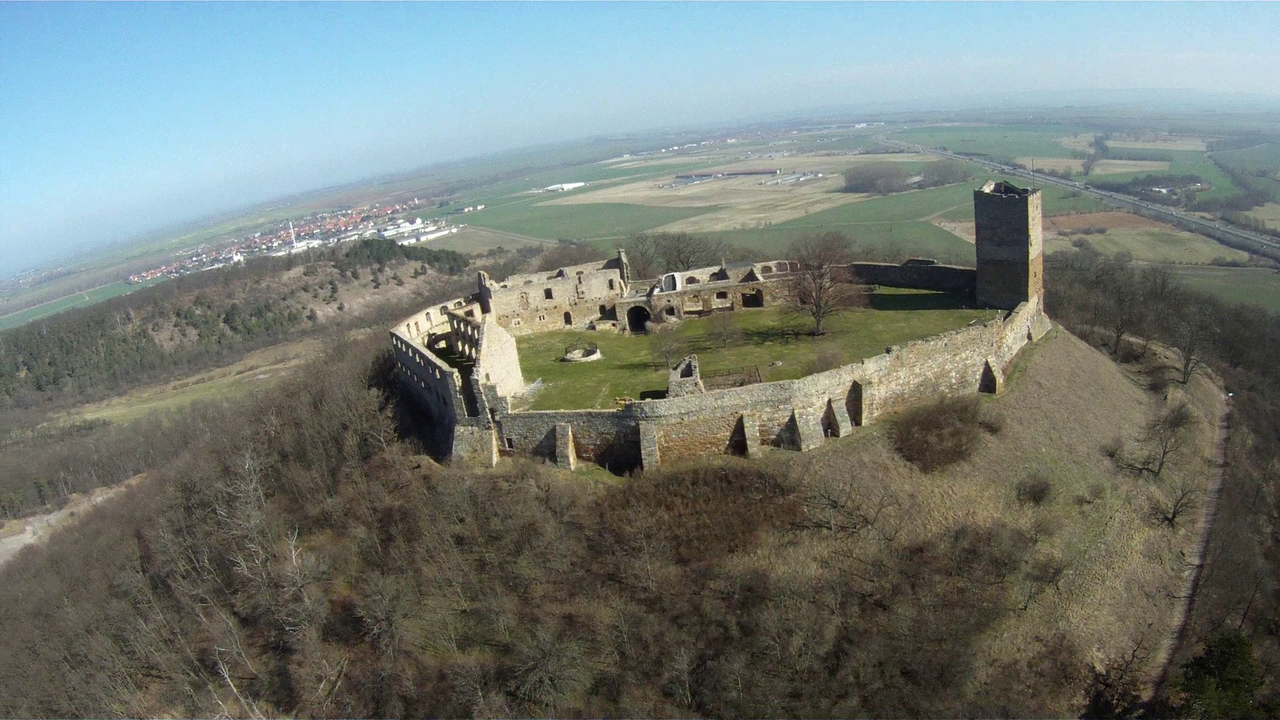
Burg Gleichen stands as a remarkable example of an early medieval hill castle located near the village of Wandersleben in the Thuringia region of Germany. This castle, dating back to the 10th and 11th centuries, offers a fascinating glimpse into the architectural and feudal history of the region during the early Middle Ages. Though now in a state of ruins, Burg Gleichen retains significant archaeological and historical importance, attracting scholars and visitors interested in medieval fortifications and German heritage. Historical background and significance The origins of Burg Gleichen trace back to the early medieval period, a time when hill castles were strategically constructed for defense and control over surrounding territories. It was built during the 10th to 11th centuries, a period marked by the consolidation of regional powers and the establishment of feudal domains in what is now central Germany. Burg Gleichen served as a stronghold for local nobility, overseeing important trade routes and providing protection against invasions and rival factions. Throughout its active use, the castle witnessed various historical events typical of medieval fortifications, including sieges, territorial disputes, and shifts in ownership. Its position on a hilltop provided a commanding view of the surrounding landscape, enhancing its defensive capabilities and symbolizing feudal authority. Architectural features and layout As a hill castle, Burg Gleichen was constructed on elevated terrain, utilizing the natural topography to maximize defense. The castle's design typically included a keep or donjon—a fortified tower that served as the last line of defense and the residence of the lord. Surrounding the keep were curtain walls with battlements, enclosing a courtyard that housed various auxiliary buildings such as stables, workshops, and living quarters for retainers. The ruins today reveal remnants of these defensive structures, including sections of the stone walls and foundations. Archaeological studies have identified traces of a gatehouse that controlled access to the castle, as well as defensive ditches or moats that further enhanced security. The use of local stone materials and early medieval masonry techniques is evident in the surviving remains. Defensive elements Burg Gleichen’s location on a steep hill naturally deterred attackers, while the constructed fortifications added layers of protection. The battlements allowed defenders to repel assaults, and the gatehouse served as a choke point for controlling entry. The castle’s design reflects typical early medieval military architecture focused on functionality and defense rather than elaborate ornamentation. Current condition and preservation Today, Burg Gleichen is classified as ruins, with only partial structures remaining visible. Despite its dilapidated state, the site is valued for its cultural heritage and offers insight into early medieval castle construction. Preservation efforts focus on stabilizing the remaining walls and preventing further decay, ensuring that visitors can safely explore the historic site. The ruins are accessible to the public, providing an evocative experience of medieval history amidst the natural beauty of the Thuringian landscape. Informational signage and guided tours often accompany visits, highlighting the castle’s architectural features and historical context. Location and surroundings Burg Gleichen is situated near Wandersleben, a small town in Thuringia, central Germany. The castle’s hilltop position offers panoramic views of the surrounding countryside, including forests, fields, and nearby settlements. The region is known for its rich medieval history and a number of other historic castles and ruins, making it a popular destination for cultural tourism and history enthusiasts. Visitors to Burg Gleichen can combine their trip with excursions to other nearby medieval sites, hiking trails, and local museums that showcase the heritage of Thuringia. Visiting information and tips While Burg Gleichen is primarily a ruin, it remains an important historical site open for exploration. Visitors should wear sturdy footwear due to uneven terrain and be prepared for outdoor conditions. The site is ideal for those interested in medieval architecture, archaeology, and German history. There are no extensive facilities on-site, so planning ahead for refreshments and transportation is advisable. The best time to visit is during the warmer months when the weather is conducive to hiking and outdoor sightseeing. Frequently asked questions What is Burg Gleichen? Burg Gleichen is an early medieval hill castle ruin located near Wandersleben in Thuringia, Germany, dating back to the 10th and 11th centuries. Can I visit the castle ruins? Yes, the ruins are accessible to the public and offer a glimpse into medieval fortification architecture amidst scenic surroundings. What remains of the castle today? Visitors can see remnants of the stone curtain walls, the gatehouse, and foundations of the keep, although much of the structure is in ruins. Is there an entrance fee? Typically, access to the ruins is free, but it is advisable to check local tourist information for any changes or guided tour fees. How do I get to Burg Gleichen? The castle is located near Wandersleben in Thuringia, accessible by local roads and hiking paths from the town. What is the best time to visit? Spring through early autumn offers the best weather for visiting and exploring the ruins comfortably. Are there other castles nearby? Thuringia is home to many medieval castles and ruins, making it a rich area for castle tourism and historical exploration.

Early Medieval (5th–10th c.)
Details