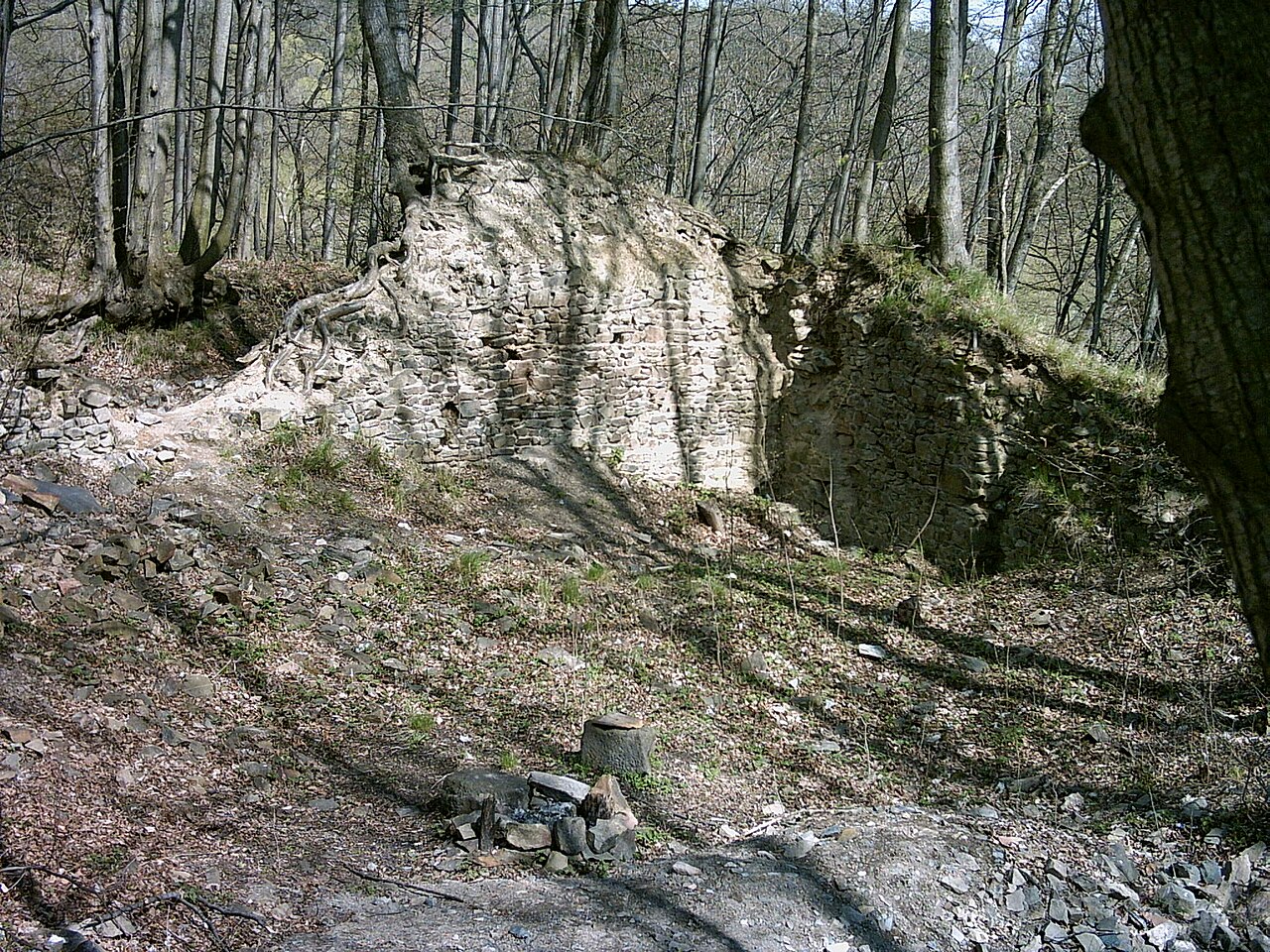
Cvilin
Cvilin Castle stands as a significant historical monument atop the 432-meter hill of Cvilin in Czechia. These ruins of a Gothic castle represent a crucial piece of medieval fortification history in the region. The castle was likely established in the early 13th century under the patronage of the Czech Przemyslid dynasty as a royal stronghold, with the first documented mention dating back to 1238. Over the centuries, it played a vital role in guarding an important trade route along the Opava River leading to Krnov and further into Silesia.
Medieval origins and strategic importance
The castle was originally constructed on a deliberately isolated rocky promontory, shaped into a rectangular plan to maximize defensive capabilities. Its most prominent feature was a massive round tower with walls of considerable thickness and a diameter of approximately 12 meters. This tower was complemented by a rock-cut water cistern, an essential feature for sustaining the castle during sieges. Adjacent to the tower, in the northwest corner, stood a vaulted residential building with a basement, indicating the castle’s dual role as both a fortress and a noble residence. The gate was situated between this residential building and the tower, providing controlled access to the inner ward. The entire complex was enclosed by a robust stone curtain wall and protected by a dry moat, enhancing its defensive posture.
Political shifts and ownership
In 1269, Cvilin Castle returned to the hands of the Przemyslids and became part of the newly formed Duchy of Opava, created by King Ottokar II for his illegitimate son, Nicholas. The castle's strategic location made it a valuable asset during the turbulent political landscape of the region. Between 1308 and 1311, after Nicholas was removed from power, the Duchy of Opava was pledged to Silesian dukes. Subsequently, King Sigismund of Luxembourg redeemed the pledge in 1311 and recognized Nicholas II’s rights to the duchy in 1318. Following territorial divisions, Cvilin Castle became part of the Duchy of Krnov, ruled by descendants of the Przemyslid line.
Late medieval renovations and expansions
The year 1474 marked a significant turning point when the Duchy of Krnov was seized by King Matthias Corvinus of Hungary and Bohemia. His successor, King Władysław II Jagiellończyk, granted the castle as a fief to Jan of Šelmberk. Under Jan's ownership, the castle, then known as Šelenburk, underwent substantial repairs and expansions. A late Gothic residential building was added along the northeastern curtain wall, reflecting contemporary architectural trends. The castle was further fortified with a parkan—an outer defensive wall divided into three sections by transverse walls. In the southern corner of this outer bailey, a gatehouse with a stone-arched bridge spanning the moat was constructed, supported by stone pillars.
Decline and ruin
In 1523, Jan sold Cvilin Castle to George of Hohenzollern, Margrave of Brandenburg, who continued the expansion efforts. However, the castle's functional life ended during the Thirty Years' War when it was abandoned and fell into disrepair. The construction of a road in 1861 accelerated its destruction, as the ruins were quarried for building materials, leading to near-total dismantlement.
Current state and archaeological remains
Today, only the lower sections of the curtain walls, parts of the residential buildings, and the cylindrical tower remain visible atop the hill. The remnants of the dry moat and the stone pillars that once supported the bridge are still discernible, offering valuable insights into the castle's original defensive design. These ruins serve as a poignant reminder of the castle's historical significance and architectural heritage in the Czech borderlands.
Frequently asked questions (FAQ)
- How do I get to Cvilin Castle?
- Cvilin Castle is located in Cvilin, Czechia, and can be reached by car or public transport. There are local buses that connect to nearby towns, making it accessible for visitors. Additionally, parking is available near the castle for those traveling by car.
- What is the historical significance of Cvilin Castle?
- Cvilin Castle dates back to the 13th century and is known for its rich history and architectural style. It served as a strategic fortification and residence through various periods, reflecting the changing political landscape of the region. The castle is an important cultural landmark that showcases the heritage of Czechia.
- When was Cvilin Castle built?
- Cvilin Castle was originally constructed in the 13th century, with various modifications and renovations occurring over the centuries. Its architectural features represent styles from different eras, which adds to its historical value. The castle's enduring presence makes it a fascinating site for history enthusiasts.
- Can I take guided tours of Cvilin Castle?
- Yes, guided tours are available for visitors interested in learning more about the castle's history and architecture. These tours typically provide insights into the significant events that took place at the castle and its role in the region. It's recommended to check the schedule in advance as tour availability may vary.
- Why is Cvilin Castle popular among tourists?
- Cvilin Castle attracts tourists due to its beautiful architecture, historical significance, and picturesque surroundings. Visitors appreciate the chance to explore its grounds and learn about its past, as well as enjoy the scenic views from the castle. The combination of history and natural beauty makes it a must-visit destination.
- Is it possible to visit Cvilin Castle year-round?
- Cvilin Castle is generally open to visitors year-round, although specific opening hours may vary by season. It's best to check the official website or contact the castle directly for the most current information regarding visiting times. Some areas may have limited access during winter months.
- What are the ticket prices for Cvilin Castle?
- Ticket prices for Cvilin Castle are typically reasonable, making it accessible for a wide range of visitors. Discounts may be available for children, seniors, or groups, so it's worth inquiring when purchasing tickets. Be sure to check the official site for the latest pricing and any special offers.
- What are the best times to visit Cvilin Castle?
- The best times to visit Cvilin Castle are during the spring and fall when the weather is mild and the surrounding landscape is particularly beautiful. Summer is also a popular time, but it may be busier with tourists. Early morning visits can provide a quieter experience and a chance to enjoy the castle in peace.
- Are there any nearby attractions to Cvilin Castle?
- Yes, there are several attractions near Cvilin Castle, including beautiful nature trails and other historical sites. Visitors can explore the charming village of Cvilin or take a short trip to nearby towns that offer cultural experiences. The area's natural beauty is perfect for hiking and outdoor activities.
Information
Loading map...
Visitor reviews
No reviews yet. Been here? Write the first review and help other travelers!
Write the first reviewVisited this castle? Share your experience
Your review helps other travelers and adds first-hand knowledge to our encyclopedia.