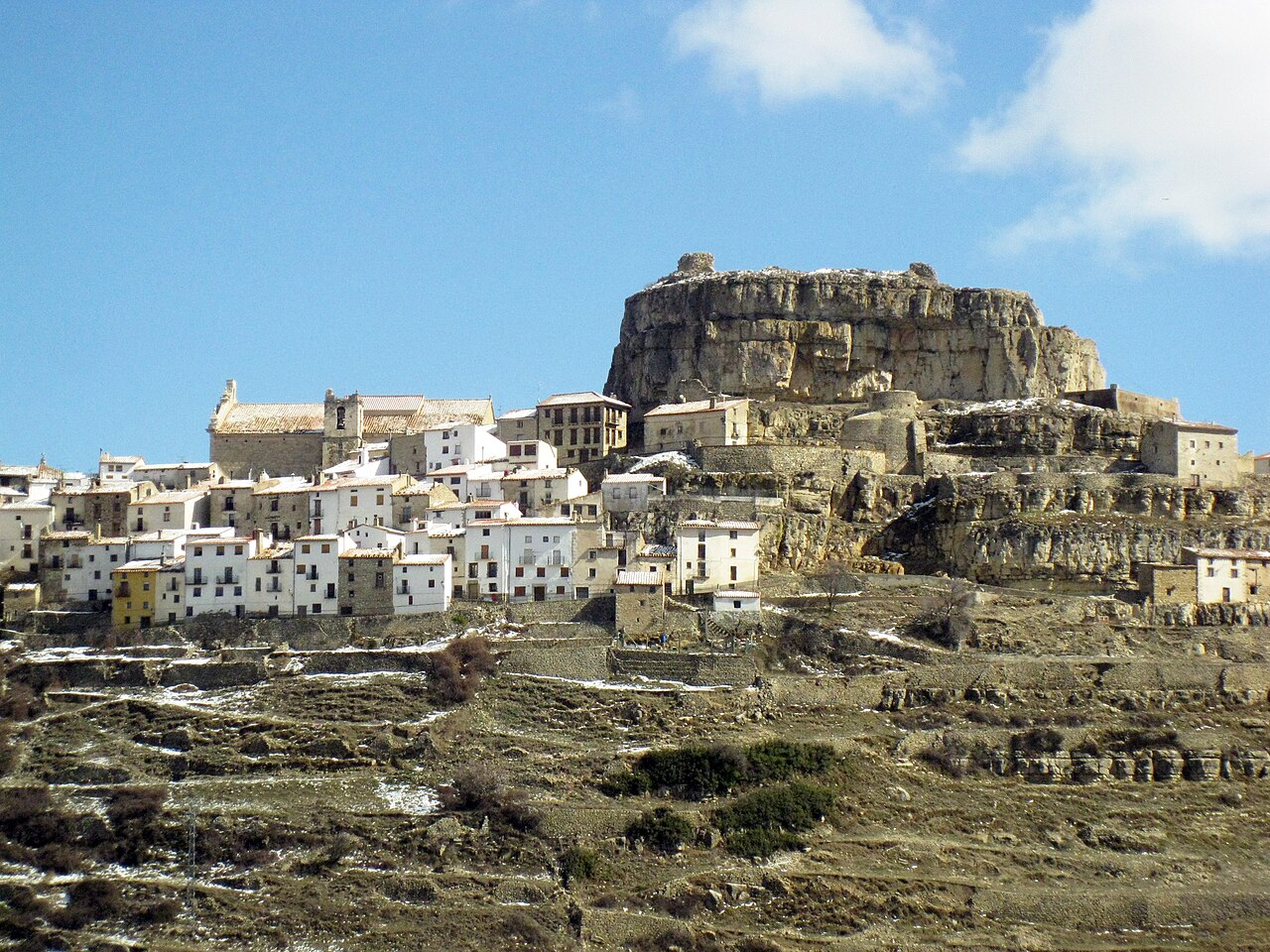
Culla Castle and Walls
Culla Castle and Walls stand as a remarkable testament to the rich medieval heritage of the town of Culla, located in the province of Castellón, Spain. This hill castle occupies the highest point of the settlement atop a distinctive tableland known locally as the muela. Originally constructed during the 12th century under Muslim rule, the fortress was strategically positioned to control the surrounding territory and protect the settlement.
Before the castle's erection, the area around Culla held significant prehistoric importance, evidenced by archaeological discoveries including rock paintings that attest to early human activity. These findings highlight the long-standing human presence in this mountainous region of the Iberian Peninsula.
The origins and early history of Culla Castle
The fortress was built during the period of Arab domination in the 12th century, serving as a military stronghold designed to oversee and defend the region. Its location on the muela provided a commanding vantage point over the surrounding landscape, essential for both surveillance and defense.
In 1233, the castle and town were reconquered by Blasco de Alagón as part of the Christian advance during the Reconquista. Following this, Culla was granted its town charter in 1244, formally integrating it into the Kingdom of Valencia. This transition marked a significant shift in the castle's role and ownership, as it became a key defensive and administrative site within Christian territories.
Medieval military orders and the castle's evolution
By the beginning of the 14th century, control of Culla Castle passed to the Order of the Temple, commonly known as the Knights Templar. This military and religious order played a pivotal role in defending and managing frontier territories during the medieval period. The Templars maintained possession until their dissolution in the early 14th century.
After the suppression of the Templars, the castle came under the authority of the Order of Montesa, founded in the 14th century to continue the military and religious mission of the Templars in the region. During their stewardship, the local population of Culla and six neighboring municipalities formed a cooperative alliance known as the Setena de Culla or Comunitat d’Herbatge in 1345. This coalition collectively acquired rights to pasture and forest resources from the Order of Montesa, ensuring shared management of grazing lands that were vital for the local agrarian economy.
Architectural features and fortifications
The castle complex originally featured an irregular design composed of three roughly concentric defensive enclosures. This layered defense system was intended to maximize protection of the settlement’s highest area, adapting over time to evolving military needs.
Although much of the structure lies in ruins today, surviving elements include fragments of the outer defensive wall, which in some places have been incorporated into the foundations and walls of later residential buildings. Sections of this wall include towers, passageways, and gates that once guarded the approaches to the fortress. Notably, several towers date back to the 13th century, including the remains of the Torre del Frare Pere, which stands as a significant reminder of the castle’s medieval military importance.
The entrance gate leading to the barbican, a fortified outwork designed to protect the main door, remains partially intact. This layered entrance system was a common defensive feature in medieval fortifications, intended to slow and expose attackers. Embedded within the walls are heraldic shields belonging to the Order of Montesa, marking the period of their control and providing a tangible connection to the castle’s religious and military patrons.
The original walls and defensive structures were constructed during the Arab period but underwent significant alterations following the Christian reconquest. Families such as the Alagón and Anglesola further reinforced the fortifications, reflecting the changing military technologies and threats of the later medieval period.
Integration with urban development
Adjacent to and partially integrated with the defensive walls is a notable group of stately houses. These structures exemplify how later urban expansion incorporated the old fortifications into residential architecture. This gradual transformation from a military stronghold to a component of the town’s living core illustrates the evolving relationship between defense and daily life in Culla.
Economic and social context
Throughout the medieval and early modern periods, the economy of Culla centered on dry farming of crops such as almonds, olives, hazelnuts, vines, and cereals. Livestock raising was also extensive, with sheep, goats, and cattle forming the backbone of rural life. More intensive agricultural activities, including pig husbandry, poultry keeping, and beekeeping, complemented the traditional farming economy.
The cooperative management of grazing lands through the Setena de Culla alliance was crucial for sustaining the livestock economy, illustrating the communal approach to natural resource management in medieval Spain.
Decline and damage during the modern era
By the 18th century, the military and administrative relevance of Culla Castle diminished significantly. The town experienced notable urban development, including the construction of the Parish Church of El Salvador and the Hermitage of San Cristóbal. These new buildings redefined the town’s character, and the expansion of the urban area encroached upon the defensive walls. As a result, parts of the old fortifications were either demolished or incorporated into residential buildings.
During the 19th century Carlist Wars, a series of civil conflicts that affected much of Spain, Culla endured frequent skirmishes. The castle suffered disastrous damage during this period, leading to the near-total destruction of its structure. Today, the fortress remains in a ruined state, bearing the scars of conflict and neglect.
Heritage status and cultural significance
Recognizing its cultural and historical value, the remains of Culla Castle and Walls have been legally protected since 1997 as a Bien de Interés Cultural, a designation reserved for Spanish heritage sites of significant importance. This status helps ensure the preservation of the site and promotes awareness of its historical legacy.
Visitors to Culla today can explore the ruins and gain insight into the castle’s layered history, from its Muslim origins and medieval military orders to its transformation through urban growth and its decline following 19th-century conflicts. The site offers a unique window into the strategic, social, and architectural evolution of a fortress that played a pivotal role in the history of the region.
Overall, Culla Castle and Walls stand as enduring symbols of the complex history of the Iberian Peninsula, reflecting centuries of cultural exchange, military conflict, and community resilience.
Frequently asked questions (FAQ)
- How do I get to Culla Castle and Walls?
- Culla Castle and Walls are located in the picturesque village of Culla, Spain. You can reach the castle by car, with parking available nearby, or by taking public transport to the village and walking to the site. The surrounding landscape provides a beautiful backdrop for your journey.
- What is the historical significance of Culla Castle?
- Culla Castle dates back to the 13th century and played a crucial role in the region's defense against invasions. It is a prime example of medieval architecture and reflects the rich history of the area. The castle offers insight into the feudal system and the strategic importance of the site during its time.
- When was Culla Castle built?
- Culla Castle was constructed in the early 13th century, around the time of the Reconquista. Its design showcases the military architectural style of the period, making it a significant historical landmark. Over the centuries, it has undergone various renovations while preserving its original essence.
- Can I visit Culla Castle year-round?
- Yes, Culla Castle is open to visitors throughout the year, allowing you to explore its historical features at your convenience. However, it's advisable to check local conditions and any potential restrictions or maintenance closures before planning your visit. This ensures you have the best experience possible.
- Why is Culla Castle a popular tourist attraction?
- Culla Castle is popular due to its stunning views, historical significance, and well-preserved architecture. Visitors are drawn to its serene surroundings and the opportunity to learn about the medieval period firsthand. The castle serves as a perfect spot for photography and enjoying the natural beauty of the area.
- Is it possible to access Culla Castle with mobility issues?
- Culla Castle presents some challenges for individuals with mobility issues, as the terrain can be uneven and steep in places. While efforts have been made to improve access, visitors should prepare for some physical exertion. It is recommended to contact local authorities for specific accessibility conditions.
- What are the opening hours for Culla Castle?
- Culla Castle typically opens at 10 AM and closes at 6 PM, but hours may vary seasonally. It's best to verify the current opening times on the official website or local tourist information before your visit. This helps to ensure that you can make the most of your time exploring the site.
- Are there any ticket prices for visiting Culla Castle?
- Admission to Culla Castle is generally free, making it an attractive option for budget-conscious travelers. However, there may be guided tours available for a fee, which provide deeper insights into the castle's history and architecture. Always check for the latest information regarding tours and any special events that might have associated costs.
- What are some nearby attractions to visit while in Culla?
- While in Culla, visitors can explore the charming village itself, known for its traditional architecture and stunning landscapes. Nearby attractions include the natural parks and hiking trails that offer breathtaking views of the region. Additionally, the historic towns of Ares de la Maestre and Morella are within driving distance and worth a visit.
Information
Website
Visit websiteSources & official resources
Verify the information above using these authoritative references.
Loading map...
Visitor reviews
No reviews yet. Been here? Write the first review and help other travelers!
Write the first reviewVisited this castle? Share your experience
Your review helps other travelers and adds first-hand knowledge to our encyclopedia.