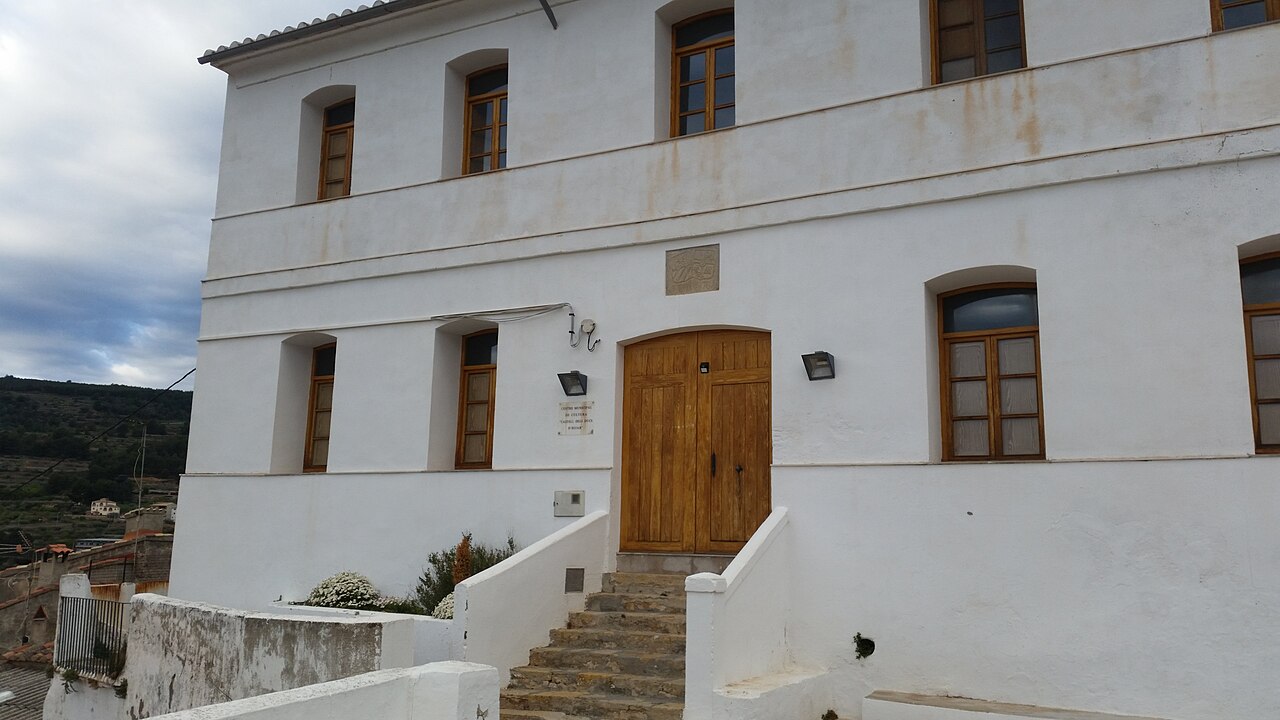
Xodos Castle and Walls
The Castle and walls of Xodos stand as a testament to the medieval fortifications established in the municipality of Xodos, located in the province of Castellón, Spain. This hill castle occupies a commanding position atop a rocky outcrop approximately 1063 meters above sea level, providing strategic oversight of the upper Alcalatén river basin. The natural elevation and the cliff rising about 70 meters made it a formidable defensive site during the medieval period.
The origins of Xodos are closely linked to its early settlement as a Mozarabic community, Christians living under Muslim rule before the Christian reconquest. This historical context set the stage for the castle's development under the Kingdom of Aragon. In 1233, King James I of Aragon conquered the area, initiating a new chapter in the town's history. The subsequent grant of the Carta Puebla in 1254 by Ximén de Urrea, the lord of Alcalatén, formalized Xodos's status under Christian rule and likely spurred the reinforcement of its defensive structures, including the castle and surrounding walls.
Medieval fortifications and architectural features
The defensive system of Xodos is characterized by a combination of masonry and tapia (rammed earth) construction techniques, typical of the region's medieval military architecture. Among the most notable surviving elements is a square tower built using the tapia technique, which demonstrates the practical use of local materials and methods to create strong, durable walls.
The castle complex includes remnants of additional towers, including a circular tower and another probable square tower, which formed part of a complex network designed for defense and surveillance. These towers, together with the fortified walls, enclosed the settlement and provided protection against potential invaders.
The tower-portal el callis
A defining feature of the fortifications is the tower-portal known as El Callis, which served as the main entrance to the fortified enclosure. The name "El Callis" derives from the term "callizo," meaning a narrow passageway, accurately describing the ground floor's layout as a tight corridor controlling access through the walls. Positioned adjacent to the parish church and near the castle tower, El Callis was strategically placed at one end of the main plaza to monitor and regulate movement into the town.
Constructed primarily of masonry, the base of El Callis features a vaulted passageway with three pointed arches built from finely cut ashlar stone blocks. Two arches open toward the town, facilitating entry and exit, while the third leads into the castle's interior spaces. This architectural arrangement remains well-preserved and continues to function as a thoroughfare, highlighting its enduring importance.
Historical significance and noble dominion
Following the Christian conquest, the lordship of Alcalatén, which included Xodos, was initially granted to Ximén de Urrea. The town's growing importance is reflected in further privileges granted in 1283. Over the centuries, the lordship passed through prominent noble families, including the Counts of Aranda and later the Dukes of Híjar through marriage alliances. This lineage maintained control until the early 19th century, with the current titleholder being the Duchess of Alba.
The castle and fortified enclosure served not only as military defenses but also as the administrative center of the community. The presence of the Town Hall with its characteristic lonja (arcaded ground floor) within the walls indicates the dual role of the enclosure as a place of governance and commerce.
Urban layout within the walls
Inside the fortified perimeter, the settlement contained key civic and religious buildings. The parish church was situated close to the main entrance, emphasizing its central role in community life. Residential homes and administrative buildings were arranged within the walls, creating a compact and secure urban environment.
The defensive walls, reinforced by towers at strategic points, enclosed a space that balanced protection with daily living needs. The integration of military and civilian functions within the enclosure reflects the medieval approach to urban planning in frontier regions of the Kingdom of Aragon.
Current condition and preservation
Today, the remains of the Xodos Castle and walls are partially preserved. The surviving structures, including the tapia tower, sections of the walls, and the tower-portal El Callis, provide valuable insights into medieval fortification techniques and the historical development of the town. The vaulted arches of El Callis remain intact, showcasing skilled masonry work from the period.
The castle's elevated location continues to offer panoramic views of the surrounding landscape, underscoring the strategic importance that influenced its original placement. Preservation efforts focus on maintaining these remnants as a cultural heritage site, allowing visitors to explore the medieval history of Xodos and its role within the Kingdom of Aragon.
Visiting information and cultural context
Visitors to Xodos can explore the castle ruins and walls, appreciating the blend of military architecture and historical urban development. The site offers a tangible connection to the medieval period and the complex history of Christian and Muslim interactions in the region.
The castle's position atop a high rocky outcrop makes it a notable landmark within the Alcalatén comarca. Its preservation contributes to understanding the broader historical landscape of Castellón and the Aragonese reconquest efforts during the 13th century.
Frequently asked questions (FAQ)
- When was Xodos Castle built?
- Xodos Castle was built in the 13th century, following the Christian reconquest of the area by King James I of Aragon in 1233.
- What is the architectural style of the castle?
- The castle features medieval military architecture with characteristic use of masonry and tapia (rammed earth) construction techniques typical of the region.
- Can visitors access the tower-portal El Callis?
- Yes, the tower-portal El Callis remains well-preserved and continues to serve as a functional passageway into the fortified area.
- What historical families controlled Xodos?
- The lordship of Alcalatén, including Xodos, was controlled by noble families such as the Counts of Aranda and the Dukes of Híjar until the early 19th century.
- What buildings were inside the castle walls?
- Inside the walls were the Town Hall with its arcaded lonja, the parish church, residential homes, and administrative buildings, reflecting the castle's role as both a defensive and communal center.
Information
Loading map...
Visitor reviews
No reviews yet. Been here? Write the first review and help other travelers!
Write the first reviewVisited this castle? Share your experience
Your review helps other travelers and adds first-hand knowledge to our encyclopedia.