Broch of Gurness
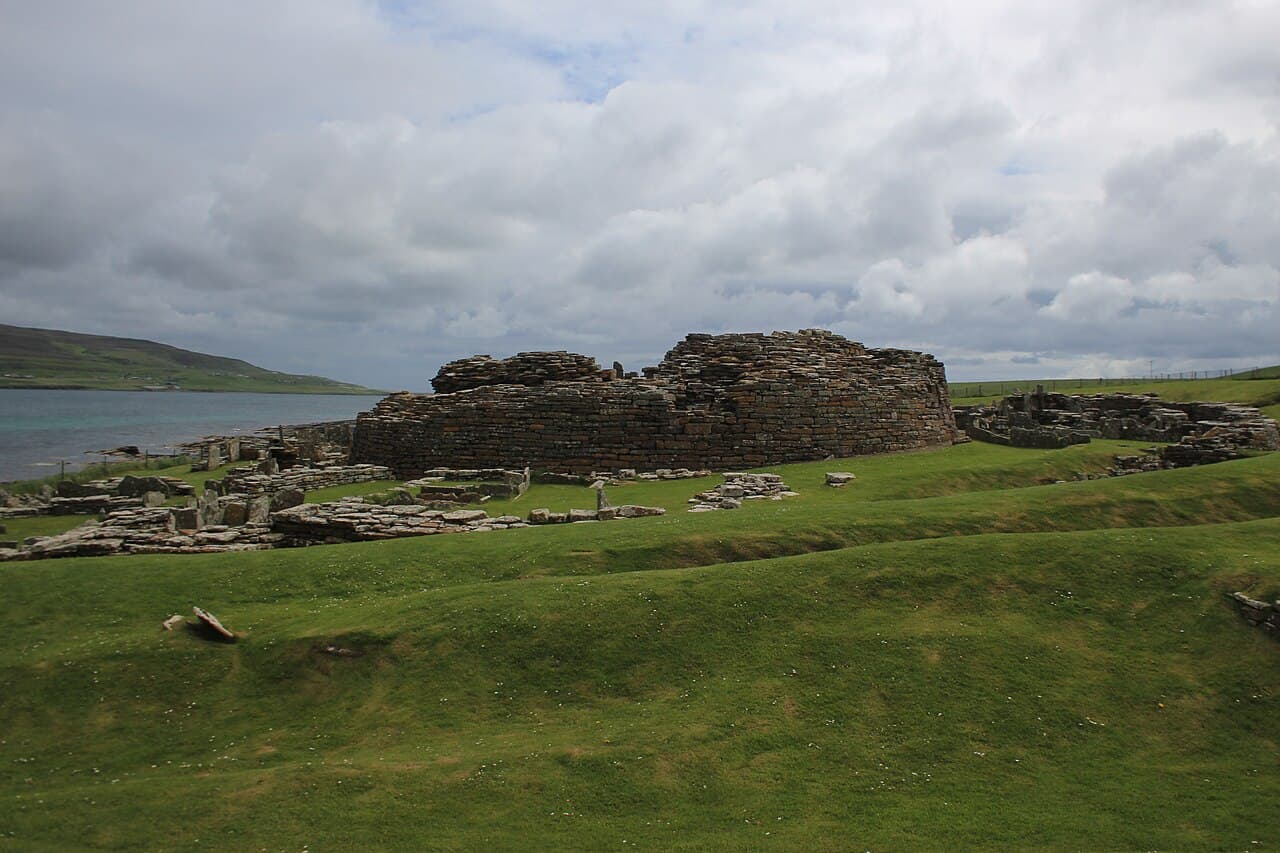
The Broch of Gurness is a remarkable Iron Age broch village situated on the northeast coast of Mainland Orkney in Scotland, overlooking the Eynhallow Sound. Located approximately 15 miles northwest of Kirkwall, this site offers an exceptional glimpse into prehistoric life in the region. The broch itself is a type of drystone tower unique to Scotland, characterized by its thick, double-skinned walls and hollow interior, designed for defense and habitation.
Dating back to the 5th century BC, the Broch of Gurness represents one of the earliest examples of this architectural form, making it a significant monument of the Early Medieval period. The site was discovered in 1929 by the Orkney poet and naturalist Robert Rendall, who brought attention to its historical importance. The broch was part of a larger village complex, indicating it once supported a substantial community engaged in farming, fishing, and trading activities.
Architectural design and features
The broch itself is circular, with walls up to 4 meters thick and an internal diameter of around 10 meters. Its construction utilized local stone, carefully laid without mortar, showcasing advanced dry-stone building techniques. The walls contain a series of intramural galleries and stairways, allowing access to upper levels and providing structural stability.
Surrounding the broch is a roughly circular village enclosure, consisting of several stone-built houses and outbuildings arranged around a central courtyard. The layout suggests a planned community with communal spaces and defensive considerations. The village was protected by an outer ditch and rampart, enhancing its defensive capabilities against potential attackers.
Defensive elements
The broch's design emphasizes defense, with its thick walls and narrow entrance passage that could be easily defended. The elevated position overlooking the sound provided strategic advantages for surveillance and control of maritime routes. The surrounding village's ramparts and ditch further contributed to the overall security of the settlement.
Historical context and significance
The Broch of Gurness is one of the best-preserved broch sites in Orkney and provides valuable insights into Iron Age society in northern Scotland. Brochs are believed to have served multiple functions, including as fortified homesteads, status symbols, and community centers. The presence of a village around the broch indicates a complex social structure with economic and defensive roles.
Archaeological excavations have uncovered a variety of artifacts, including pottery, tools, and animal bones, which help reconstruct the daily life of the inhabitants. These findings suggest a mixed economy based on agriculture, animal husbandry, and marine resource exploitation.
Later use and preservation
After the Iron Age, the broch and its village were eventually abandoned, but the site remained visible and was preserved by the natural environment of Orkney. Today, it is managed as an important archaeological site, attracting researchers and visitors interested in Scotland's prehistoric heritage.
Visitors to the Broch of Gurness can explore the remains of the broch tower, the surrounding village structures, and the defensive earthworks. Interpretive signage and guided tours provide context for the site's historical and architectural features.
Visiting information and accessibility
The Broch of Gurness is accessible year-round, with pathways suitable for most visitors. The site offers a unique opportunity to experience one of Scotland's most significant prehistoric settlements firsthand. Nearby Kirkwall provides amenities and accommodations for tourists.
Frequently asked questions (FAQ)
- How do I get to the Broch of Gurness?
- The Broch of Gurness is located on Mainland Orkney, about 15 miles northwest of Kirkwall. Visitors can reach it by car or local bus services from Kirkwall, followed by a short walk to the site.
- What is the historical significance of the Broch of Gurness?
- The Broch of Gurness is a well-preserved Iron Age broch village dating from the 5th century BC. It provides valuable insights into prehistoric life, architecture, and social organization in northern Scotland.
- Can I explore the broch and village remains?
- Yes, visitors can walk around and explore the remains of the broch tower, village houses, and defensive earthworks. Interpretive signs help explain the site's features and history.
- Is the site suitable for families and children?
- The site is family-friendly, with safe pathways and open spaces for children to explore. However, visitors should supervise children near uneven ground and stone structures.
- Are there any facilities at the Broch of Gurness?
- There are no visitor facilities directly at the broch site, but nearby Kirkwall offers amenities such as cafes, shops, and accommodations.
Photo gallery

Information
Opening hours
Open year-round, dawn to dusk
Ticket prices
Free
Current owner
Historic Environment Scotland
Loading map...
Visitor reviews
No reviews yet. Been here? Write the first review and help other travelers!
Write the first reviewVisited this castle? Share your experience
Your review helps other travelers and adds first-hand knowledge to our encyclopedia.