Cseszneki Castle
Cseszneki Castle stands as a remarkable example of a medieval hill castle in Central Transdanubia, Hungary. Founded around 1263 by Jakab Cseszneki, the royal swordbearer of King Béla IV, it was constructed on a strategically advantageous rocky peak. This location was chosen for its natural defensive qualities, typical of high medieval fortifications built in the aftermath of the devastating Mongol invasion of 1241-42. The castle's origins are deeply rooted in the turbulent history of 13th-century Hungary, reflecting the kingdom's efforts to strengthen its defenses against future invasions.
The earliest written record of the castle dates from 1281, noting that Jakab’s sons shared ownership. Over the following centuries, the castle changed hands multiple times, reflecting the shifting political landscape of medieval Hungary. In 1315, the powerful Csák clan seized the fortress, but by 1323, it was returned to the Cseszneki family, who sold it to the Csák clan in exchange for land and silver denarii. Later, under King Charles Robert, the castle became part of the royal estates, further emphasizing its strategic importance.
Ownership and political significance in the medieval period
In 1392, King Sigismund of Luxembourg granted Cseszneki Castle and its surrounding thirty-one villages to the noble Garai family as part of a land exchange. The Garai family held the castle until 1482, when their male line died out. Subsequently, King Matthias Corvinus awarded the castle to his treasurer, István Szapolyai, in 1483. This transfer highlights the castle’s continued value as a noble residence and administrative center.
The early 16th century saw a rapid succession of owners, including Ferdinand I in 1527, followed by Pál Bakics, Bálint Török, and the prominent families of Csaby and Wathay. These changes reflect the castle’s role during a period of increasing Ottoman pressure on Hungary’s borders. Under the command of Captain Lőrinc Wathay, the fortress served as a critical defensive stronghold during the mid-16th century Ottoman incursions.
Military role and conflicts in the 16th and 17th centuries
Cseszneki Castle played a vital role as a border fortress during the Ottoman wars. In 1561, Captain Lőrinc Wathay successfully repelled an Ottoman siege, demonstrating the castle's strategic defensive capabilities. Tragically, Wathay died in 1573 due to an accidental explosion involving an old cannon, a vivid episode reflecting the dangers of early modern warfare.
Following the fall of the nearby city of Győr in 1594, the castle fell into Ottoman hands but was recaptured by Hungarian forces in 1598. The early 17th century was marked by further military upheaval: the castle surrendered to the troops of István Bocskai in 1605 and was occupied by commanders loyal to Gábor Bethlen in 1619. The Peace of Nikolsburg in 1622 restored the castle to royal control.
During the Rákóczi War of Independence (1703-1711), the castle served as an ammunition and food warehouse and a prisoner-of-war camp. It withstood a siege by imperial forces in 1708 but was captured the following year. These events illustrate the castle’s ongoing military importance well into the early modern period.
Architectural evolution and baroque transformation
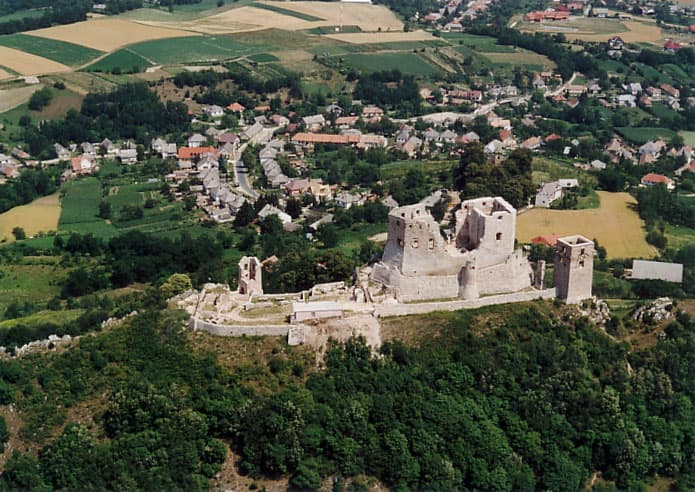
Originally constructed as a high medieval fortress, the castle underwent significant architectural changes over the centuries. Archaeological excavations in 1967-69 revealed that the initial 13th-century structure was a modest rectangular building subdivided by internal walls. This early fortress was dismantled in the 14th century to make way for a more complex layout featuring a rectangular main section and an adjoining pentagonal tower enclosing a central courtyard.
The castle’s entrance was located on the northwest side, protected by a gate that likely included a drawbridge. A lintel stone bearing the Garai-Cillei coat of arms survives, linking the castle to its influential 15th-century owners. The southern side of the castle contained lower economic buildings, probably used for storage and workshops, while residential quarters occupied other areas. A small semicircular tower on the southern edge added both defensive strength and architectural interest.
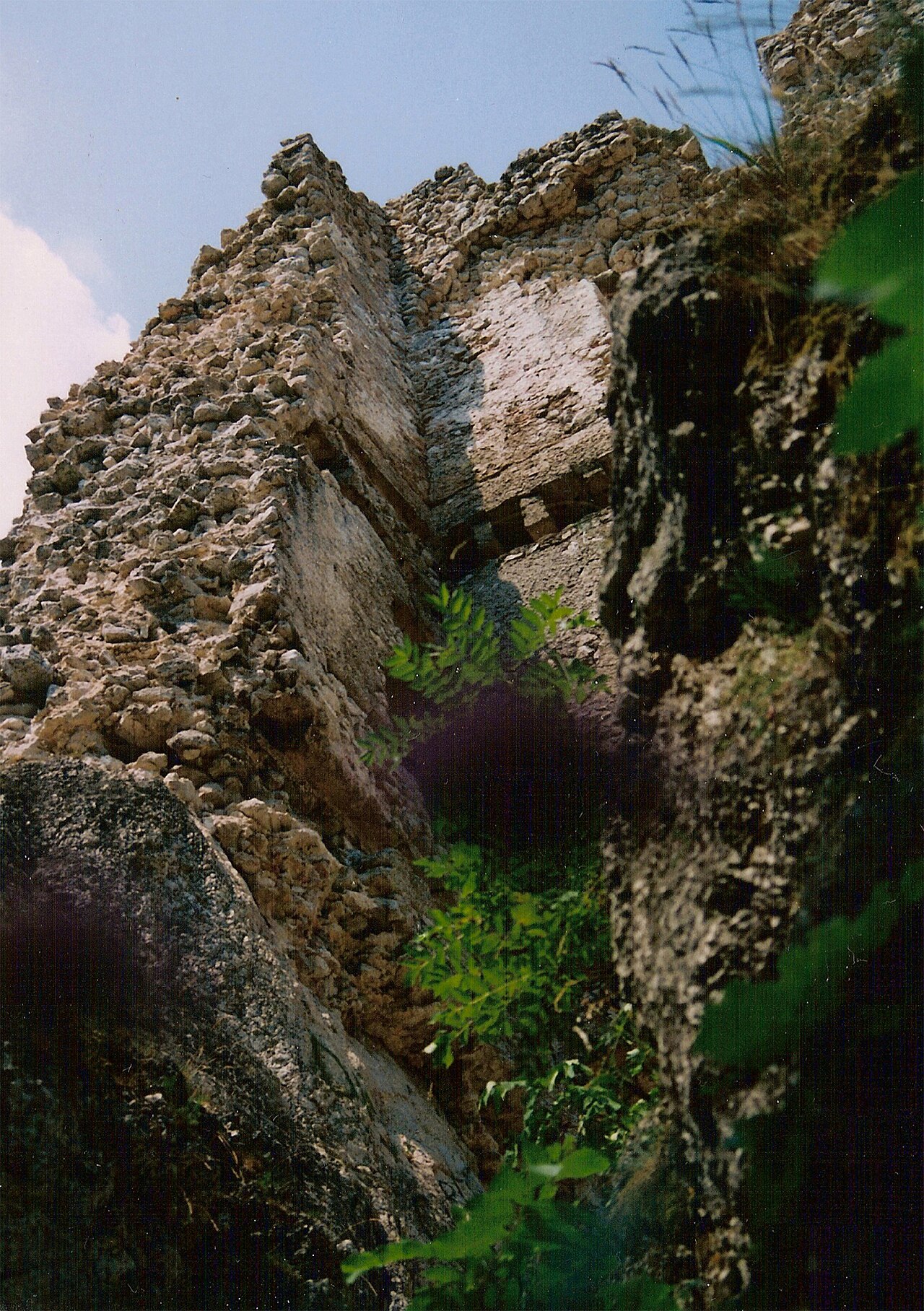
In the 16th century, modifications were made to strengthen defenses against Ottoman attacks. The castle’s stone walls were reinforced, and its position on a rocky peak provided a commanding view of the surrounding landscape, enhancing its military effectiveness. The fortress’s layered construction reflects the evolving needs of defense and residence across medieval and early modern periods.
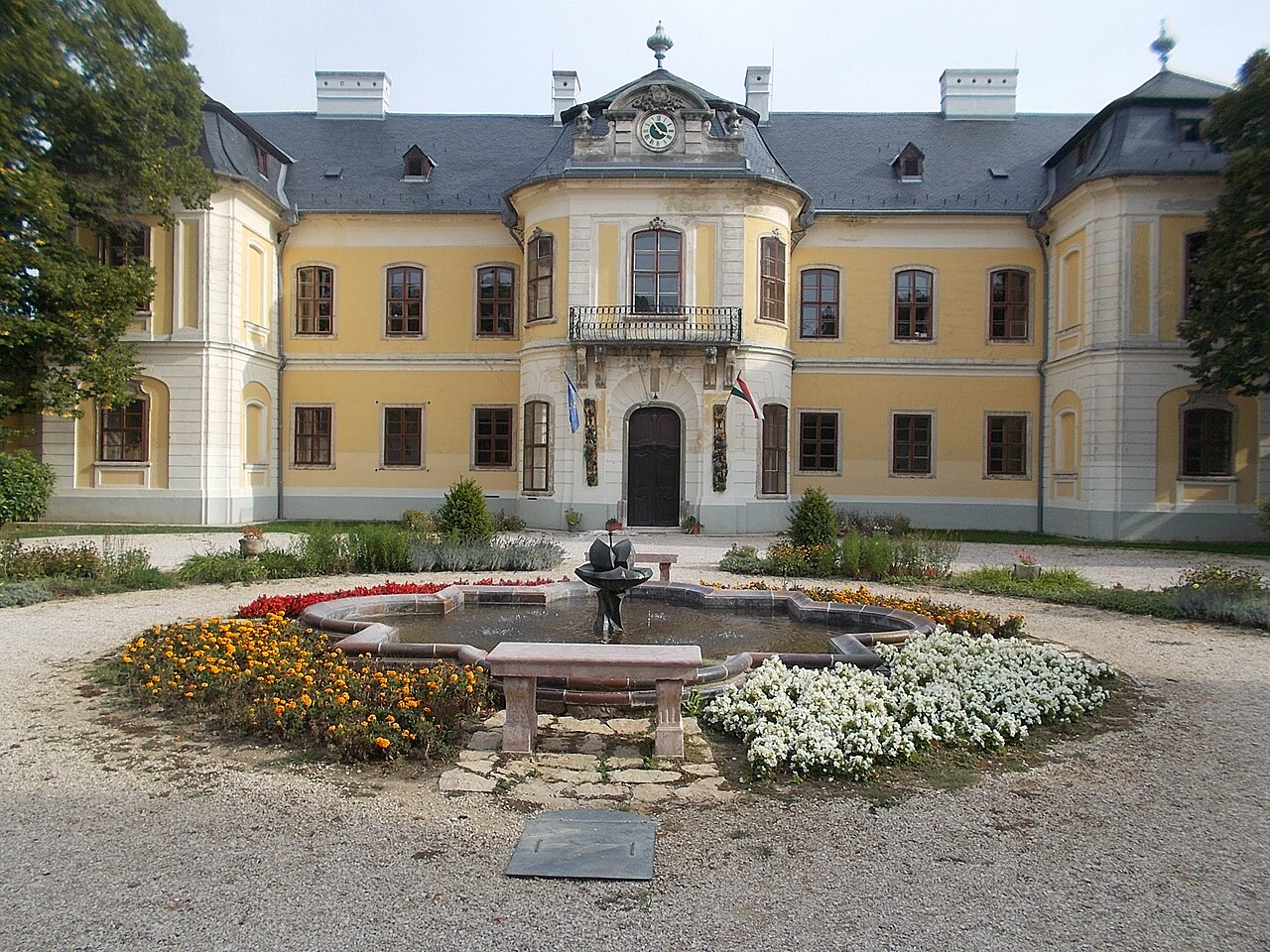
Following the military conflicts of the early 18th century, the castle’s role shifted from fortress to noble residence. The Counts of Esterházy, who acquired the property in 1635, transformed the rugged medieval stronghold into a Baroque castle offering more comfortable accommodations. By around 1780, the aristocratic family had moved to other residences, and the castle was used by servants until an earthquake and subsequent fire rendered it uninhabitable.
Modern history and cultural significance
In the 20th century, Cseszneki Castle gained cultural prominence when its exterior was used for filming the 1947 Hungarian film Somewhere in Europe. This connection to cinema highlights the castle’s evocative ruins as a symbol of Hungary’s historical heritage.
More recently, the castle area has become a popular site for outdoor activities. In 2013, Hungary’s first climbing routes were established near the castle, including the medium difficulty "Strada degli Sedi," the longer and more challenging "Strada Panoramica del Castello," and the difficult "Zoltán The Tálos Memorial Road." These via ferrata routes attract climbers seeking both adventure and historical ambiance.
Today, the ruins of Cseszneki Castle stand as a testament to centuries of Hungarian history, from medieval fortification to Baroque residence. Ongoing preservation efforts aim to maintain its structural remains and promote its significance as a cultural and historical landmark in Central Europe.
Architectural details and archaeological findings
Excavations have revealed that beneath the visible ruins lie remnants of the original 13th-century fortress, including a rectangular building subdivided into smaller rooms. This early phase was completely replaced in the 14th century by a more elaborate structure, reflecting changes in defensive architecture and residential needs.
The 15th-century castle combined rectangular and pentagonal forms enclosing a courtyard, with defensive towers and economic buildings arranged strategically. Stone carvings from this period, now housed in the Hungarian National Museum, showcase the high craftsmanship and wealth of the Garai family.
The surviving ruins primarily date from the 16th century, when the castle was fortified against Ottoman siege warfare. The thick stone walls, battlements, and towers attest to its military function. Its position atop a rocky hill continues to dominate the landscape, offering panoramic views and a tangible connection to Hungary’s medieval past.
Frequently asked questions (FAQ)
- What is the historical significance of Cseszneki Castle?
- Cseszneki Castle, built in the 13th century, is a significant medieval fortress in Central Transdanubia, Hungary. It played a crucial role in the region's defense against invasions and served as a symbol of power for local nobility throughout the centuries.
- When was Cseszneki Castle built?
- The construction of Cseszneki Castle began in the early 13th century, with significant expansions and renovations occurring in the following centuries. Its architecture reflects various styles that evolved over time, showcasing the castle's long and storied history.
- Is it possible to visit Cseszneki Castle?
- Yes, Cseszneki Castle is open to visitors, allowing you to explore its rich history and stunning architecture. Guided tours are available, providing insights into the castle's past and the surrounding landscape.
- What are the opening hours for Cseszneki Castle?
- Cseszneki Castle typically opens from 10 AM to 6 PM during the tourist season, which generally runs from April to October. It's advisable to check the official website for any seasonal changes or special events before your visit.
- Can I find nearby attractions to visit along with Cseszneki Castle?
- Absolutely! Nearby attractions include the picturesque town of Csesznek and various hiking trails in the Bakony Hills, offering beautiful views and outdoor activities. The region is rich in natural beauty and historical sites, making it perfect for a full day of exploration.
- What are the ticket prices for visiting Cseszneki Castle?
- Ticket prices for Cseszneki Castle are generally affordable, with discounts available for students and seniors. It's best to check the castle's official website for the most current pricing and any special offers.
- What is the best time to visit Cseszneki Castle?
- The best time to visit Cseszneki Castle is during the spring and fall when the weather is mild and the landscape is particularly beautiful. Visiting outside the peak summer months can also help you avoid larger crowds, allowing for a more enjoyable experience.
- How do I get to Cseszneki Castle?
- Cseszneki Castle is accessible by car and public transportation, with nearby bus stops serving the region. The castle is located just a short distance from major towns, making it an easy day trip for visitors exploring Central Transdanubia.
- Is Cseszneki Castle accessible for people with mobility issues?
- Cseszneki Castle has some accessibility features, but due to its historic nature, certain areas may be challenging for visitors with mobility issues. It's recommended to contact the castle administration in advance to inquire about specific accommodations and available routes.
Photo gallery

Information
Website
Visit websiteSources & official resources
Verify the information above using these authoritative references.
Loading map...
Visitor reviews
No reviews yet. Been here? Write the first review and help other travelers!
Write the first reviewVisited this castle? Share your experience
Your review helps other travelers and adds first-hand knowledge to our encyclopedia.