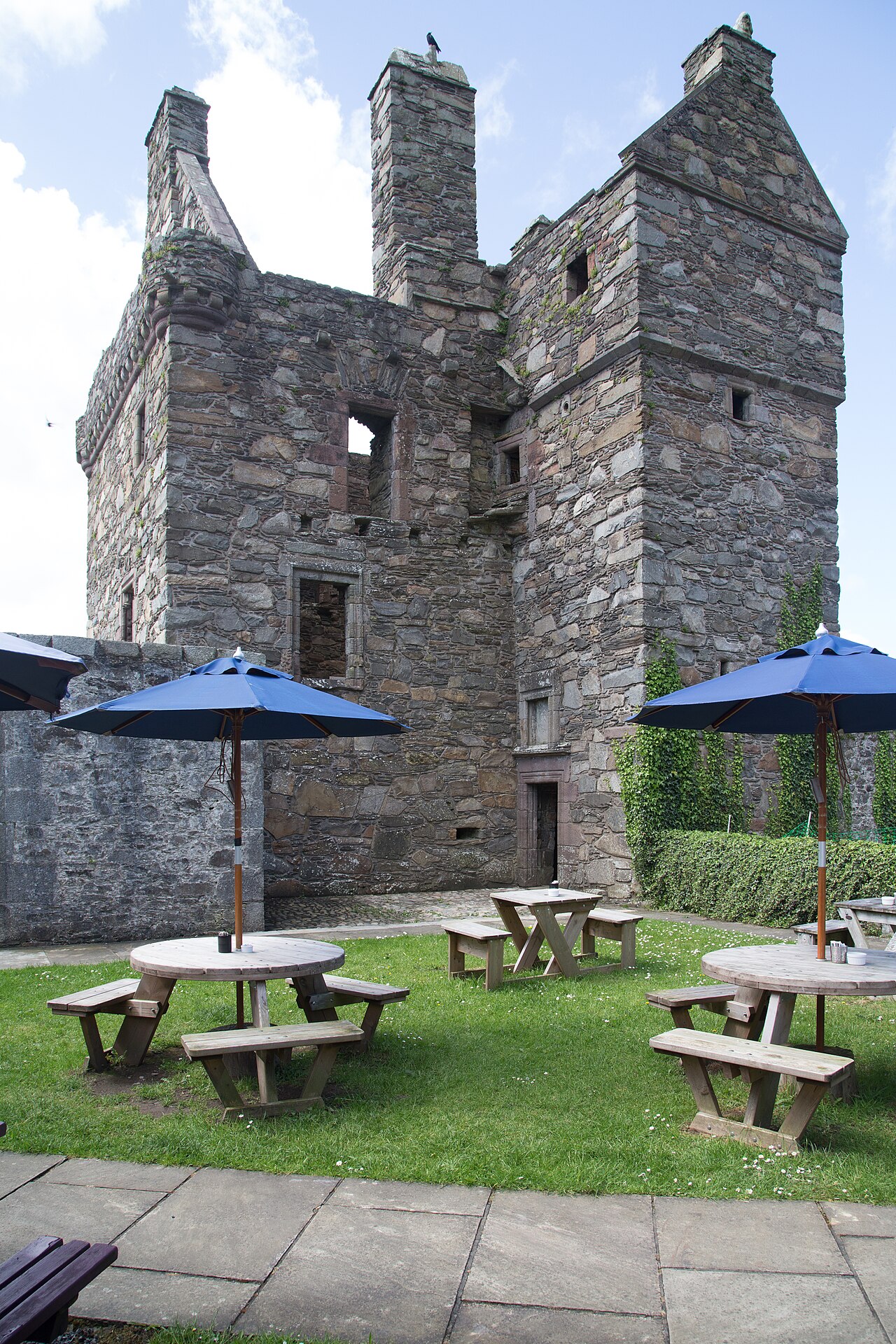
Cruggleton Castle
Cruggleton Castle stands as a significant historical site near Newton Stewart in Scotland, embodying a rich legacy that spans from the late Iron Age through the medieval period to the 17th century. Perched on a shale promontory rising approximately 40 metres above sea level, the castle's strategic location overlooking the coast reflects its importance as a defensive and residential stronghold over many centuries.
The early history and archaeological origins
Archaeological evidence reveals that the site of Cruggleton Castle was first occupied in the first century AD, during the late Iron Age. The discovery of a hut circle indicates early human settlement, suggesting the area was valued for its natural defenses and proximity to the sea. Moving into the early medieval period, a timber hall was constructed, marking the site as a significant residence well before the establishment of the medieval stone fortress.
Medieval construction and fortification
From motte and timber tower to stone castle
In the late 12th or early 13th century, the natural rock outcrop on the promontory was deliberately heightened to create a motte, a raised earthwork mound designed to support a defensive tower. Initially, this was topped by a timber tower, characteristic of early medieval fortifications. By the end of the 13th century, this wooden structure was replaced with a more durable stone tower, signaling the transition to a permanent fortress. This development was accompanied by the construction of a curtain wall in the early 1400s, encircling the castle and enhancing its defensive capabilities.
Architectural features and defensive elements
The castle complex was notable for its scale and sophistication. Historical records describe eight towers roofed with lead sourced from the nearby Calf of Man island, illustrating the castle's considerable size and the resources invested in its construction. The curtain wall was topped with distinctive sloped merlons—angled battlements designed to deflect projectiles and provide cover for defenders. A drawbridge and a portcullis secured the main gatehouse, forming formidable barriers against attackers.
Historical significance and ownership through the centuries
Medieval lords and royal connections
Cruggleton Castle served as a stronghold for the Lords of Galloway during the medieval era before passing into the hands of the Earls of Buchan. In the 1290s, John Comyn, 7th Earl of Buchan, obtained royal permission from King Edward I of England to extract lead from the Calf of Man, underscoring the castle's importance and the scale of its fortifications.
Role in the Scottish Wars of Independence
The castle played a pivotal role during the Scottish Wars of Independence. Known locally as "The Black Rock of Cree," it was captured by William Wallace and his followers in 1307. Following its recapture by Scottish forces, the castle was deliberately demolished to prevent its use by English troops, reflecting the strategic importance of the site during this turbulent period.
Later ownership and decline
In the 14th century, King David II granted the castle to Gilbert Kennedy, a prominent nobleman. By 1424, ownership transferred to the Prior and Canons of Whithorn, indicating the castle's integration into ecclesiastical administration. The 16th century saw the castle lightly defended, as noted by English spies in 1563. The Scottish Reformation triggered disputes over ownership, culminating in a siege involving Lord Robert Stewart, the Prior of Whithorn, and John Fleming, 5th Lord Fleming. Resolution came through James Stewart, Earl of Moray, favoring Margaret Stewart, Mistress of Ochiltree. Subsequent owners included Sir Patrick Vaus, his son Sir John Vaus, and Peter McDowall of Machermore. The property was acquired by James Kennedy in 1606. By 1684, the castle was described as fully ruined and abandoned.
Architectural remains and archaeological features
Surviving structures and landscape
Today, Cruggleton Castle is recognized primarily for its ruined state, with the most prominent surviving feature being a narrow segment of vaulted stonework from the original tower, known locally as "The Arch." This barrel vault rises to about three metres and was reinforced with metal bands during restoration efforts to preserve its stability. Visible from a nearby road, it stands as a striking relic of the castle's medieval stone construction.
Foundations and defensive earthworks
Scattered foundations across the site reveal the footprints of additional buildings, indicating the castle extended beyond the main keep into a larger complex. About 50 metres west of the ruins, a broad defensive ditch cuts across the promontory, serving as a barrier against attackers. Historical illustrations from the 16th century depict further defensive elements, including the curtain wall with sloped merlons, a drawbridge, and a portcullis, complementing the surviving physical evidence.
Visiting Cruggleton Castle today
Visitors can access the site via a scenic coastal path from the nearby Galloway House estate. As a scheduled monument, Cruggleton Castle is protected for its archaeological and heritage value. While much of the castle lies in ruins, the site offers a compelling glimpse into Scotland's medieval past and the evolution of castle architecture from timber fortifications to stone strongholds.
Cruggleton Castle's layered history, from its Iron Age origins through its role in the Scottish Wars of Independence and eventual decline, makes it an important cultural landmark. Its surviving architectural features, combined with historical records and illustrations, provide valuable insights into the defensive strategies and noble life of medieval Scotland.
Frequently asked questions (FAQ)
- What is the historical significance of Cruggleton Castle?
- Cruggleton Castle is a medieval fortress located near Newton Stewart, Scotland, with roots dating back to the 12th century. It played a crucial role in local power struggles and has connections to notable Scottish clans, making it an important site for understanding the region's history.
- When was Cruggleton Castle built?
- Cruggleton Castle was constructed in the late 12th century, primarily serving as a stronghold for the local nobility. Its structure has undergone various modifications over the centuries, reflecting changes in architectural styles and defensive needs.
- Can I visit Cruggleton Castle?
- Yes, visitors can explore the ruins of Cruggleton Castle. While the site is not fully restored, it offers a fascinating glimpse into medieval architecture and history, making it a popular destination for history enthusiasts and tourists alike.
- What are the opening hours for Cruggleton Castle?
- Cruggleton Castle is open to visitors year-round, but it's recommended to check local listings or the official tourism website for specific opening hours. Seasonal variations may affect accessibility, especially during winter months.
- Is it possible to access Cruggleton Castle by public transport?
- Yes, Cruggleton Castle can be reached by public transport; however, services may be limited. Visitors are encouraged to plan their trip in advance and check local bus schedules to ensure a smooth journey.
- What is the best time to visit Cruggleton Castle?
- The best time to visit Cruggleton Castle is during the spring and summer months when the weather is milder and more conducive to outdoor exploration. Additionally, the surrounding landscape is particularly beautiful during this time, enhancing the overall experience.
- Are there any ticket prices for visiting Cruggleton Castle?
- Access to Cruggleton Castle is generally free, as it is a historical ruin. However, donations are often encouraged to help with the preservation of the site and surrounding area.
- What nearby attractions can I visit while at Cruggleton Castle?
- While visiting Cruggleton Castle, you can also explore the nearby Galloway Forest Park and the scenic coastline of Luce Bay. Additionally, the charming town of Newton Stewart offers shops, cafes, and local history museums.
- Is Cruggleton Castle wheelchair accessible?
- Access to Cruggleton Castle may be challenging for those with mobility issues due to uneven terrain and limited pathways. Visitors should consider contacting local tourism services for more information on accessibility options and assistance.
Information
Website
Visit websiteSources & official resources
Verify the information above using these authoritative references.
Loading map...
Visitor reviews
No reviews yet. Been here? Write the first review and help other travelers!
Write the first reviewVisited this castle? Share your experience
Your review helps other travelers and adds first-hand knowledge to our encyclopedia.