Cristian
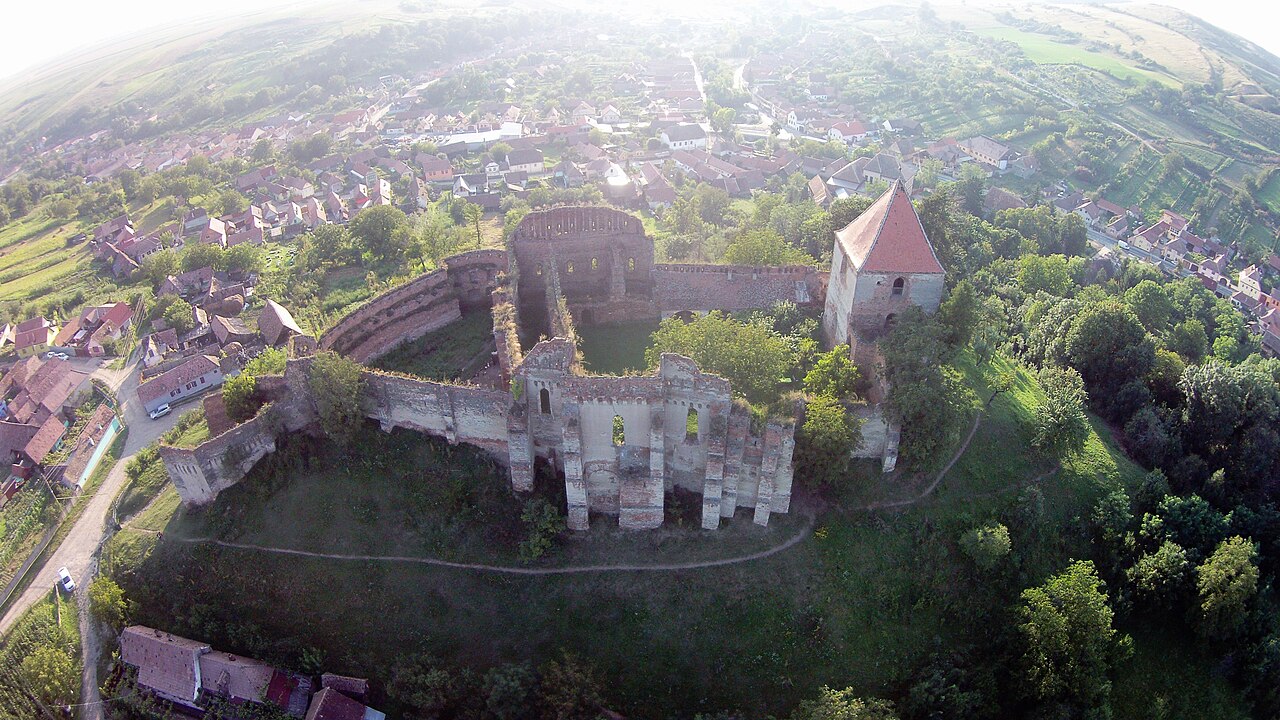
Cristian, located near Sibiu in Transylvania, Romania, is renowned for its fortified church and bastioned fortress complex, a remarkable example of medieval defensive architecture built by the Transylvanian Saxons. The origins of the settlement date back to the 12th century, when King Géza II of Hungary invited German settlers during the first wave of colonization. The village was first documented in 1223, marking the beginning of a rich history intertwined with religious and military architecture.
Early development and Romanesque origins
In the 13th century, the community constructed a three-nave Romanesque church dedicated to Saint Servatius. This early church formed the spiritual and defensive heart of Cristian. By the end of the century, the church was surrounded by an earthen rampart topped with a wooden palisade, reflecting the growing need for protection in a turbulent region.
Transition to Gothic architecture and fortification enhancements
During the 14th century, the village aimed to replace the Romanesque basilica with a new Gothic hall church, a rare ambition for a rural settlement at that time. However, the threat of Ottoman incursions interrupted these plans, prompting a shift in focus towards strengthening the fortifications. An inner defensive wall was likely constructed around the church during this period, enhancing its defensive capabilities.
Destruction and rebuilding in the late 15th century
In 1493, the village suffered devastation during a Turkish raid, but the church itself remained intact, suggesting the fortifications successfully repelled the attackers. Between 1472 and 1498, the original Romanesque church was dismantled and replaced with a three-nave Gothic hall church. This new church featured a polygonal presbytery with two chapels, and the arcades to the side aisles were replaced by pillars. The main nave measured approximately 18.3 meters in length, 17.5 meters in width, and soared to 28.4 meters in height, while the presbytery was 15.5 meters long, 8.4 meters wide, and 26.3 meters high. The nave was covered by a net vault, and the presbytery featured a ribbed cross vault. The western Romanesque tower was heightened with a fortified upper story, and a fortified stair tower was added on the north side of the choir, linking to the new defensive level.
16th-century fortification expansion
In the early 16th century, fortifications were further enhanced with the construction of two defensive walls forming an irregular pentagon with a 3-meter gap between them. The outer wall was reinforced with buttresses and featured five protruding bastions. The main entrance was through a western gate tower. To the north, two outer baileys were separated by a double wall; the first contained the parsonage. Along the inner wall, a series of granaries were built, allowing villagers to store supplies and withstand sieges.
Sieges and conflicts
In 1529, the settlement was again destroyed, this time by troops of the Wallachian voivode Drăgan during the siege of Sibiu. In the late 16th century, a massive octagonal bastion equipped with machicolations was constructed on the southeast corner, designed for the use of firearms, reflecting advancements in military technology. In 1599, the fortress was occupied by the forces of Michael the Brave, the Wallachian ruler. Another Turkish invasion supported by Tatars occurred in 1658. Despite local efforts to protect the fortress, including a pastor paying for its defense, the fortress was ultimately captured after a tragic incident involving a drunken villager. The last defenders perished in a fire on the church tower, and the village was devastated.
Later modifications and restoration efforts
In 1750, flooding from the Sibiu River destroyed the gate tower, leading to the creation of a new southern entrance with a guardhouse. The inner wall was partially removed on the north, south, and east sides. Following an earthquake in 1805, the church tower was rebuilt and adorned with four corner turrets. Despite subsequent damage from warfare and natural disasters, the fortified church complex was restored and preserved, maintaining much of its medieval character.
Architectural features and current state
The fortified church of Cristian is one of the most interesting examples of Transylvanian Saxon defensive architecture. It retains its double ring walls, four of the original five towers, and the distinctive octagonal bastion. Inside the fortress, three granaries remain, offering insight into the logistical preparations for sieges. The Gothic church's interior is notable for its spatial proportions and vaulting, while the lower part of the church tower preserves elements of the original Romanesque structure.
Additional historical layers
The village, founded by Saxons in the mid-13th century, also built a church dedicated to Saint Nicholas around 1270, which underwent many changes, including damage from earthquakes. Early 15th-century fortifications included an oval wall up to 10 meters high and nearly 2 meters thick, incorporating eight towers with various shapes and defensive features like machicolations and arrow slits. A covered walkway connected the towers, accessible only by ladder. The defensive complex included 160 rooms used as storage and living quarters. Over nearly 200 years, the fortifications were improved with an outer wall, barbican, and moat fed by a nearby river, enhancing the site's defensive capacity.
Historical challenges and transformations
Despite these defenses, the fortress was occupied multiple times, including by Gabriel Báthory's forces in 1611 and Kuruc rebels in 1704, causing significant damage. The Gothic church fell into ruin due to warfare and earthquakes and was replaced by a new hall church in a neoclassical style between 1839 and 1841. The gate tower was demolished and replaced by a parsonage, and the moat was filled in. The bell tower was heightened and crowned with a spire. Due to poor condition, many storage and residential buildings were demolished in 1899.
Visitor experience and cultural significance
Today, Cristian is a popular destination near Sibiu, attracting visitors interested in medieval Saxon heritage and fortified churches. The site offers a vivid glimpse into the defensive strategies and community life of Transylvanian Saxons. The preserved walls, towers, and bastions, combined with the Gothic church's impressive interior, make Cristian a significant cultural and architectural landmark in the region.
Frequently asked questions (FAQ)
- How do I get to Cristian fortified church from Sibiu?
- Cristian is located about 10 kilometers from Sibiu and can be reached by car or local bus. The journey takes approximately 15-20 minutes, making it an accessible day trip for visitors staying in Sibiu.
- What are the opening hours of the fortified church in Cristian?
- The fortified church in Cristian is generally open to visitors during daylight hours, typically from 9:00 AM to 6:00 PM. It is advisable to check locally for any seasonal variations or special events that might affect opening times.
- Is there an entrance fee to visit the Cristian fortified church?
- Visiting the fortified church in Cristian is usually free of charge, but donations are welcome to support maintenance and preservation efforts.
- What architectural styles are represented in Cristian fortified church?
- The fortified church in Cristian showcases a blend of <strong>Romanesque</strong> and <strong>Gothic</strong> architectural styles, with later neoclassical modifications to the church building from the 19th century.
- Can I see the original medieval fortifications at Cristian?
- Yes, visitors can explore the well-preserved double ring walls, several defensive towers, including an octagonal bastion, and the gate tower remains, providing a clear understanding of the medieval fortification system.
- Why was the fortified church important historically?
- The fortified church served both religious and defensive purposes, protecting the local Saxon community from invasions and raids, particularly during the turbulent periods of Ottoman and Tatar incursions in Transylvania.
Information
Current owner
Local municipality
Loading map...
Visitor reviews
No reviews yet. Been here? Write the first review and help other travelers!
Write the first reviewVisited this castle? Share your experience
Your review helps other travelers and adds first-hand knowledge to our encyclopedia.