Cisnădie
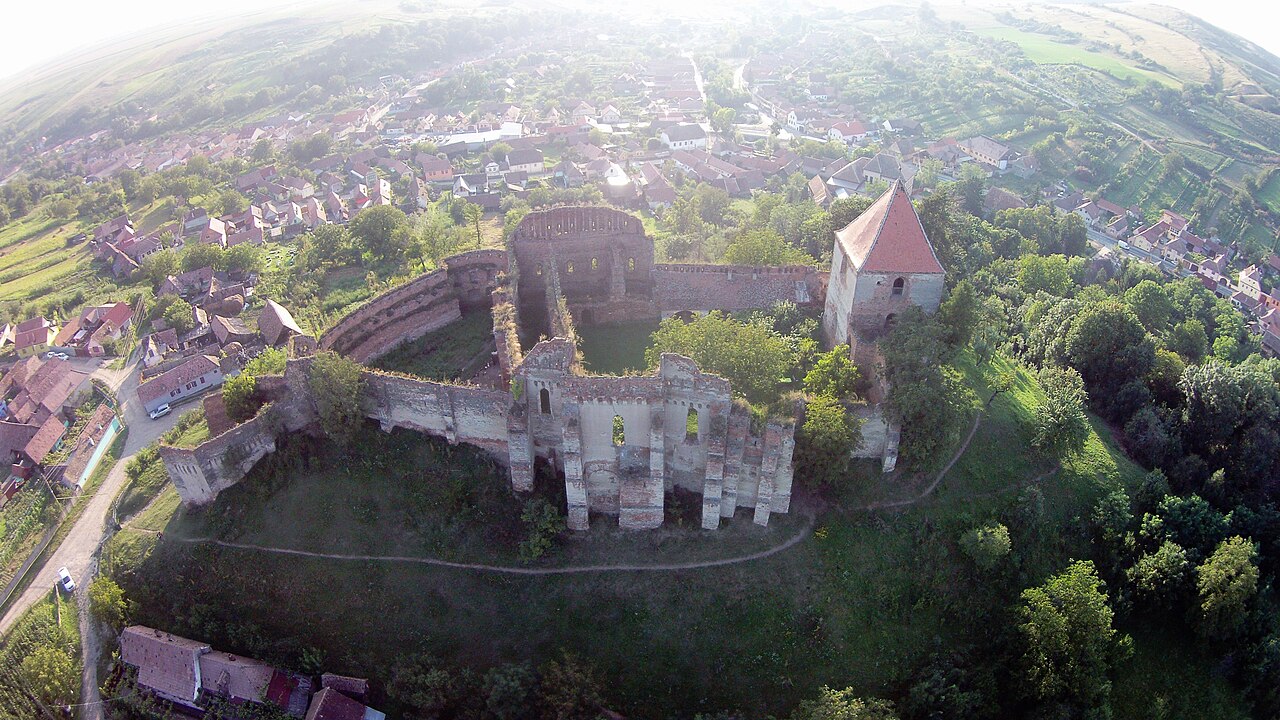
The Cisnădie fortified church and bastioned fortress is a remarkable historical complex located in Cisnădie, Romania, embodying centuries of architectural evolution and Saxon heritage in Transylvania. Its origins trace back to the mid-12th century when King Géza II of Hungary invited German settlers to protect the kingdom's borders from Pechenegs and Cumans. The earliest written record of the settlement dates to 1204, although the original village was likely destroyed during the Mongol invasions. A subsequent wave of colonization brought Saxons who rebuilt the village, centering it around a church initially constructed as a three-nave Romanesque basilica dedicated to Saint Walburga.
Medieval origins and early architectural transformations
By 1323, the settlement, known as Heltau, had achieved town status. During this period, the church underwent significant changes, transitioning from its original Romanesque style to a Gothic architectural style. This transformation included the reconstruction of the church to accommodate the evolving liturgical and defensive needs of the community.
Fortification against turkish invasions
The 15th century was marked by repeated Turkish incursions in 1438, 1442, and 1457, which inflicted considerable damage on the town. These threats prompted the decision to fortify the church, transforming it into a defensive bastion. Additional defensive floors equipped with loopholes for firearms were constructed above the transept and presbytery, and the church tower was heightened and reinforced.
Surrounding the church, a formidable 6-meter-high oval defensive wall was erected, forming the core of the fortress. Despite continued Turkish attacks in 1490 and 1493, the fortress successfully resisted capture, although the town suffered extensive damage. These events accelerated the fortification efforts, culminating in one of the largest fortified churches in Transylvania by 1530.
Defensive structures and layout
The fortress was enclosed by a double ring of walls strengthened by several bastions and towers, with a moat occupying the space between the walls. Access to the inner courtyard was controlled via a double drawbridge, enhancing the defensive capability. Attached to the inner walls were storage rooms that served dual purposes: safeguarding supplies during peacetime and providing refuge for townspeople during sieges.
Renaissance period developments and later modifications
In the mid-16th century, the church was taken over by the Lutheran community, reflecting the religious changes sweeping through Transylvania. The complex suffered damage from an earthquake in 1583, necessitating repairs. The church tower was rebuilt in 1591 and later received its current form in 1751.
Between 1778 and 1793, extensive renovations were undertaken following fire damage, which was likely caused by repeated lightning strikes on a golden sphere atop the 59-meter tower. To prevent further incidents, the first lightning rod in Transylvania was installed on the tower in 1797. In 1868, a clock was added to the tower, which remarkably continues to function without repairs.
During the 19th century, parts of the fortress walls were removed to make way for residential buildings, reflecting changing urban needs and the diminished military role of the fortress.
Architectural and cultural significance today
Today, the fortified church of Cisnădie stands as the town's main tourist attraction, showcasing well-preserved defensive walls and several towers, including the Guard Tower, Town Hall Tower, School Tower, Blacksmiths' Tower, and Pantry Tower. The church itself houses valuable architectural elements such as a Romanesque portal on the western façade of the tower and a neo-Gothic altar.
The southern apse treasury
A particularly intriguing feature is the southern apse, which was separated from the rest of the church by a wall, serving as a treasury. In times of danger, valuables were concealed here, with knowledge of the hiding place restricted to two trusted individuals. The secret was passed on only when one guardian neared death. When the treasury was rediscovered in 1793, part of the treasure funded the church's restoration, while the remainder is exhibited at the Brukenthal National Museum in Sibiu.
The Cisnădie fortress exemplifies the Saxon tradition of fortified churches in Transylvania, combining religious, residential, and military functions within a single complex. Its extensive fortifications and well-preserved structures offer valuable insights into the region's turbulent history and architectural ingenuity from the Renaissance period onward.
Frequently asked questions (FAQ)
- How do I get to Cisnădie Castle?
- Cisnădie Castle is conveniently located in Cisnădie, Romania, and can be accessed by car or public transportation. The nearest major city is Sibiu, from where you can take a bus or drive approximately 15 kilometers to reach the castle.
- What is the historical significance of Cisnădie Castle?
- Cisnădie Castle, originally built in the 13th century, served as a defensive structure for the region and is a prime example of Transylvanian architecture. It reflects the rich history of the area, showcasing the blend of medieval influences and local traditions.
- When was Cisnădie Castle built?
- Cisnădie Castle was constructed in the 13th century, with significant renovations occurring in the following centuries. Its enduring structure highlights the architectural styles of the time and offers insight into the historical context of medieval Romania.
- Can I take guided tours of Cisnădie Castle?
- Yes, guided tours are available at Cisnădie Castle, providing visitors with detailed insights into its history and architecture. Tours typically include access to various parts of the castle and are led by knowledgeable guides who can answer any questions you may have.
- Why is Cisnădie Castle a popular tourist attraction?
- Cisnădie Castle attracts visitors due to its stunning architecture, rich history, and picturesque location. The castle offers a unique glimpse into Romania's medieval past and is surrounded by beautiful landscapes, making it a perfect destination for history enthusiasts and nature lovers alike.
- Is it possible to visit Cisnădie Castle year-round?
- Yes, Cisnădie Castle is open to visitors throughout the year, although opening hours may vary by season. It's advisable to check the official website or contact the castle administration for the most current information on visiting times.
- What are the ticket prices for Cisnădie Castle?
- Ticket prices for Cisnădie Castle are generally affordable, with discounts available for students and seniors. It's best to check the castle's official website for the most up-to-date pricing and any special offers that may be available during your visit.
- What is the best time to visit Cisnădie Castle?
- The best time to visit Cisnădie Castle is during the spring and early autumn when the weather is pleasant and the surrounding nature is in full bloom. These seasons also tend to have fewer tourists, allowing for a more tranquil and enjoyable experience.
- Are there any nearby attractions to explore while visiting Cisnădie Castle?
- Yes, nearby attractions include the historic city of Sibiu, known for its well-preserved medieval architecture and vibrant cultural scene. Additionally, the Astra Museum of Traditional Folk Civilization is close by, offering a fascinating look into Romania's rural heritage.
Information
Loading map...
Visitor reviews
No reviews yet. Been here? Write the first review and help other travelers!
Write the first reviewVisited this castle? Share your experience
Your review helps other travelers and adds first-hand knowledge to our encyclopedia.