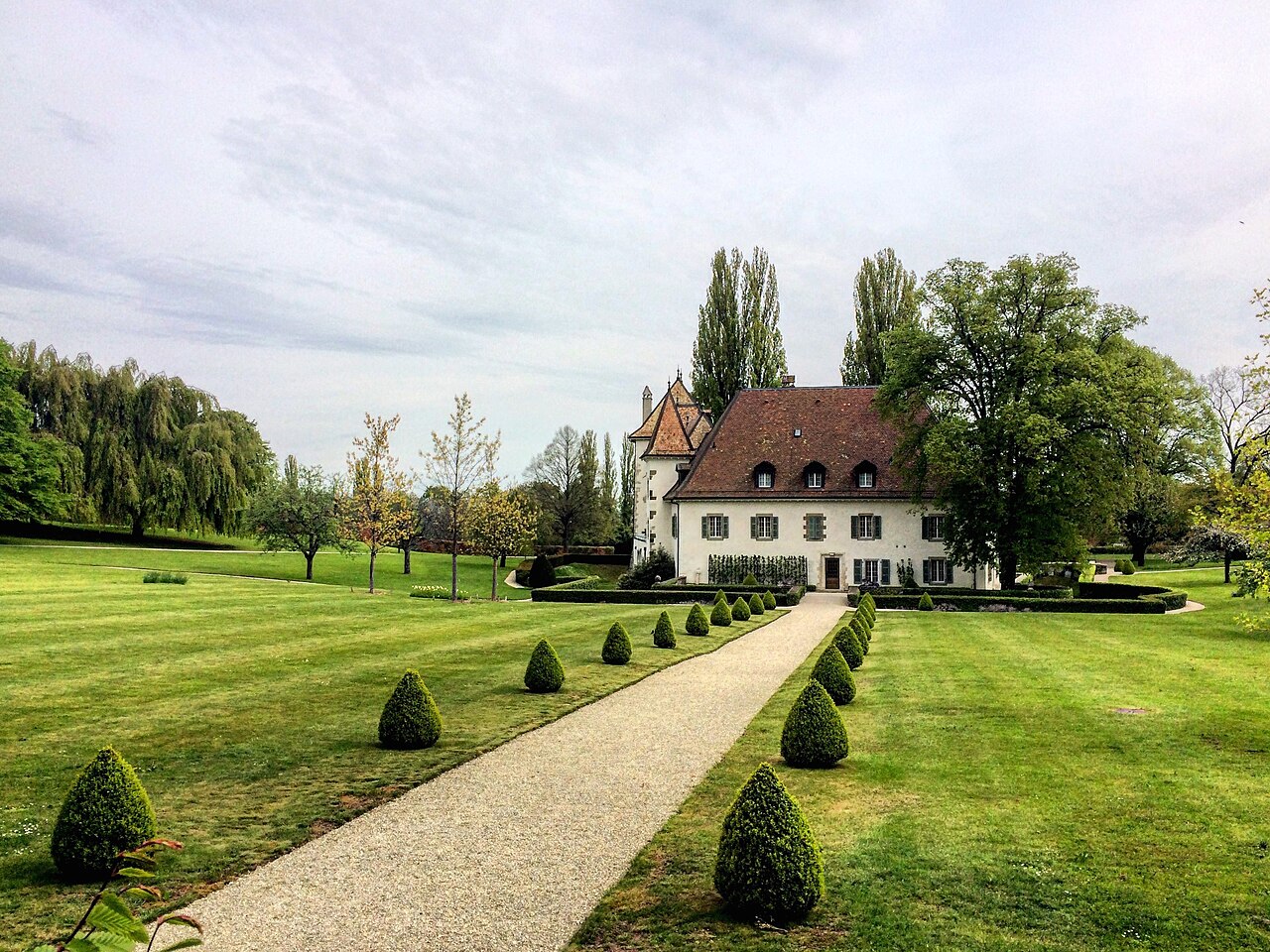
Crest Castle

Crest Castle in Jussy, Switzerland
High Medieval (11th–13th c.)
Partially Preserved

Crest Castle stands as a unique historical monument on the left bank of Lake Geneva in the Canton of Geneva, Switzerland. Built around 1220, this high medieval castle is notable not only for its architectural heritage but also for being the only wine-producing castle in the region. Its origins trace back to lands owned by the Bishop of Geneva, who commissioned the construction of the castle to serve both as a defensive stronghold and an administrative center overseeing the surrounding domains.

Medieval origins and ownership history

Constructed in the 13th century, Crest Castle was initially under the stewardship of various noble families appointed by the Bishop of Geneva. These families were responsible for managing the castle and its extensive agricultural estates, which included vineyards that have contributed to the castle's longstanding association with wine production. Over the centuries, the castle witnessed multiple changes in ownership, reflecting the shifting political and social landscape of the region. Despite these transitions, the castle maintained its role as a significant local landmark and agricultural hub.

Architectural features and preservation

The castle's architecture embodies typical high medieval design elements, including fortified walls, towers, and a central courtyard that would have supported both defense and domestic functions. While specific architectural details are less documented, the castle's enduring structure suggests robust medieval construction techniques adapted to the terrain of Jussy. The castle's preservation has allowed it to retain much of its historical character, although it has undergone various restorations to maintain its condition.

Cultural significance and current management

Today, Crest Castle holds cultural and historical importance as a symbol of the medieval heritage of the Geneva region. Since 2005, the castle has been managed by the Foundation Micheli-du-Crest, which oversees its maintenance and promotes its historical legacy. The foundation also supports the continuation of the castle's traditional wine production, linking past and present through viticulture. Visitors to the castle can appreciate its scenic location overlooking Lake Geneva and its role in the region's history.

The castle and its vineyards

The vineyards associated with Crest Castle are integral to its identity. The castle's grounds include cultivated plots that have been used for grape growing since its early days. This agricultural activity not only sustained the castle's inhabitants but also contributed to the local economy. The continuation of wine production at Crest Castle is a rare example of how medieval estates can maintain their traditional functions into the modern era, offering insights into historical land use and regional viticulture.

Visiting crest castle

While Crest Castle is primarily a private heritage site managed by the Foundation Micheli-du-Crest, it occasionally opens its doors for cultural events and wine tastings, allowing visitors to engage with its historical and agricultural heritage. Its picturesque setting near Lake Geneva makes it a notable destination for those interested in medieval architecture, Swiss history, and wine culture.

Frequently asked questions (FAQ)

How do I get to Crest Castle?
Crest Castle is located in Jussy, Switzerland, and can be accessed by car or public transport. If you're coming by train, the nearest station is a short bus ride away. Make sure to check local transport schedules for the best route.
What is the historical significance of Crest Castle?
Crest Castle dates back to the 13th century and has played a vital role in the region's history. It served as a strategic military stronghold and a residence for local nobility. The castle's rich history is reflected in its architecture and the artifacts displayed within.
When was Crest Castle built?
Crest Castle was originally constructed in the early 1200s, with significant renovations and expansions occurring throughout the centuries. Its design showcases the evolution of architectural styles from medieval to Renaissance influences. Today, it stands as a testament to the craftsmanship of its time.
Can I take guided tours at Crest Castle?
Yes, guided tours are available at Crest Castle, providing visitors with in-depth insights into its history and architecture. Tours are typically conducted in multiple languages, allowing a diverse range of visitors to enjoy the experience. It's advisable to book in advance during peak tourist seasons.
Why is Crest Castle a popular tourist destination?
Crest Castle is popular for its stunning views of the surrounding landscape and its well-preserved historical architecture. Visitors are drawn to its fascinating history and the picturesque scenery that surrounds it. Additionally, the castle hosts various cultural events throughout the year, adding to its charm.
Is it possible to host events at Crest Castle?
Yes, Crest Castle offers facilities for hosting private events, including weddings and corporate gatherings. The unique setting and historical ambiance make it a memorable location for special occasions. Interested parties should contact the castle administration for more details on availability and services.
What are the opening hours for Crest Castle?
Crest Castle is open to visitors from 10 AM to 6 PM daily, with extended hours during the summer months. It is advisable to check the official website for any seasonal changes in opening times. Plan your visit accordingly to make the most of your experience.
What are the ticket prices for visiting Crest Castle?
Ticket prices for Crest Castle vary depending on age and group size, with discounts available for children and seniors. A standard adult ticket typically costs around CHF 10, and family packages are also offered. Be sure to check for special events that may have different pricing structures.
What is the best time to visit Crest Castle?
The best time to visit Crest Castle is during the spring and early autumn when the weather is pleasant, and the surrounding gardens are in full bloom. Summer can be busy with tourists, while winter may limit access due to weather conditions. Plan your visit around local events for a richer experience.
Are there any nearby attractions to visit while at Crest Castle?
Yes, there are several attractions near Crest Castle, including beautiful hiking trails and the stunning Lake Geneva. The nearby town of Jussy offers charming cafes and shops, perfect for a leisurely stroll. Many visitors enjoy combining their castle tour with a day exploring the local area.

Information

Hill Castle

Current owner

Foundation Micheli-du-Crest

Sources & official resources

Verify the information above using these authoritative references.

Loading map...

Visitor reviews

No reviews yet. Been here? Write the first review and help other travelers!

Write the first review

Visited this castle? Share your experience

Your review helps other travelers and adds first-hand knowledge to our encyclopedia.
Write a review

(5/5)

0/2000 characters

Your review will be visible after admin approval

Nearby castles

4 km
Rouelbeau Castle Ruins — Switzerland castle

Rouelbeau Castle Ruins

Meinier, Switzerland

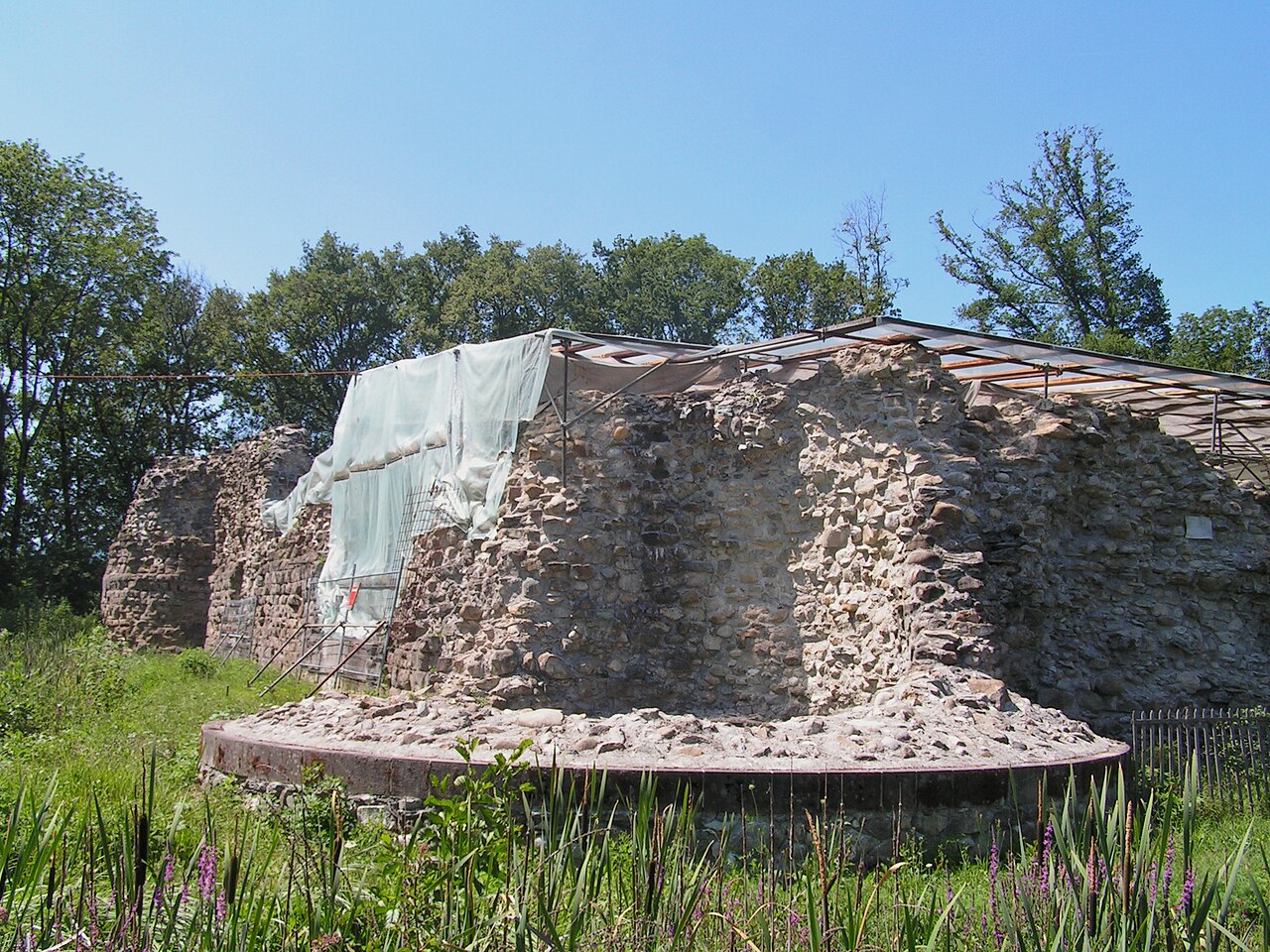
Rouelbeau Castle ruins stand as a remarkable testament to medieval fortification and regional power struggles in the Swiss municipality of Meinier. Originally constructed in 1318 as a wooden stronghold by knight Humbert de Choulex, the castle was strategically positioned to secure the route of the lords of Faucigny toward the settlement of Hermance and to counter the influence of the expanding House of Savoy. Over the course of the 14th century, Rouelbeau evolved from its initial wooden form into a formidable stone castle, reflecting the shifting military and political realities of the late medieval period. The castle's location on marshy terrain near the source of the Seymaz river necessitated innovative construction techniques, including the creation of an artificial earth mound to provide a stable foundation. This mound was formed using clay excavated from the site itself, demonstrating medieval engineering adapted to challenging landscapes. Surrounding the castle was a complex double moat system, parts of which still retain water today, offering a glimpse into the castle's original water defenses designed to repel attackers. Historical context and strategic significance Rouelbeau Castle's foundation in 1318 by the lords of Faucigny was part of a broader effort to fortify the region against the ambitions of the House of Savoy. The castle served as a key defensive outpost in the borderlands, with a small garrison manning the site during peacetime and a larger force during periods of conflict. Early records indicate that the castle was initially a wooden fortified house, which was typical for the period but vulnerable to siege and attack. Between 1334 and 1339, the castle's defenses were significantly enhanced with the addition of an artificial mound and two moats. Subsequently, stone fortifications replaced or reinforced the wooden structures, likely under the ownership of Nicod de Ferney after 1345. This transition to stone construction marked a critical evolution in the castle's architecture, aligning with contemporary trends in military fortification during the late medieval period. The castle's military role diminished after its conquest by Amadeus VI of Savoy in 1355, which integrated the castle firmly into the County of Savoy. Following this, Rouelbeau was repurposed as a prison and later, from the early 15th century, served as a hunting lodge for the Genève-Lullin family. The castle sustained damage during the religious conflicts of the 16th century, particularly in 1536 amid the Protestant Reformation and Geneva's struggle for independence. Despite this, the site remained under the control of baronial owners after being reclaimed from the city of Geneva in 1564. Architectural features and layout The castle's ruins reveal a roughly rectangular footprint measuring approximately 52 by 39 meters. The defensive perimeter was defined by four circular corner towers, each about nine meters in diameter with walls approximately 2.3 meters thick, designed to withstand assaults and provide vantage points for defenders. The main entrance was guarded by a rectangular gate tower, controlling access to the interior courtyard. The transition from wood to stone construction between 1339 and 1355 involved the use of molasse sandstone, a soft regional stone, for the walls. Interestingly, some of the masonry incorporates embedded cannonballs, which may have been repurposed from military engagements or served as additional defensive reinforcement. Large sections of these stone walls remain visible, including parts of the main gate and foundations of two corner towers, offering valuable insights into medieval construction techniques and defensive design. Moats and earthworks The castle's double moat system was a critical defensive feature. The moats, fed by the nearby Seymaz river source, created a formidable barrier against attackers. Remnants of these moats persist, with some areas still holding water, allowing visitors to appreciate the castle's original strategic use of natural and artificial water defenses. Interior structures and archaeological findings Within the castle's enclosure, the earliest structure was a wooden fortified house surrounded by wooden palisades. Archaeological excavations conducted between 2001 and 2014 uncovered a wealth of artifacts that illuminate the castle's varied history. Among the finds was a lead-sealed papal bull issued by Pope Innocent IV, underscoring the site's connection to broader medieval ecclesiastical networks. Other notable artifacts include fragments of lead-glazed ceramic jugs decorated with chevron patterns, coins, and a ceramic hunting horn, which testify to the castle's later use as a noble residence and hunting lodge. These discoveries provide a tangible link to the daily life and social status of the castle's inhabitants across centuries. Cultural significance and preservation Beyond its historical and architectural importance, Rouelbeau Castle is embedded in local folklore. Legends of a "White Lady" ghost and a mysterious "Black Cat" apparition linked to witchcraft accusations from 1567 enrich the cultural heritage of the site, attracting visitors interested in both history and legend. Recognized as a monument of national importance in 1921, the ruins have been carefully preserved and protected. Excavations have been covered with layers of sand and earth to safeguard the delicate remains. Modern technologies, including drone surveys and 3D virtual reconstructions, have enhanced understanding and public engagement with the site. Visitors today can explore the ruins via a designated trail that guides them through the castle's defensive architecture and historical phases. Interpretive materials help contextualize the castle within the broader narrative of medieval fortifications and regional power dynamics in Switzerland.

Late Medieval (14th–15th c.)
Details
10.1 km
Chateau de Tournay — Switzerland castle

Chateau de Tournay

, Switzerland

Chateau de Tournay, located in the municipality of Pregny-Chambésy in the Canton of Geneva, Switzerland, is a notable example of a late-medieval hill castle. Classified as a Cultural Property of National and Regional Significance, this castle offers a fascinating glimpse into the region's turbulent history and architectural evolution. Origins and early history The exact origins of Chateau de Tournay remain somewhat obscure due to the absence of contemporary written records. It is generally accepted that the castle was constructed in the 15th century, a period marked by significant military and political strife in the region. The castle's strategic position atop a hill provided a commanding view of the surrounding landscape, typical of hill castles designed for defense and surveillance during the late medieval period. Architectural features and layout The castle's architecture reflects the defensive priorities of its time. Its stone walls and battlements were built to withstand sieges and attacks. The structure includes a central keep or donjon, which served as the last line of defense and the residence of the lord. Surrounding the keep, the castle likely featured a courtyard enclosed by curtain walls, with towers at key points to provide flanking fire against attackers. While detailed architectural plans are not widely documented, typical features of such castles include narrow arrow slits for archers, a fortified gatehouse, and possibly a moat or natural defensive barriers enhanced by man-made fortifications. Historical events and ownership In 1583, the castle came under the ownership of the Brosses family. The late 16th century was a tumultuous era for the region, and in 1590, the castle suffered significant damage when it was burned and pillaged by Genevan soldiers. This event reflects the ongoing conflicts between local powers during the period. A notable chapter in the castle's history began in 1758 when the famous Enlightenment writer and philosopher Voltaire acquired the castle and its countal title under a lifetime lease. Voltaire used the castle as a venue for theatrical performances, which, while culturally significant, caused friction with the local populace who disapproved of these activities. This tension illustrates the complex social dynamics of the time. Following the upheavals of the French Revolution, the castle was seized and subsequently sold in 1794. This transfer marked a shift from aristocratic to private ownership, a common fate for many such estates in post-revolutionary Europe. In the 20th century, the castle was purchased by Alfred Baur, a noted merchant and collector, in 1915. After his death, ownership passed to the Baur Foundation, which maintained the property until 2009. Since then, it has been privately owned, ensuring its preservation and continued significance. Significance and preservation Today, Chateau de Tournay stands as a well-preserved example of a late-medieval hill castle in Switzerland. Its classification as a Cultural Property of National and Regional Significance highlights its importance in Swiss heritage. The castle's survival through centuries of conflict, ownership changes, and social transformation makes it a valuable site for understanding regional history and medieval architecture. The castle's architectural features, including its defensive walls, towers, and possible remnants of the keep, provide insight into the military engineering of the period. Its association with prominent historical figures like Voltaire adds cultural depth, linking the site to broader European intellectual history. Visiting Chateau de Tournay While the castle is privately owned and not regularly open to the public, its exterior and surrounding landscape can be appreciated from nearby vantage points in Pregny-Chambésy. The region itself offers a rich context of Swiss history and natural beauty, making it a worthwhile destination for enthusiasts of medieval architecture and history. Visitors interested in the castle's history can explore local archives and museums in Geneva, which provide additional context on the castle's role in regional conflicts and its cultural significance during the Enlightenment. Nearby attractions The city of Geneva, with its historic old town and numerous museums. The nearby Lake Geneva, offering scenic views and recreational opportunities. Other medieval sites in the canton, providing a broader understanding of the area's heritage.

Late Medieval (14th–15th c.)
Details
10.9 km

Avully Castle

Brenthonne, France

Avully Castle, also known as Château d'Avully or Château Saint-Michel d'Avully, is a remarkable example of a fortified medieval hill castle located in Brenthonne, within the Haute-Savoie department of France. This castle stands on a site with a history of occupation dating back to antiquity, originally built upon the remains of a substantial 1st century Gallo-Roman villa. Over centuries, it evolved from a Roman estate into a medieval stronghold, reflecting the region's turbulent history and architectural transitions. Early history and origins The site of Avully Castle was first occupied during the Roman period, evidenced by the discovery of Roman tiles and ceramic fragments during restoration works. This villa was part of a network of Roman rural estates that dotted the landscape of what is now southeastern France. Following the decline of Roman authority, the site continued to be inhabited through the early Middle Ages, with archaeological finds such as ceramic stove tiles dating to the high medieval period. These artifacts indicate a continuity of occupation and suggest close cultural and economic ties with the neighboring regions of Savoy and Swiss Romandy. Medieval development and fortification The first documentary mention of the Avully family appears around 1172, identifying them as vassals of the powerful Faucigny family. By the early 14th century, the manor was formally recognized under the jurisdiction of the Counts of Savoy (1323) and later the Dauphins of Viennois (1336). At this time, the manor was ordered to be fortified, reflecting the strategic importance of the site amidst regional conflicts. Following this directive, the original house was rebuilt into a castle with defensive features suitable for the period. The castle's location on a hill provided natural advantages, while the addition of a water-filled moat and ramparts enhanced its defensive capabilities. The enclosure is roughly rectangular, measuring approximately 26 by 34 meters, surrounded by a moat and preceded by a lower courtyard protected by ramparts and ditches. Architectural features of the castle Avully Castle exhibits a complex of defensive and residential structures characteristic of the late medieval period. At the northern corner stands a distinctive spur-shaped tower, while the southern corner features a square tower with machicolations, above which a chapel is situated. The eastern and western corners are marked by square corbelled watch turrets or échauguettes, projecting from the walls and supported by stone corbels, providing vantage points for surveillance. The main entrance is through a 14th-century rectangular gatehouse, measuring about 10 by 5.5 meters. This gate tower includes a machicolated wall walk (chemin de ronde) for defenders and a turret with a staircase accessing the upper levels. Inside the courtyard, buildings line the sides, including two main residential wings. One wing is notable for its three arcaded openings on the ground floor and loggias containing a 16th-century staircase, reflecting Renaissance-era modifications. Ownership transitions and historical significance In the early 15th century, the castle passed by marriage to the Boëge family. In 1441, Jacquemette de Boëge transferred ownership to Louis I, Duke of Savoy, who promptly sold it to Boniface de Saint-Michel, a wealthy burgher from Geneva. The Saint-Michel family renamed themselves Saint-Michel d'Avully and undertook significant remodeling during the 16th century, adapting the castle to contemporary residential and defensive needs. During the religious upheavals of the 16th century, the Saint-Michel family embraced Protestantism in 1536 amid the Bernese invasion. However, in 1596, Antoine de Saint-Michel renounced Protestantism and returned to Catholicism, an act that influenced the broader re-Catholicization of the Chablais region. This period saw the castle's fortifications adapted to accommodate artillery, reflecting evolving military technology. The estate was acquired by the de Sales family in 1756, who retained it until 1896. The castle survived the French Revolution with minor damage; its moats were filled in, and the keep was lowered to reduce its military threat. After 1896, the castle was abandoned and fell into ruin, with parts collapsing in the mid-20th century. Restoration and current use In 1971, the ruins were purchased by a private company, initiating a comprehensive restoration project lasting over four decades. Led by Jean and Yvonne Guyon, the restoration focused on rebuilding defensive walls, roofs, and reinstating the moat, reviving the castle's historic character. Since 1974, Avully Castle has been protected as a historic monument, recognized for its cultural and architectural significance. Today, the castle is privately owned and serves as a venue for weddings, seminars, and cultural events. It is also open to visitors for a fee, offering a unique glimpse into a well-preserved medieval fortified residence with layers of history visible in its architecture and layout. Architectural and landscape details The castle's layout includes a fortified enclosure with a water-filled moat, a lower courtyard with ramparts and ditches, and multiple towers providing defense and observation points. The presence of machicolations and échauguettes demonstrates advanced medieval military architecture. Residential buildings inside the courtyard feature Renaissance elements such as arcades and loggias, indicating adaptations for comfort and status. Surrounding the château are formal gardens designed in both Italian and French styles, enhancing the site's aesthetic appeal. These gardens complement the castle's historic ambiance and provide visitors with scenic views of the surrounding landscape. Interior spaces and notable rooms The castle's interior includes a guardroom and a hall adorned with coats of arms of prominent Savoyard families, underscoring its administrative role. The upper floors contain distinct chambers such as the "ladies' room," "Cruet room," "gentlemen's room," and a hunting room, reflecting the social organization and lifestyle of its noble inhabitants. Cultural and heritage importance Avully Castle stands as a testament to the region's layered history, from Roman occupation through medieval feudalism to Renaissance transformation and modern restoration. Its architecture embodies the evolution of defensive structures adapting to changing military technologies and residential needs. The castle's survival through political upheavals, religious conflicts, and periods of neglect highlights its resilience and importance as a cultural heritage site. As a protected historic monument, Avully Castle contributes to the understanding of regional history in Haute-Savoie and the broader Savoyard territories. Its accessibility to the public and use as a cultural venue ensures ongoing engagement with its storied past.

Early Medieval (5th–10th c.)
Details