Cramond Roman Fort
Cramond Roman Fort is a significant archaeological and historical site located at the mouth of the River Almond where it flows into the Firth of Forth in Edinburgh, Scotland. Established around 140 AD during the construction of the Antonine Wall, this fort was part of a strategic chain of Roman military installations designed to control and defend the northern frontier of the Roman Empire in Britain. The fort's position near a probable natural harbour made it a vital point for logistics and communication along the Roman frontier in Lothian.
The fort remained active until approximately 170 AD, when Roman forces retreated to the more southerly Hadrian's Wall. Later, during the reign of Emperor Septimius Severus (205-214 AD), the fort was reoccupied and expanded as part of his campaigns in Scotland. Archaeological evidence indicates a continuous civilian settlement outside the fort walls, suggesting a vibrant community that interacted with the Roman military presence. Furthermore, traces of occupation into the 4th and 5th centuries AD point to a transitional phase into the early Sub-Roman period, highlighting the site's long-term importance.
Roman architectural features and archaeological discoveries
The fort's layout, partially visible today in open parkland, includes the remains of key Roman military buildings such as the principia (headquarters building), granaries, and workshops. These structures were essential for the administration, storage, and maintenance of the fort's garrison. Excavations over the last 50 years have revealed detailed plans and foundations, allowing for partial restoration and interpretation of the site. Visitors can explore information panels that reconstruct the daily life of Roman soldiers and civilians, including the bathhouse complex, which was a central feature of Roman military life.
Numerous Roman inscriptions and artifacts, including fragments of amphorae and mortaria, have been uncovered around Cramond, providing insights into the trade, diet, and cultural practices of the inhabitants. The discovery of a defensive ditch linked to the fort further illustrates the military engineering employed to secure the site.
Cramond Tower: medieval fortified residence and later adaptations
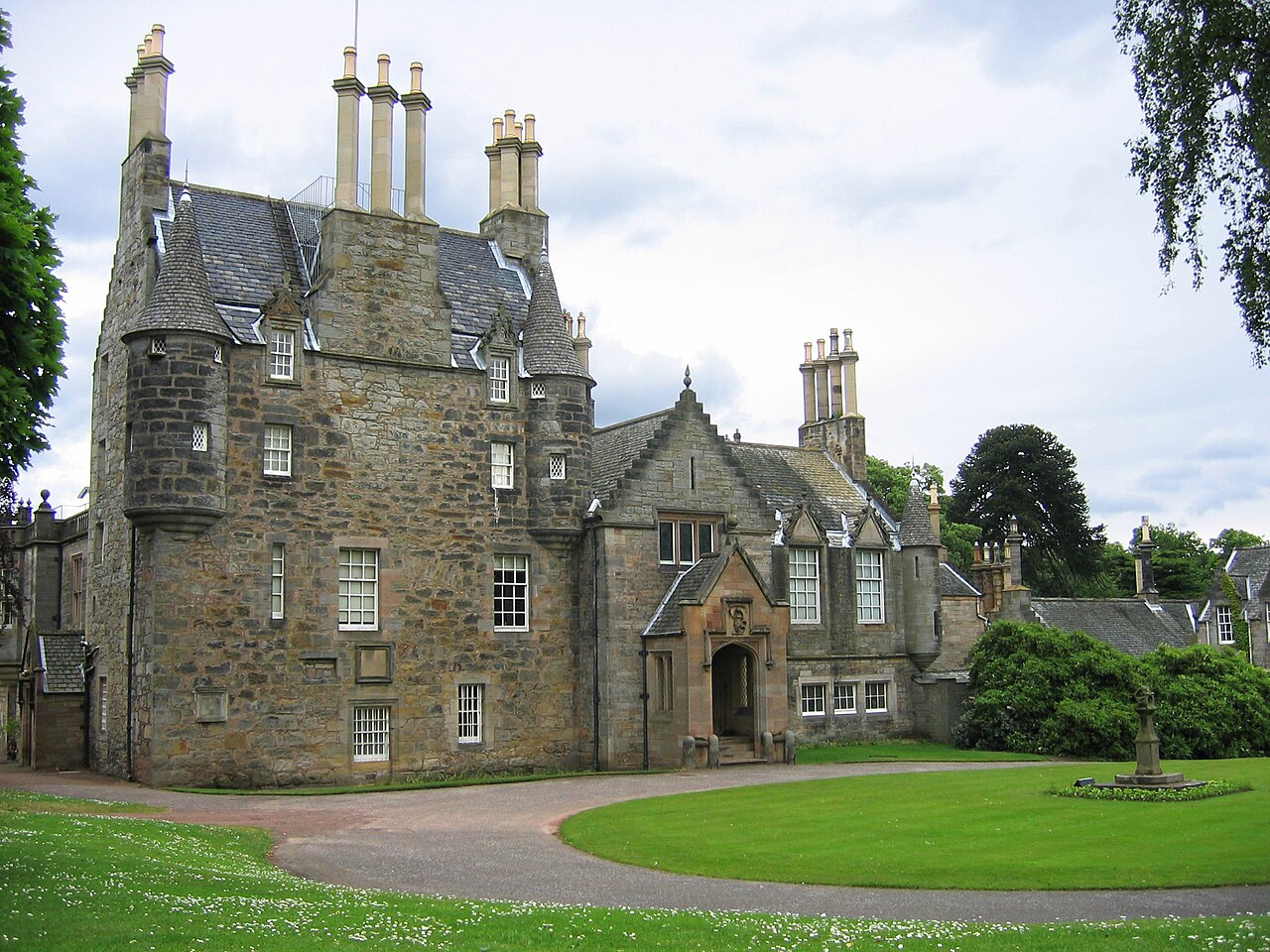
Adjacent to the Roman fort lies Cramond Tower, a well-preserved four-storey stone structure dating from the late 15th or early 16th century. This tower house was originally built as a defensible residence, likely by local Scottish builders, and served as a seasonal home for the Bishop of Dunkeld. Its robust construction, with walls up to 5 feet thick and a nearly square footprint of approximately 25 feet per side, reflects its defensive purpose during a turbulent period in Scottish history.
The tower features a distinctive round staircase turret projecting from the southeast corner, allowing vertical movement between floors without compromising the structural integrity of the main walls. Internally, the ground floor was traditionally used for storage, with living quarters, kitchen, bedrooms, and bathrooms arranged on the upper floors. The tower's layout was adapted over time to meet changing residential needs.
Ownership and restoration history
In the early 17th century, the tower passed into the hands of James Inglis, an Edinburgh merchant, who made alterations around 1622 to improve comfort, including enlarging windows and creating internal recesses. The Inglis family retained ownership until the late 17th century, after which the tower was abandoned in favor of nearby Cramond House. Neglect over the next three centuries led to significant deterioration.
The 19th century saw the tower depicted as a romantic ruin by artist James Skene in 1837. Preservation efforts began in the 1960s with protective measures such as a concrete roof covering and clearing of surrounding vegetation. Private ownership resumed in 1978, and a major restoration project led by Robert Hurd & Partners between 1979 and 1981 converted the tower into a modern home, carefully reconstructing the pitched roof and adding a sympathetic stone extension in the 1990s.
Despite suffering fire damage in 2011, the tower remains a category B listed building, recognized for its architectural and historic significance. Its preservation allows visitors to appreciate the evolution of fortified domestic architecture in Scotland from the medieval period to the present.
Archaeological investigations and the broader historical landscape
Excavations around Cramond Tower have uncovered medieval and post-medieval artifacts directly related to the tower's occupation, as well as Roman-period remains, underscoring the continuity of settlement in this location. Foundations of outbuildings west of the tower reveal the extent of the medieval complex, supporting ancillary functions.
The juxtaposition of the Roman fort and the medieval tower within the same landscape provides a rare opportunity to study the layers of military and domestic architecture spanning over a millennium. The site illustrates how strategic locations were reused and adapted through changing historical contexts, from Roman frontier defense to medieval fortified residences.
Visiting Cramond Roman Fort and Tower today
The remains of Cramond Roman Fort are accessible in a public open parkland setting, where visitors can walk among the outlines of Roman buildings and learn about the site's history through informative displays. The nearby Cramond Tower, while privately owned, stands as a prominent historic landmark visible from surrounding areas, symbolizing the rich architectural heritage of Edinburgh.
Both sites contribute valuable insights into Scotland's layered past, from Roman military occupation to medieval societal structures, making them important destinations for history enthusiasts and scholars alike.
Frequently asked questions (FAQ)
- How do I get to Cramond Roman Fort?
- Cramond Roman Fort is located in Edinburgh, accessible by public transport and car. You can take a bus from the city center, which offers a scenic route along the coast, or drive and take advantage of local parking options.
- What is the historical significance of Cramond Roman Fort?
- Cramond Roman Fort dates back to the Roman occupation of Britain and served as a strategic military base. It is one of the best-preserved Roman sites in Scotland, showcasing the Roman influence and military architecture in the region.
- When was Cramond Roman Fort built?
- Cramond Roman Fort was constructed around AD 142, during the reign of Emperor Antoninus Pius. It was part of the larger Antonine Wall, which marked the northern frontier of the Roman Empire in Britain.
- Can I visit Cramond Roman Fort year-round?
- Yes, Cramond Roman Fort is open to visitors year-round, although some areas may be subject to seasonal access restrictions. It's advisable to check local guidelines or the official website for any updates on accessibility.
- Why is Cramond Roman Fort a popular tourist attraction?
- Cramond Roman Fort attracts visitors due to its rich history and stunning coastal views. The site offers a unique glimpse into Roman military life and is set in a picturesque location, making it ideal for both history enthusiasts and casual visitors.
- Is it possible to access Cramond Roman Fort with a wheelchair?
- Cramond Roman Fort has some accessible paths, but certain areas may be uneven or challenging for wheelchair users. It is recommended to contact the site management ahead of your visit to inquire about specific accessibility options.
- What are the opening hours for Cramond Roman Fort?
- Cramond Roman Fort typically opens from 9 AM to 5 PM daily, but hours may vary seasonally. Always check the official website for the most accurate and up-to-date information on opening times before your visit.
- Are there any ticket prices for visiting Cramond Roman Fort?
- Entry to Cramond Roman Fort is generally free, allowing visitors to explore the site without any cost. However, special events or guided tours may have associated fees, so it's best to check in advance.
- What are some nearby attractions to Cramond Roman Fort?
- Nearby attractions include Cramond Island, which can be accessed during low tide, and the beautiful Cramond village with its charming cafes and shops. Additionally, the scenic coastline offers excellent walking paths and views of the Firth of Forth.
Information
Website
Visit websiteSources & official resources
Verify the information above using these authoritative references.
Loading map...
Visitor reviews
No reviews yet. Been here? Write the first review and help other travelers!
Write the first reviewVisited this castle? Share your experience
Your review helps other travelers and adds first-hand knowledge to our encyclopedia.