Cornstejn Castle
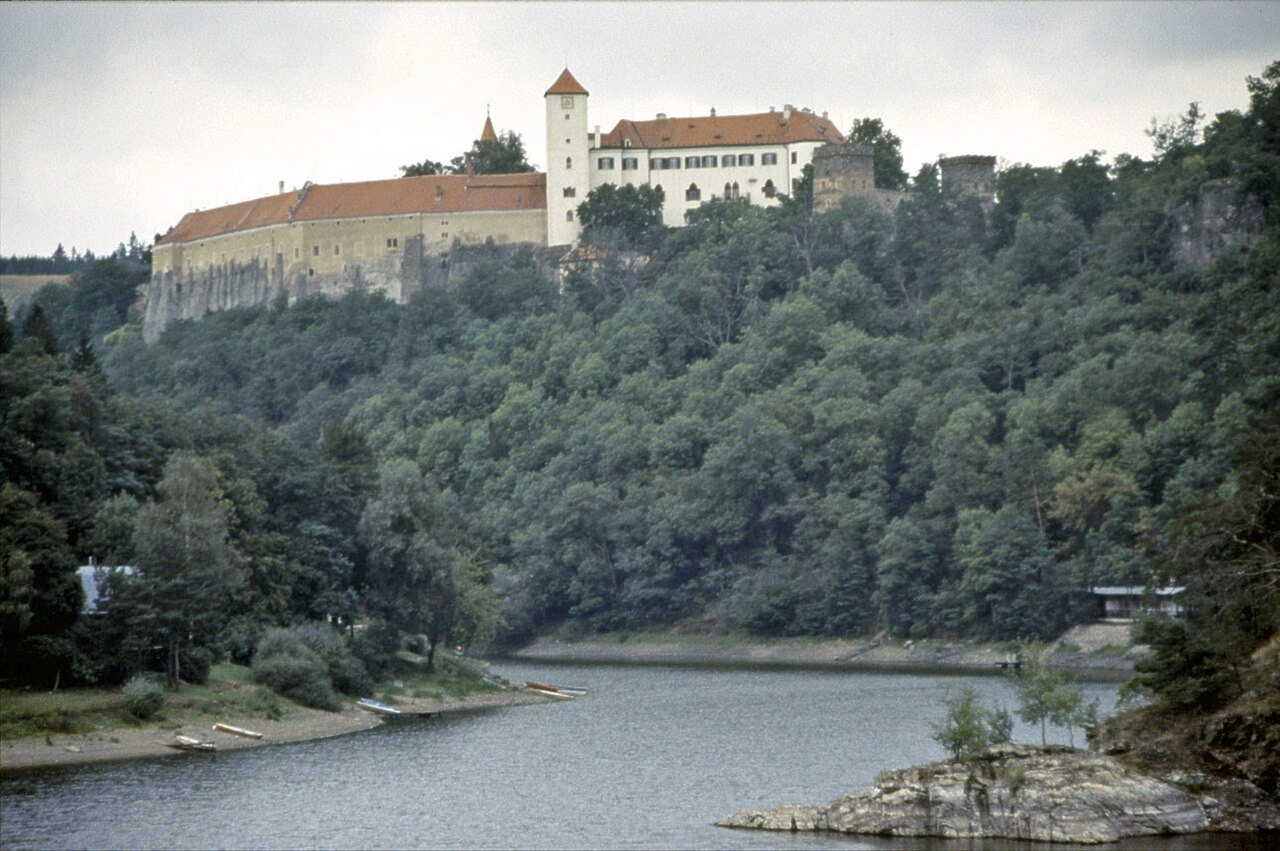
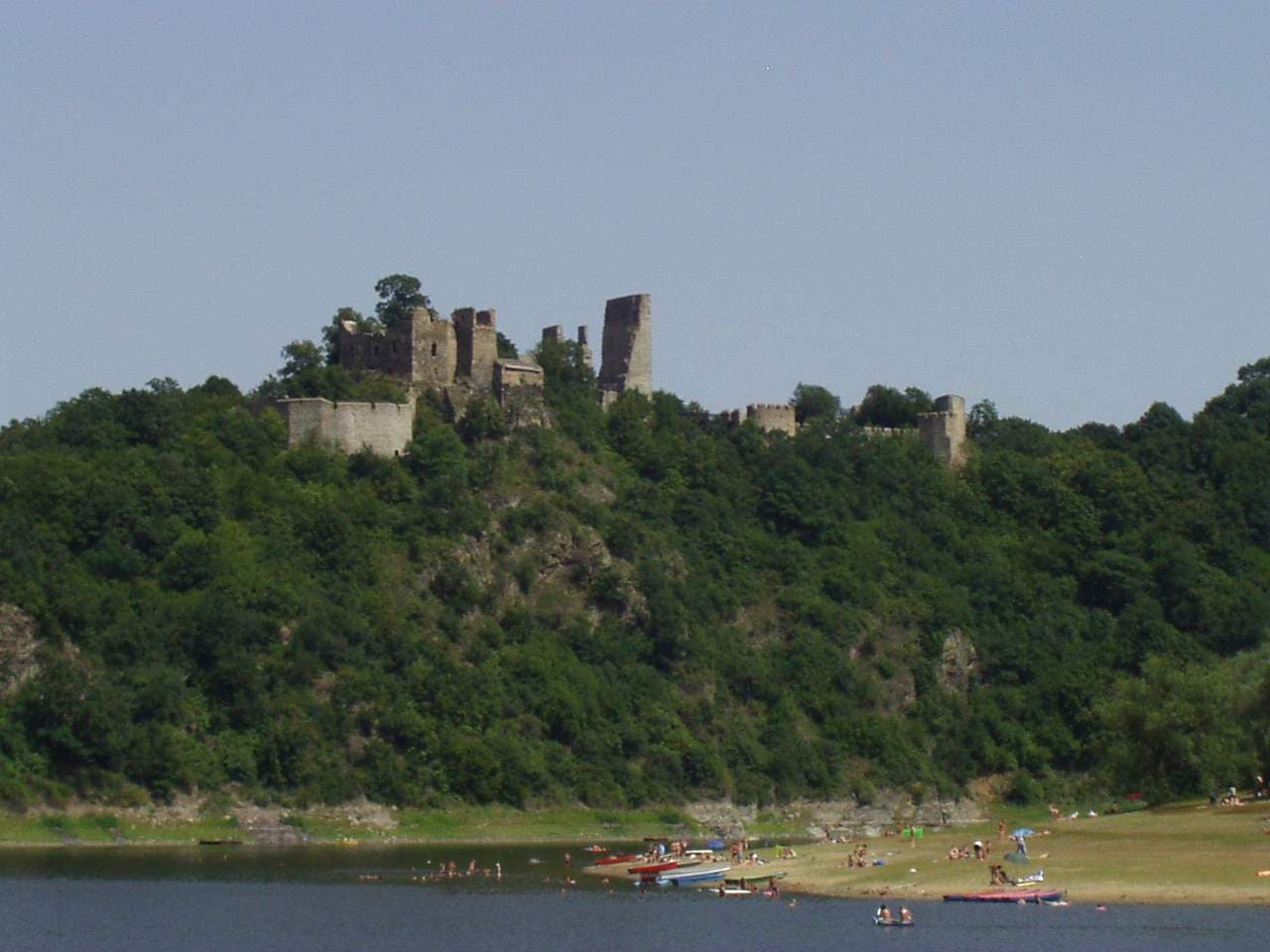
Cornštejn Castle is a significant late medieval Gothic hill castle located near Bítov in the scenic Dyje (Thaya) River Valley of south-west Moravia, Czech Republic. Built in the 14th century on royal demesne land, it was originally subordinate to the nearby Bítov Castle and strategically positioned to secure vital routes between key fortresses. The castle's name derives from the German words "Zorn" (anger) and "Stein" (stone), reflecting its formidable nature and rocky setting.
Founding and early development
The castle was established in the early 14th century, with the first significant construction attributed to Raimund of Lichtenburg, a favored noble of King Wenceslaus II. Raimund aimed to strengthen the security of the region by reinforcing the road connecting Bítov Castle with Vranov Castle. Initially, Cornštejn was conceived as a small Gothic noble residence featuring a courtyard, a high enclosing wall, and a palace protected by a tall shield wall. This early phase laid the groundwork for its evolution into a substantial fortress.
Expansion under the lichtenburg family
Throughout the 14th century, the castle underwent significant fortification. Henry of Lichtenburg added a pre-wall around the entire castle in the latter half of the century, creating the Upper Bailey. By the early 15th century, Albrecht and John of Lichtenburg expanded the complex further by constructing a second palace on the opposite side of the courtyard. They also established the Lower Ward, which included barracks and additional buildings. This area was enclosed by a new ring of curtain walls featuring two gates and two bastions, reflecting the castle's growing military importance.
Sieges and military significance
Cornštejn Castle played a notable role during the turbulent times of the Hussite Wars. In 1422, it was besieged by Hussite forces, prompting the lords to fortify a strategically vulnerable hill to the south with a detached outwork. The castle's defenses were tested again in 1463 when it endured an eleven-month siege by King George of Bohemia. Despite the prolonged assault, Cornštejn's fortifications held strong, demonstrating its resilience. Following the siege, King George confiscated the castle from Hynek of Lichtenburg and granted it to Wolfgang Kraiger of Kraigk, who undertook extensive reconstruction and modernization efforts.
Advancements in artillery defense
Wolfgang Kraiger's sons, Lipolt and Henry, further enhanced the castle's defenses by building a modern fortification on the rocky platform south of the main castle. This addition was designed to counter the evolving artillery warfare of the time, marking Cornštejn as a forward-thinking military stronghold. The castle's strategic importance continued into the 16th century, with the Moravian Estates ordering repairs and improvements in 1542 to prepare for potential Ottoman incursions, though such an attack never materialized.
Decline and preservation
By the late 16th century, the era of medieval castles was waning. After the extinction of the Lichtenburg family in 1576, the castle passed to the Streuns of Schwarzenau, who abandoned it and likely removed the roofs to avoid taxation. This marked the beginning of Cornštejn's decline into ruin. Subsequent owners, including the Jankovský of Vlašim, the Counts von Daun, and the Haases von Hasenfels, made no significant restorations.
Following World War II, in 1945, Cornštejn Castle was confiscated and nationalized. Restoration efforts began in the early 1970s, led by the Monument Preservation Institute in Brno, stabilizing two-thirds of the castle ruins. Since 1998, the site has been open to the public, offering visitors insight into its rich history and architectural evolution.
Architectural features and layout
The castle's layout reflects its development from a small noble residence into a complex fortress. The original Gothic palace and courtyard were protected by a high enclosing wall and a shield wall, typical of 14th-century military architecture. The Upper Bailey added by Henry of Lichtenburg included a pre-wall that enhanced the castle's defensive perimeter.
The Lower Ward constructed in the early 15th century expanded the castle's functional spaces, including barracks and additional buildings, all enclosed by a curtain wall with two gates and bastions. The detached outwork on the southern hill provided an extra layer of defense against attackers.
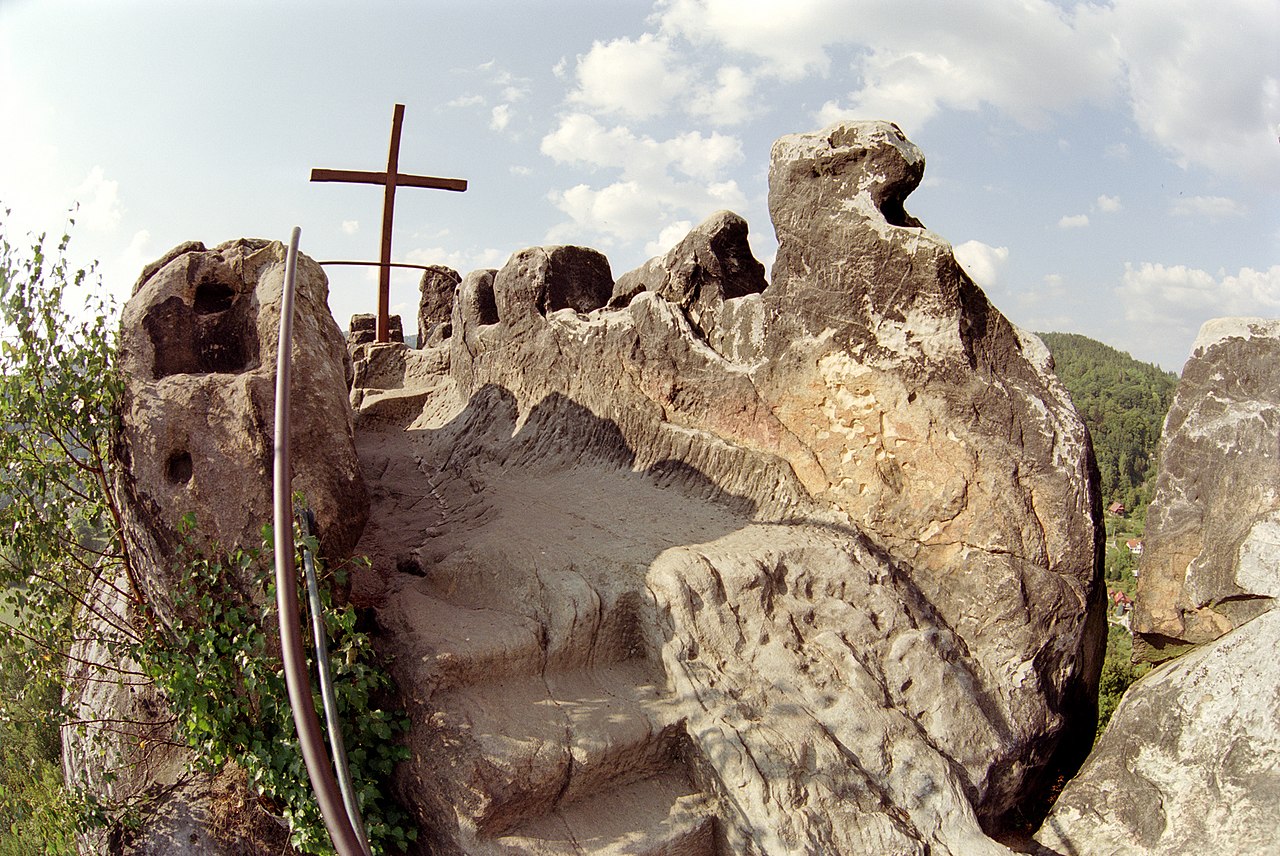
The later artillery fort built on the rocky platform south of the main castle demonstrates the adaptation of medieval fortifications to the demands of gunpowder warfare. This advanced fortification included bastions designed to withstand cannon fire and to mount artillery pieces, marking a significant shift in castle design during the Renaissance period.
Location and natural surroundings
Cornštejn Castle enjoys a commanding position overlooking a large meander of the Dyje (Thaya) River, now impounded by the Vranov Dam. The castle's location not only provided natural defensive advantages but also control over important medieval trade and military routes between Bítov and Vranov castles.
The surrounding landscape is notable for its dramatic river valley scenery and proximity to an Eneolithic fortified settlement, indicating the strategic importance of this site long before the castle's construction. The rocky terrain and elevation contributed to the castle's defensibility and its imposing presence in the region.
Visiting cornštejn castle today
Today, visitors to Cornštejn Castle can explore the well-preserved ruins, including the remains of the Gothic palaces, curtain walls, bastions, and the artillery fort. The castle offers panoramic views of the Dyje River Valley and the surrounding countryside, making it a popular destination for both history enthusiasts and nature lovers.
Guided tours and informational displays provide insights into the castle's architectural evolution, military history, and the noble families who shaped its story. The site is managed to preserve its historical integrity while allowing public access to this remarkable example of medieval and Renaissance fortification in Moravia.
Frequently asked questions (FAQ)
- How do I get to Cornštejn Castle from Bítov?
- Cornštejn Castle is located near Bítov and can be reached by car or local bus services. It is approximately a 10-minute drive from Bítov town center, with parking available near the castle.
- What is the best time to visit Cornštejn Castle?
- The castle is open daily from 10:00 to 16:00. The best time to visit is during the late spring to early autumn months when the weather is favorable and the surrounding landscape is at its most scenic.
- Can I explore the castle ruins on my own?
- Yes, visitors can explore the castle ruins independently. However, guided tours are available and recommended for a deeper understanding of the castle's history and architecture.
- Is Cornštejn Castle wheelchair accessible?
- Due to its hilltop location and medieval structure, Cornštejn Castle has limited accessibility for wheelchair users. Visitors with mobility concerns should inquire in advance about available assistance.
- Are there any special events held at Cornštejn Castle?
- The castle occasionally hosts historical reenactments and cultural events, especially during the summer months. Check the official website or local tourist information for event schedules.
Photo gallery

Information
Opening hours
10:00-16:00, daily
Ticket prices
€5 adult, €3 child
Current owner
State museum
Loading map...
Visitor reviews
No reviews yet. Been here? Write the first review and help other travelers!
Write the first reviewVisited this castle? Share your experience
Your review helps other travelers and adds first-hand knowledge to our encyclopedia.