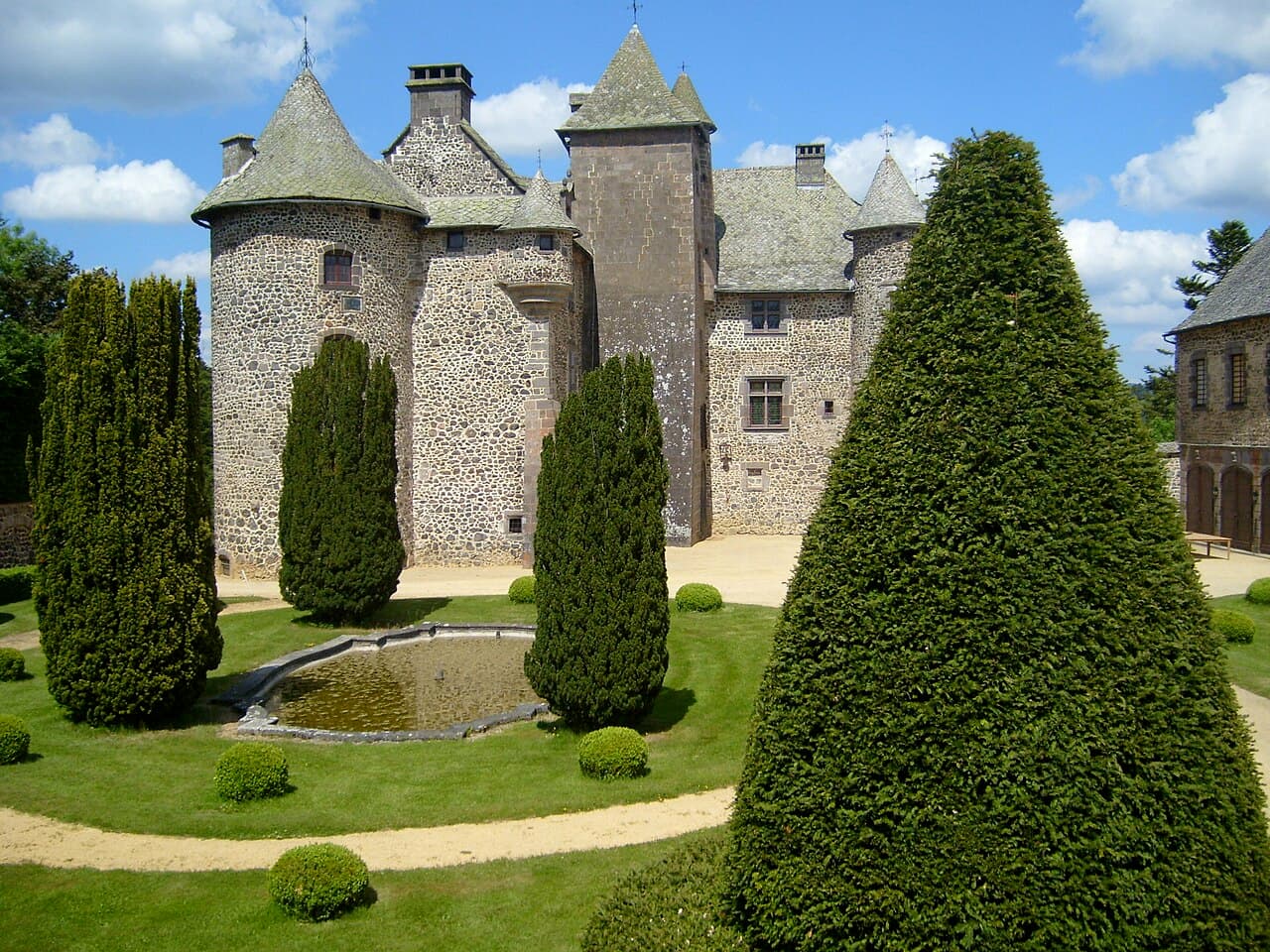
Cordes Castle
Cordes Castle, located in the scenic region of Auvergne-Rhone-Alpes, France, stands as a remarkable testament to the architectural and historical evolution from a medieval fortress into a refined French residence. Originally constructed in the 15th century, the castle reflects a blend of defensive medieval features and later classical French residential design, enhanced notably during the 17th and 18th centuries. The castle’s strategic hilltop position overlooking the Sioulet River underscores its initial military significance in the region.
The castle's earliest recorded owner, Guillaume de Chalus, held the estate from 1268, initiating nearly four centuries of continuous possession by the Chalus family. This long tenure highlights the castle’s role in the local gentry and defensive network throughout the late Middle Ages. In 1659, ownership passed to Emmanuel d’Allègre, whose descendant, Yves d’Alègre, a marshal of France and marquis de Tourzel, transformed the castle’s character by adapting it into a more elegant residence. Around 1695, the renowned landscape architect André Le Nôtre was commissioned to design the castle’s gardens, marking a significant shift from military functionality to aesthetic grandeur.
Medieval origins and architectural features
The castle’s original construction in the 15th century included typical defensive elements such as machicolations—openings in the parapet used to repel attackers—and thick stone walls. These features reflect the turbulent period of medieval France, where fortifications were essential for protection. The castle’s position on a hill (hill castle type) provided a commanding view of the surrounding landscape, enhancing its defensive capabilities.
Despite its military origins, the castle’s architecture evolved considerably in the 17th and 18th centuries. The defensive austerity was softened by the addition of elegant residential features, including large windows, refined interior decorations, and the creation of formal reception rooms. The ground floor chapel and the Louis XV style salon exemplify this transition, showcasing elaborate stuccoes and gypseries plasterwork from the 18th century that enrich the castle’s artistic heritage.
Gardens and landscape design by André Le Nôtre
The gardens at Cordes Castle are a highlight of its later history, designed by André Le Nôtre, the celebrated landscape architect behind the gardens of Versailles. Commissioned in 1695 by Marshal d'Allègre, these gardens are remarkable for their adaptation to the castle’s elevated altitude of approximately 900 meters, a rare and unique feature for such formal French gardens.
Garden layout and features
An alley lined with hornbeam trees, pruned to form a living canopy nearly five meters high, leads visitors to the castle’s main courtyard. This courtyard is designed in a half-moon shape and features lawn beds punctuated with boxwood and trimmed yew, alongside ornamental ponds. The courtyard is enclosed by retaining walls adorned with blind arcades surmounted by arbors, creating a harmonious blend of architecture and horticulture.
The gardens are accessed by two staircases, each crowned with a turret, leading to terraced areas that contain pairs of identical formal gardens. These gardens are structured within rectangular spaces bordered by rows of arbors, with paths radiating from central basins. The garden compartments are edged with double rows of meticulously cut boxwood hedges containing rose bushes, exemplifying the formal French garden style.
To the southeast of the castle lies an oval green room, framed by multiple rows of arbors forming a labyrinth, centered on a basin and rose bushes. To the northwest, the remains of a vegetable garden with a circular central basin attest to the estate’s practical horticultural functions.
Historical significance and ownership lineage
The castle’s history spans several centuries and notable owners. After the Chalus family’s long tenure, the estate passed to the d’Allègre family in the mid-17th century. Yves d’Alègre, a marshal of France from 1724, was instrumental in its transformation into a refined residence. Subsequent owners included Pierre Grangier de Védières in 1755 and Félix-Victor Martha-Becker in 1873.
In 1938, the estate was acquired by the Puy-de-Dôme general council. During the Second World War, parts of the castle served as a refuge for collections from the Bibliothèque nationale et universitaire de Strasbourg, protecting cultural treasures from wartime threats. This use underscores the castle’s role beyond a noble residence, contributing to cultural preservation in times of conflict.
Artistic and cultural heritage
Inside the castle, visitors can find a 16th-century altarpiece made of Carrara marble, highlighting the religious and artistic significance of the chapel. The tomb sculpture of Yves II d’Allègre, a companion of the famed knight Bayard, connects the castle to notable historical figures. Decorative elements such as painted woodwork, stone fireplaces, and terracotta floor tiles span several centuries, enriching the castle’s interiors with layers of artistic expression.
The Louis XV style salon features exquisite plasterwork, enhancing the elegance of the castle’s residential quarters. These interior features have received heritage protection, reflecting their cultural and architectural value.
Preservation and visitor experience
After a period of abandonment, the castle was restored in 1965 by its current owner, ensuring the preservation of its unique architectural and horticultural heritage. The castle is listed as a protected monument since 1933, with specific protections extended to the chapel, salon, courtyard, and gardens.
Visitors to Cordes Castle can enjoy the harmonious blend of medieval fortifications with the elegance of formal French gardens. The estate includes a court of honor, a French formal park with parallel alleys of hornbeam trees, garden walls with enclosures, and an earthen terrace. The presence of an independent staircase and various ponds and basins enrich the visitor experience, offering insights into the castle’s historical evolution and landscape design.
The castle’s gardens have been recognized as Remarkable Gardens of France, highlighting their exceptional design and preservation at high altitude. This distinction, along with the castle’s rich history and artistic treasures, makes Cordes Castle a significant cultural landmark in the Auvergne-Rhone-Alpes region.
Frequently asked questions (FAQ)
- What is the historical significance of Cordes Castle?
- Cordes Castle, located in France, dates back to the 13th century and is a prime example of medieval architecture. It played a key role in the region's defense and has witnessed many historical events, reflecting the rich tapestry of French history.
- When was Cordes Castle built?
- Cordes Castle was constructed in the early 13th century, around the year 1222. This period marked the height of feudalism in France, and the castle served as a stronghold for local lords.
- Can I visit Cordes Castle year-round?
- Yes, Cordes Castle is open to visitors throughout the year, although opening hours may vary seasonally. It is advisable to check the official website for the most up-to-date information on visiting times.
- What are the opening hours for Cordes Castle?
- Cordes Castle typically opens daily from 9 AM to 6 PM, with extended hours during the summer months. Visitors should confirm current hours before planning their visit, as they may change for special events or holidays.
- Is it possible to access Cordes Castle with a disability?
- While Cordes Castle offers some accessibility features, the medieval architecture may present challenges for those with mobility issues. It is recommended to contact the castle staff in advance to inquire about specific accommodations available for visitors with disabilities.
- What is the ticket price for visiting Cordes Castle?
- Admission to Cordes Castle is generally around €8 for adults, with reduced prices for children and seniors. Family tickets and group discounts may also be available, so it's best to check the official website for current rates.
- When is the best time to visit Cordes Castle?
- The best time to visit Cordes Castle is during the spring and fall when the weather is mild and the crowds are smaller. However, summer offers vibrant events and activities that can enhance your experience.
- What nearby attractions can I explore after visiting Cordes Castle?
- After visiting Cordes Castle, you can explore the charming village of Cordes-sur-Ciel, known for its medieval streets and local artisan shops. Additionally, the surrounding countryside offers beautiful hiking trails and scenic views, perfect for a day of exploration.
Photo gallery

Information
Website
Visit websiteSources & official resources
Verify the information above using these authoritative references.
Loading map...
Visitor reviews
No reviews yet. Been here? Write the first review and help other travelers!
Write the first reviewVisited this castle? Share your experience
Your review helps other travelers and adds first-hand knowledge to our encyclopedia.



