Colpach Castle
Colpach Castle stands as an enduring example of a hill castle with origins tracing back to the early 14th century. Originally constructed as a small medieval stronghold surrounded by a moat, it shared architectural similarities with the nearby castles of Ell and Everlange. The earliest recorded mention of Colpach Castle dates from 1303, marking it as a significant fortification in western Luxembourg during the Middle Ages.
Medieval origins and transformation into a manor house
Initially, the castle served defensive and strategic purposes typical of medieval fortifications. Its moat provided protection against invaders, while the stronghold itself was designed to withstand sieges common in the turbulent medieval period. By the early 17th century, ownership passed to the Pforzheim family in 1628. Under their stewardship, the castle underwent a significant transformation. Around 1747, the moat was filled in, and the fortress was converted into a modest manor house. This date is notably inscribed on the castle’s entrance gate, marking the shift from military to residential function.
18th-century architectural features
The manor house adaptation reflected the architectural trends of the post-Renaissance period, emphasizing comfort and aesthetics over fortification. The structure retained some of its original defensive elements but incorporated more domestic spaces suitable for noble living. The castle’s layout was adjusted to create a more welcoming residence, aligning with the evolving social and political climate of the 18th century in Luxembourg.
19th-century developments and cultural significance
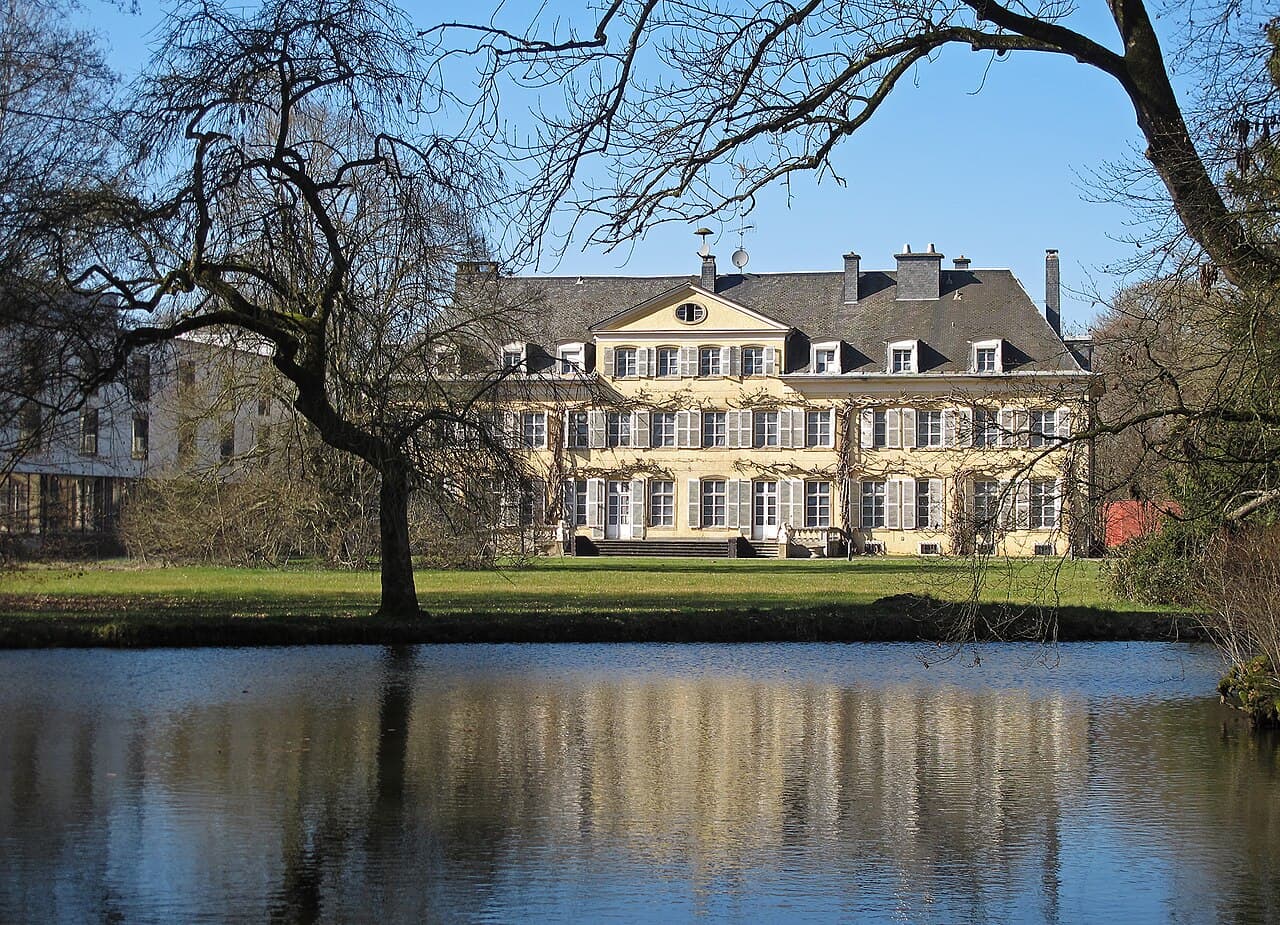
In the 19th century, Colpach Castle transitioned into a farming estate under the administration of Baron Edouard de Marches, who resided at Guirsch Castle near Arlon. Around 1870, Baron de Marches designed and laid out the ornamental gardens surrounding the manor. These gardens featured a lake with an island, curved pathways, and carefully arranged ornamental bushes and trees, many of which remain visible to visitors today.
Artistic connections and notable visitors
The castle gained cultural prominence in the late 19th century when Baron de Marches’ widow, née Cécile Papier, married the renowned Hungarian painter Michael Munkácsy in 1874. The couple spent their summers at Colpach Castle and winters in Paris, attracting a circle of artistic and intellectual figures. In 1886, the celebrated composer Franz Liszt visited the castle shortly before his death, highlighting the estate’s status as a hub of cultural activity.
20th-century ownership and architectural modifications
Following the death of Munkácsy’s widow in 1915, Colpach Castle was acquired by Émile Mayrisch, the head of the Luxembourg steel company ARBED, on 27 January 1917. Mayrisch commissioned architect Sosthène Weis to enlarge and modify the castle between 1917 and 1920. Weis’s work imparted a simple yet elegant style to the building, blending functional improvements with refined aesthetics.
Intellectual and political salon
Under the Mayrisch family, the castle became a center for prominent politicians, economists, writers, and artists during the interwar period. Distinguished guests included Walther Rathenau, André Gide, Jacques Rivière, Otto Bartning, and Théo van Rysselberghe. This period cemented Colpach Castle’s reputation as a cultural and intellectual salon in Luxembourg.
Modern use and preservation
In 1947, Aline Mayrisch bequeathed Colpach Castle to the Red Cross to serve as a convalescent home. Since then, the castle has been adapted into a 60-bed medical facility specializing in post-oncological and physical rehabilitation, managed by the Red Cross through its Fondation Emile Mayrisch. The facility has undergone continuous improvements to meet modern healthcare standards.
Park and accessibility
The castle’s surrounding park remains open to the public year-round and is noted for its suitability for handicapped visitors. The historic gardens, with their lake, island, and ornamental plantings, offer a peaceful environment that complements the castle’s medical function. The preservation of both the castle and its grounds reflects a commitment to maintaining cultural heritage alongside contemporary use.
Frequently asked questions (FAQ)
- What is the historical significance of Colpach Castle?
- Colpach Castle dates back to the early 14th century as a medieval stronghold and later transformed into a manor house in the 18th century. It became a cultural hub in the 20th century under Émile Mayrisch, hosting notable politicians and artists.
- Can visitors explore the gardens at Colpach Castle?
- Yes, the ornamental gardens designed in the 19th century by Baron Edouard de Marches are open to the public year-round and feature a lake with an island, curved pathways, and ornamental trees.
- Is Colpach Castle accessible to handicapped visitors?
- The castle park is particularly suitable for handicapped visitors, providing accessible pathways and facilities to accommodate all guests.
- What is the current use of Colpach Castle?
- Today, Colpach Castle operates as a 60-bed medical facility specializing in post-oncological and physical rehabilitation, managed by the Red Cross through the Fondation Emile Mayrisch.
- When was Colpach Castle last modified architecturally?
- The castle was enlarged and modified between 1917 and 1920 by architect Sosthène Weis, who gave it a simple but elegant style.
Photo gallery

Information
Current owner
Red Cross
Loading map...
Visitor reviews
No reviews yet. Been here? Write the first review and help other travelers!
Write the first reviewVisited this castle? Share your experience
Your review helps other travelers and adds first-hand knowledge to our encyclopedia.