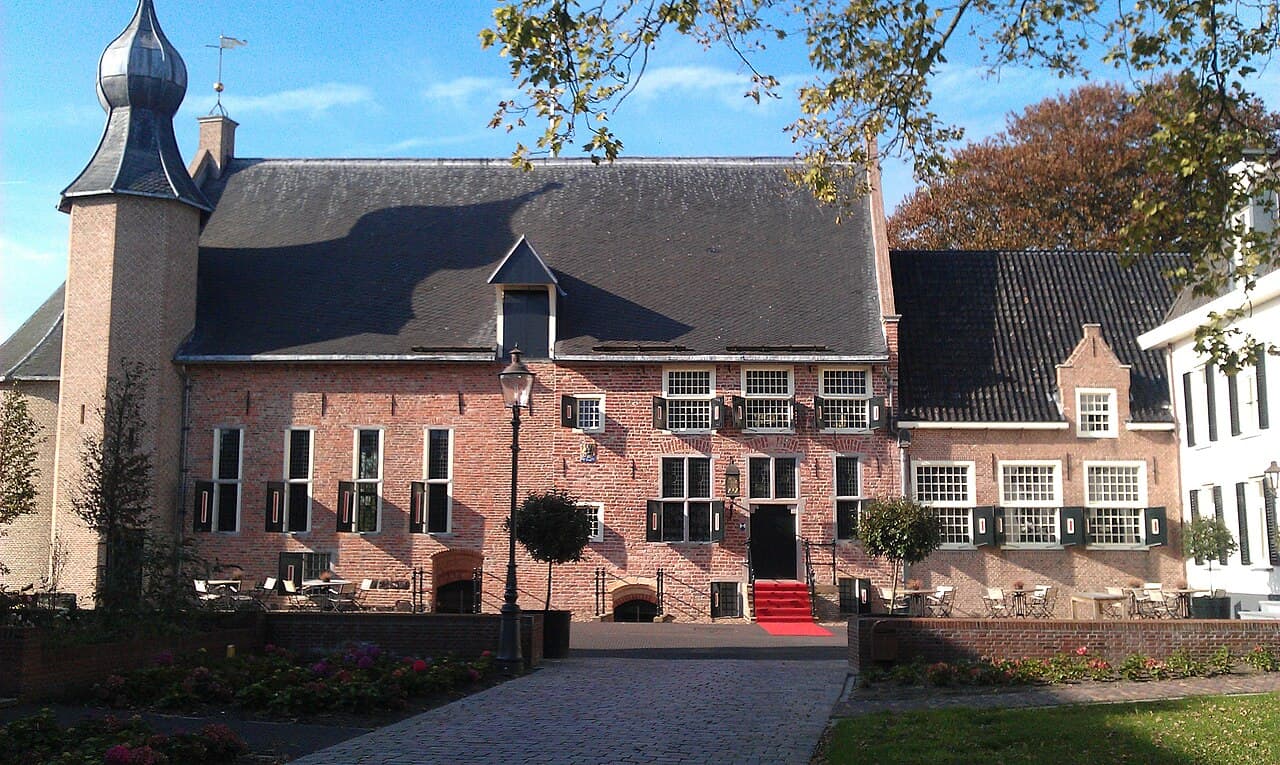
Coevorden Castle
Coevorden Castle is a notable example of a medieval motte castle located in the city of Coevorden in the Netherlands. Its strategic position on an artificial hill, known as a motte, was constructed near a ford in the river Kleine Vecht. The name "Coevorden" itself derives from this geographic feature, with "koevoorde" meaning "cow ford," highlighting the importance of this crossing point in medieval times.
Historical origins and significance
The castle's origins date back to around 1025, making it one of the early medieval fortifications in the region. In 1046, the castle gained political importance when German Emperor Henry III granted the county of Drenthe to the Bishop of Utrecht. The bishop appointed a viscount to govern the area, establishing a hereditary title linked to the castle. This arrangement underscored the castle's role as a center of regional authority and governance.
By the late 14th century, the castle's status was further solidified. In 1395, Bishop Frederik van Blankenheim decreed that Coevorden Castle was to be the only castle in the province of Drenthe. This unique status prevented the construction of other castles in the region, emphasizing Coevorden's exclusive military and administrative role.
Architectural features and evolution
Coevorden Castle is primarily characterized as a hill castle due to its motte construction. The artificial hill was a common defensive technique during the high medieval period, providing a vantage point for surveillance and defense. The motte was typically accompanied by a bailey or courtyard, enclosed by defensive walls or palisades.
Over the centuries, the castle underwent various modifications, particularly in the 16th century around 1522. These changes reflected evolving military technologies and architectural styles. While the original wooden structures typical of motte-and-bailey castles were likely replaced or reinforced with stone, specific details of these renovations remain limited.
Defensive structures
The castle's design included typical medieval defensive features such as moats, curtain walls, and gatehouses. The moat, fed by the nearby Kleine Vecht river, added an extra layer of protection against attackers. The walls were constructed to withstand sieges common in the medieval period, and the gatehouse controlled access to the inner courtyard.
Residential and administrative spaces
Within the castle, there would have been essential chambers such as the great hall, used for gatherings and official functions, as well as residential quarters for the viscount and his retinue. These spaces combined defensive utility with administrative and domestic functions, reflecting the castle's role as both a fortress and a seat of power.
Later history and current use
Through its history, Coevorden Castle has witnessed various political and military events, shaping the development of the Drenthe region. Its unique status as the only castle in Drenthe has been maintained to this day.
In modern times, the castle no longer serves a defensive or administrative purpose. Instead, it has been repurposed as a restaurant, allowing visitors to experience its historic ambiance while enjoying contemporary hospitality services. This adaptive reuse preserves the castle's physical structure and keeps it integrated into the community.
Visiting Coevorden Castle today
Visitors to Coevorden Castle can explore its historic setting and appreciate the remnants of its medieval architecture. The castle's location on the motte provides a glimpse into early medieval defensive strategies. The surrounding town of Coevorden also offers additional cultural and historical attractions, making it a worthwhile destination for those interested in Dutch medieval history.
Access and amenities
As a restaurant, Coevorden Castle provides dining facilities within a historic environment. While the castle's original defensive structures may not be fully intact, the site retains significant heritage value. Visitors should check current opening hours and any special events to plan their visit accordingly.
Frequently asked questions (FAQ)
- When was Coevorden Castle originally built?
- Coevorden Castle was originally constructed around 1025, with significant modifications made in 1522.
- What is the architectural type of Coevorden Castle?
- Coevorden Castle is classified as a hill castle, built on an artificial motte near a river ford.
- Why is Coevorden Castle unique in Drenthe?
- In 1395, Bishop Frederik van Blankenheim decreed that Coevorden Castle should be the only castle in Drenthe, a status it retains today.
- Can visitors dine at Coevorden Castle?
- Yes, Coevorden Castle currently operates as a restaurant, offering a historic setting for dining experiences.
- What defensive features did Coevorden Castle have?
- The castle featured typical medieval defenses such as moats, curtain walls, and gatehouses, utilizing the nearby Kleine Vecht river for moat water.
Photo gallery

Information
Website
Visit websiteSources & official resources
Verify the information above using these authoritative references.
Loading map...
Visitor reviews
No reviews yet. Been here? Write the first review and help other travelers!
Write the first reviewVisited this castle? Share your experience
Your review helps other travelers and adds first-hand knowledge to our encyclopedia.



