Coeffin Castle
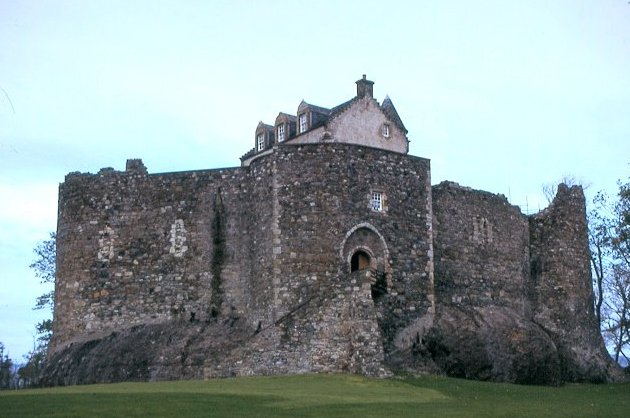
Coeffin Castle is a notable ruin situated on the island of Lismore, located in Loch Linnhe on the west coast of Argyll, Scotland. This 13th-century hill castle stands prominently on a promontory on the island's north-west coast, overlooking the sea and commanding views across Loch Linnhe towards Glensanda. The castle's strategic location highlights its historical importance in controlling maritime routes and overseeing the surrounding landscape.
The site of Coeffin Castle is steeped in history, having originally been the location of a Viking fortress. The castle's name is believed to derive from Caifen, a Danish prince associated with the early Norse presence in the region. Local legend tells of Caifen's sister, whose restless spirit was said to haunt the castle until her remains were repatriated to Norway to rest beside her lover, underscoring the site's deep Norse cultural connections.
Historical background and ownership
The castle was likely constructed in the 13th century by the MacDougalls of Lorn, a powerful Scottish clan who held lordship over the region during the High Medieval period. Lismore itself was an important ecclesiastical center, home to St. Moluag's Cathedral, the seat of the Bishop of Argyll, which added to the strategic and symbolic significance of the castle within the lordship.
The first documented mention of Coeffin Castle dates from 1469–1470, when it was granted by Colin Campbell, 1st Earl of Argyll, to Sir Colin Campbell of Glenorchy. This transfer reflects the shifting power dynamics among Scottish noble families during the late medieval period. After this time, the castle is believed to have fallen out of regular use and was likely abandoned in the post-medieval era.
Architectural features and layout
The hall-house
The surviving ruins of Coeffin Castle primarily consist of an oblong hall-house alongside an irregularly shaped bailey. The great hall is an irregular rectangle measuring approximately 20.3 by 10.4 metres (67 by 34 feet), with remarkably thick walls ranging from 2.1 to 2.4 metres (6 ft 11 in to 7 ft 10 in) in thickness. These robust walls indicate the defensive considerations of the castle's design, providing protection against attacks and harsh weather conditions.
The bailey and access points
The bailey was constructed later than the hall-house and likely served as a protected courtyard for livestock, storage, and ancillary activities related to the castle's operation. An external stairway probably connected the hall's entrance, located on the north-east wall, to the bailey, facilitating movement between the two areas.
On the south-west side of the hall, a secondary door provides direct access to the sea, highlighting the castle's maritime connections. This feature would have been crucial for receiving supplies, communication, or escape by water, emphasizing Coeffin Castle's role in controlling both land and sea routes.
Surrounding features and archaeological context
Near the castle lies a tidal fish trap in a small bay to the south-east. Though its precise age is unknown, this stone structure illustrates the long-standing exploitation of marine resources by the island's inhabitants. Additionally, to the north-east of the castle are the remains of a stone-walled fort, suggesting earlier or supplementary defensive works in the area.
Historically, the castle ruins have been described as heavily overgrown with ivy and in a dilapidated state, reflecting centuries of abandonment and natural decay. Despite this, the site remains an important category B listed building since 1971, recognized for its cultural and historical significance within Scotland's heritage.
Significance within Scottish medieval heritage
Coeffin Castle represents a fascinating example of a High Medieval Scottish hill castle with strong Norse origins and connections to prominent Scottish clans such as the MacDougalls and Campbells. Its location on Lismore Island situates it within a landscape rich in religious and political history, notably due to the proximity of St. Moluag's Cathedral.
The castle's architectural elements, including the thick defensive walls, hall-house layout, and bailey, illustrate typical medieval fortification strategies adapted to the island's maritime environment. The presence of sea access points and nearby fish traps further highlight the integration of coastal resources into the castle's function.
Though now a ruin, Coeffin Castle offers valuable insights into medieval Scottish castle construction, clan dynamics, and the enduring legacy of Viking influence in western Scotland. Its preservation as a listed building ensures that this heritage site continues to be recognized and protected for future generations.
Frequently asked questions (FAQ)
- When was Coeffin Castle built and by whom?
- Coeffin Castle was built in the 13th century, most likely by the MacDougalls of Lorn, a powerful Scottish clan during the High Medieval period.
- What is the historical significance of Coeffin Castle?
- The castle was built on the site of a Viking fortress and is linked to Norse heritage through its name and local legends. It also played a role within the lordship of Lorn and was connected to St. Moluag's Cathedral, an important ecclesiastical site.
- What remains can be seen at Coeffin Castle today?
- Today, visitors can see the ruins of an oblong hall-house with thick defensive walls and an irregularly shaped bailey. The ruins also include access points to the sea and evidence of later additions such as the bailey.
- Is Coeffin Castle accessible to the public?
- There is no specific information about public access or visiting hours for Coeffin Castle, as it is a ruin on a remote island. Visitors should plan accordingly and check local resources before visiting.
- Are there any notable legends associated with Coeffin Castle?
- Local legend tells of Caifen, a Danish prince associated with the castle, and his sister whose ghost reportedly haunted the site until her remains were returned to Norway, reflecting the castle's Viking connections.
Information
Website
Visit websiteSources & official resources
Verify the information above using these authoritative references.
Loading map...
Visitor reviews
No reviews yet. Been here? Write the first review and help other travelers!
Write the first reviewVisited this castle? Share your experience
Your review helps other travelers and adds first-hand knowledge to our encyclopedia.