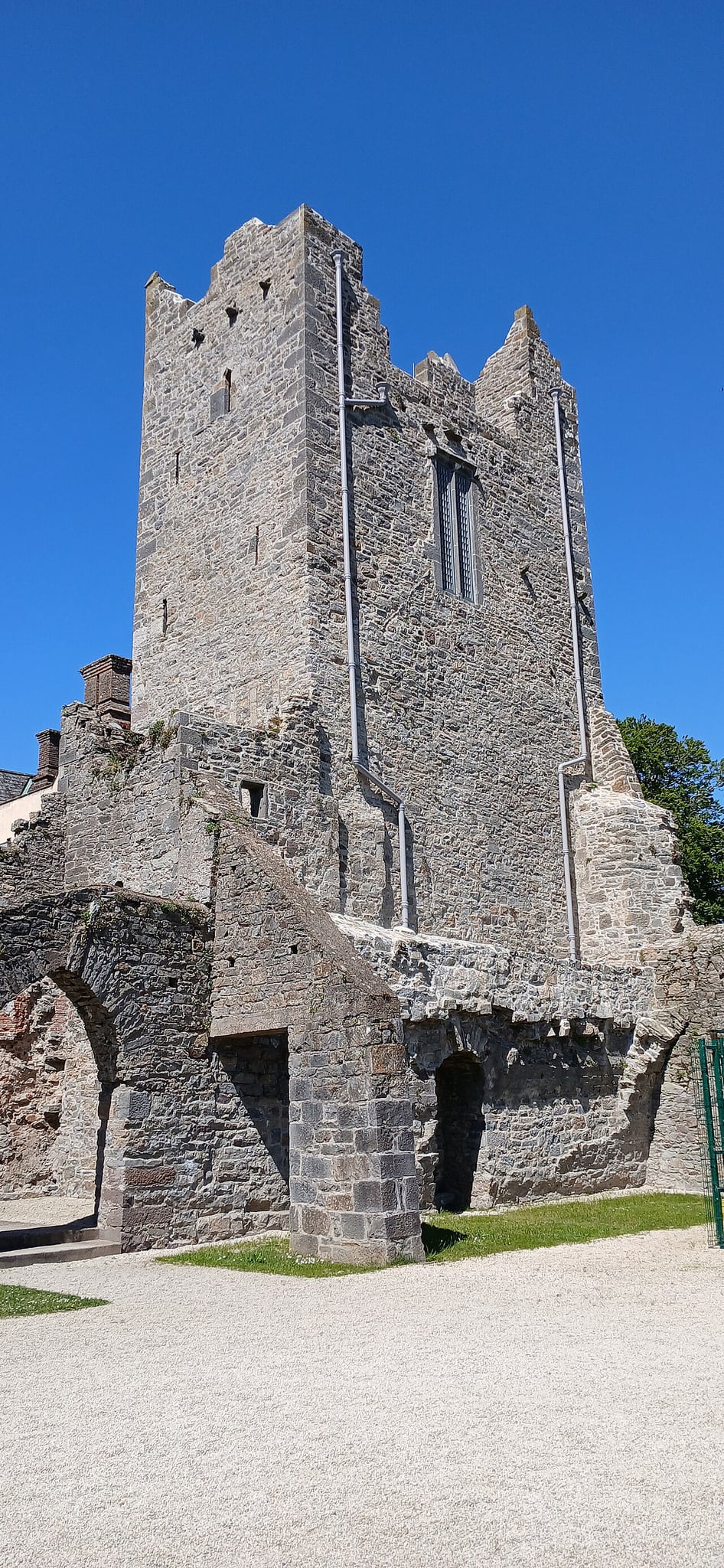
Clonea Castle
Clonea Castle, also known as Clonea Power Castle, is a historic 16th-century Renaissance tower house located in the townland of Clonea, County Waterford, Ireland. This castle stands as a significant example of the fortified residences built during the Renaissance period in Ireland, reflecting the architectural and defensive needs of the era.
Historical background and ownership
The castle was constructed in the 16th century, a time when tower houses were commonly built by local lords and gentry across Ireland to assert control over their lands and provide defense against rival clans and invaders. Clonea Castle was owned by the Power family, a prominent Anglo-Norman lineage in the region, with records from around 1640 indicating that it was under the possession of J. Lord Power of Curraghmore. By that time, the castle was described as being "out of repair" and uninhabited, suggesting it had already begun to decline in strategic importance.
Architectural features and layout
Clonea Castle was originally a rectangular six-storey tower house built on a natural rock outcrop, a common defensive feature that elevated the structure and provided a commanding view of the surrounding landscape. The tower house was surrounded by a ditch serving as a moat, enhancing its defensive capabilities against attackers.
Encircling the tower was a bawn—a fortified enclosure typical of Irish tower houses—equipped with flanking towers at its corners. These towers would have provided vantage points for defense and surveillance. Although much of the bawn and its towers have been lost to time and are now concealed beneath dense undergrowth, traces of their foundations remain visible to careful observers.
Construction materials and techniques
The castle was constructed primarily from local stone, with thick walls designed to withstand sieges and harsh weather conditions. The masonry techniques reflect the Renaissance period's emphasis on robust, functional fortifications combined with residential comfort for the lord and his household.
Damage and current condition
Historical accounts note that a severe storm in 1890 caused significant damage to Clonea Castle, destroying the west and south walls of the tower. Since then, the castle has remained in a state of ruin, with only partial walls and structural elements standing.
Today, Clonea Castle is freely accessible to the public and is situated adjacent to a public road, making it a striking ruin visible to passersby. Visitors are advised to exercise caution due to the risk of falling masonry. The site remains an evocative reminder of Ireland's turbulent history and the architectural legacy of its Renaissance period.
Significance in Irish castle heritage
As a tower house with an associated bawn, Clonea Castle exemplifies the typical defensive and residential architecture of the Irish Renaissance. Its association with the Power family links it to the broader narrative of Anglo-Norman influence in southeast Ireland. Despite its ruined state, the castle contributes valuable insights into the social and military history of the region.
Visitor information and accessibility
While there are no formal visitor facilities or guided tours at Clonea Castle, its location next to a public road allows easy access for those interested in historical architecture and Irish heritage. The surrounding landscape offers opportunities for exploration, although visitors should be mindful of safety hazards around the ruin.
Frequently asked questions (FAQ)
- How do I get to Clonea Castle?
- Clonea Castle is located in the townland of Clonea, County Waterford, Ireland, adjacent to a public road, making it easily accessible by car or local transport.
- What is the historical significance of Clonea Castle?
- Clonea Castle is a 16th-century Renaissance tower house associated with the Power family, representing typical fortified residences of the period in Ireland.
- Can I enter the castle ruins?
- The castle ruins are freely accessible to the public; however, visitors should exercise caution due to unstable masonry and falling debris.
- When was Clonea Castle built?
- Clonea Castle was built in the 16th century during the Renaissance period in Ireland.
- Is there an entrance fee to visit Clonea Castle?
- There is no entrance fee to visit Clonea Castle as it is freely accessible.
Information
Loading map...
Visitor reviews
No reviews yet. Been here? Write the first review and help other travelers!
Write the first reviewVisited this castle? Share your experience
Your review helps other travelers and adds first-hand knowledge to our encyclopedia.