Clavering Castle
Clavering Castle is a significant historical site located in the village of Clavering, Essex, England. It stands out as a rare example of an early medieval Anglo-Saxon ringwork fortification that predates the Norman Conquest of 1066 and continued in use through the medieval period. The castle occupies a strategic position near the River Stort, which played a crucial role in its defense and water management systems. Its long history reflects continuous occupation and adaptation from the Iron Age through the late medieval era.
The origins of Clavering Castle trace back to an Iron Age British fortification that once occupied the site, indicating the area's longstanding strategic importance. The Anglo-Saxon settlers established a fortified settlement featuring a ringwork enclosure, a defensive earthwork comprising a raised bank topped originally with a wooden palisade. This type of fortification was common in late Anglo-Saxon England and served as a stronghold for local lords and their retainers. The castle's association with Robert FitzWimarc, a French nobleman and close confidant of Edward the Confessor, is well documented. It was known as "Robert's Castle" in the Domesday Book of 1086, underscoring its importance before and after the Norman Conquest.
Early history and Anglo-Saxon fortification
The site initially served as a fortified settlement before 1066, featuring a ringwork that enclosed the core defensive area. This earthwork was constructed by raising a bank of earth and clay, which was then topped with a wooden palisade to provide protection against attackers. The location's proximity to the River Stort allowed natural water defenses and facilitated the creation of a moat by diverting river water around the enclosure. This moat, approximately 26 meters long and 5 meters deep, enhanced the castle's defensive capabilities.
During the political turmoil of 1052, the castle provided shelter for the Norman-aligned faction at Edward the Confessor's court, highlighting its military significance in the years leading up to the Norman invasion. The castle's strategic importance continued under Norman rule, with further developments made to the site.
Medieval developments and manor integration
Following the Norman Conquest, Clavering Castle evolved beyond its initial military function. The castle grounds were expanded to include a moat, bridge, pond, watermill, and various manorial buildings. These additions indicate the site's role as a manorial center supporting agricultural and industrial activities alongside its defensive purpose. The watermill, fed by channels and ponds extending about 200 meters along the riverbank, was an important feature whose exact date remains uncertain but likely dates from the medieval period.
By the 14th century, the manor's center shifted away from the castle, and the fortification gradually lost its military relevance. The castle area transitioned to primarily agricultural use, with local maps from the 18th century depicting the site as an orchard. Despite this change, visible ruins of castle walls persisted into the 18th century, attesting to the site's former prominence.
Archaeological findings and notable discoveries
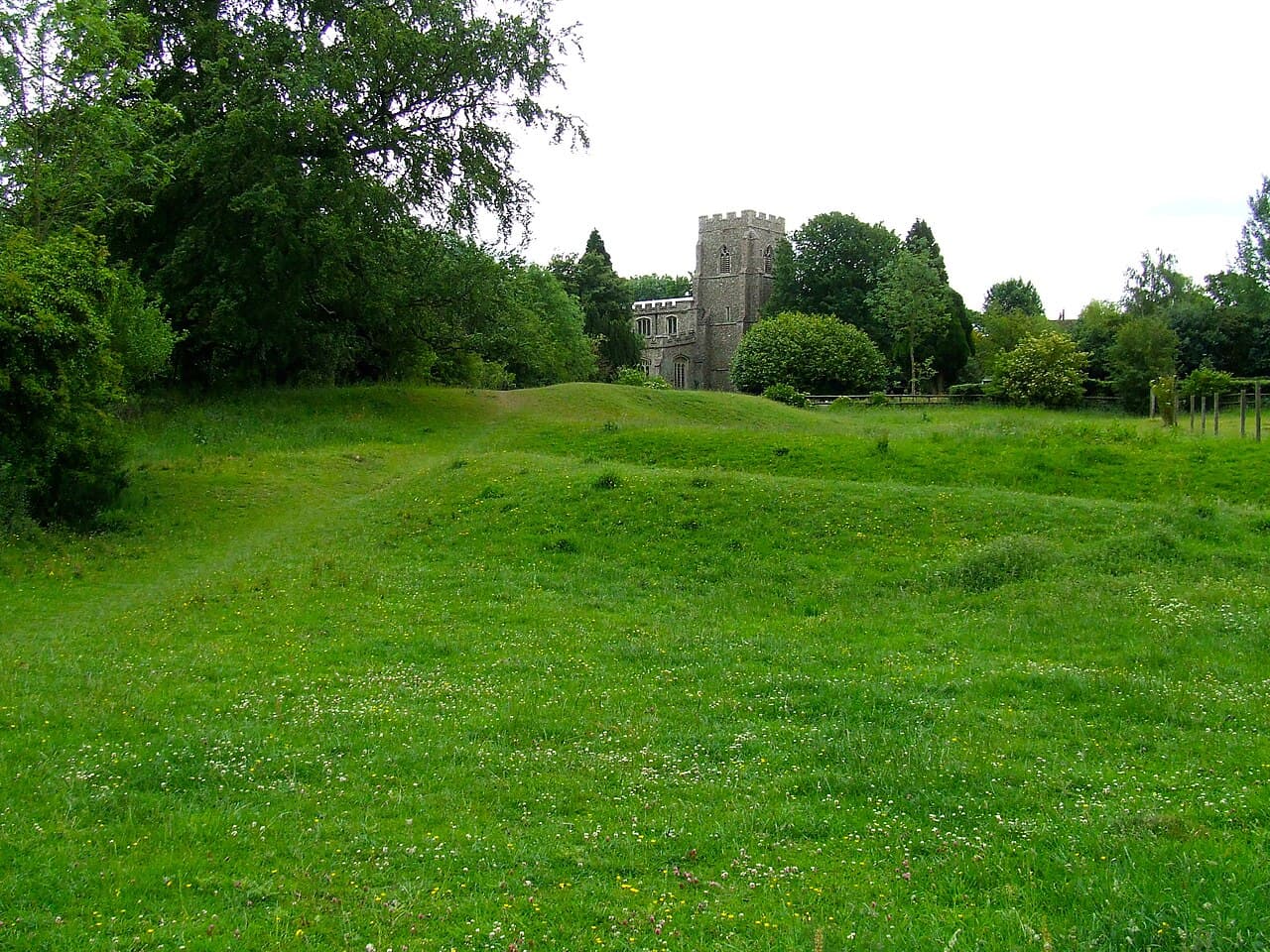
Archaeological investigations have revealed the castle's earthwork defenses and traces of internal structures within the courtyard. Uneven ground and subsurface remains outline the foundations of domestic and service buildings that supported habitation and administration during the castle's occupation. Although no above-ground stone buildings survive, these archaeological features provide insight into the site's layout and function.
A remarkable discovery in 1923 near the former moat was a massive sandstone coffin measuring over two meters in length and weighing about one ton. The coffin, believed to contain the remains of a lord of Clavering, is a testament to the site's status as a noble residence. Despite signs of disturbance, the coffin's craftsmanship and size underscore the high social rank of its occupant.
Current state and preservation
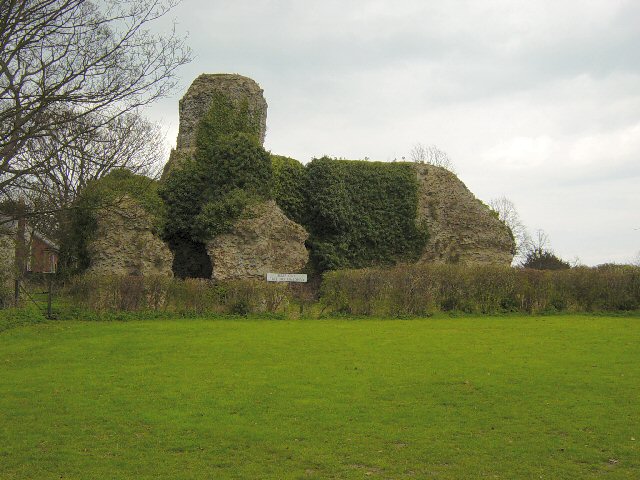
Today, Clavering Castle remains primarily as earthwork fortifications, with the raised banks and moat still visible. The roughly rectangular enclosure measures about 150 meters by 100 meters, providing a tangible impression of the castle's original scale and defensive design. The site is located approximately 50 meters north of the church of St Mary and St Clement on the southern bank of the River Stort, roughly 10 kilometers north of Bishop's Stortford.
Archaeological surveys, including aerial photography and detailed mapping, have helped uncover hidden features beneath the surface, contributing valuable knowledge about this rare example of a pre-Norman fortification that adapted through the medieval period. The castle's preservation as an earthwork site allows visitors and researchers to explore the layers of history embedded in the landscape.
Location and accessibility
Clavering Castle is situated in the small parish village of Clavering in Essex, England. Its proximity to the River Stort and the village church places it within a historically rich rural setting. The site is accessible for those interested in early medieval fortifications and offers a unique glimpse into the continuity of defensive architecture from the Iron Age through the medieval era.
Frequently asked questions (FAQ)
- What is the historical significance of Clavering Castle?
- Clavering Castle is a rare example of an Anglo-Saxon ringwork fortification that predates the Norman Conquest and continued in use through medieval times, reflecting its strategic and political importance.
- Can visitors see remains of Clavering Castle today?
- Yes, visitors can observe the earthwork remains including the raised banks and moat which outline the castle's original defensive enclosure.
- Where is Clavering Castle located?
- Clavering Castle is located in the village of Clavering, Essex, England, near the River Stort and about 10 kilometers north of Bishop's Stortford.
- What notable archaeological discoveries have been made at Clavering Castle?
- A massive sandstone coffin believed to belong to a lord of Clavering was discovered near the moat, highlighting the site's noble connections.
- Is Clavering Castle accessible to the public?
- The site is accessible for those interested in historical earthworks, though facilities and formal visiting hours may be limited due to its nature as an archaeological site.
Photo gallery

Information
Loading map...
Visitor reviews
No reviews yet. Been here? Write the first review and help other travelers!
Write the first reviewVisited this castle? Share your experience
Your review helps other travelers and adds first-hand knowledge to our encyclopedia.