Civitacampomarano Castle
Civitacampomarano Castle is a significant medieval fortress located in the historic town of Civitacampomarano, nestled within the picturesque region of Molise, Italy. Perched on a strategic sandstone ridge overlooking two converging streams, the castle commands sweeping views of the surrounding valleys, a location chosen for its defensive advantages and control over important waterways. The castle's origins are rooted in the turbulent medieval period, reflecting the shifting political and military landscape of southern Italy.
The early history and construction
The earliest known fortification on the site was a watchtower likely built in the late 12th century. This initial structure served primarily as a lookout, providing surveillance over the valleys and streams below. Though the original tower no longer stands intact, its outline remains visible due to restoration efforts carried out in the late 19th century. This early defensive installation laid the groundwork for the more extensive castle complex that followed.
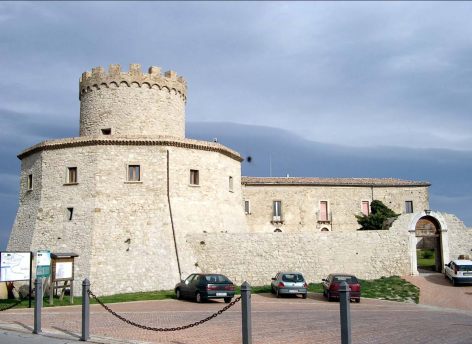
The main castle as it exists today was constructed during the 13th century, a period marked by the rule of the Angevin dynasty over the Kingdom of Naples. The architectural design of the castle incorporates typical features of Angevin military fortifications, including robust walls and cylindrical towers, which were intended to withstand sieges and assert noble authority over the region. Over the centuries, the castle passed through the hands of several prominent noble families, most notably the di Sangro family, whose coat of arms is prominently displayed on the eastern façade.
Architectural features and layout
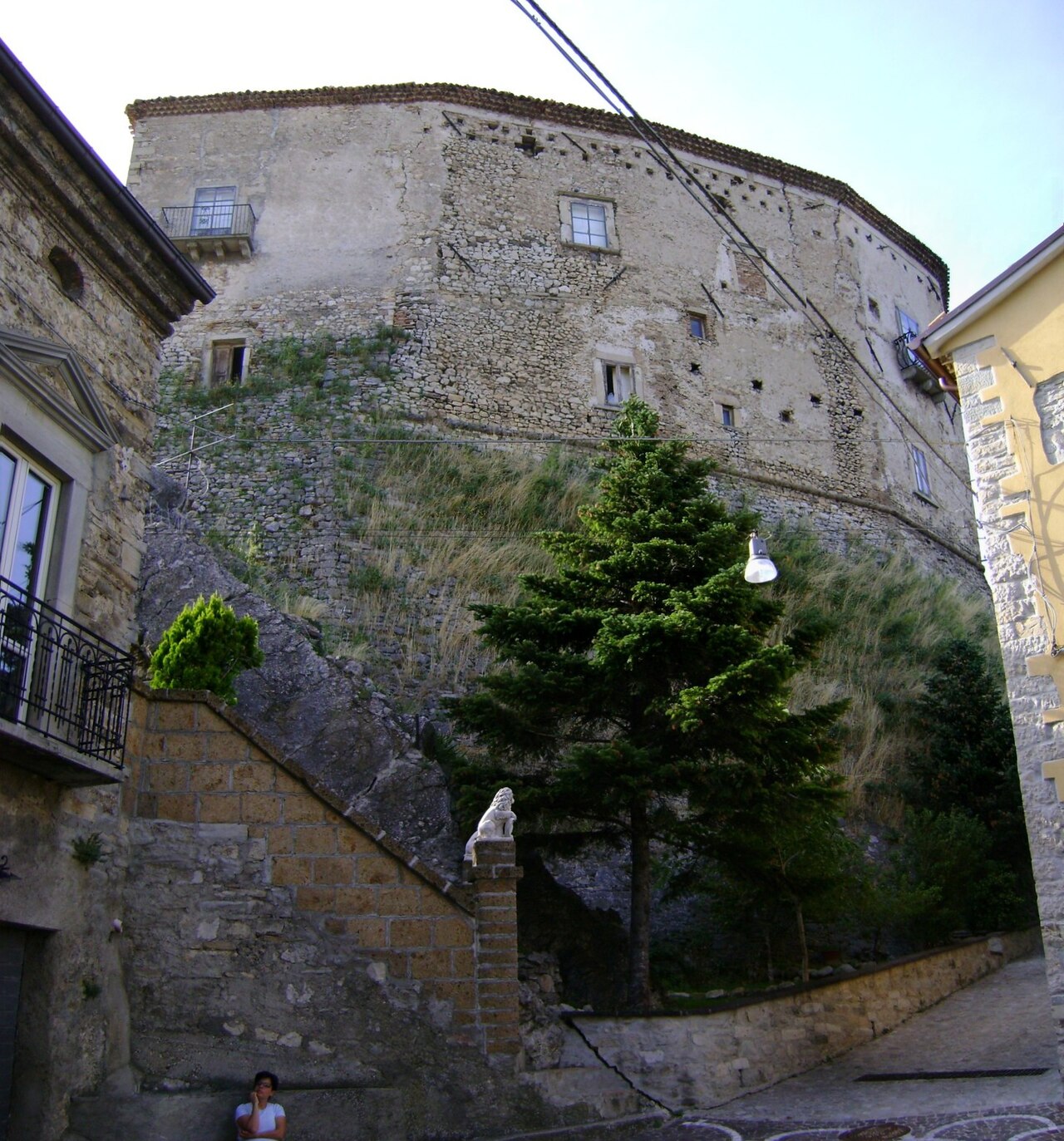
Civitacampomarano Castle is laid out on a quadrangular plan, anchored by three cylindrical towers at its corners. Two of these towers remain fully preserved, while the third was damaged and subsequently reconstructed during recent restoration work. A smaller, fourth tower is attached to the southwest corner, integrated into a private residence built against the castle walls, illustrating later adaptations of the fortress for domestic use.
The castle was originally protected by a moat on the side facing the town, which opened into what is now known as Piazza Municipio. This moat was filled in and transformed into a green space after the late 15th century, but it originally served as a defensive barrier separating the castle from the town's western fortifications.
The eastern façade is distinguished by the coat of arms of Paolo di Sangro, framed by symbolic motifs reflecting the region's complex political history. Flanking the emblem are two inverted lilies, which commemorate the Aragonese victory over the Angevin dynasty, a pivotal event in the Kingdom of Naples during the late Middle Ages. Adjacent to the coat of arms are arrow slits that bear marks from the chains of a former drawbridge, highlighting the castle's defensive capabilities.
Interior courtyard and hydraulic engineering
Within the castle's internal courtyard stands the Fountain of the Fauns, an ornamental feature adorned with four animal-shaped figures symmetrically arranged around a central column. Although originally discovered in Montefalcone nel Sannio and relocated here by previous owners, the fountain was once mistakenly attributed to the ancient Samnite civilization; however, no conclusive studies support this theory.
Encircling the courtyard beneath the roofline is a sophisticated gutter system made from terracotta shards. This system is ingeniously sloped to channel rainwater through two wells into a vast underground cistern capable of holding approximately 120,000 liters. This hydraulic design ensured a reliable water supply for the castle and the surrounding settlement, demonstrating advanced medieval engineering techniques.
Historical significance and noble heritage
The castle has a rich history intertwined with the noble families who governed the region. The di Sangro family left a lasting mark on the castle, with their coat of arms prominently displayed and symbolic elements commemorating their political and military influence. Above the di Sangro emblem on the façade is the crest of the Carafa della Spina family, who briefly ruled the area. Their emblem, consisting of three horizontal stripes intersected diagonally by a thorn, adds another layer to the castle's feudal history.
One notable historical event documented at the castle is the signing of a marriage contract on November 21, 1450, between Altobella di Sangro and Cola di Monforte. This event underscores the castle's role as a center of noble administration and alliance-building during the Middle Ages.
Religious life was also closely connected to the castle, which stood adjacent to the town's mother church until a landslide in 1903 caused the church's collapse. While the church itself no longer stands, remnants of its base remain visible, and the bell tower continues to rise near the castle, preserving the ecclesiastical presence that once neighbored this fortress.
Interior spaces and restoration
Access from the courtyard leads to various service rooms, stables, and the noble quarters located on the first floor, which are reached via a covered stone staircase. These quarters include a series of chambers extending from the west side with views over a loggia, continuing along the southern and eastern wings, and culminating in the northeast tower.
Key rooms on this level include the representative hall and a probable dining area featuring a large fireplace connected to a small kitchen. The kitchen is decorated with majolica tiles and equipped with small stoves and an oven, indicating a sophisticated domestic environment for its time.
Although many of the original coffered wooden ceilings and their decorative elements have been lost or replaced during restoration, some noble rooms still retain fragments of their original ornamental designs. Most furnishings currently displayed are reproductions intended to reflect the castle's historical interior arrangement, creating an atmosphere that honors its medieval heritage.
Modern preservation and cultural importance
Recognizing its historical and architectural value, Civitacampomarano Castle was designated a National Monument in 1979 and acquired by the Italian State in 1988. Since then, restoration efforts have focused on preserving the castle's structure and safeguarding its cultural heritage. Today, the castle is managed by governmental authorities dedicated to its maintenance and promotion as a significant monument of medieval southern Italy.
The castle remains an important symbol of the region's feudal past, architectural ingenuity, and noble lineage. Its combination of military, residential, and hydraulic features offers valuable insights into medieval castle construction and life in the Kingdom of Naples during the Angevin and Aragonese periods.
Frequently asked questions (FAQ)
- How do I visit Civitacampomarano Castle?
- Civitacampomarano Castle is accessible to the public with guided tours available. Visitors should check local tourism websites or contact the municipality for current opening hours and tour schedules.
- What is the historical significance of Civitacampomarano Castle?
- The castle played a strategic role in controlling the surrounding territory during the medieval period and was associated with prominent noble families like the di Sangro and Carafa della Spina.
- When was Civitacampomarano Castle built?
- The earliest fortifications date back to the late 12th century, with the main castle complex constructed in the 13th century during Angevin rule.
- Can I see the coat of arms of the di Sangro family at the castle?
- Yes, the di Sangro family coat of arms is prominently displayed on the eastern façade, along with symbolic motifs related to regional political history.
- Is the castle fully preserved?
- The castle is partially restored, with two of its cylindrical towers fully preserved and the third reconstructed. Some original interiors remain, but many features have been restored or replicated.
- What architectural style is Civitacampomarano Castle?
- The castle features Gothic architectural elements typical of Angevin military fortifications in southern Italy during the 13th century.
Information
Sources & official resources
Verify the information above using these authoritative references.
Loading map...
Visitor reviews
No reviews yet. Been here? Write the first review and help other travelers!
Write the first reviewVisited this castle? Share your experience
Your review helps other travelers and adds first-hand knowledge to our encyclopedia.