Cittadella, Gozo
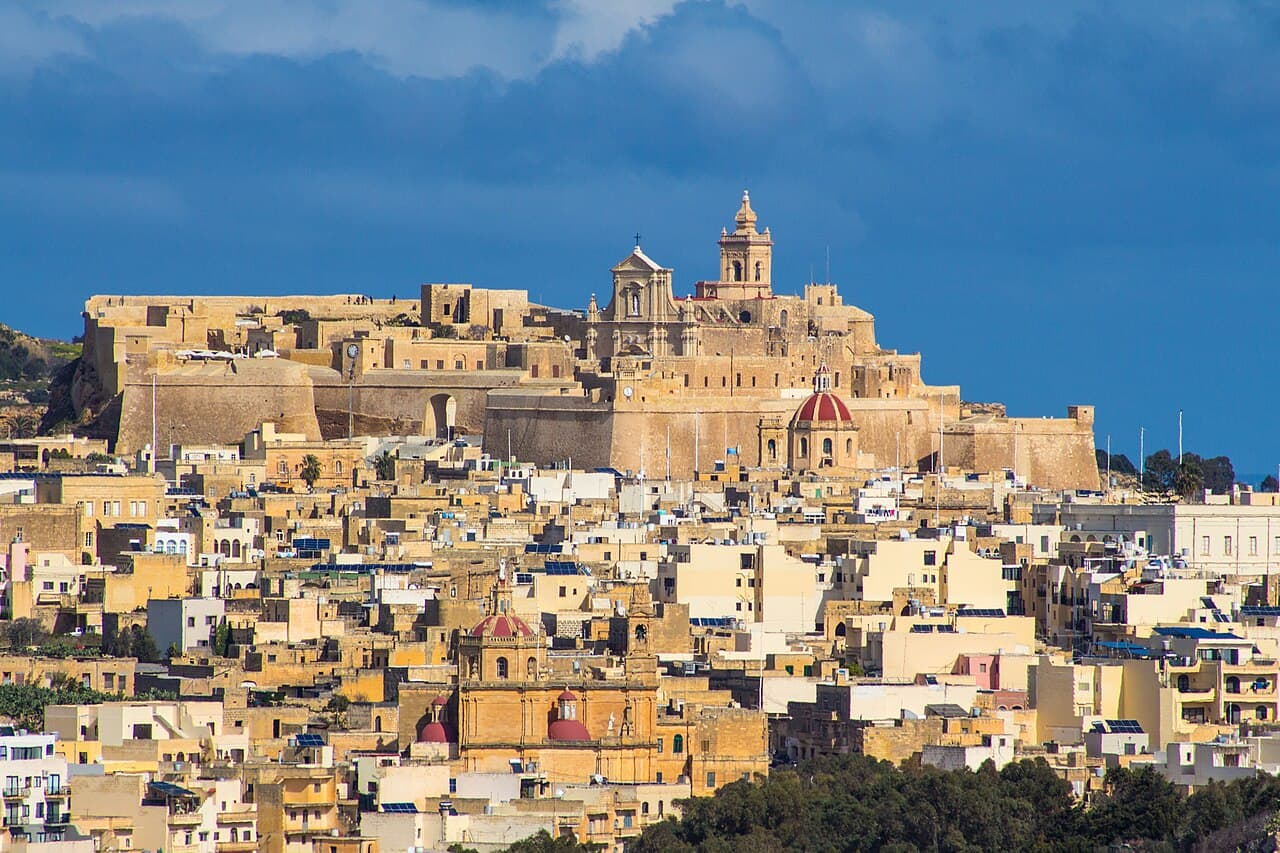
The Cittadella (Maltese: Iċ-Ċittadella), also known as the Castello (Maltese: Il-Kastell), is the historic citadel of Victoria on the island of Gozo, Malta. This fortified complex is a bastioned fortress that reflects the evolution of military architecture from the medieval period through the Renaissance. The site has been continuously inhabited since the Bronze Age, with archaeological evidence indicating that it was the acropolis of the ancient Punic-Roman city known as Gaulos or Glauconis Civitas.
Ancient origins and medieval transformation
The strategic location of the Cittadella on a natural plateau overlooking the surrounding landscape made it an ideal defensive position since antiquity. During the medieval period, the acropolis was transformed into a fortified castle that served as a refuge for the entire population of Gozo during times of invasion and unrest. The original fortifications consisted mainly of high walls and towers typical of medieval military architecture, designed to withstand siege warfare prevalent in that era.
By the 15th century, a settlement began to grow outside the walls of the Cittadella. This suburb eventually developed into the town of Victoria, which today forms the historic core of the island's capital. The castle itself remained the focal point of defense and governance.
The ottoman siege and renaissance reconstruction
Despite its formidable medieval walls, the Cittadella's defenses became outdated with the advent of gunpowder artillery. This vulnerability was exposed in 1551 when an Ottoman force launched a surprise invasion of Gozo. The fortress was sacked, and much of the population was captured or killed. This event underscored the need for modernized fortifications capable of withstanding cannon fire.
In response, a major reconstruction project commenced between 1599 and 1622, focused on the southern walls of the Cittadella. These works transformed the citadel into a bastioned fortress designed to resist artillery attacks. The new fortifications included angled bastions, thickened walls, and lower profiles to deflect cannonballs. Meanwhile, the northern walls retained much of their original medieval form, creating a unique blend of architectural styles within the fortress.
Despite these improvements, the new fortifications were subject to criticism by military engineers in subsequent decades. Plans to demolish the entire citadel were proposed multiple times during the 17th and 18th centuries, but these were never implemented, allowing the Cittadella to survive largely intact.
Later history and military use
The Cittadella saw limited military action in the late 18th century. During the French invasion of Malta in 1798, the fortress surrendered quickly without significant resistance. It also capitulated during the subsequent Maltese uprising against French rule. Following these events, the citadel continued to serve as a military installation under British control until it was officially decommissioned on 1 April 1868.
Architectural highlights and cultural significance
Within the walls of the Cittadella are several notable buildings, including the Cathedral of the Assumption, constructed between 1697 and 1711 on the site of an earlier church. This cathedral is a prominent example of Baroque ecclesiastical architecture and serves as a religious and cultural center for Gozo.
The fortress also contains various bastions, gates, and defensive walls that illustrate the transition from medieval to Renaissance military architecture. The combination of medieval and bastioned elements makes the Cittadella a valuable site for studying the evolution of fortifications in the Mediterranean region.
Recognizing its historical and architectural importance, the Cittadella has been included in Malta's tentative list of UNESCO World Heritage Sites since 1998. Today, it stands as a well-preserved monument that attracts visitors interested in Malta's rich past and military heritage.
Visiting the cittadella
Visitors to the Cittadella can explore its well-preserved walls, bastions, and historic buildings. The site offers panoramic views of the island of Gozo and provides insight into the defensive strategies employed over centuries. Walking tours often highlight the blend of architectural styles and the fortress's role in Malta's history.
Frequently asked questions (FAQ)
- What is the historical significance of the Cittadella in Gozo?
- The Cittadella served as the fortified citadel and refuge for the population of Gozo since medieval times. It reflects the island's ancient origins and its strategic importance through various periods, including the Bronze Age, Punic-Roman era, and Renaissance military upgrades.
- When was the Cittadella rebuilt as a bastioned fortress?
- The major reconstruction of the Cittadella's southern walls into a bastioned fortress took place between 1599 and 1622 to improve defenses against artillery attacks.
- Can visitors explore the Cathedral of the Assumption inside the Cittadella?
- Yes, the Cathedral of the Assumption, built between 1697 and 1711, is open to visitors and is a key architectural and religious landmark within the Cittadella.
- Is the Cittadella accessible year-round?
- The Cittadella is generally open to visitors throughout the year, though specific opening hours may vary seasonally. It is advisable to check local tourism resources for current visiting times.
- How did the Ottoman invasion impact the Cittadella?
- The 1551 Ottoman invasion exposed the obsolescence of the Cittadella's medieval defenses, leading to its sacking and prompting the later Renaissance-era reconstruction of its fortifications.
Photo gallery

Information
Loading map...
Visitor reviews
No reviews yet. Been here? Write the first review and help other travelers!
Write the first reviewVisited this castle? Share your experience
Your review helps other travelers and adds first-hand knowledge to our encyclopedia.