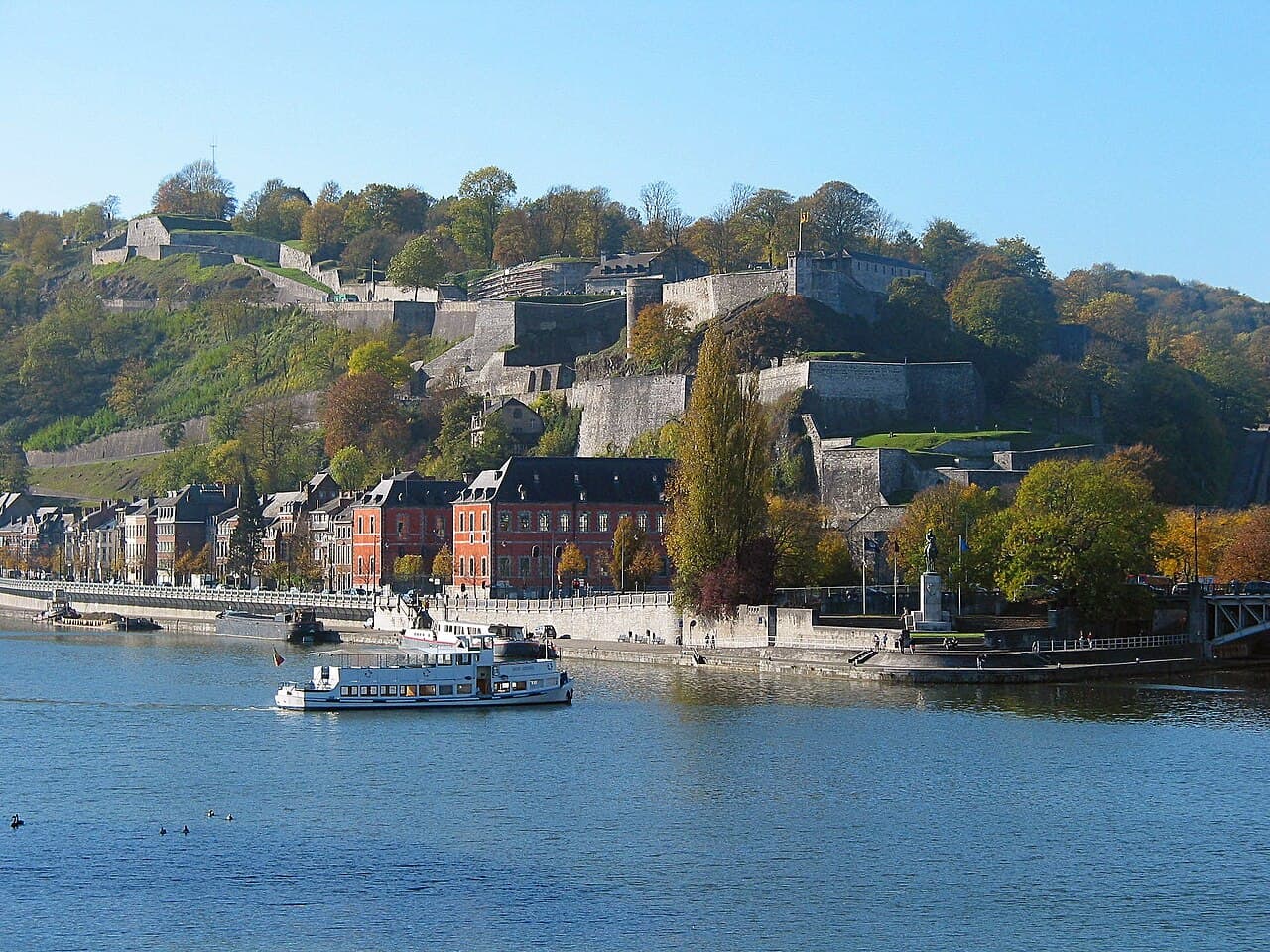
The Citadel of Namur stands majestically on a rocky spur overlooking the confluence of the Meuse and Sambre rivers in Belgium, a location of strategic and historical significance for millennia. Human presence at this site dates back to approximately 6000 BCE, with archaeological evidence indicating a settled community and port established by the 1st century CE. This long history of occupation underscores the site's enduring importance as a natural defensive position and commercial hub.
Early fortifications at the site began in the 9th century with wooden palisades, which were soon replaced by more durable stone walls in the 10th century. These initial defenses laid the groundwork for what would become a complex and evolving fortress, reflecting the changing military technologies and political powers in the region over the centuries.
Medieval origins and the counts of namur
From the 10th century until the 15th century, the citadel served as the residence and capital for 23 counts of Namur. These counts wielded considerable influence, with familial connections extending into European royalty, including emperors and queens. This era saw the citadel develop as both a political center and a fortified stronghold.
In 1429, the last count sold the county to Philip the Good, Duke of Burgundy, marking a significant shift in control. Under Burgundian rule, the citadel's strategic importance continued to grow, prompting further fortification enhancements to withstand the evolving artillery and siege tactics of the late medieval period.
Fortification enhancements and military significance
Between the 15th and 19th centuries, the citadel changed hands multiple times, reflecting the turbulent political landscape of Europe. It was controlled successively by the Holy Roman Empire, Spanish and Austrian Habsburgs, the French Republic and Empire, and the United Kingdom of the Netherlands. Each ruling power contributed to the citadel's fortifications, adapting and expanding them to meet contemporary military needs.
Notably, the citadel's defenses were significantly upgraded with the addition of bastioned walls, a design pioneered by military engineers such as Donato de Boni, Salomon Van Es, Jean Boulengier, and Menno van Coehoorn. These bastions allowed for improved artillery placement and defensive coverage, marking the citadel as a formidable fortress in the region.
Sieges and military engagements
The citadel endured several significant sieges, including those in 1692 and 1695 during the War of the League of Augsburg, and again in 1746 during the War of Austrian Succession. These conflicts tested the strength of the fortifications and the resilience of its defenders.
In 1782, Emperor Joseph II ordered the partial dismantling of the fortifications, reflecting changing military strategies and political priorities. Later, in 1804, Napoleon Bonaparte commanded the demolition of fortresses in annexed territories, leading to further neglect of the citadel's defenses.
19th-century restoration and military role
Following the Congress of Vienna in 1815, Dutch engineers undertook extensive restoration and modernization of the citadel as part of a defensive line against France. This period saw the rebuilding of key fortifications and the construction of new military facilities.
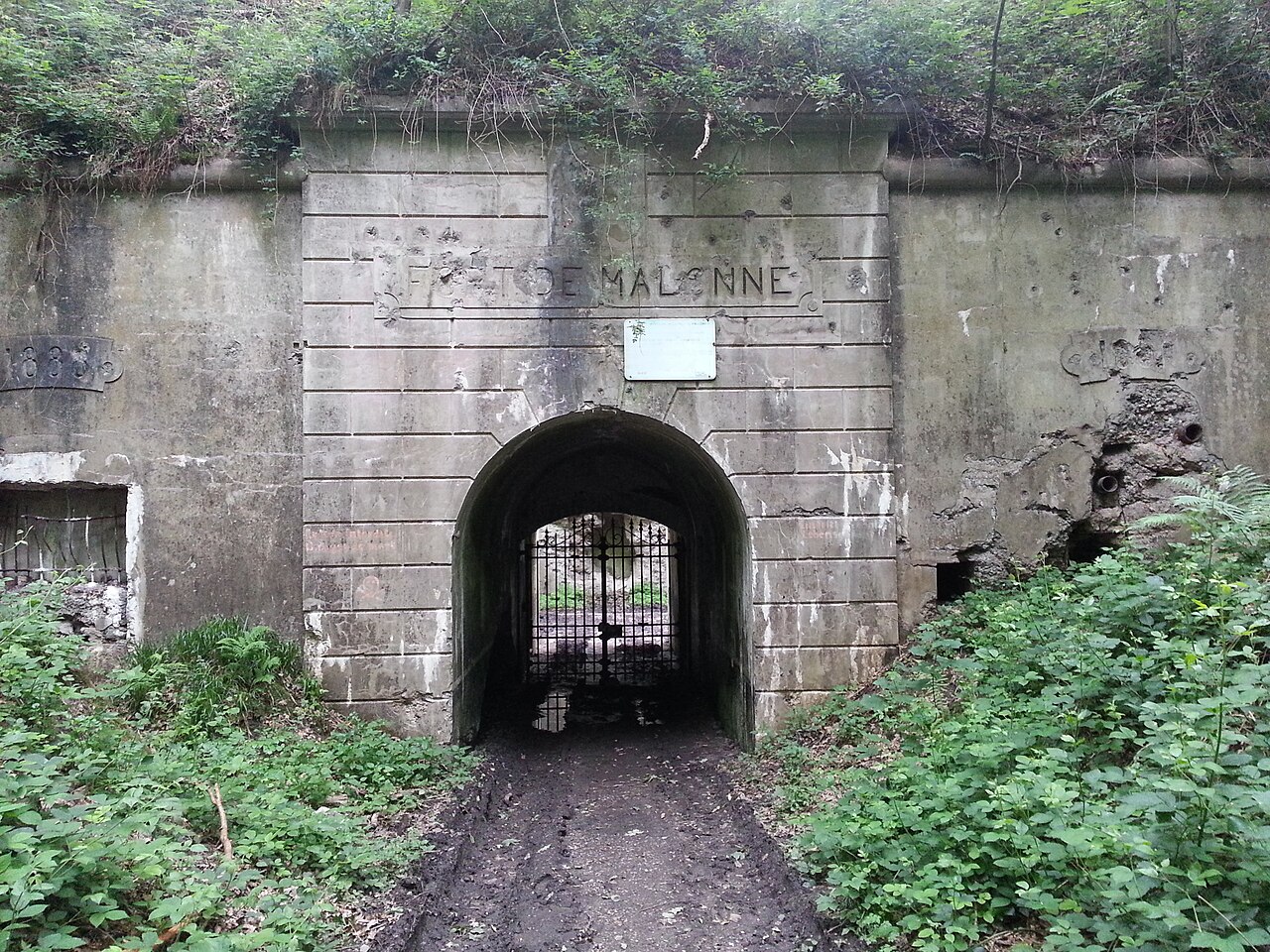
During the Belgian Revolution of 1830, the citadel was a focal point of mutinies and battles, eventually falling to Belgian forces. It continued to serve as a military garrison and training center throughout the 19th century. However, its defensive role diminished after the construction of outer forts designed by Henri Alexis Brialmont between 1887 and 1892.
Architectural layout and features
The citadel spans over 80 hectares atop a rocky outcrop approximately 190 meters above sea level. Its layout is divided into three main vertical sections, each representing different construction phases and defensive strategies:
- Donjon: The lowest level, containing medieval structures dating from the 12th century, including the Tour au Four and Tour aux Chartes. A ring-shaped moat carved into the rock in the 14th century surrounds this section. The Dessus Bordial tower, originally built in 1370, was adapted for artillery use in the 15th and 16th centuries.
- Médiane: This middle section features a bastioned enceinte constructed between 1542 and 1559 under the direction of Donato de Boni and his successors. It includes artillery positions and an underground bakery built between 1695 and 1698 by Menno van Coehoorn, showcasing advanced military engineering of the time.
- Terra Nova: The highest section, initially built in the 17th century by Dutch engineers, dismantled under Joseph II, and rebuilt by the United Kingdom of the Netherlands between 1820 and 1830. It houses barracks for 1,200 soldiers, an arsenal, and a staff building, with heating installed in the barracks by 1837.
Fortifications and underground galleries
The citadel's fortifications include bastions, curtain walls, and an extensive network of underground galleries. These subterranean passages are so vast that Napoleon I famously nicknamed the citadel "The Termite Mound of Europe". These galleries served various military functions, including troop movement, storage, and protection from artillery fire.
Modern adaptations and cultural significance
Many original 17th-century residential and officer buildings were demolished by 1913. The Grand Hôtel de la Citadelle, constructed between 1893 and 1899, was destroyed by fire in 1914 and restored in 1930. Today, it functions as a hospitality training center, reflecting the site's shift from military to civilian use.
The citadel grounds include a large forested area, residential quarters behind the castle, and a park named after Queen Fabiola, established in 1959 with recreational facilities. Modern visitor amenities include a visitor center at Terra Nova, a tourist train crossing the Médiane via a footbridge, and a cable car installed in 2021 connecting the citadel to Namur's city center.
The former guardhouse of Terra Nova was renovated between 2013 and 2014 and now houses exhibition spaces, administrative offices, and a restaurant. The 19th-century staff building is currently used by the Walloon Archaeological Service, emphasizing the site's ongoing cultural and historical importance.
Frequently asked questions (FAQ)
- How do I get to the Citadel of Namur?
- The Citadel of Namur is accessible from the city center via a cable car installed in 2021, as well as by foot and car. The cable car offers scenic views and a convenient route to the fortress.
- What are the main historical periods represented at the Citadel of Namur?
- The citadel reflects multiple historical periods, including early medieval wooden fortifications, 12th-century medieval stone structures, 16th-century bastioned walls, and 19th-century Dutch military expansions.
- Can I explore the underground galleries at the citadel?
- Yes, visitors can explore parts of the extensive underground galleries, which were used historically for troop movements and defense. Guided tours often include these subterranean passages.
- When is the best time to visit the citadel?
- The citadel is open daily from 10:00 to 18:00, with spring and summer offering the best weather for exploring the extensive grounds and enjoying panoramic views.
- Are there facilities for families and children?
- Yes, the citadel grounds include a park named after Queen Fabiola with recreational facilities suitable for families and children, making it a family-friendly destination.
Photo gallery

Information
Opening hours
10:00-18:00, daily
Ticket prices
€8 adult, €5 child
Current owner
Municipality of Namur
Website
Visit websiteSources & official resources
Verify the information above using these authoritative references.
Loading map...
Visitor reviews
No reviews yet. Been here? Write the first review and help other travelers!
Write the first reviewVisited this castle? Share your experience
Your review helps other travelers and adds first-hand knowledge to our encyclopedia.