Thy-le-Chateau

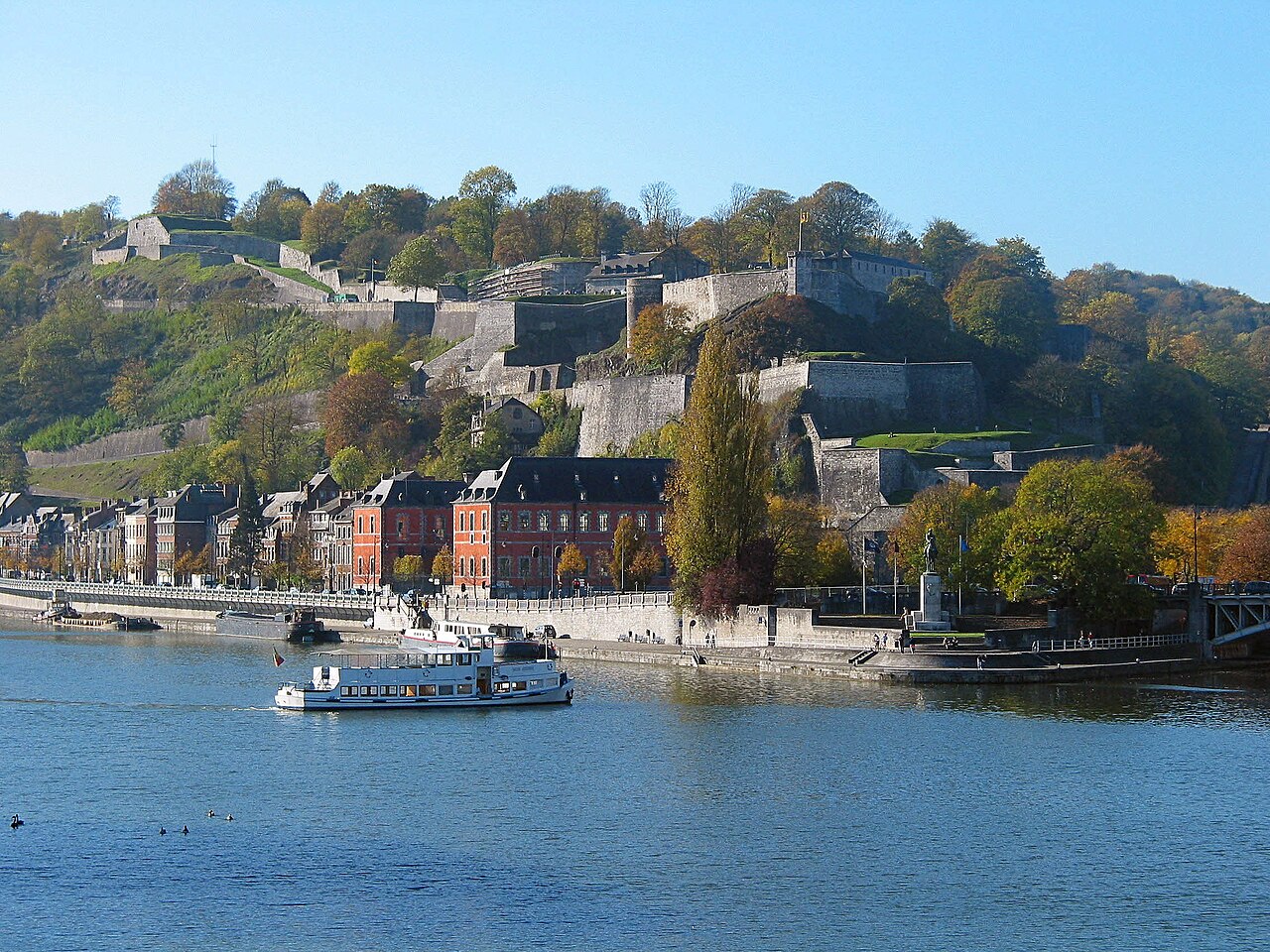
Thy-le-chateau castle in namur, belgium
Namur, Belgium
High Medieval (11th–13th c.)
Restored

Thy-le-Chateau Castle stands as a remarkable example of a high medieval fortress in the city of Namur, Belgium. Originally constructed in the 12th century, this castle served as a vital military stronghold for various noble families throughout the Middle Ages. Its strategic location allowed it to play a significant role in regional defense and power struggles until the upheavals of the French Revolution, after which it fell into disrepair.

Medieval origins and architectural features

The castle was initially built during the high medieval period, characterized by robust stone construction typical of the era. Its design included defensive walls, towers, and a fortified keep or donjon, which was common for castles intended to withstand sieges. The layout was likely influenced by the need for both military defense and residence for the noble clans who controlled it.

The castle's hilltop location provided commanding views of the surrounding landscape, a tactical advantage in monitoring approaching enemies. Defensive features such as moats or natural barriers may have been incorporated, though specific details on these are limited.

Historical significance and noble ownership

Throughout its history, Thy-le-Chateau was held by several noble families who used it as a military base and symbol of their feudal power. Its position in Namur placed it within a contested region that experienced numerous conflicts, especially during the medieval period when territorial control was frequently challenged.

The castle's military importance diminished after the French Revolution, a period that led to the decline of many feudal structures across Europe. Thy-le-Chateau, like many castles, suffered neglect and partial ruin during this time.

Restoration and modern status

In 1939, Thy-le-Chateau underwent a significant restoration effort aimed at preserving its historical and architectural heritage. This restoration helped stabilize the structure and allowed it to become accessible to the public, serving as a cultural monument and tourist attraction.

Today, the castle is recognized for its well-preserved medieval architecture and its role in the military history of the Namur region. It stands as a testament to the region's feudal past and the evolution of castle construction techniques over centuries.

Distinguishing from the citadel of namur

It is important to distinguish Thy-le-Chateau Castle from the Citadel of Namur, another prominent fortress in the city. The Citadel, located at the confluence of the Sambre and Meuse rivers, has origins dating back to the Roman era and was extensively rebuilt in the 17th century by military engineers such as Menno van Coehoorn and Vauban. Unlike Thy-le-Chateau, the Citadel is classified as a major heritage site of Wallonia and reflects a different historical and architectural timeline.

Frequently asked questions (FAQ)

How do I get to Thy-le-Chateau?
Thy-le-Chateau is located in Namur, Belgium, and can be accessed by car or public transport. The nearest train station is in Namur, from where you can take a local bus or taxi to reach the castle. There are also parking facilities available for visitors arriving by car.
What is the historical significance of Thy-le-Chateau?
Thy-le-Chateau has a rich history dating back to the medieval period, serving as a strategic fortress during various conflicts. It played a crucial role in the defense of the region and has been witness to numerous historical events. The castle's architecture reflects the evolution of military designs over the centuries.
When was Thy-le-Chateau built?
Thy-le-Chateau was originally constructed in the 11th century, with subsequent modifications and expansions made in the following centuries. The castle has undergone various restorations, allowing visitors to appreciate its historical evolution. Its enduring structure is a testament to the architectural styles of different eras.
Can I take guided tours of Thy-le-Chateau?
Yes, guided tours are available at Thy-le-Chateau, offering visitors an in-depth look at its history and architecture. These tours are led by knowledgeable guides who share fascinating stories and insights about the castle. It’s advisable to check the schedule in advance as tours may vary by season.
Why is Thy-le-Chateau considered an architectural gem?
Thy-le-Chateau is regarded as an architectural gem due to its blend of medieval and Renaissance styles, showcasing intricate stonework and fortifications. The castle's design reflects the strategic military needs of its time while also incorporating elements of beauty and artistry. Visitors are often captivated by its impressive towers and well-preserved structures.
Is it possible to hold events at Thy-le-Chateau?
Yes, Thy-le-Chateau offers facilities for hosting events such as weddings, conferences, and cultural gatherings. The scenic backdrop and historical ambiance make it a unique venue for special occasions. It's recommended to contact the castle administration for availability and specific arrangements.
What are the opening hours for Thy-le-Chateau?
Thy-le-Chateau is typically open to visitors from April to October, but hours may vary depending on the season. During peak tourist season, the castle often opens earlier and closes later to accommodate more visitors. Always check the official website for the most current opening hours before your visit.
What are the ticket prices for visiting Thy-le-Chateau?
Ticket prices for Thy-le-Chateau vary depending on age and group size, with discounts often available for students and seniors. Generally, adults can expect to pay a modest entrance fee, while children under a certain age may enter for free. It's best to check the official website for the latest pricing and any special offers.
What is the best time to visit Thy-le-Chateau?
The best time to visit Thy-le-Chateau is during the spring and early fall when the weather is mild, and the surrounding landscapes are particularly beautiful. This timing allows for a more pleasant experience while exploring the castle's grounds. Additionally, visiting during weekdays may help avoid larger crowds.
Are there any nearby attractions to Thy-le-Chateau?
Yes, there are several nearby attractions including the city of Namur, with its charming streets and vibrant culture. Visitors can also explore the Meuse River and the scenic landscapes of the Ardennes region. Local museums and parks provide additional opportunities for exploration and enjoyment in the area.

Information

Hill Castle

Sources & official resources

Verify the information above using these authoritative references.

Loading map...

Visitor reviews

No reviews yet. Been here? Write the first review and help other travelers!

Write the first review

Visited this castle? Share your experience

Your review helps other travelers and adds first-hand knowledge to our encyclopedia.
Write a review

(5/5)

0/2000 characters

Your review will be visible after admin approval

Nearby castles

0.8 km
Citadel of Namur — Belgium castle

Citadel of Namur

Namur, Belgium

The Citadel of Namur stands majestically on a rocky spur overlooking the confluence of the Meuse and Sambre rivers in Belgium, a location of strategic and historical significance for millennia. Human presence at this site dates back to approximately 6000 BCE, with archaeological evidence indicating a settled community and port established by the 1st century CE. This long history of occupation underscores the site's enduring importance as a natural defensive position and commercial hub. Early fortifications at the site began in the 9th century with wooden palisades, which were soon replaced by more durable stone walls in the 10th century. These initial defenses laid the groundwork for what would become a complex and evolving fortress, reflecting the changing military technologies and political powers in the region over the centuries. Medieval origins and the counts of namur From the 10th century until the 15th century, the citadel served as the residence and capital for 23 counts of Namur. These counts wielded considerable influence, with familial connections extending into European royalty, including emperors and queens. This era saw the citadel develop as both a political center and a fortified stronghold. In 1429, the last count sold the county to Philip the Good, Duke of Burgundy, marking a significant shift in control. Under Burgundian rule, the citadel's strategic importance continued to grow, prompting further fortification enhancements to withstand the evolving artillery and siege tactics of the late medieval period. Fortification enhancements and military significance Between the 15th and 19th centuries, the citadel changed hands multiple times, reflecting the turbulent political landscape of Europe. It was controlled successively by the Holy Roman Empire, Spanish and Austrian Habsburgs, the French Republic and Empire, and the United Kingdom of the Netherlands. Each ruling power contributed to the citadel's fortifications, adapting and expanding them to meet contemporary military needs. Notably, the citadel's defenses were significantly upgraded with the addition of bastioned walls, a design pioneered by military engineers such as Donato de Boni, Salomon Van Es, Jean Boulengier, and Menno van Coehoorn. These bastions allowed for improved artillery placement and defensive coverage, marking the citadel as a formidable fortress in the region. Sieges and military engagements The citadel endured several significant sieges, including those in 1692 and 1695 during the War of the League of Augsburg, and again in 1746 during the War of Austrian Succession. These conflicts tested the strength of the fortifications and the resilience of its defenders. In 1782, Emperor Joseph II ordered the partial dismantling of the fortifications, reflecting changing military strategies and political priorities. Later, in 1804, Napoleon Bonaparte commanded the demolition of fortresses in annexed territories, leading to further neglect of the citadel's defenses. 19th-century restoration and military role Following the Congress of Vienna in 1815, Dutch engineers undertook extensive restoration and modernization of the citadel as part of a defensive line against France. This period saw the rebuilding of key fortifications and the construction of new military facilities. During the Belgian Revolution of 1830, the citadel was a focal point of mutinies and battles, eventually falling to Belgian forces. It continued to serve as a military garrison and training center throughout the 19th century. However, its defensive role diminished after the construction of outer forts designed by Henri Alexis Brialmont between 1887 and 1892. Architectural layout and features The citadel spans over 80 hectares atop a rocky outcrop approximately 190 meters above sea level. Its layout is divided into three main vertical sections, each representing different construction phases and defensive strategies: Donjon: The lowest level, containing medieval structures dating from the 12th century, including the Tour au Four and Tour aux Chartes. A ring-shaped moat carved into the rock in the 14th century surrounds this section. The Dessus Bordial tower, originally built in 1370, was adapted for artillery use in the 15th and 16th centuries. Médiane: This middle section features a bastioned enceinte constructed between 1542 and 1559 under the direction of Donato de Boni and his successors. It includes artillery positions and an underground bakery built between 1695 and 1698 by Menno van Coehoorn, showcasing advanced military engineering of the time. Terra Nova: The highest section, initially built in the 17th century by Dutch engineers, dismantled under Joseph II, and rebuilt by the United Kingdom of the Netherlands between 1820 and 1830. It houses barracks for 1,200 soldiers, an arsenal, and a staff building, with heating installed in the barracks by 1837. Fortifications and underground galleries The citadel's fortifications include bastions, curtain walls, and an extensive network of underground galleries. These subterranean passages are so vast that Napoleon I famously nicknamed the citadel "The Termite Mound of Europe". These galleries served various military functions, including troop movement, storage, and protection from artillery fire. Modern adaptations and cultural significance Many original 17th-century residential and officer buildings were demolished by 1913. The Grand Hôtel de la Citadelle, constructed between 1893 and 1899, was destroyed by fire in 1914 and restored in 1930. Today, it functions as a hospitality training center, reflecting the site's shift from military to civilian use. The citadel grounds include a large forested area, residential quarters behind the castle, and a park named after Queen Fabiola, established in 1959 with recreational facilities. Modern visitor amenities include a visitor center at Terra Nova, a tourist train crossing the Médiane via a footbridge, and a cable car installed in 2021 connecting the citadel to Namur's city center. The former guardhouse of Terra Nova was renovated between 2013 and 2014 and now houses exhibition spaces, administrative offices, and a restaurant. The 19th-century staff building is currently used by the Walloon Archaeological Service, emphasizing the site's ongoing cultural and historical importance.

High Medieval (11th–13th c.)
Details
4.6 km

Château de Flawinne

Namur, Belgium

The Château de Flawinne is an 18th-century castle located near Namur in the Wallonia region of Belgium. Constructed in 1711 by Jean-Jacques d'Hinslin and his son, the château exemplifies the refined architectural style of the post-Renaissance period. It is particularly notable for its remarkable gardens, which reflect the landscaping trends of the era and contribute significantly to the estate's charm and historical value.Historical context and constructionThe château was built during a time when aristocratic residences were transitioning from fortified medieval structures to elegant country estates focused on comfort and aesthetics. Jean-Jacques d'Hinslin, a member of the local nobility, commissioned the château to serve as a family residence and a symbol of status. Construction completed in 1711, placing the château firmly in the post-Renaissance era, characterized by architectural elements that blend classical influences with emerging Baroque sensibilities.The location near Namur was strategically chosen for its scenic views and proximity to the Meuse River, which historically served as a significant transportation and trade route. The château's design reflects a shift away from military functionality toward leisure and representation.Architectural features and styleThe Château de Flawinne exhibits architectural features typical of early 18th-century Belgian aristocratic residences. While not a fortified castle, it retains elements of a palace castle type, emphasizing grandeur and elegance. The building showcases a symmetrical layout with a central body flanked by wings, large windows allowing ample natural light, and refined stonework.The château's style is a mix of post-Renaissance and early Baroque influences, visible in the decorative details such as pilasters, cornices, and window surrounds. The roofline often features steeply pitched roofs with dormer windows, typical of the region's architectural vernacular.Gardens and landscape designOne of the château's most distinguished aspects is its remarkable gardens. These gardens were designed to complement the château's elegant architecture and to provide a serene outdoor environment for leisure and social activities. The landscaping includes formal parterres, tree-lined avenues, and ornamental flower beds arranged in geometric patterns.The gardens also reflect the influence of French formal garden design, popularized by André Le Nôtre, with an emphasis on symmetry, order, and vistas that extend the visual impact of the château into the surrounding countryside. Water features and statuary may also be present, enhancing the aesthetic experience.Current status and visitor informationToday, the Château de Flawinne remains a well-preserved example of early 18th-century aristocratic architecture in Belgium. While it is primarily a private residence, the château and its gardens occasionally open to the public during special events or cultural heritage days, allowing visitors to appreciate its historical and architectural significance.The château's location near Namur makes it accessible for day trips from the city, offering a glimpse into the region's noble past and landscape artistry. Visitors interested in Belgian history, architecture, and garden design will find the Château de Flawinne a noteworthy site.Architectural and cultural significanceThe château represents the evolution of noble residences in Belgium from medieval fortifications to elegant country estates focused on comfort and display. Its post-Renaissance architectural style marks a period of transition and refinement, while its gardens exemplify the integration of architecture and landscape design in aristocratic culture.As part of the cultural heritage of the Namur region, the Château de Flawinne contributes to understanding the social and artistic developments of early 18th-century Belgium. Its preservation allows for ongoing study and appreciation of this important historical period.

Post-Renaissance (17th–18th c.)
Details
4.7 km

La Falize Castle

Namur, Belgium

La Falize Castle, located near Namur in Belgium, is a notable example of a late-medieval fortress strategically positioned on the cliffs overlooking the Meuse River valley. Its name derives from the Latin word "Falise," meaning "cliff" or "falaise," reflecting its commanding location near the top edge of a steep declivity that defines the landscape of the Meuse valley. This dramatic setting not only provided natural defenses but also allowed control over the vital river and the adjacent land routes. Geographical and strategic significance The castle occupies a prominent site where the steep valley sides of the Meuse are intersected by the Houyoux tributary, which carves a smaller valley into the larger Meuse valley declivity. This smaller valley created by the Houyoux serves as a natural corridor for land transport routes descending from the plains above, connecting Gembloux and Namur to the Meuse valley below. The location of La Falize Castle near this junction allowed it to oversee and potentially control these critical transportation paths, enhancing its military and economic importance. Historical background and ownership The history of La Falize Castle is closely linked to the noble Glymes family. In 1638, King Philip IV of Spain leased the manor to Gilles I of Glymes, Lord of La Falize, for 1500 florins, establishing the family's association with the estate. The Glymes family were prominent in the region, and their stewardship shaped much of the castle's development and status. Later, in 1757, Honore de Glymes-Brabant, son of Ignace-François de Glymes-Brabant, undertook significant construction that resulted in much of the current structure seen today. This 18th-century building phase introduced architectural elements that blended with the castle's medieval origins, reflecting evolving tastes and functions. Role in military history La Falize Castle played a notable role during the Siege of Namur in 1695, serving as the headquarters of William of Orange. This siege was a major military engagement during the Nine Years' War, where the castle's position provided a strategic vantage point for commanding operations against the French-held city. Its involvement in such a significant historical event underscores its military importance in the region. Architectural features and evolution The castle's architecture reflects its late-medieval origins with subsequent modifications in the 18th century. The original medieval fortress likely featured defensive elements typical of the period, such as thick stone walls, battlements, and possibly a keep or donjon. The later 1757 construction by Honore de Glymes-Brabant introduced more refined residential features, blending functionality with comfort and aesthetic considerations. The castle's placement on the cliff edge would have necessitated adaptations to the terrain, including terraced grounds and fortified walls designed to maximize defense while taking advantage of the natural topography. The proximity to the Meuse and the surrounding valleys also influenced the design of access routes and outbuildings. Current status and cultural significance Today, La Falize Castle stands as a well-preserved monument to the region's medieval and early modern history. Its dramatic location and historical associations make it a site of cultural heritage interest. While not as widely known internationally as some other Belgian castles, it offers valuable insight into the military, architectural, and noble history of the Namur area. The castle's connection to significant historical figures and events, such as William of Orange and the Siege of Namur, adds layers of historical depth that attract historians and visitors interested in the military history of the Low Countries. Visiting La Falize Castle Visitors to La Falize Castle can appreciate not only the architectural features but also the sweeping views of the Meuse valley and the surrounding landscape. The castle's position provides a unique perspective on the natural and strategic factors that shaped its history. While the castle is primarily a historic site, its grounds and surroundings offer opportunities for exploration and understanding of the region's geography. Access to the castle and visiting hours may vary, and it is advisable to check local resources or tourism offices in Namur for the most current information.

Late Medieval (14th–15th c.)
Details

