Christianpris
Christianspris, also known as Frederiksort, was a Danish bastioned fortress constructed in the early 17th century on the Jernved peninsula along the western shore of the Kielerfiord, near the historical Danish city of Kiel. Initiated in 1632 by Danish King Christian IV, the fortress was part of a strategic effort to secure Danish territorial interests against advancing German forces during the Thirty Years' War (1618–1648), a major conflict that engulfed much of Europe.
The fortress was designed as a bastioned fortification, a style characterized by angular bastions projecting outward from the main walls, allowing defensive artillery to cover all approaches and eliminate blind spots. This architectural style was typical of the period, reflecting advancements in military engineering intended to withstand cannon fire and siege warfare. Christianspris was strategically placed on a narrow land tongue, providing a commanding position over the Kielerfiord and controlling access to the important maritime routes and the city of Kiel.
Historical context and construction
The construction of Christianspris was part of Christian IV's broader military and urban development policies. Known for founding numerous towns and fortifications, Christian IV sought to strengthen Denmark's defenses during a turbulent era marked by shifting alliances and frequent warfare. The fortress was intended not only as a military stronghold but also as a symbol of Danish sovereignty in the region.
Building commenced in 1632, amidst the ongoing Thirty Years' War, which saw Denmark involved in multiple campaigns to maintain its influence in northern Germany. The choice of location on the Jernved peninsula was tactical, leveraging natural landforms to enhance defensive capabilities. The fortress's bastioned design incorporated thick earthworks and stone walls, enabling it to absorb artillery bombardment and provide overlapping fields of fire.
The town of Christianspris and its military significance
Alongside the fortress, a small town was established, reflecting the common practice of combining military and civilian settlements to support garrisons and local administration. However, Christianspris as a town was short-lived, as the region remained contested throughout the mid-17th century.
During the Torstenson War (1643–1645), part of the wider Thirty Years' War conflicts, Christianspris became a focal point of military action. In December 1643, the fortress and town were stormed by Swedish forces during the Jutland Campaign. The attack demonstrated the strategic importance of the site and the intensity of the conflict between Denmark and Sweden for control over the Baltic region.
Architectural features and defensive elements
Christianspris featured typical elements of bastioned fortresses of the period, including angular bastions designed to eliminate dead zones around the walls, a moat or water defenses fed by the fjord, and robust curtain walls. The layout allowed defenders to place artillery in overlapping fields of fire, maximizing the fortress's defensive potential.
The fortress's position on a narrow peninsula enhanced its natural defenses, limiting the directions from which an enemy could mount an assault. Although detailed plans and remains are scarce, historical records suggest that Christianspris incorporated a gatehouse, barracks, and storage facilities typical for a fortress of its size and purpose.
Legacy and current status
Christianspris's existence was relatively brief, as the shifting political landscape and military technologies evolved rapidly in the decades following its construction. The fortress did not develop into a major urban center and was eventually abandoned or absorbed into other territorial changes following the end of the Thirty Years' War.
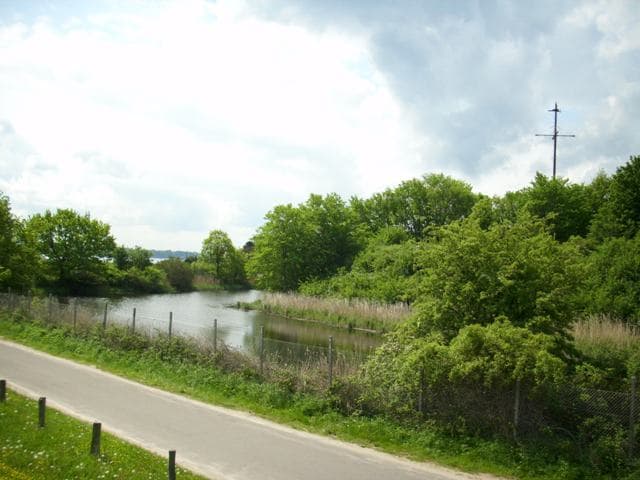
Today, the site of Christianspris is recognized primarily through historical documentation rather than extensive surviving structures. It remains an important example of early 17th-century Danish military architecture and the efforts of Christian IV to fortify his realm during a critical period of European conflict.
Frequently asked questions (FAQ)
- What was the purpose of Christianspris fortress?
- Christianspris was built in 1632 by King Christian IV to defend the Danish territory near Kiel against German troops during the Thirty Years' War.
- When was Christianspris stormed by Swedish forces?
- The fortress was stormed in December 1643 during the Torstenson War, part of the larger Thirty Years' War conflicts.
- What architectural style characterizes Christianspris?
- Christianspris was designed as a bastioned fortress, featuring angular bastions typical of early modern military architecture to withstand artillery attacks.
- Is Christianspris fortress still standing today?
- Christianspris exists today mainly as ruins with limited visible remains, documented primarily through historical records.
- Can visitors access the site of Christianspris?
- There is limited information about public access to the site, as few structures remain and it is primarily of historical interest rather than a developed tourist attraction.
Photo gallery

Photo by Truckstock•Public domain
Information
Loading map...
Visitor reviews
No reviews yet. Been here? Write the first review and help other travelers!
Write the first reviewVisited this castle? Share your experience
Your review helps other travelers and adds first-hand knowledge to our encyclopedia.