Chervonohorod Castle
Chervonohorod Castle stands as a remarkable testament to the layered history of fortifications and noble residences in Ukraine. Located near the village of Nyrkiv in Ternopil Oblast, this castle site occupies a strategic hilltop position within a natural defensive basin formed by a near-encircling loop of the Dzhuryn River. The castle's origins trace back to the early medieval period, with the earliest known fortification being a wooden structure established by Ruthenian princes before the mid-13th century.
The original wooden castle was destroyed during the Mongol-Tatar invasions of 1241, a fate common to many Ruthenian strongholds of the time. While direct contemporary chronicles do not explicitly mention the castle's destruction, archaeological findings and regional history strongly support this conclusion. In the 14th century, the property passed to the Koriatovych princes, who rebuilt a wooden fortress on the site. This wooden structure, however, was again razed in 1538 by combined Tatar and Vlach forces, reflecting the turbulent military conflicts in the region.
The 17th-century transformation into a brick fortress
At the dawn of the 17th century, the castle underwent a significant architectural transformation under the patronage of Mikołaj Daniłowicz, the castellan of Lviv. The wooden defenses were replaced with a more durable and modern brick quadrangular fortress. This new design featured four round corner towers connected by robust defensive walls, embodying the military architectural advancements of the period. The fortress was further protected by an outer defensive wall and a controlled entrance gate, enhancing its defensibility.
Military history and sieges in the 17th century
The fortress's strategic importance is underscored by its turbulent history during the 17th century. In 1648, it was captured by the rebel forces of Bohdan Khmelnytsky during the Cossack uprising against Polish rule. Later, in 1672, the castle fell to the Ottoman army led by Sultan Mehmed IV during the Ottoman expansion into Ukrainian lands. During the period of Turkish occupation, the fortress was abandoned and gradually fell into ruin. When local inhabitants returned after the Ottoman withdrawal, the castle was already in a state of significant decay.
19th-century palace construction and architectural adaptations
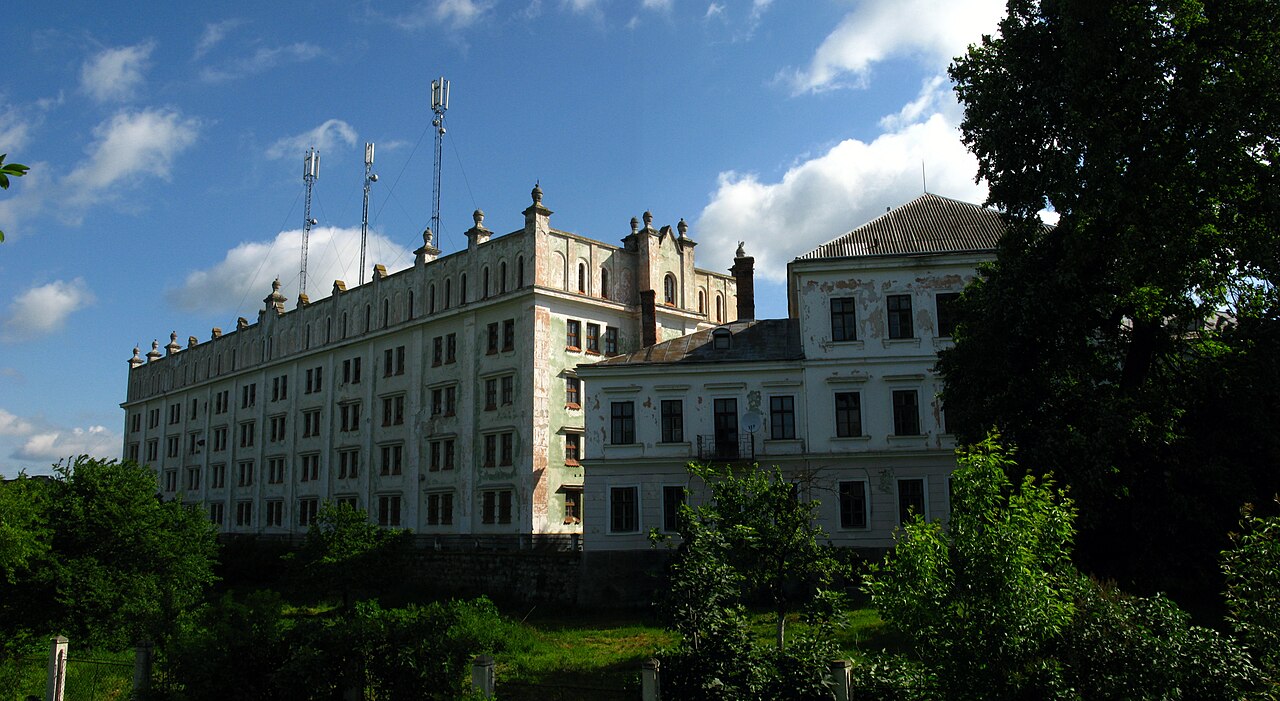
From 1778, the estate was owned by Karol Poniński, a Polish nobleman who initiated major changes to the site. In 1820, he demolished two of the remaining towers and parts of the castle walls to build a palace directly on the castle's foundations. This palace reflected the tastes of the period, incorporating elements such as an Italian-style terrace and a colonnade of six stone columns. The grounds were landscaped into a large park featuring a fountain, demonstrating 19th-century garden design trends.
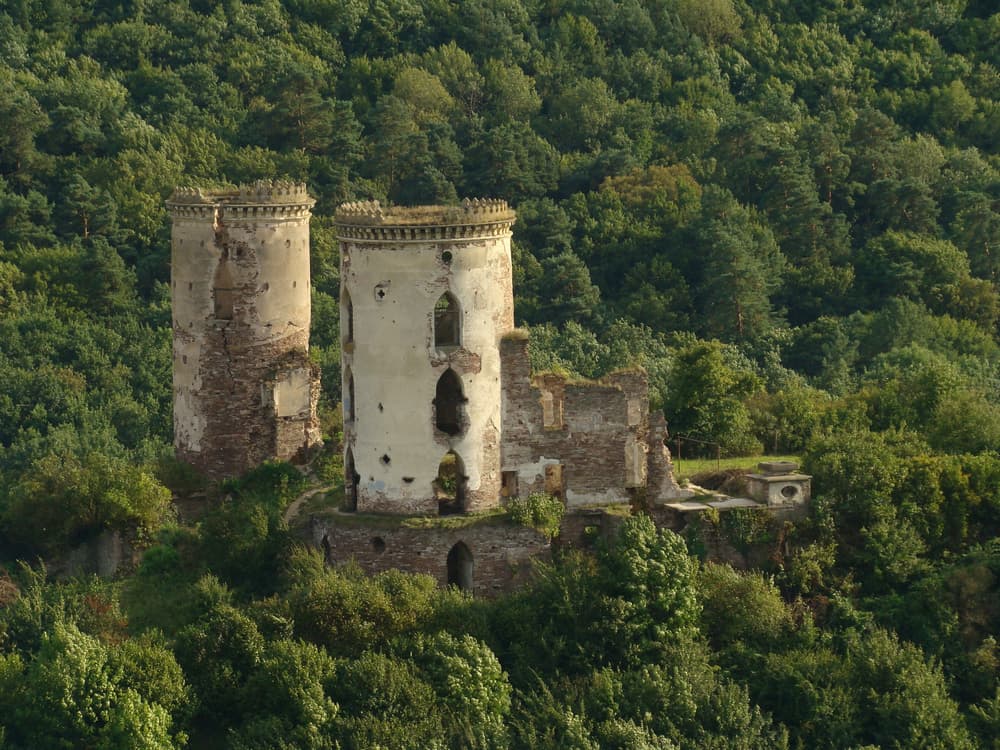
Karol's son, Kalikst Poniński, later rebuilt the dismantled towers, altering their appearance with taller and more voluminous forms inspired by a pseudo-Gothic architectural style. This style was part of the broader Romantic revival of medieval forms popular in 19th-century Europe. The reconstructed towers and palace combined medieval fortification elements with residential grandeur.
Palace and estate before the world wars
Before the outbreak of World War I, the estate had developed into a stately residence that blended historic and romantic architectural features. The palace and its grounds served as a symbol of noble prestige and cultural refinement in the region. However, the estate suffered heavy damage during World War I and subsequent conflicts.
Destruction and decline in the 20th century
The palace and castle ruins sustained further damage during World War II. In February 1945, the site was the scene of a violent clash between Polish defenders and the Ukrainian Insurgent Army, resulting in the deaths of 49 people. Following the war, parts of the palace were dismantled to provide building materials for local construction projects, accelerating the site's decline.
By the early 21st century, the ruins were in a precarious state. In 2013, one of the two remaining towers partially collapsed due to lack of maintenance and conservation efforts. The ruins are currently owned by the Ternopil Eparchy of the Orthodox Church of Ukraine, but the site remains largely neglected.
Architectural features and remains
The original 17th-century fortress was built of brick in a quadrangular layout with four round towers at each corner, connected by thick defensive walls. An outer wall and entrance gate controlled access to the complex. The natural defensive advantage was enhanced by the steep hill and the surrounding loop of the Dzhuryn River, creating a near-moat effect.
In the 19th century, the surviving defensive structures were adapted for residential use. Two of the original towers were incorporated into Karol Poniński's palace, although three wings of the historic fortification and two towers were demolished. The towers rebuilt by Kalikst Poniński were taller and featured a pseudo-Gothic style, expanding their medieval forms.
The palace included an Italian-style terrace and a colonnade with six stone columns opening onto a landscaped park with a fountain. Nearby architectural elements include a Roman Catholic church and the Poniński family chapel, reflecting the site's noble and religious heritage.
Current condition and surroundings
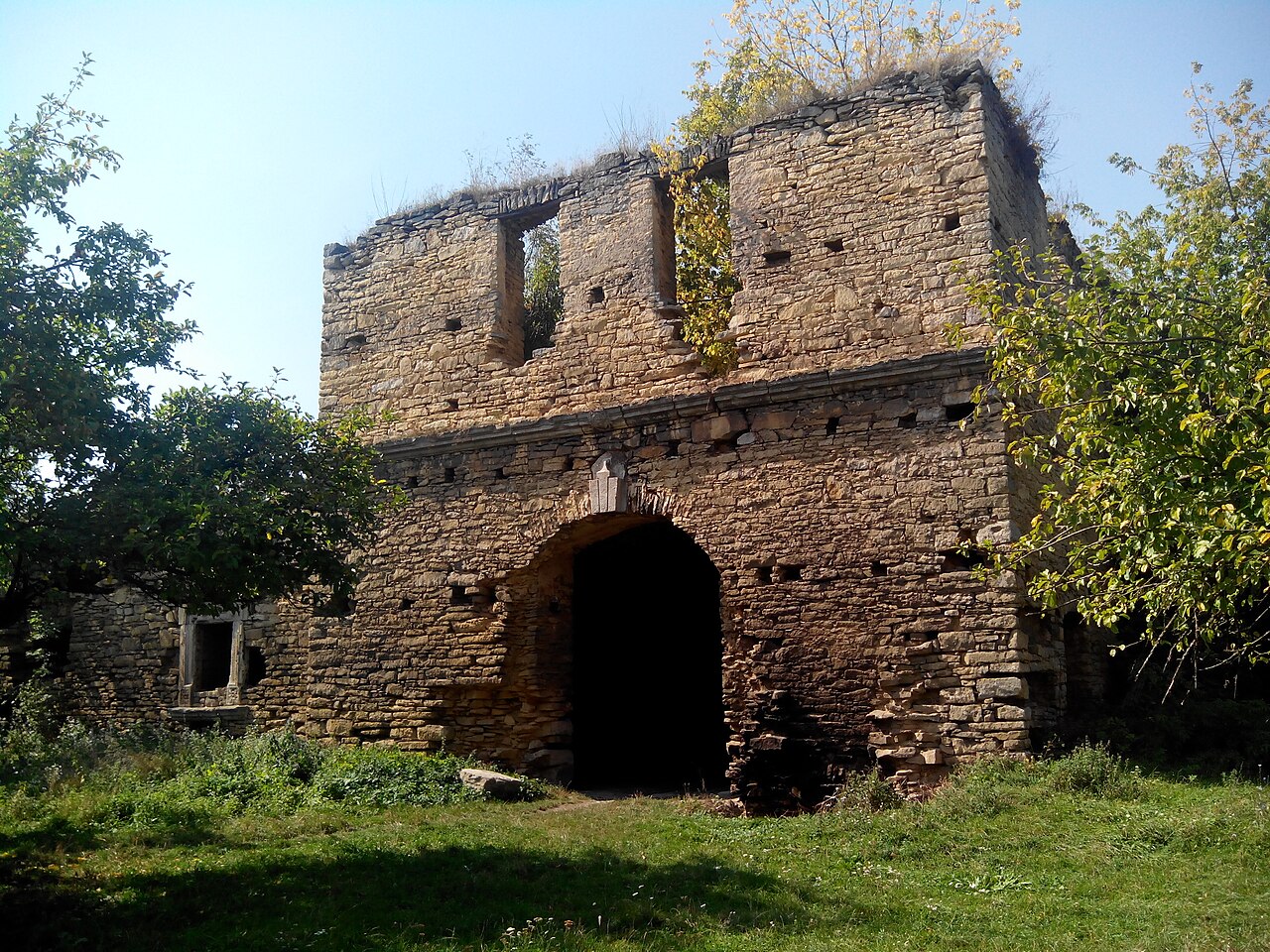
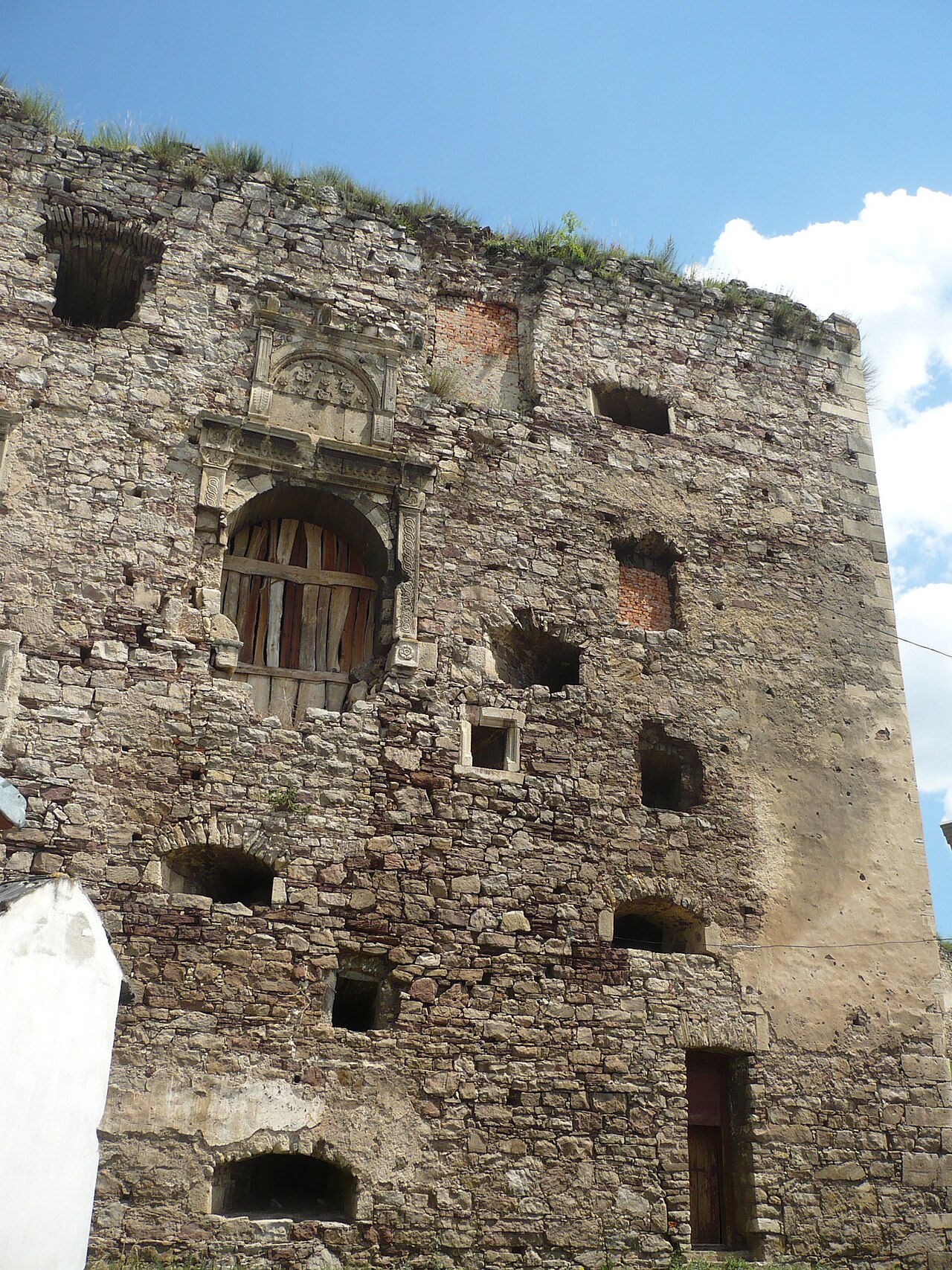
Today, the site is marked by two heavily damaged towers, one of which partially collapsed in 2013. The rest of the palace and fortress have fallen into ruin, with only fragments and outlines remaining visible. The dramatic natural environment includes a notable waterfall nearby, enhancing the picturesque quality of the ruins.
Despite its ruined state, Chervonohorod Castle remains a significant cultural and historical monument in Ukraine. Its layered history from medieval wooden fortifications to a 17th-century brick fortress and a 19th-century palace illustrates the evolution of military and residential architecture in the region. The castle's story is intertwined with major historical events, including Mongol invasions, Cossack uprisings, Ottoman wars, and 20th-century conflicts, making it a site of rich historical resonance.
Frequently asked questions (FAQ)
- How do I get to Chervonohorod Castle?
- Chervonohorod Castle is located near the village of Nyrkiv in Ternopil Oblast, Ukraine. Visitors typically reach the site by car or local transport from nearby towns. The castle is situated on a hill and involves some walking to access the ruins.
- What is the historical significance of Chervonohorod Castle?
- Chervonohorod Castle is historically significant as a medieval fortress that witnessed major events such as the Mongol invasions, Cossack uprisings, and Ottoman occupation. Its layered history reflects the military and noble architectural evolution in western Ukraine.
- Can I visit the castle ruins and palace grounds?
- Yes, visitors can explore the ruins of the castle and the remains of the 19th-century palace grounds. However, the site is in a state of ruin with limited facilities, so caution is advised when walking around the structures.
- When was the castle originally built?
- The original wooden castle at Chervonohorod was built before the mid-13th century by Ruthenian princes, making it an early medieval fortification.
- Why is the castle in ruins today?
- The castle fell into ruin due to repeated destruction during invasions and wars, abandonment during Ottoman rule, and later damage during the World Wars. Lack of maintenance has led to partial collapses of the remaining structures.
Photo gallery

Information
Sources & official resources
Verify the information above using these authoritative references.
Loading map...
Visitor reviews
No reviews yet. Been here? Write the first review and help other travelers!
Write the first reviewVisited this castle? Share your experience
Your review helps other travelers and adds first-hand knowledge to our encyclopedia.