Châtillon Castle

Châtillon Castle in Châtillon-sur-Indre, France
Châtillon-sur-Indre, Centre-Val de Loire, France
High Medieval (11th–13th c.)
Ruins

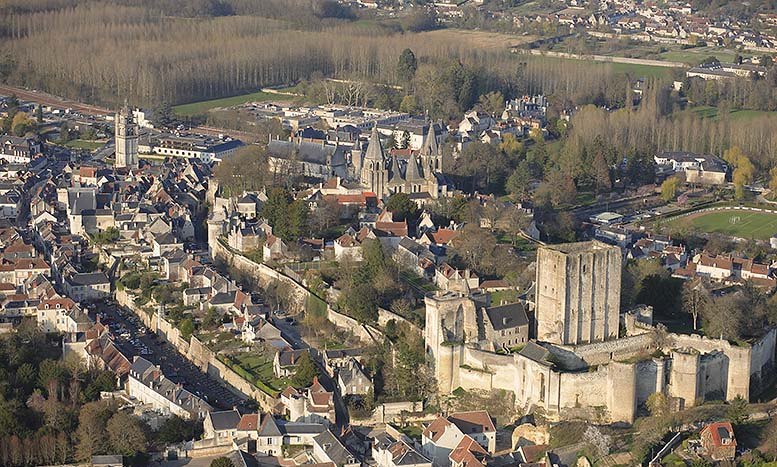
Châtillon Castle, located in the town of Châtillon-sur-Indre in the Centre-Val de Loire region of France, is a significant example of a high medieval hill castle dating back to the 12th century. Though now in a state of ruins, the castle's remains offer valuable insight into medieval fortification architecture and the feudal history of the region.

The historical context of Châtillon Castle

The castle was constructed during the high medieval period, a time when the consolidation of feudal territories and the need for defensive strongholds led to the widespread building of castles across France. Châtillon Castle served as a strategic fortification overseeing the surrounding landscape, positioned on a natural elevation, which classified it as a hill castle. This location provided a tactical advantage for surveillance and defense against potential invaders.

Throughout its history, the castle was part of the complex network of feudal holdings in the Loire Valley, an area known for its dense concentration of castles and fortifications. It likely played a role in local power struggles and defense during various medieval conflicts, although specific historical events directly involving Châtillon Castle are not extensively documented.

Architectural features and layout

The original 12th-century construction of Châtillon Castle would have included typical elements of medieval military architecture. These likely comprised a central keep or donjon, surrounded by defensive walls with battlements and possibly a moat or other natural defensive features enhanced by man-made structures.

Although much of the castle is now in ruins, archaeological studies and remaining structures suggest a compact fortified complex adapted to the hilltop terrain. The castle's design prioritized defense, with thick stone walls and limited access points, characteristic of high medieval fortifications.

Defensive structures

The castle's elevated position was complemented by architectural features such as towers for lookout and archery, and a fortified gatehouse controlling entry. The use of natural slopes further enhanced its defensive capabilities.

The decline and current condition

Over the centuries, Châtillon Castle fell into disuse and was eventually abandoned, leading to its current state as ruins. The deterioration was likely due to changing military technology, shifts in political power, and the reduced strategic importance of hill castles in the post-medieval period.

Today, the site is valued for its historical and cultural significance, attracting visitors interested in medieval architecture and history. Preservation efforts focus on maintaining the ruins and providing interpretive information to highlight the castle's role in the region's feudal past.

Visiting Châtillon Castle

Visitors to Châtillon-sur-Indre can explore the ruins of Châtillon Castle, which offer a tangible connection to the medieval era. The site provides scenic views of the surrounding countryside and serves as a reminder of the region's rich heritage of castle-building.

While the castle remains largely a ruin, its accessibility and the surrounding area's charm make it a worthwhile destination for those interested in history, architecture, and the medieval landscape of the Loire Valley.

Frequently asked questions (FAQ)

How do I get to Châtillon Castle?
Châtillon Castle is located in Châtillon-sur-Indre, France, and is easily accessible by car or public transportation. If you are driving, follow the signs to the town center, and there is parking available nearby. For public transport, check the local bus schedules for routes that service the area.
What is the historical significance of Châtillon Castle?
Châtillon Castle dates back to the 12th century and has played a crucial role in the region's history, serving as a residence for various noble families. Its architecture reflects the feudal style of the period, and it has witnessed numerous historical events. The castle is a testament to the medieval heritage of France and offers insights into the lives of its former inhabitants.
When was Châtillon Castle built?
Châtillon Castle was originally constructed in the 12th century, with significant modifications made in the following centuries. Its design has evolved over time, showcasing various architectural styles that reflect the periods of its renovations. This rich history adds depth to the visitor experience as they explore the castle's grounds.
Can I take guided tours of Châtillon Castle?
Yes, guided tours are available at Châtillon Castle, providing visitors with in-depth knowledge of its history and architecture. These tours are led by knowledgeable guides who share fascinating stories and insights about the castle. It is advisable to check the castle's official website for tour schedules and availability.
Why is Châtillon Castle a popular tourist attraction?
Châtillon Castle attracts visitors due to its stunning medieval architecture, rich history, and beautiful surrounding landscapes. The castle offers a unique glimpse into France's past and is a great spot for photography and exploration. Its accessibility and proximity to other attractions make it a popular choice for those visiting the region.
Is it possible to visit Châtillon Castle year-round?
Châtillon Castle is generally open to visitors year-round, but specific opening hours may vary by season. It is advisable to check the castle's official website or contact them directly for the most current information on visiting hours. Keep in mind that some areas may be restricted during the winter months for preservation purposes.
What are the ticket prices for Châtillon Castle?
Ticket prices for Châtillon Castle vary depending on age and group size, with discounts often available for children and seniors. Typically, standard adult tickets are reasonably priced, making it accessible for families. Always check the official website for the latest pricing and any special offers or group rates.
What is the best time to visit Châtillon Castle?
The best time to visit Châtillon Castle is during the spring and early autumn when the weather is mild and the surrounding gardens are in full bloom. These seasons also tend to have fewer crowds, allowing for a more enjoyable experience. Summer can be busy, while winter visits may offer a quieter atmosphere but could limit access to certain areas.
Are there any nearby attractions to visit alongside Châtillon Castle?
Yes, there are several nearby attractions worth exploring, including charming villages and beautiful natural landscapes. The Loire Valley, known for its stunning châteaux and vineyards, is just a short drive away. Additionally, local parks and walking trails provide excellent opportunities for outdoor activities and scenic views.

Information

Hill Castle

Loading map...

Visitor reviews

No reviews yet. Been here? Write the first review and help other travelers!

Write the first review

Visited this castle? Share your experience

Your review helps other travelers and adds first-hand knowledge to our encyclopedia.
Write a review

(5/5)

0/2000 characters

Your review will be visible after admin approval

Nearby castles

16.9 km
Castle of Azay-le-Ferron — France castle

Castle of Azay-le-Ferron

Azay-le-Ferron, France

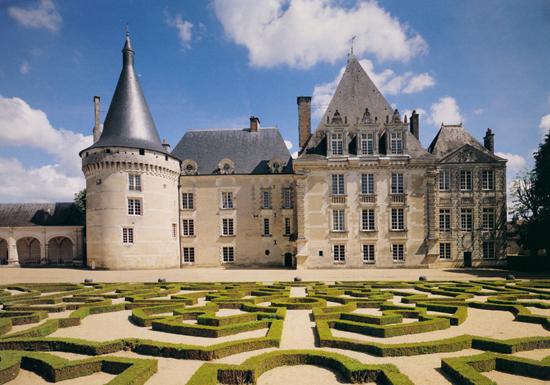
The castle of Azay-le-Ferron stands as a remarkable example of French noble architecture, blending late medieval origins with Renaissance and 17th-century expansions. Located in the commune of Azay-le-Ferron, within the Centre-Val de Loire region of France, this château embodies centuries of historical evolution, aristocratic lineage, and architectural refinement. It is situated at an altitude of 111 meters and is part of the famed group of Loire castles, which collectively illustrate the grandeur of French heritage. Early history and construction The site where the château now resides was first fortified in 1422 by Prégent Frotier, marking the beginning of its military and residential significance. The land initially belonged to Nicolas Turpin de Crissé in the 13th century and was incorporated into the barony of Preuilly by 1412. The original fortification suffered damage during the Hundred Years War, a conflict that ravaged much of France during the 14th and 15th centuries. Construction of the present castle began in 1496 with the erection of a sturdy stone tower, which remains the oldest surviving element of the château. This tower was later integrated into the expanding manor house, symbolizing the transition from a defensive fortress to a noble residence. The reign of Francis I in the early 16th century saw further enlargement, reflecting Renaissance architectural influences and the increasing focus on comfort and style over military utility. Architectural evolution and aristocratic ownership In 1560, the château passed into the hands of the Cravant family, notably including César de Vendôme, the illegitimate son of King Henry IV of France, and Louis IV de Crevant, a marshal under Louis XIV. Their tenure marked a period of prominence and refinement for the estate. The 17th century brought significant architectural additions under Louis III de Crevant d’Humières. In 1629, a pavilion was constructed to connect the round tower to the main building, and in 1638, a new wing was added, known as the wing of Humières. This period also saw the transformation of the original tower with the insertion of windows, converting the fortress into a more comfortable and stately home. Emblems of King François I and Claude de France adorn this wing, linking the château to royal symbolism and prestige. At the end of the 17th century, in 1699, the barony was acquired by Louis-Nicolas Le Tonnelier de Breteuil. His family contributed the east wing, which was originally detached but later connected to the main structure by an arched gallery built in 1936. The de Breteuil family is also notable for Gabrielle-Émilie de Breteuil, who was the mistress of the Enlightenment writer Voltaire from 1733 to 1737. Later ownership and historical significance In 1739, the château was sold to Louis François de Gallifet, marking the beginning of a series of ownership changes. During the French Revolution, the château was owned by two arms manufacturers who produced weapons for Napoleon's army, linking the estate to France's military-industrial history. The estate was purchased in 1852 by the Luzarche family, who retained ownership into the 20th century. Marthe Luzarche, the granddaughter of Antoine Luzarche, married engineer George Hersent and inherited the château in 1925. Upon her death in 1952, she bequeathed the château and its extensive park to the city of Tours, ensuring its preservation and public accessibility. The château was officially classified as a Monument historique on January 25, 1950, acknowledging its architectural and cultural importance within France's heritage. Architectural features and interior furnishings The château is a composite structure centered around the original 1496 stone tower. The 17th-century expansions include several wings and pavilions, notably the wing of Humières and the east wing built by the de Breteuil family. The 1936 arched gallery connects these parts, creating a harmonious architectural ensemble. The 1638 wing is distinguished by decorative emblems such as the salamander of King François I and the ermine of Claude de France, highlighting the château's royal connections. The east wing bears the coat of arms of the de Breteuil family, adding aristocratic symbolism to the façade. Inside, the château preserves a rich collection of furnishings spanning several periods, including Renaissance, Regency, Louis XVI, and Empire styles. These pieces reflect the tastes and lifestyles of the Luzarche and Hersent families from the mid-19th to mid-20th century. Noteworthy interior features include an 18th-century buffet and still-life paintings in the small dining room. The Salle des Gardes houses a hunting trophy collection, including a large stuffed crocodile, illustrating the aristocratic pastime of hunting. A grand stairway, inscribed as built by Jacques de Crevant in 1638, connects the floors. The Grand Salon showcases richly decorated Italian Renaissance chests and cabinets, a 17th-century painted ceiling, and a parquet floor relocated from Versailles. Paintings by Antonio Lagorio and Simon François de Tours adorn this room. Other rooms of interest include the Salon Empire, furnished with First French Empire pieces and art; Madame Hersent’s bedroom, featuring Empire furniture and botanical paintings; the Salon Restauration, with a rose-shaped parquet floor from Versailles; and the Salle Cassas, displaying drawings by Louis-François Cassas. The library contains a large 16th-century tapestry titled "L’Enlevement des Sabines" and a 1641 painting by Hendrick Martensz Sorgh. The Salon de la Tour, located in the oldest tower section, exhibits French Regency furniture and portraits of early owners. Gardens and parkland The château is surrounded by an extensive 50-hectare park created initially in the 17th century. This includes a 10-hectare landscape park and a "parc agricole" likely used historically for growing fruits and vegetables. In 1856, Antoine Luzarche commissioned the Buhler brothers to design an 18-hectare French landscape garden featuring perspectives, alleys, bosquets (formal wooded areas), and an arboretum with exotic trees such as Californian sequoias. This garden reflects the 19th-century taste for integrating naturalistic and formal elements. From 1920, Georges Hersent added a formal French garden near the house, including broderies (ornamental garden patterns) and topiary shaped like chess pieces. Later additions include a pear and apple orchard planted in 1995, espaliered fruit trees and 40 grape varieties added in 1999, a rose garden with 168 rosebushes of 56 varieties created in 2003, and a path tracing the history of the rose established in 2008. The gardens have been awarded the Jardin remarquable label, recognizing their historical and botanical significance and making them a major attraction for visitors interested in garden design and horticulture. Visiting the château d’Azay-le-Ferron Today, the château is owned by the city of Tours and is open to the public, allowing visitors to explore its richly furnished interiors, historic architecture, and extensive gardens. The château offers a unique glimpse into the lifestyle of French nobility from the late medieval period through the 20th century. Visitors can appreciate the blend of medieval fortification and Renaissance elegance, alongside the later 17th-century additions and the beautifully maintained gardens. The site provides educational opportunities about French history, architecture, and landscape design, making it a valuable cultural destination in the Centre-Val de Loire region.

Late Medieval (14th–15th c.)
Details
19 km

Château de Montrésor

Montrésor, France

The Château de Montrésor stands as a remarkable example of medieval military architecture combined with Renaissance elegance, nestled in the village of Montrésor within the Indre-et-Loire department of central France. Overlooking the scenic valley of the Indrois, this castle's origins date back to the early 11th century, making it a significant heritage site that reflects centuries of French history and architectural evolution. Founded around 1005 by Fulk Nerra, Count of Anjou, the castle was initially constructed on a rocky spur to dominate the surrounding landscape strategically. Fulk Nerra entrusted his captain, Roger le Petit Diable, with building one of the earliest stone keeps in the Touraine region. This early fortress featured a polygonal donjon, similar in concept to the one at Loches, and was protected by two concentric circular curtain walls, though only the western wall survives today. The castle's location and formidable design underscored its military importance during the turbulent medieval period. Medieval origins and strategic significance Throughout the 12th century, the Château de Montrésor was a focal point in the power struggles between the English Plantagenêts and the French crown. It fell under the control of Henry II of England, who fortified the castle further by constructing imposing entrance towers and extending the northern curtain wall. However, in 1188, King Philip Augustus of France successfully recaptured Montrésor, reaffirming French dominance in the region. The castle then passed to André de Chauvigny, a noble returning from the Third Crusade with Richard the Lionheart. Subsequently, the Palluau family held the castle for nearly two centuries. The fortress suffered demolition in 1203 but was rebuilt in 1393 by Jean IV de Bueil, who reinforced the defenses with a new enclosure wall, gatehouse, and outbuildings. These enhancements reflected the evolving military architecture of the late medieval period, including adaptations for artillery. Fortifications and architectural features The castle's defensive system includes a double curtain wall: the inner wall dates from the 12th century and features corbelled arcades that once supported a defensive walkway, crenellations, and merlons. The outer wall, built in the 14th century, is lower but strengthened the more vulnerable north and east sides. It includes three round towers designed to mount bombards, early cannon-like weapons, illustrating the castle's adaptation to gunpowder warfare. The surviving fragment of the original polygonal donjon measures approximately 4 meters in length and 5 meters in height, constructed from irregular medium-sized stone blocks. The main entrance is through a 12th-century gatehouse flanked by two circular towers, with a south-facing wall pierced by mullioned windows. While the east face of the gatehouse has vanished, the west retains a pointed-arch doorway and a square tower, now attached to a 19th-century lodge. Renaissance transformation under imbert de batarnay In 1493, Imbert de Batarnay, a prominent royal councillor and chamberlain to four French kings, acquired the castle. Recognizing the need to transition from purely military functions to residential comfort, he constructed an elegant Renaissance-style residence within the medieval enclosure. This logis features a rectangular plan with two conical turrets at the southern corners and two corbelled watch turrets on the northern façade. The building rises two main floors with a mansard attic, adorned with five window bays and dormers on both sides. Niches within the inner angles contain statues, adding to the residence's refined aesthetic. Batarnay's role in French politics was significant; he was instrumental in arranging the marriage of Anne of Brittany to the French king, a union that integrated the Duchy of Brittany into the kingdom. His long tenure and influence are reflected in the castle's transformation from a fortress to a noble residence. Later ownership and decline During the 17th and 18th centuries, the castle passed through the hands of several noble families, including the Bourdeille and Beauvilliers families. However, this period saw little architectural change. The French Revolution marked a turning point, leading to neglect and partial destruction. Around 1845, Count Jouffroy de Gonsan demolished the west wing of the Renaissance logis and the castle chapel, contributing to the site's decline. 19th-century restoration by count xavier branicki The castle's fortunes revived in 1849 when Count Xavier Branicki, a wealthy Polish émigré and friend of Emperor Napoleon III, purchased the property. Branicki undertook a comprehensive restoration that lasted over two decades. He repaired roofs, rebuilt parts of the structure, and furnished the interiors lavishly in the Second Empire style. His restoration included the installation of a remarkable spiral staircase made of Cuban mahogany and gilded bronze, notable for its engineering as it rests only on its first and last steps and is supported by steel rods. Branicki also enriched the castle with a collection of Polish historical artifacts and artworks, including silver goblets of King Sigismund II, a repoussé gold dish commemorating King John III Sobieski's victory at Vienna, and Murano glass from the 18th and 19th centuries. The castle became a cultural hub, hosting sumptuous feasts attended by Napoleon III and other dignitaries. Castle grounds and artistic heritage The château is surrounded by a 19th-century park redesigned with exotic plant species and adorned with sculptures such as Costantino Corti's "The Fallen Angel" (1869) and a copy of Jules Franceschi's "The Dying Soldier" (1862). The interiors showcase a blend of Renaissance Italian furniture, including a Medici family buffet, and paintings by Italian primitives like Filippino Lippi, as well as portraits by Franz Xaver Winterhalter and Polish historical artists Tony Robert-Fleury and Artur Grottger. Historical uses and preservation status During World War I, the château served as an auxiliary hospital, accommodating up to 32 wounded soldiers. After World War II, it briefly housed a military squadron. In 1996, the castle was officially classified as a historic monument, ensuring its protection and preservation. The site retains dungeons, some unexplored, and defensive features such as a dry moat (now filled) and the remnants of a drawbridge replaced by a fixed wooden bridge. The castle's preservation status today is well preserved, thanks largely to Branicki's 19th-century restoration and ongoing care by his descendants, who continue to own the property.

Late Medieval (14th–15th c.)
Details
20.4 km
Loches Castle — France castle

Loches Castle

Loches, France

Loches Castle is a monumental medieval fortress located in the historic town of Loches, in the Centre-Val de Loire region of France. Perched approximately 500 meters above the Indre River, this imposing castle is renowned for its massive square keep (donjon), one of the finest examples of medieval military architecture in the Loire Valley. The castle complex also includes a royal residence, a collegiate church, and extensive gardens, forming a rich heritage site that reflects centuries of French history and architectural evolution. The origins of Loches Castle date back to the 9th century, with its initial fortifications established to control the strategic valley. The castle's most significant construction phase occurred during the High Medieval period, especially in the 12th and 13th centuries, when it was extensively developed under the reign of Henry II of England and his son, Richard the Lionheart. The fortress played a crucial role in the Angevin Empire's defense during the conflicts with the French crown, notably resisting assaults by King Philip II of France until its capture in 1204. Following this, the castle was upgraded into a formidable military stronghold under French control. Architectural features and military significance The massive donjon and fortifications The centerpiece of Loches Castle is its massive square donjon, which stands as a testament to medieval military engineering. Constructed over several centuries, from the 11th to the 15th century, the keep was designed to serve both as a final defensive refuge and as a symbol of feudal power. Its thick walls, narrow arrow slits, and elevated position made it nearly impregnable. Surrounding the keep are extensive fortifications including curtain walls, towers, and a moat, which were progressively enhanced to adapt to evolving siege warfare techniques. The royal residence and its historical importance Adjacent to the military structures is the royal residence, a remarkable example of Middle Ages and pre-Renaissance architecture. This residence became a favored home of the Valois dynasty. It holds a special place in French history as the site where Joan of Arc met Charles VII before his coronation, marking a pivotal moment in the Hundred Years' War. The residence features a front terrace offering breathtaking views over the town of Loches and the Indre valley, emphasizing the castle's strategic and symbolic prominence. The dungeon and its evolution The dungeon or keep of Loches Castle was not only a military bastion but also served as a prison for several centuries. Initially completed in the 11th century, the dungeon underwent continuous modifications until the 15th century. Under King Louis XI, the castle was converted into a state prison, a function it retained until 1926. During this period, the castle housed notable prisoners, reflecting its importance in the judicial and political history of France. The collegiate church of saint-ours Within the castle complex lies the Collegiate Church of Saint-Ours, an architectural gem dating back to between 963 and 985. The church is distinguished by its two unusual octagonal hollow pyramids or "dubes" from the 12th century, which contribute to its unique silhouette. It was originally built to house a revered relic, one half of the belt of the Virgin Mary, brought from Constantinople. The church also contains the marble tomb of Agnès Sorel, the mistress of Charles VII, adding to its historical significance. The medieval garden and cultural heritage The castle grounds include a meticulously recreated medieval garden of approximately 700 square meters. This garden reflects the three main types of medieval gardens: the manorial garden, monastery garden, and farmer's garden. It also features a secret garden with plants believed to have special virtues, such as joubarbe, traditionally thought to protect against lightning. The garden enhances the cultural and historical ambiance of the site, offering visitors a sensory connection to the medieval period. The lansyer museum and artistic legacy Located within the royal city of Loches, the Lansyer Museum is housed in the former mansion of Emmanuel Lansyer, a celebrated 19th-century landscape painter. Lansyer's extensive oeuvre, including over 1,500 paintings and a significant collection of Japanese art, is showcased here. The museum also features original etchings by renowned artists such as Piranesi and Canaletto. This artistic heritage adds a rich cultural layer to the historical significance of Loches Castle and its surroundings. Historical events and restoration efforts Loches Castle has witnessed numerous significant historical events. After its capture by Philip II in 1204, it became a strategic royal fortress. It was favored by Charles VII, who gifted it to Agnès Sorel. During the American Revolution, the castle served as a prison for captured English soldiers, reflecting France's role in the conflict. The French Revolution brought damage and ransacking to the castle, but restoration efforts began in 1806 to preserve its legacy. Today, parts of the castle remain in ruins, while others are well-preserved or restored, allowing visitors to explore its rich past. Owned by the Commune of Loches, the castle and the adjacent Collegiate Church of Saint-Ours are open to the public. Recognized as a monument historique since 1861, Loches Castle is a key part of the Châteaux of the Loire and a testament to the region's medieval and Renaissance heritage.

High Medieval (11th–13th c.)
Details