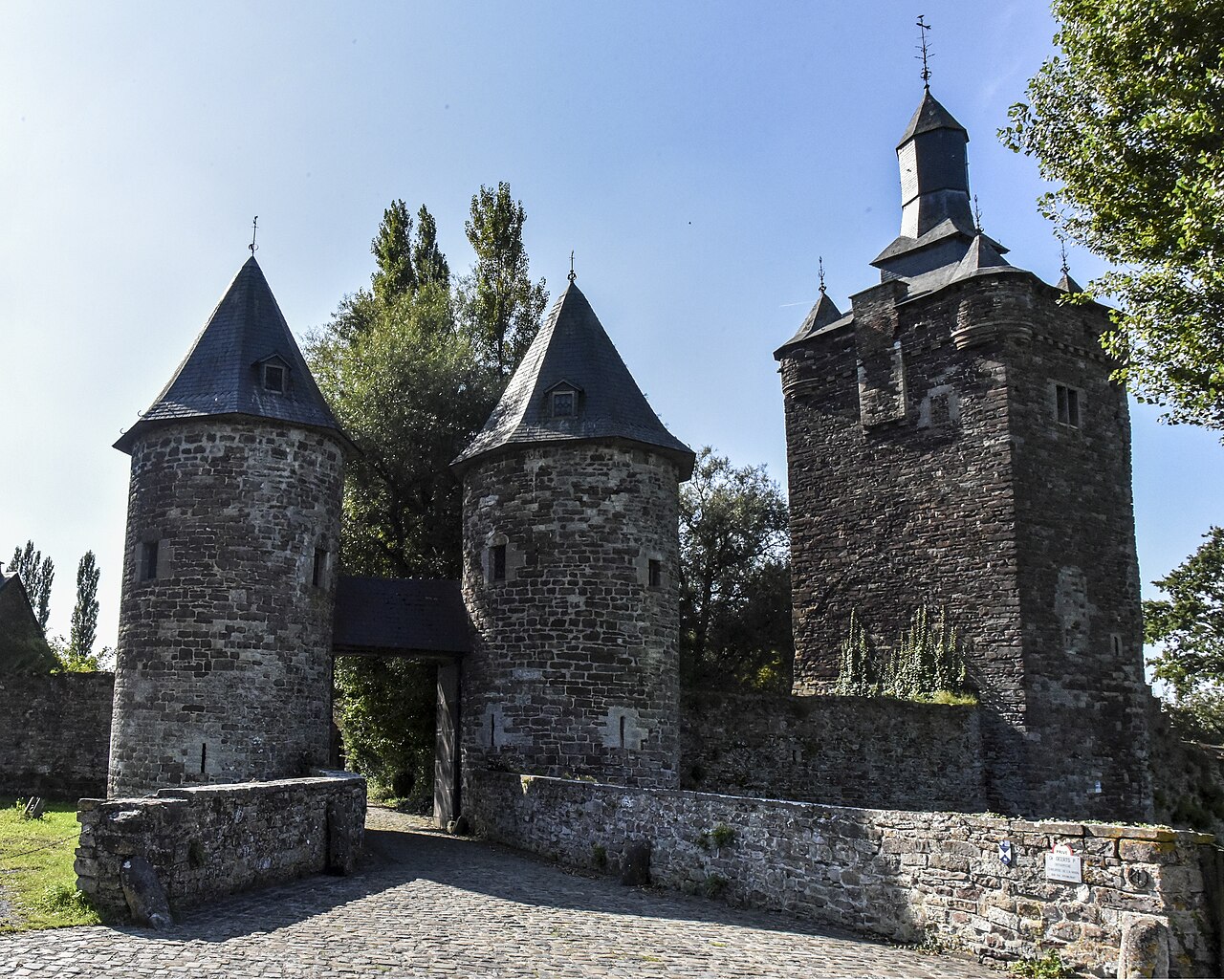
Châtelet Castle
Châtelet Castle, locally known as Le Châtelet, is a historic medieval fortress situated near the village of Marbais in the province of Walloon Brabant, within the Wallonia region of Belgium. This castle occupies a strategic location near the former border between the Duchy of Brabant and the County of Namur, reflecting its historical significance in regional power dynamics during the High Medieval period.
The exact date of the castle's construction remains uncertain, but it is generally attributed to the 11th century, coinciding with the earliest mentions of the Lords of Marbais, who are credited as its founders. The castle itself was first documented in written records in 1299. The Lords of Marbais originally held their lordship under the Duchy of Brabant; however, in the mid-12th century, they shifted allegiance to the Counts of Namur in an effort to evade the increasing influence of the Duke of Brabant. This political maneuvering underscores the castle's role as a frontier stronghold during a turbulent medieval era.
Architectural features and layout
Châtelet Castle was constructed as a fortified residence typical of the High Medieval period, likely featuring defensive elements such as thick stone walls, a moat, and towers to guard its perimeter. Although the castle suffered significant destruction and subsequent decay, archaeological excavations carried out in 1968 revealed foundational elements and remnants that provide insight into its original layout and construction techniques.
The castle's design would have included a central courtyard surrounded by residential and defensive buildings, with battlements and a gatehouse controlling access. The presence of a moat or water defenses is probable, given the castle's location and era, enhancing its defensive capabilities against sieges and raids common in the region during the Middle Ages.
Historical significance and events
Châtelet Castle played a notable role in the regional conflicts between the Duchy of Brabant and the County of Namur. Its position on the border made it a valuable asset for controlling territory and asserting influence. The castle's fortunes changed dramatically in 1554 when forces under King Henry II of France attacked and destroyed it during military campaigns in the region. This assault left the castle in ruins, marking the end of its function as a military stronghold.
Following its destruction, the castle and surrounding lands passed to the t'Serclaes de Tilly family around the year 1600. The new owners repurposed the site, converting the remains of the castle into agricultural use, effectively ending its political and military importance. This transition from fortress to farmstead reflects broader changes in the use of medieval castles during the post-medieval period.
Restoration and current status
In the 20th century, specifically in 1968, archaeological excavations and restoration efforts were undertaken to stabilize and preserve the ruins of Châtelet Castle. These works aimed to uncover the castle's historical footprint and prevent further deterioration of the remaining structures. The restoration has given the castle its present appearance, allowing for appreciation of its historical and architectural heritage.
Today, Châtelet Castle remains private property and is not open to public tours. However, its location near a public road allows visitors to view the site externally and appreciate its peaceful rural setting. The castle stands as a reminder of the medieval history of Walloon Brabant and the shifting political landscape of the region.
Visiting and accessibility
While direct access to Châtelet Castle is restricted due to private ownership, its proximity to public roads makes it easily visible to visitors exploring the surrounding countryside. The castle's quiet location offers opportunities for photography and historical interest from a distance. Nearby towns and villages in Walloon Brabant provide additional cultural and historical attractions for visitors interested in the broader heritage of the area.
Frequently asked questions (FAQ)
- When was Châtelet Castle built?
- Châtelet Castle was likely built in the 11th century, although the first written mention of the castle dates to 1299.
- Can I visit Châtelet Castle?
- Châtelet Castle is private property and not open to the public, but it can be viewed from the nearby public road.
- What is the historical significance of Châtelet Castle?
- The castle was a strategic fortress on the border between the Duchy of Brabant and County of Namur, playing a role in medieval regional conflicts.
- What happened to Châtelet Castle in 1554?
- In 1554, troops of King Henry II of France destroyed the castle, leading to its decline and eventual conversion into a farm.
- Are there restoration efforts at Châtelet Castle?
- Excavations and restoration were carried out in 1968 to preserve the ruins and reveal the castle's historical layout.
Information
Current owner
Private owner
Address
Rue de Sart 76-84, Belgium
Loading map...
Visitor reviews
No reviews yet. Been here? Write the first review and help other travelers!
Write the first reviewVisited this castle? Share your experience
Your review helps other travelers and adds first-hand knowledge to our encyclopedia.