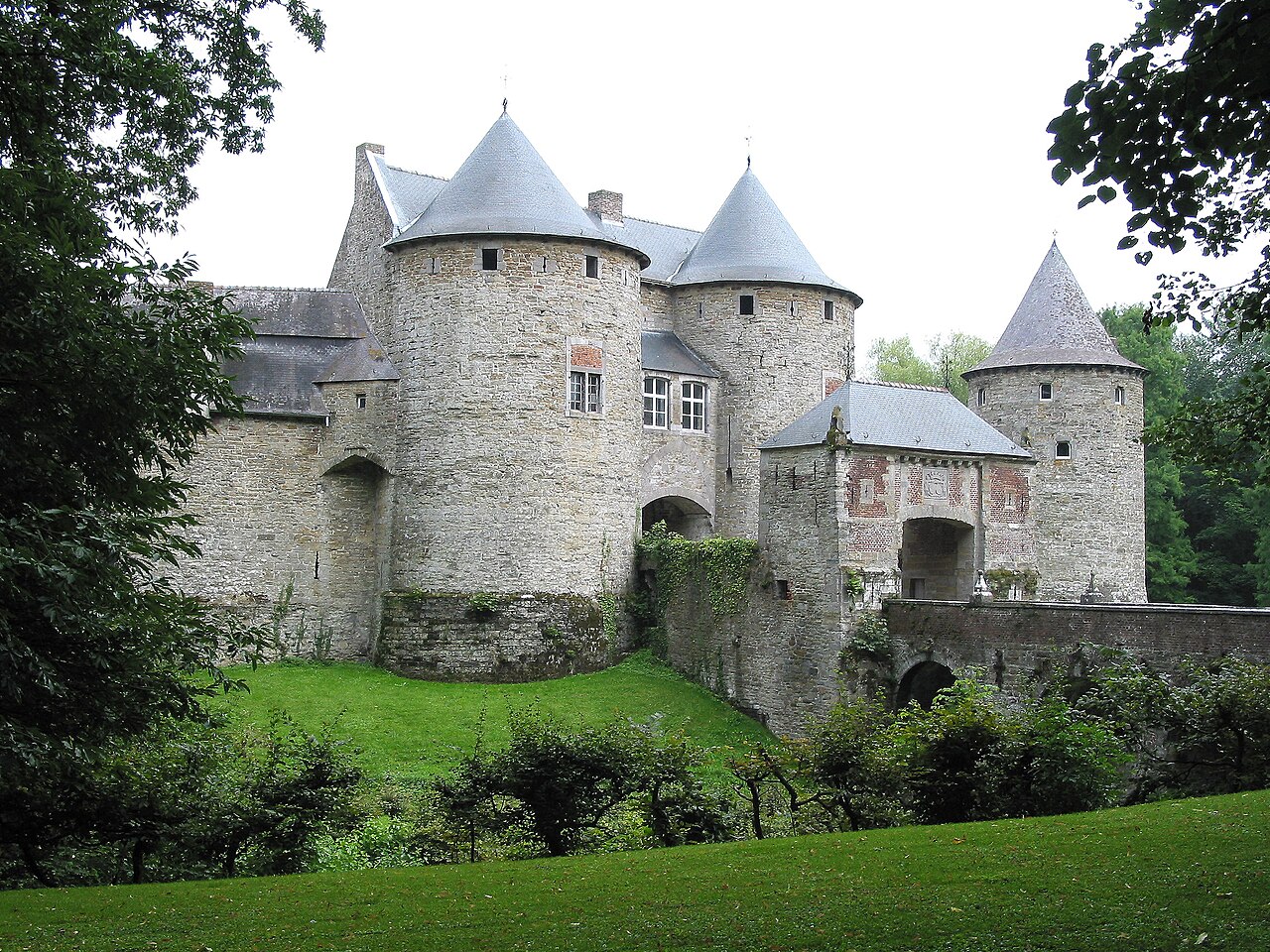
Boissemont Tower
Boissemont Tower, locally known as Tour de Boissemont or Tour des Sarrasins, is a fortified structure dating back to the early 13th century, located in the village of Saint-Géry in the province of Walloon Brabant, within the Wallonia region of Belgium. This tower is attached to a residence that reflects architectural developments from the Renaissance period, creating a unique historical ensemble that spans several centuries.
The origins of Boissemont Tower trace back to around 1238, coinciding with the marriage of Godefroid de Wavre, Lord of Saint-Géry, to Marguerite de Gentinnes. It is believed that the tower was either constructed by Godefroid himself or had already been built by the Gentinnes family, who were vassals under the Lord of Walhain. The Gentinnes family held the fief of Boissemont, making the tower an important feudal stronghold in the region during the High Medieval period.
Medieval ownership and strategic importance
In 1370, following the death of Gilles de Walhain, the tower became the property of the Order of Malta, a military and religious order known for their fortifications and role in medieval crusades. This transfer indicates the tower's continued strategic and symbolic importance during the late medieval era. By 1417, records mention an Arnould de Saint-Géry as the owner of the tower, then referred to as Bochamont. The last known feudal holder was Jean de Saint-Géry in 1495, marking the end of the tower's medieval noble ownership.
Renaissance transformation and architectural evolution
At the dawn of the 16th century, the tower was acquired by the Baron of Sombreffe, who transferred it to the Knights of Pont-Rémy. This period marked significant architectural changes, as the knights constructed a new residence adjoining the original medieval tower. This addition is characterized by Renaissance architectural features, which contrast with the medieval defensive elements of the tower itself.
The juxtaposition of the 13th-century fortified tower with the 16th-century Renaissance residence creates a layered architectural narrative. The tower retains its original defensive structures such as thick stone walls and narrow windows, typical of medieval military architecture. Meanwhile, the adjacent residence reflects Renaissance ideals with more comfortable living spaces, larger windows, and decorative elements.
Decline and later use
By 1670, Boissemont Tower had lost its military and noble significance. Unable to find a buyer, ownership reverted to the village of Saint-Géry. Subsequently, the tower and its adjoining residence were repurposed as a farmstead, marking a shift from feudal and military functions to agricultural use.
Following the death of the last Baron of Sombreffe in 1822, the property passed into the hands of local farmers. This transition reflects broader social and economic changes in the region during the 19th century, where many noble estates were broken up or adapted for new uses.
Current status and accessibility
Today, Boissemont Tower remains part of a private residence and is not open to the public. The tower's interior and detailed architectural features remain largely inaccessible to visitors, limiting direct study and appreciation of its historical fabric. Despite this, the tower stands as a significant monument representing the evolution of feudal fortifications into Renaissance residential architecture in Belgium.
Architectural and historical significance
Boissemont Tower exemplifies the transformation of medieval defensive structures into Renaissance residences, illustrating the changing needs and tastes of the nobility over several centuries. Its association with notable historical figures such as Godefroid de Wavre, the Order of Malta, and the Knights of Pont-Rémy enriches its historical narrative.
The tower's enduring stone construction and its integration with Renaissance architectural elements provide valuable insight into the region's feudal past and architectural evolution. Its survival through centuries of political and social change highlights its resilience and the layered history typical of Belgian castles.
Location and setting
Located in the village of Saint-Géry, Boissemont Tower is situated within the province of Walloon Brabant, part of the larger Wallonia region in southern Belgium. This area is known for its rich medieval heritage and numerous castles, many of which have similarly complex histories involving feudal lords, religious orders, and noble families.
The tower's position within a rural village setting reflects its original role as a manorial stronghold overseeing local lands and serving as a symbol of feudal authority. The surrounding landscape, historically agricultural, continues to frame the tower, preserving its contextual authenticity.
Frequently asked questions (FAQ)
- What is the historical significance of Boissemont Tower?
- Boissemont Tower is a remarkable example of medieval architecture, believed to have been constructed in the 12th century. It served as a strategic lookout point and defensive structure during various conflicts in the region, making it a key part of local history.
- When was Boissemont Tower built?
- Boissemont Tower was built in the 12th century, around the year 1150. This period marked a significant era in the development of fortified structures in Belgium, reflecting the architectural styles and military needs of the time.
- How do I get to Boissemont Tower?
- Boissemont Tower is located in Saint-Géry, Belgium, and is easily accessible by car. Public transportation options are also available, with nearby bus stops that connect to major cities in the region.
- Can I visit Boissemont Tower year-round?
- Yes, Boissemont Tower is open for visitors throughout the year, but it is advisable to check for any seasonal changes in opening hours. Guided tours are often available to enhance your experience.
- What are the opening hours for Boissemont Tower?
- The opening hours for Boissemont Tower typically vary by season. Generally, it is open from 10 AM to 5 PM, with extended hours during the summer months; however, it is best to verify specific dates before your visit.
- Is it possible to access all areas of Boissemont Tower?
- While visitors can explore many parts of Boissemont Tower, certain areas may be restricted for safety reasons. It is recommended to join a guided tour to gain more insight and access to key historical sections.
- What is the best time to visit Boissemont Tower?
- The best time to visit Boissemont Tower is during the spring and early fall when the weather is mild, and the surrounding landscape is particularly beautiful. Visiting during weekdays may also help you avoid the crowds.
- Are there any nearby attractions to Boissemont Tower?
- Yes, there are several attractions near Boissemont Tower, including local museums and nature trails. Visitors can also explore the charming village of Saint-Géry, which offers a glimpse into the region's culture and history.
- What are the ticket prices for Boissemont Tower?
- Ticket prices for Boissemont Tower are quite reasonable, with discounts often available for students and seniors. It is advisable to check the official website for the most current pricing information and any special offers.
Information
Loading map...
Visitor reviews
No reviews yet. Been here? Write the first review and help other travelers!
Write the first reviewVisited this castle? Share your experience
Your review helps other travelers and adds first-hand knowledge to our encyclopedia.