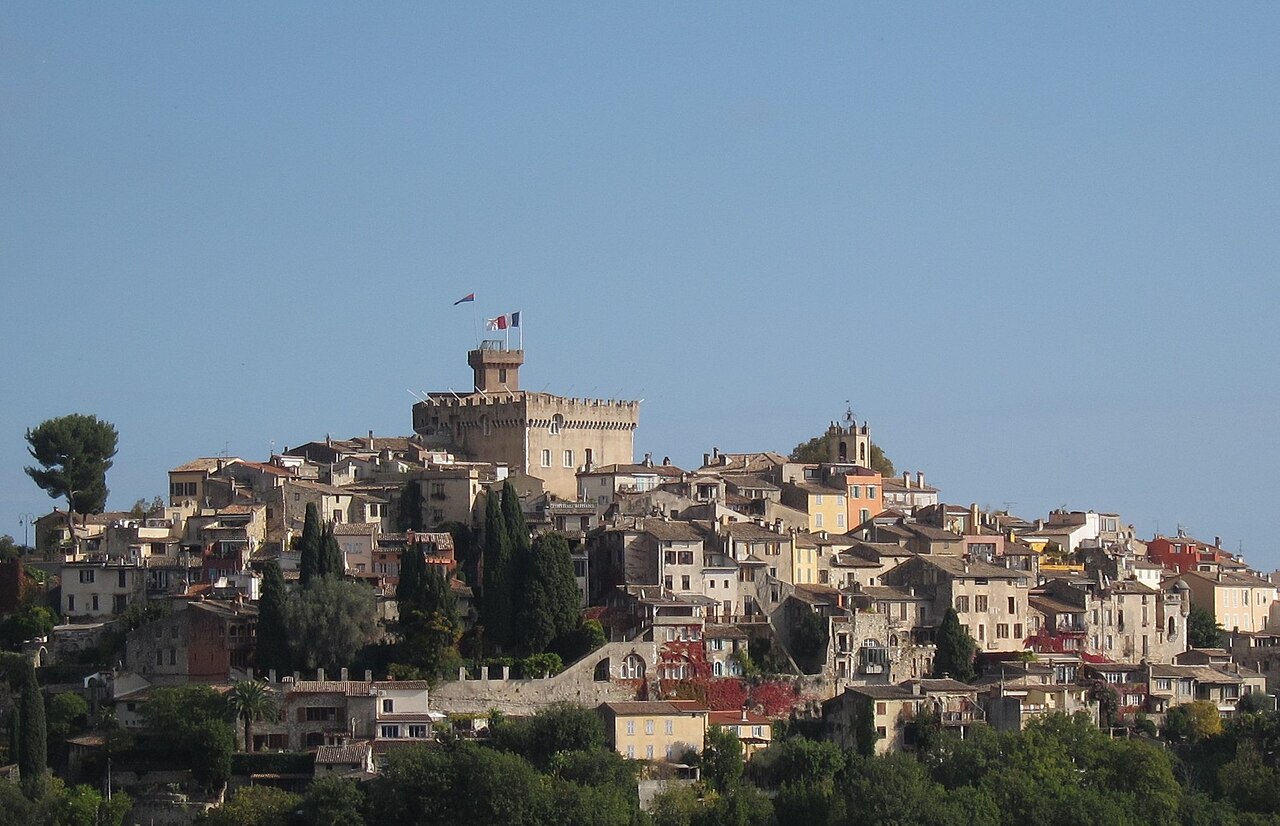
Château Saint-Jeannet

Château Saint-Jeannet: medieval fortress near Nice
Saint-Jeannet, France
High Medieval (11th–13th c.)
Partially Restored

The Château Saint-Jeannet is a medieval castle located approximately 10 kilometers northwest of Nice, in the region of Provence-Alpes-Côte d'Azur, France. This fortress occupies a strategic hilltop site that has been used for defensive purposes since at least the 9th and 10th centuries, although the earliest surviving construction dates from the 11th century. The castle's location provided commanding views over the surrounding landscape, an important factor in its military and territorial significance during the High Medieval period.

Early history and medieval origins

Tradition holds that the site was initially a fortified position during the early medieval era, serving as a lookout and defensive stronghold in the turbulent times following the Carolingian Empire's decline. The first known stone structures on the hill date to the 11th century, marking the establishment of the castle proper. Documentary evidence from the 13th century confirms the presence of a château, indicating its continued importance in the feudal landscape of the region.

Throughout the medieval period, Château Saint-Jeannet underwent several phases of destruction and rebuilding, reflecting the conflicts and changing political control typical of southern France. The castle's fortifications would have included typical medieval defensive features such as thick curtain walls, towers, and possibly a keep, although much of the original medieval fabric has not survived intact.

Architectural evolution and renovations

The most recent renovations, completed in 2009, aimed to recreate aspects of the castle's earliest fortifications based on archaeological evidence uncovered during restoration work. These efforts included the reconstruction of the outer walls, the alignment of access roads, and the addition of an observatory tower designed to evoke the original medieval defensive structures. However, these restorations did not seek to preserve the castle's authentic medieval character. Instead, they resulted in a transformation of the site into a modern luxury complex, which has been criticized for its lack of historical accuracy and for resembling a theatrical set rather than a genuine feudal castle.

From château de la gaude to château saint-jeannet

Before the 2009 renovations, the castle was commonly known as the Château de la Gaude, named after the nearby village of La Gaude, just south of Saint-Jeannet. The name change to Château Saint-Jeannet reflects the castle's geographical association with the larger commune. This shift also coincided with the change in the castle's function from a historical ruin to a commercial property.

Historical significance and cultural context

While the castle no longer retains much of its original medieval fabric, Château Saint-Jeannet remains a site of historical interest due to its long-standing role in regional defense and feudal administration. Its hilltop position was typical of medieval fortifications designed to control territory and provide refuge during times of conflict. The castle's repeated destruction and rebuilding mirror the broader history of the Provence region, marked by feudal rivalries, wars, and shifting allegiances.

Despite its current state, the site offers insights into medieval military architecture and the evolution of castle construction in southern France. The archaeological findings during restoration have contributed to a better understanding of early medieval fortification techniques and settlement patterns in the area.

Visitor information and current status

Today, Château Saint-Jeannet does not function as a traditional historical monument. The extensive renovations have repurposed the site into a luxury establishment, which has affected its authenticity and preservation as a medieval castle. Visitors interested in medieval architecture and history may find the site less representative of its original form but can appreciate its scenic location and the archaeological significance of the hilltop.

The castle is located in the commune of Saint-Jeannet within the Alpes-Maritimes department. It is accessible from Nice and nearby villages, making it a point of interest for those exploring the medieval heritage of the region.

Frequently asked questions (FAQ)

What is the historical significance of Château Saint-Jeannet?
Château Saint-Jeannet is a medieval fortress that dates back to the 11th century. It played a crucial role in the region's defense and offers insights into the feudal history of Provence. The castle's strategic location provided a vantage point over the surrounding area, making it an essential stronghold during various conflicts.
When was Château Saint-Jeannet built?
The construction of Château Saint-Jeannet began in the 11th century, reflecting the architectural styles of that era. Over the centuries, it has undergone several modifications, showcasing a blend of medieval and later architectural influences. Its rich history is evident in the remnants of its original structure and the evolution of its design.
Can I visit Château Saint-Jeannet?
Yes, Château Saint-Jeannet is open to visitors who wish to explore its historical significance and stunning views. Guided tours are available, providing insights into the castle's history and architecture. It's advisable to check the castle's official website for any special events or restrictions before your visit.
What are the opening hours for Château Saint-Jeannet?
Château Saint-Jeannet typically opens to visitors from 10 AM to 6 PM during the tourist season. However, hours may vary, especially in the off-peak season or during holidays. It's recommended to verify the current opening hours on their official website before planning your visit.
Is it possible to access the castle with limited mobility?
Château Saint-Jeannet is situated on a hillside, which may present challenges for visitors with limited mobility. While efforts have been made to improve accessibility, some areas may still be difficult to navigate. It's best to contact the castle administration in advance to inquire about specific accommodations.
What is the best time to visit Château Saint-Jeannet?
The best time to visit Château Saint-Jeannet is during the spring and early autumn when the weather is mild and pleasant. These seasons also tend to attract fewer tourists, allowing for a more enjoyable experience. Summer can be quite hot, while winter may limit access due to weather conditions.
Are there any nearby attractions to visit?
Yes, Château Saint-Jeannet is close to several other attractions, including the picturesque village of Saint-Jeannet itself, known for its charming streets and local cuisine. Additionally, the nearby towns of Vence and Saint-Paul-de-Vence offer rich cultural experiences and beautiful landscapes. Exploring these areas can enhance your visit to the castle.
What are the ticket prices for visiting Château Saint-Jeannet?
Ticket prices for Château Saint-Jeannet are generally affordable, with discounts available for students and seniors. Children under a certain age may enter for free. It's advisable to check the official website for the most current pricing and any special promotions or group rates.

Information

Hill Castle

Sources & official resources

Verify the information above using these authoritative references.

Loading map...

Visitor reviews

No reviews yet. Been here? Write the first review and help other travelers!

Write the first review

Visited this castle? Share your experience

Your review helps other travelers and adds first-hand knowledge to our encyclopedia.

Write a review

(5/5)

0/2000 characters

Your review will be visible after admin approval

Nearby castles

5.7 km

Château de Carros

Carros, France

Château de Carros stands as a remarkable example of 12th century Provençal architecture, reflecting the military and residential styles typical of the High Medieval period in southern France. Its defining feature is a rectangular main building fortified by four robust towers positioned at each corner, designed for both defense and habitation. This layout exemplifies the strategic architectural approaches of the era, combining strong fortifications with noble living quarters. Early history and ownership The castle's origins trace back to the 12th century, with the first recorded lord being Rostaing de Carros, mentioned in historical documents from 1156. Shortly after its initial establishment, ownership transferred to the De Placas family, who maintained control of the castle for over 600 years. This long tenure indicates the castle's importance as a hereditary stronghold and seat of local power through centuries of regional developments and feudal dynamics. Architectural features and design The castle's rectangular plan is typical of medieval fortifications in Provence, emphasizing practicality and defense. Each of the four corner towers was likely equipped to provide overlapping fields of fire, enabling defenders to cover all approaches. The walls connecting these towers would have been thick and high, constructed from local stone, providing formidable resistance against siege engines and attackers. Inside, the castle would have contained a great hall, private chambers, storage rooms, and possibly a chapel, reflecting the dual military and domestic functions of such structures. The elevated position of the castle within the town of Carros would have offered commanding views of the surrounding landscape, crucial for early warning and control of trade routes or agricultural lands. Transformation into a cultural site In modern times, Château de Carros underwent a significant transformation. Since 1998, it has been the home of the CIAC (International Center of Contemporary Art), a cultural institution dedicated to promoting contemporary artistic expression. This adaptive reuse of the castle preserves its historical fabric while giving it a new public function, attracting visitors interested in both medieval history and modern art. The integration of contemporary art within the ancient walls creates a dynamic dialogue between past and present, highlighting the castle's enduring relevance. The site's preservation and cultural programming contribute to the local community and tourism, ensuring ongoing maintenance and appreciation of this medieval monument. Location and regional significance Located in the town of Carros in the Provence-Alpes-Côte d'Azur region of France, the castle occupies a strategic position in southeastern France. The region is known for its rich medieval heritage, with numerous castles, fortifications, and historic towns. Château de Carros is part of this network of heritage sites that illustrate the complex feudal history and architectural evolution of Provence. Preservation and visitor experience The castle is well preserved, maintaining its essential medieval structural elements, including the towers and main building. Visitors to Château de Carros can explore the exterior fortifications and enjoy exhibitions hosted by the CIAC. The castle's adaptation for cultural use ensures accessibility and interpretive opportunities, blending historical education with contemporary cultural engagement. Its location within the town makes it accessible to tourists traveling through the Provence-Alpes-Côte d'Azur region, providing a unique combination of historical architecture and modern artistic innovation.

High Medieval (11th–13th c.)
Details
8.7 km
Château Grimaldi — France castle

Château Grimaldi

Cagnes-sur-Mer, France

Château Grimaldi in Cagnes-sur-Mer stands as a prominent hill castle built in 1309 by Rainier Grimaldi, a notable admiral of France and ancestor of Monaco's ruling family. Erected on a strategic hilltop, the castle overlooks the town and is constructed from locally sourced stone, preserving its original medieval defensive features such as machicolations and crenelated towers including a fortified keep. The castle's design centers around a distinctive triangular courtyard, a layout that enhances its defensive capabilities and internal organization. Historical background and significance The site of Château Grimaldi has a long history of occupation, initially by the Greeks and later the Romans, who recognized its strategic importance. The medieval castle replaced earlier fortifications, becoming a stronghold for the Grimaldi family in the Late Medieval period. It later served as the residence of provincial governors, reflecting its continued administrative importance through the centuries. Following the upheavals of the French Revolution, the castle's role shifted from noble residence to military barracks and subsequently a hospital, illustrating its adaptability and continued use in public service. Eventually, ownership passed to the municipality of Cagnes-sur-Mer, which transformed the castle into a cultural venue known as le Château Musée Grimaldi. Architectural features and modifications Medieval defensive elements The castle's original medieval architecture is well preserved, with machicolations—openings between the supporting corbels of the battlements—allowing defenders to drop projectiles on attackers. The crenelated parapets atop the towers and keep provided cover for archers and guards. The use of local stone not only ensured sturdy construction but also helped the castle blend visually with its surroundings. Renaissance-era transformations During the reign of Louis XIII (1610–1643), the castle underwent significant alterations to improve comfort and aesthetics, reflecting changing tastes and functions. The principal rooms were redecorated in the contemporary style of the early 17th century, shifting from purely defensive to more residential uses. The great hall features a remarkable painted ceiling illustrating the Fall of Phaëton, completed in the 1620s by the Genoese artist Giulio Benso, though some attribute the work to Giovanni Battista Carlone. This artwork exemplifies the castle's blend of medieval fortification and Renaissance artistry. The castle chapel also received decorative attention, with a ceiling painted with folk scenes, adding a cultural and artistic dimension to the religious space within the fortress. Current use and cultural importance Today, Château Grimaldi functions as an exhibition center for contemporary art from around the world, alongside its role as a museum of modern art. This dual function highlights the castle's ongoing cultural relevance, connecting its historical legacy with modern artistic expression. The museum hosts a variety of temporary and permanent exhibitions, attracting visitors interested in both history and contemporary creativity. The castle's preservation and adaptive reuse demonstrate successful integration of heritage conservation with cultural innovation. Its commanding position on the hill continues to make it a landmark of Cagnes-sur-Mer and a symbol of the region's layered history from ancient times through the medieval era to the present day. Visitor experience and architectural highlights Visitors to Château Grimaldi can explore the castle's robust medieval walls, walk through the triangular courtyard, and admire the machicolated towers that once defended the stronghold. The interior spaces offer insight into the castle's transformation over centuries, with the great hall's painted ceiling serving as a highlight for art and history enthusiasts alike. The museum's exhibitions provide a dynamic cultural experience, often featuring works that contrast with the castle's medieval architecture, creating a stimulating dialogue between past and present. The site is accessible to the public and forms an integral part of the cultural heritage of the Alpes-Maritimes region.

Late Medieval (14th–15th c.)
Details
9.8 km

Château de Tourrette-Levens

Tourrette-Levens, France

Château de Tourrette-Levens is a medieval castle located in the commune of Tourrette-Levens in southeastern France. Dating back to the 12th century, this fortress was constructed during the high medieval period and originally served as a strategic stronghold overseeing the ancient salt road, a vital trade route for transporting salt and other goods through the region. Historical background and original ownership The castle was built by Raymond Chabaud, a nobleman whose family maintained control of the estate for several centuries until 1684. During its prime, the Château de Tourrette-Levens was considered one of the most formidable fortifications in the area, renowned for its defensive capabilities and architectural complexity. Architectural features and layout Originally, the castle featured six towers, which formed a robust defensive perimeter. These towers were connected by thick curtain walls designed to withstand sieges and attacks. The castle's elevated position on a hill provided commanding views of the surrounding landscape, enhancing its defensive advantage. Over time, much of the castle fell into disrepair, and today only one of the original six towers remains standing. This surviving tower is a testament to the castle's former grandeur and offers insight into medieval military architecture. Defensive structures The remaining tower likely served as a keep or donjon, the central stronghold within the castle complex. It would have housed the lord's residence and acted as the last line of defense during an assault. The castle's walls and towers were designed to repel invaders and protect the inhabitants. Modern use and cultural significance Today, Château de Tourrette-Levens has been repurposed to serve the public as a museum devoted to entomology. This unique use highlights the castle's adaptation from a military fortress to a cultural and educational site. Visitors can explore exhibits related to insects and their ecological importance, set within the historic ambiance of the medieval tower. Location and surroundings Situated in the region of Provence-Alpes-Côte d'Azur, the castle overlooks the village of Tourrette-Levens and the surrounding countryside. Its position along the ancient salt road underscores its historical role in controlling trade routes and regional security during the Middle Ages. Preservation and condition The castle is currently in a partially preserved state, with the surviving tower maintained as a focal point for visitors. Efforts to preserve this structure allow for ongoing study and appreciation of medieval fortification techniques and regional history. Visitor information Visitors to Château de Tourrette-Levens can enjoy both the historical architecture and the specialized museum exhibits. The castle provides an opportunity to experience a slice of medieval history alongside natural science, making it a distinctive destination in the French Riviera area.

High Medieval (11th–13th c.)
Details