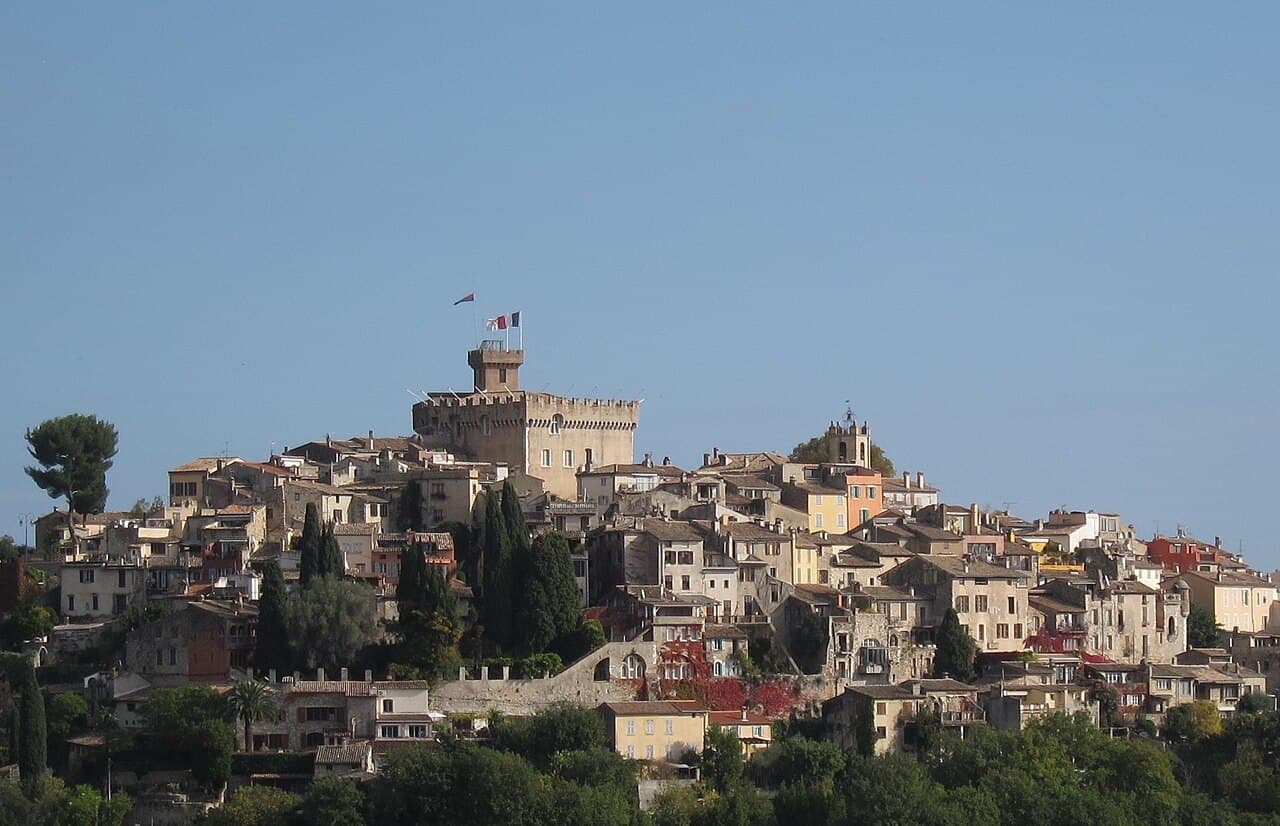
Château Grimaldi
Château Grimaldi in Cagnes-sur-Mer stands as a prominent hill castle built in 1309 by Rainier Grimaldi, a notable admiral of France and ancestor of Monaco's ruling family. Erected on a strategic hilltop, the castle overlooks the town and is constructed from locally sourced stone, preserving its original medieval defensive features such as machicolations and crenelated towers including a fortified keep. The castle's design centers around a distinctive triangular courtyard, a layout that enhances its defensive capabilities and internal organization.
Historical background and significance
The site of Château Grimaldi has a long history of occupation, initially by the Greeks and later the Romans, who recognized its strategic importance. The medieval castle replaced earlier fortifications, becoming a stronghold for the Grimaldi family in the Late Medieval period. It later served as the residence of provincial governors, reflecting its continued administrative importance through the centuries.
Following the upheavals of the French Revolution, the castle's role shifted from noble residence to military barracks and subsequently a hospital, illustrating its adaptability and continued use in public service. Eventually, ownership passed to the municipality of Cagnes-sur-Mer, which transformed the castle into a cultural venue known as le Château Musée Grimaldi.
Architectural features and modifications
Medieval defensive elements
The castle's original medieval architecture is well preserved, with machicolations—openings between the supporting corbels of the battlements—allowing defenders to drop projectiles on attackers. The crenelated parapets atop the towers and keep provided cover for archers and guards. The use of local stone not only ensured sturdy construction but also helped the castle blend visually with its surroundings.
Renaissance-era transformations
During the reign of Louis XIII (1610–1643), the castle underwent significant alterations to improve comfort and aesthetics, reflecting changing tastes and functions. The principal rooms were redecorated in the contemporary style of the early 17th century, shifting from purely defensive to more residential uses. The great hall features a remarkable painted ceiling illustrating the Fall of Phaëton, completed in the 1620s by the Genoese artist Giulio Benso, though some attribute the work to Giovanni Battista Carlone. This artwork exemplifies the castle's blend of medieval fortification and Renaissance artistry.
The castle chapel also received decorative attention, with a ceiling painted with folk scenes, adding a cultural and artistic dimension to the religious space within the fortress.
Current use and cultural importance
Today, Château Grimaldi functions as an exhibition center for contemporary art from around the world, alongside its role as a museum of modern art. This dual function highlights the castle's ongoing cultural relevance, connecting its historical legacy with modern artistic expression. The museum hosts a variety of temporary and permanent exhibitions, attracting visitors interested in both history and contemporary creativity.
The castle's preservation and adaptive reuse demonstrate successful integration of heritage conservation with cultural innovation. Its commanding position on the hill continues to make it a landmark of Cagnes-sur-Mer and a symbol of the region's layered history from ancient times through the medieval era to the present day.
Visitor experience and architectural highlights
Visitors to Château Grimaldi can explore the castle's robust medieval walls, walk through the triangular courtyard, and admire the machicolated towers that once defended the stronghold. The interior spaces offer insight into the castle's transformation over centuries, with the great hall's painted ceiling serving as a highlight for art and history enthusiasts alike.
The museum's exhibitions provide a dynamic cultural experience, often featuring works that contrast with the castle's medieval architecture, creating a stimulating dialogue between past and present. The site is accessible to the public and forms an integral part of the cultural heritage of the Alpes-Maritimes region.
Frequently asked questions (FAQ)
- How do I get to Château Grimaldi?
- Château Grimaldi is located in Cagnes-sur-Mer, France, and is easily accessible by public transport. You can take a train to Cagnes-sur-Mer station and then a short bus ride or a 15-minute walk to the castle. If you're driving, there is parking available nearby.
- What are the opening hours of Château Grimaldi?
- Château Grimaldi is typically open to visitors from 10 AM to 6 PM, with extended hours during the summer months. It is advisable to check the official website for any seasonal changes or special closures. Plan your visit accordingly to make the most of your experience.
- When was Château Grimaldi built?
- Château Grimaldi was originally constructed in the 14th century and has been significantly modified over the centuries. It served as a fortress and later as a residence for the Grimaldi family. Today, it stands as a testament to the rich history of the region.
- Can I visit the museum inside Château Grimaldi?
- Yes, Château Grimaldi houses a museum that showcases a collection of paintings and artifacts related to the history of Cagnes-sur-Mer. The museum is included in your ticket price, providing a cultural insight into the local heritage. Guided tours are also available for a more in-depth experience.
- Why is Château Grimaldi historically significant?
- Château Grimaldi is historically significant as it reflects the architectural evolution of a feudal fortress into a Renaissance castle. It played a crucial role in the defense of the region and the establishment of the Grimaldi family's power. The castle also offers stunning views of the Mediterranean, making it a strategic location.
- Is it possible to book guided tours at Château Grimaldi?
- Yes, guided tours of Château Grimaldi can be booked in advance. These tours provide valuable insights into the castle's history, architecture, and the Grimaldi family. It's recommended to reserve your spot, especially during peak tourist seasons.
- What is the best time to visit Château Grimaldi?
- The best time to visit Château Grimaldi is during the spring and fall when the weather is mild, and the crowds are smaller. Summer can be quite busy, but it also offers the advantage of longer daylight hours. Early mornings or late afternoons are ideal for a more serene experience.
- What are the ticket prices for Château Grimaldi?
- Ticket prices for Château Grimaldi are generally affordable, with discounts available for students, seniors, and groups. Admission fees typically include access to both the castle and the museum. Always check the official website for the most current pricing and any special events that may alter entry fees.
- Are there any nearby attractions to visit after Château Grimaldi?
- Yes, after visiting Château Grimaldi, you can explore the picturesque old town of Cagnes-sur-Mer, filled with charming streets and local shops. The nearby beaches offer a lovely spot for relaxation, and the Renoir Museum is also within close proximity for art enthusiasts. Make a day of it by enjoying the local cuisine at nearby restaurants.
Photo gallery

Information
Loading map...
Visitor reviews
No reviews yet. Been here? Write the first review and help other travelers!
Write the first reviewVisited this castle? Share your experience
Your review helps other travelers and adds first-hand knowledge to our encyclopedia.



