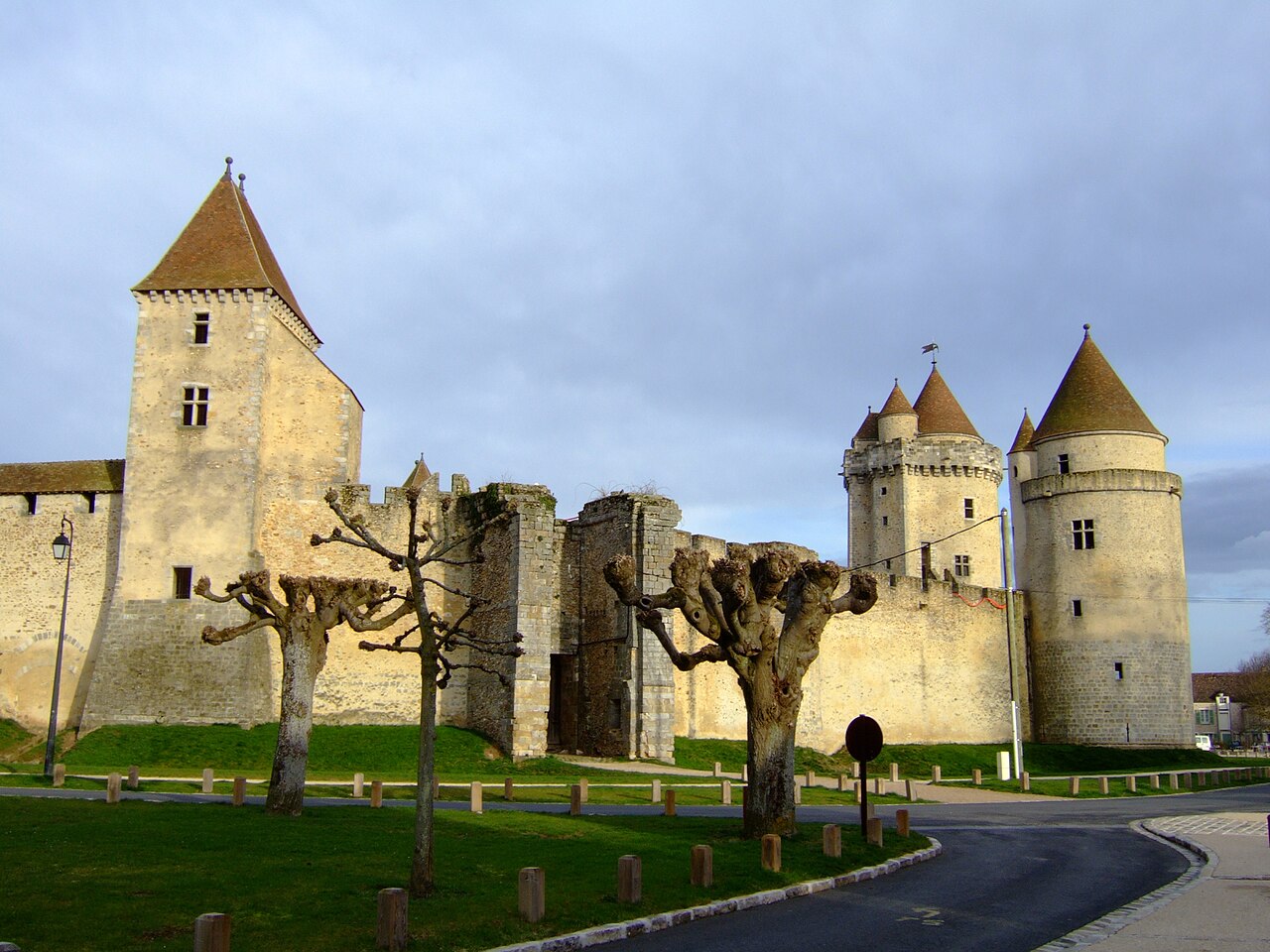
Château Royal du Vivier
The Château Royal du Vivier stands as a remarkable testament to medieval fortification and royal residence in the Hauts-de-France region of France. Originally constructed during the medieval period, this hill castle was closely tied to the French monarchy and nobility, serving as a fortified seigneurial estate and later a royal stronghold. Its history spans from the 13th century through the Hundred Years’ War, Renaissance decline, and 19th-century restoration, reflecting the complex evolution of French aristocratic architecture and political power.
Situated in the commune of Fontenay-Trésigny, the castle's origins trace back to the Garlande family in the 13th century as part of the seigneurie of Tournan-en-Brie. The estate changed hands in 1293 when Jean II de Garlande sold it to Pierre de Chambly, chamberlain to King Philippe IV. Shortly thereafter, it was acquired by Charles de Valois, brother to the king, who expanded the domain and significantly enhanced the castle's fortifications, including raising its walls. By 1260, a fortified residence or "hôtel seigneurial" was already established on the site, indicating its strategic and residential importance.
Medieval origins and royal patronage
The castle's medieval significance is underscored by its association with prominent royal figures. King Philippe IV stayed at the château, and his son Philippe V signed important ordinances there between 1319 and 1320, highlighting its function as a royal administrative center. The castle also played a role in the troubled reign of King Charles VI, who was held there during episodes of mental illness starting in 1392.
Religious patronage was a defining feature of the castle’s history. In 1316, Pope John XXII authorized the construction of a chapel dedicated to Saint Thomas Becket, followed by a second chapel honoring Saint Louis in 1336 under King Philippe VI. The marriage of Jeanne de France to Charles the Bad of Navarre in 1352 was celebrated at the estate, coinciding with the elevation of the chapel complex to a collegiate church, served by a community of canons rather than a single priest.
The collegiate church and sainte-chapelle status
In 1368, King Charles V further enhanced the castle’s religious stature by placing a relic of the True Cross in the collegiate chapel, promoting it to the rank of a Sainte-Chapelle. This royal chapel type was designed to house precious relics and serve as a symbol of the monarchy’s divine authority. The construction of the castle’s gate tower around this time is notable for predating similar fortifications at the renowned Château de Vincennes.
Architectural features and fortifications
The original castle was a formidable fortress with a complex defensive system. The gate tower, built circa 1368, was a key defensive structure with thick stone walls and strategic positioning to control access. Although only fragments remain today, the masonry reflects the advanced military architecture of the period.
Additional fortifications included the governor’s tower, the Charles V tower with its curtain wall, and the prisoner’s tower, all integral to the castle’s defense. These towers enclosed the main residential and religious buildings, forming a secure precinct. The castle’s walls and towers exemplify typical medieval military design, emphasizing protection and control.
Religious structures and chapels
The two chapels dedicated to Saint Thomas Becket and Saint Louis illustrate the castle’s spiritual importance. Their elevation to collegiate and then Sainte-Chapelle status reflects the intertwining of royal power and religious authority. Over centuries, these chapels fell into disrepair, particularly by the late 17th century when the Sainte-Chapelle was described as unfit for worship. The French Revolution further transformed the site, converting the chapel into a hay barn and selling off many stones from the ruins.
Decline, restoration, and modern use
Following the death of Charles VI, the castle declined, suffering abandonment during the Hundred Years’ War and gradual neglect. Although restored in 1391, its prominence waned. King Louis XI’s transfer of pond and mill rights to the Sainte-Chapelle canons in 1471 marked a shift in the estate’s management. By the 16th century, the royal lodgings were in poor condition, as evidenced by King François I’s stay in 1546 when he was lodged with the canons rather than in the main residence.
The late 17th and 18th centuries saw further decline. Louis XIV subordinated the chapel’s independence to the Sainte-Chapelle of Vincennes, and Louis XV ordered its suppression in 1734. The French Revolution brought dramatic changes, with the property sold as national property in 1791 and adapted for agricultural use.
In the 19th century, Jean-Baptiste-Nicolas Parquin acquired the estate and constructed the current château on the old foundations, surrounded by an English-style landscaped park. This reconstruction reflects 19th-century tastes and represents a significant shift from the medieval fortress to a residential estate. Subsequent owners, including Raymond Sabatier, the Vicomte de Perthuis, and industrialist M. Cousin, contributed to restoration efforts, with Cousin undertaking extensive work after acquiring the property in 1958.
Since 1988, the site has been used for events and film productions, highlighting its cultural and historical significance. The remains and grounds were designated a Monument historique in 1996, ensuring protection and recognition of the castle’s heritage.
Present condition and visitor experience
Today, the Château Royal du Vivier presents a fascinating blend of medieval ruins and 19th-century reconstruction. Visitors can explore the remnants of the gate tower, the ruins of the chapels, and the defensive towers, gaining insight into the castle’s military and religious roles. The 19th-century château and its surrounding English-style park offer a contrasting perspective on the site’s evolution.
While much of the medieval fabric survives only in fragmentary form, the site remains an important monument to the history of French royal architecture and medieval fortifications. Its layered history from a noble seigneurie to a royal residence and eventual decline and restoration makes it a compelling destination for those interested in medieval history, architecture, and French heritage.
Frequently asked questions (FAQ)
- How do I get to Château Royal du Vivier?
- Château Royal du Vivier is located in Fontenay-Trésigny, France, easily accessible by car or public transport. If traveling by train, the nearest station is in Tournan-en-Brie, from which you can take a bus or taxi to the castle. Parking is available on-site for those who prefer to drive.
- What is the historical significance of Château Royal du Vivier?
- Château Royal du Vivier is an important historical site that dates back to the 17th century, originally built as a royal hunting lodge. It has witnessed significant events in French history and reflects the architectural styles of its time. The castle is a testament to the rich cultural heritage of the region.
- When was Château Royal du Vivier built?
- Construction of Château Royal du Vivier began in the early 1600s and was completed by the late 17th century. The castle was designed to serve both as a residence and a retreat for members of the French royal family. Its historical architecture showcases the grandeur of its era.
- Can I take guided tours of the château?
- Yes, guided tours of Château Royal du Vivier are available and highly recommended for a deeper understanding of its history and architecture. Tours typically last around an hour and include access to key areas of the castle. Advance booking is advisable, especially during peak tourist seasons.
- Why is the architecture of Château Royal du Vivier noteworthy?
- The architecture of Château Royal du Vivier is noteworthy for its blend of classical and Renaissance styles, featuring intricate detailing and beautiful gardens. The layout of the castle, along with its ornamental facades, highlights the artistic craftsmanship of the 17th century. Visitors can appreciate both the aesthetic beauty and historical context of its design.
- Is it possible to host events at Château Royal du Vivier?
- Yes, Château Royal du Vivier offers facilities for hosting various events, including weddings and corporate gatherings. The picturesque setting and historical ambiance make it a unique venue. Interested parties should contact the château's administration for specific details and availability.
- What are the opening hours for Château Royal du Vivier?
- Château Royal du Vivier is open to visitors from Tuesday to Sunday, with varying hours depending on the season. Generally, the castle opens at 10 AM and closes at 6 PM, but it's best to check the official website for any seasonal changes. Closed days may vary, so plan your visit accordingly.
- What are the ticket prices for visiting the château?
- Ticket prices for Château Royal du Vivier are quite reasonable, typically ranging from €8 to €12 for adults, with discounts available for children and seniors. Family tickets and group rates may also be offered. It's advisable to purchase tickets in advance online to avoid long queues.
- When is the best time to visit Château Royal du Vivier?
- The best time to visit Château Royal du Vivier is during the spring and early autumn when the weather is pleasant and the gardens are in full bloom. These seasons offer a more enjoyable experience for exploring the castle and its surroundings. Additionally, consider visiting on weekdays to avoid crowds.
- Are there any nearby attractions to visit along with the château?
- Yes, there are several nearby attractions to explore, including the picturesque town of Fontenay-Trésigny and the stunning gardens of the nearby Château de Champs-sur-Marne. Visitors can also enjoy local markets and cafes, providing a charming experience of French culture. Plan your itinerary to make the most of your visit to the region.
Information
Website
Visit websiteSources & official resources
Verify the information above using these authoritative references.
Loading map...
Visitor reviews
No reviews yet. Been here? Write the first review and help other travelers!
Write the first reviewVisited this castle? Share your experience
Your review helps other travelers and adds first-hand knowledge to our encyclopedia.