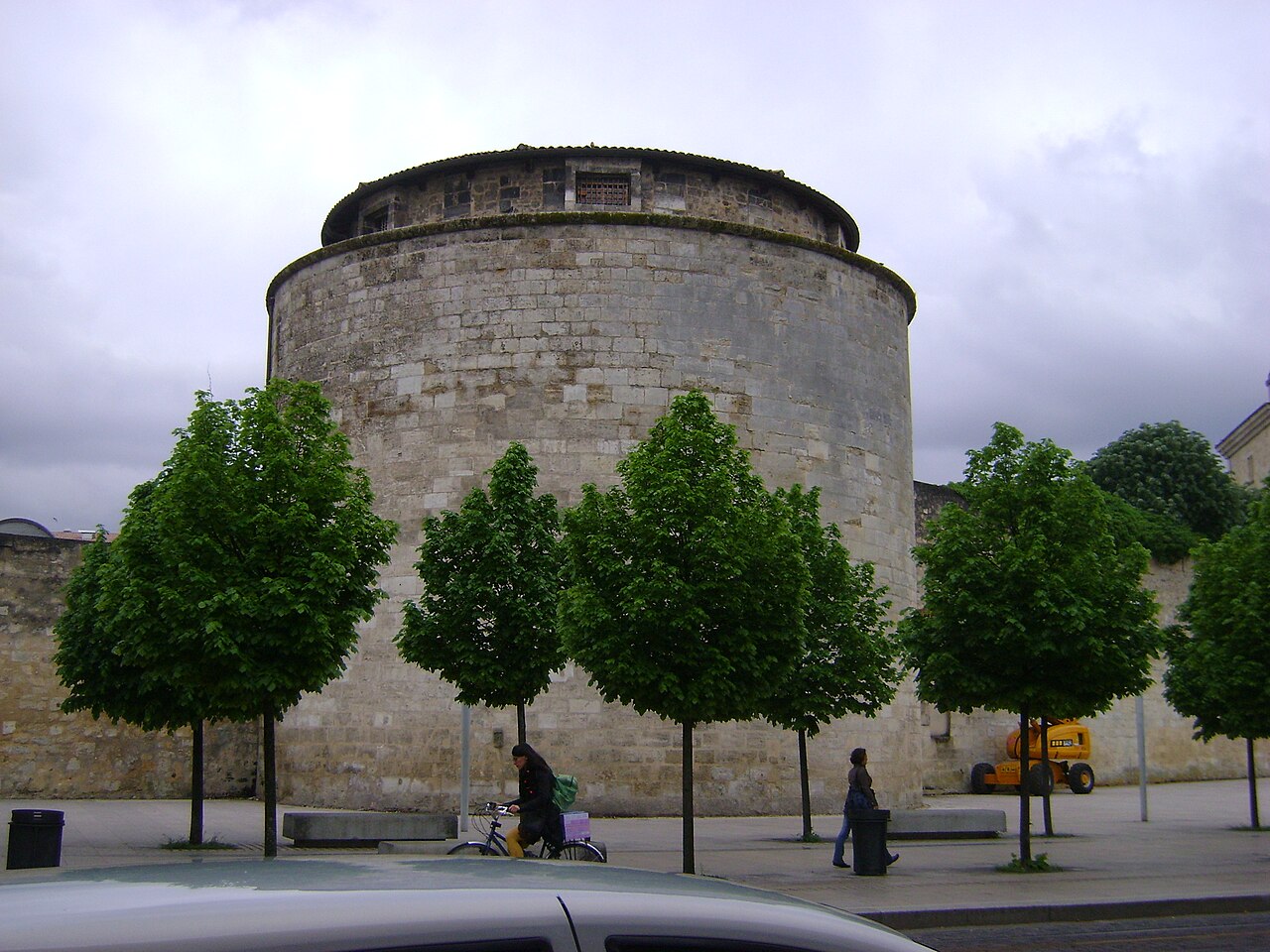
Château de la Mothe-Gajac
Château de la Mothe-Gajac stands as a remarkable example of a fortified medieval residence located in Saint-Médard-en-Jalles, France. With origins dating back to the late 13th century, this castle occupies a historically strategic site that has witnessed centuries of regional conflict, noble ownership, and architectural evolution. Although the earliest mention of the site dates to 1289, the present castle was largely rebuilt in the 15th century following the devastations of the Hundred Years' War, embodying the defensive and residential needs of the late medieval nobility.
The castle's architectural layout is distinguished by its rectangular courtyard enclosed by a curtain wall fortified with four corner towers—three circular and one square. The square tower, located on the northeast corner, uniquely incorporates the castle's chapel and original residential quarters. Surrounding the castle on three sides are water-filled moats, serving both defensive functions and aesthetic boundary markers, with access provided by a narrow bridge over the western moat.
Historical significance and ownership through the centuries
The earliest documented reference to the castle's location appears in 1289, in connection with Edward I of England's territorial holdings in the region. While the mention concerns nearby Blanquefort castle and its custodian, Arnaud de Lacaze, it situates Château de la Mothe-Gajac within the English-controlled territories during the late 13th century. The castle site likely originated as a motte castrale, a raised earthwork fortification typical of medieval defensive architecture.
Throughout the 14th and 15th centuries, the castle's ownership changed hands among prominent local families. In 1335, Aude de Tyran acquired the property, leasing it to Ayquem de Lacaze. By 1427, it was held by Arnaud Rostanh, possibly a local civic official known as a jurat. The 15th-century reconstruction after the Hundred Years' War replaced earlier structures, reflecting the transition from purely military fortifications to fortified noble residences.
The castle entered a notable phase of ownership in the 16th century when Mary de la Roche-Chaudry, widow of Jean de Roustaïng, acquired it in 1541. Three years later, she transferred the estate to Pierre Eyquem de Montaigne, the uncle of the famed Renaissance essayist Michel de Montaigne. The Montaigne family retained the château until 1786, overseeing renovations that adapted the castle to evolving residential and defensive needs.
During the French Wars of Religion in the late 16th century, the castle suffered military attacks that necessitated structural modifications. The Montaigne family’s renovations in the 17th and 18th centuries reflected a shift towards more comfortable living spaces while preserving defensive elements.
The upheavals of the French Revolution led to the confiscation and sale of the property. Mme de Basterot, who had acquired the estate in 1786, and her son-in-law were émigrés, causing the château to be seized and sold in 1795 as national property to a man named Cambon.
In the 20th century, the castle's historical landscape was altered by the construction of a German military blockhouse in 1943 during World War II, built directly in front of the château as part of coastal defenses. This blockhouse remains a visible reminder of the site's strategic importance across centuries.
Architectural features and defensive elements
Layout and fortifications
The castle is organized around a rectangular courtyard, enclosed by a curtain wall that is reinforced at its corners by four towers. The three cylindrical towers and one square tower provide a blend of defensive strength and architectural variety. The square tower on the northeast corner is particularly significant as it houses the chapel and the original residential quarters, which consist of a one-story rectangular building.
The presence of water-filled moats on three sides of the castle adds a crucial defensive barrier, historically deterring siege engines and infantry assaults. The western moat is crossed by a narrow bridge that marks the main approach, while the entrance gate is centrally located on the eastern curtain wall, accessed via the historic alley now known as rue Alfred de Musset.
Structural details and roofing
Each tower contains a vaulted stone chamber on the ground floor, surmounted by a second-floor room with a wooden roof. The roofing styles vary among the towers: the square tower features a four-sided roof decorated with a sculpted bird with outstretched wings; the northwest circular tower has a conical roof with a pointed finial; the southwest tower is topped by a nine-sided roof; and the southeast tower remains without a roof. The main entrance is also covered by a four-sided roof with a ridge running east to west.
One of the castle's distinctive architectural features is the basket-handle vault at the first-floor level, which connects the double walls of the façade. This vault creates a ground-floor gallery or passageway between two corner towers, documented in a 1574 inventory. The vault’s upper surface served as a chemin de ronde, a defensive walkway allowing movement between the towers.
The chapel within the square tower
The castle’s chapel is uniquely integrated within the northeast square tower, accessible only through a small enclosed courtyard. Historical records from 1787 describe the chapel as spacious and well-maintained, adorned with several notable paintings. Its lack of external doors emphasizes its intimate and protected nature within the castle complex, serving the spiritual needs of the castle’s inhabitants.
Preservation and heritage status
Château de la Mothe-Gajac has undergone various phases of preservation and recognition. In 1988, partial protection was granted to its façades and roofs, excluding the four corner towers. This protection was expanded in 2013 to include the entire site, encompassing the bridge, terrace, and moats, thereby ensuring comprehensive heritage status.
The castle today is surrounded by modern urban development, including residential and commercial buildings, which contrasts with its medieval character. Despite this, the château remains a significant cultural landmark, reflecting the layered history of the region from medieval fortifications to Renaissance noble residence and modern heritage conservation.
Archaeological studies, such as the 1946 description by Dr. Arnaud Alcide Castaing, have shed light on the castle's medieval core and the impact of later modifications. Damage sustained during World War II exposed original medieval construction techniques, including the double wall façade and vaulted galleries, enriching understanding of late medieval military architecture in the region.
Frequently asked questions (FAQ)
- How do I get to Château de la Mothe-Gajac?
- Château de la Mothe-Gajac is located in Saint-Médard-en-Jalles, France, and is easily accessible by public transport. You can take a bus from Bordeaux city center, which takes approximately 30 minutes, or drive, as there is parking available near the castle.
- What is the historical significance of Château de la Mothe-Gajac?
- Château de la Mothe-Gajac dates back to the 14th century and is a remarkable example of medieval architecture in the region. It played a crucial role in local history, serving various noble families and witnessing significant events during the Hundred Years' War.
- When was Château de la Mothe-Gajac built?
- The construction of Château de la Mothe-Gajac began in the late 14th century, with various renovations and expansions occurring over the centuries. Its architectural features reflect the evolution of styles from medieval to Renaissance periods.
- Can I visit Château de la Mothe-Gajac?
- Yes, visitors are welcome at Château de la Mothe-Gajac. Guided tours are often available, allowing guests to explore the castle's rich history and stunning architecture while learning from knowledgeable guides.
- Why is Château de la Mothe-Gajac a popular destination?
- Château de la Mothe-Gajac is popular due to its beautiful architecture, rich history, and scenic surroundings. It also hosts various cultural events and exhibitions throughout the year, making it a vibrant part of the local community.
- Is it possible to access Château de la Mothe-Gajac for people with disabilities?
- Efforts have been made to improve accessibility at Château de la Mothe-Gajac, including ramps and designated paths. However, some historical features may still present challenges, so it's best to check with the castle staff in advance for specific accommodations.
- What are the opening hours for Château de la Mothe-Gajac?
- Château de la Mothe-Gajac is typically open to visitors from Tuesday to Sunday, with hours varying by season. It's advisable to check the official website or contact the castle directly for the most accurate and current information.
- What are the ticket prices for Château de la Mothe-Gajac?
- Ticket prices for Château de la Mothe-Gajac vary depending on age and group size, with discounts available for students and seniors. Generally, tickets are affordable, making it a great option for budget-conscious visitors looking to explore history.
- What is the best time to visit Château de la Mothe-Gajac?
- The best time to visit Château de la Mothe-Gajac is during the spring and early fall when the weather is mild, and the gardens are in full bloom. Additionally, visiting during weekdays can help you avoid larger crowds, providing a more enjoyable experience.
- Are there any nearby attractions to Château de la Mothe-Gajac?
- Yes, several attractions are located near Château de la Mothe-Gajac, including the beautiful parks and vineyards of the Bordeaux region. Additionally, the city of Bordeaux, known for its stunning architecture and vibrant culture, is just a short drive away.
Information
Loading map...
Visitor reviews
No reviews yet. Been here? Write the first review and help other travelers!
Write the first reviewVisited this castle? Share your experience
Your review helps other travelers and adds first-hand knowledge to our encyclopedia.