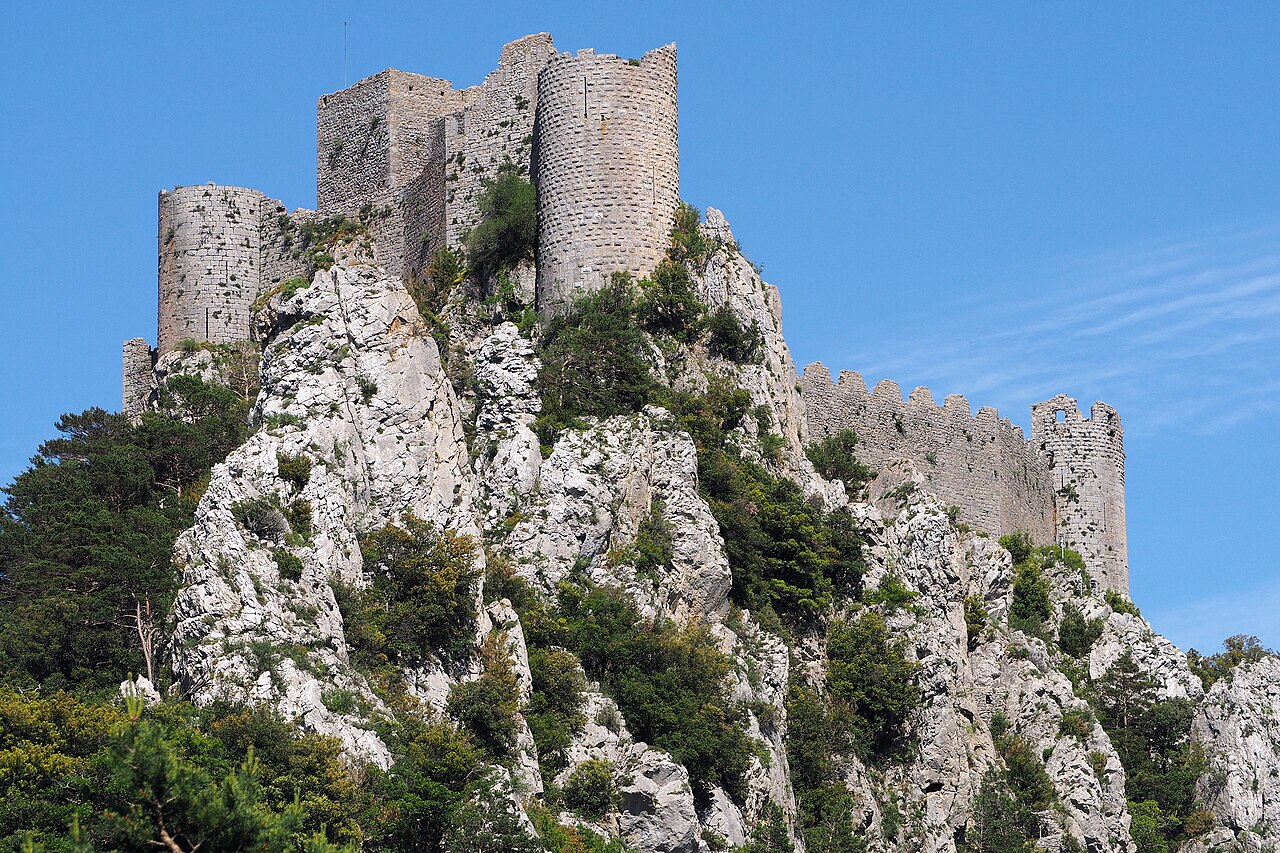
Château du Bezu
Château du Bézu, also known as Les Tiplies, is a ruined medieval castle perched on a hilltop near the small village of Le Bézu in southern France. This castle is historically significant as a Cathar stronghold during the turbulent period of the Albigensian Crusade in the early 13th century. Although local legend associates it with the Knights Templar and claims it was a refuge for Templar treasure following their persecution by King Philip IV of France in 1307, there is no substantial evidence to support this connection. Instead, the castle's origins and primary historical role are closely tied to the Cathar heresy and the military conflicts of the High Medieval period.
Historical context and significance
The Château du Bézu was constructed in the 11th century, placing it firmly within the High Medieval era, a time marked by the rise of feudalism and frequent regional conflicts in southern France. It served as a defensive fortress for the Cathars, a religious group considered heretical by the Catholic Church. The castle's strategic location on a hilltop provided commanding views of the surrounding landscape, which was crucial for surveillance and defense during the Albigensian Crusade (1209–1229), a brutal campaign launched by the Catholic Church to eradicate Catharism in the Languedoc region.
Architecture and structural features
Though now in ruins, Château du Bézu originally featured typical elements of a hill castle designed for defense and control. Its elevated position on rocky terrain exemplifies the hill castle type, maximizing natural defensive advantages. The remains suggest a compact fortress with thick stone walls, remnants of defensive towers, and possibly a keep or donjon that would have served as the last refuge during sieges. The castle's construction utilized local stone, blending into the rugged landscape, which helped conceal it from enemies.
Defensive design
The castle's fortifications likely included battlements and arrow slits to allow defenders to repel attackers efficiently. Its hilltop location made direct assault difficult, forcing besieging forces to contend with steep approaches and limited access points. While detailed architectural plans are scarce due to the ruinous state, the surviving structures and the site's topography indicate a strong emphasis on defense rather than residential comfort.
Legends and cultural heritage
Local folklore enriches the castle's mystique, with tales of hauntings and supernatural phenomena. One particularly enduring legend speaks of a silver bell that rings at midnight on the anniversary of the Templars' arrest in 1307. This story, while unverified, reflects the castle's place in popular imagination as a site of mystery and historical intrigue. The association with the Templars, despite lacking documentary proof, adds to the castle's allure for visitors and researchers interested in medieval history and esoteric traditions.
Current status and visiting information
Today, Château du Bézu stands as a ruined fortress accessible to the public. Visitors can explore the remnants of its walls and towers while enjoying panoramic views of the surrounding countryside. The site is valued both for its historical importance and its scenic setting. Preservation efforts focus on maintaining the ruins and ensuring safe access for tourists. The castle's evocative atmosphere, combined with its rich history, makes it a compelling destination for those interested in medieval architecture and the Cathar legacy.
Frequently asked questions (FAQ)
- How do I get to Château du Bezu?
- Château du Bezu is located in Le Bézu, France, and can be accessed by car or local public transportation. If you're driving, it is well signposted from major roads in the area, and there is parking available near the castle.
- What is the historical significance of Château du Bezu?
- Château du Bezu dates back to the 12th century and has played an important role in the region's history, particularly during the Albigensian Crusade. The castle's strategic position made it a key defensive structure, and today it stands as a testament to medieval architecture and noble heritage in France.
- When was Château du Bezu built?
- The construction of Château du Bezu began in the 12th century, with significant expansions and renovations occurring in subsequent centuries. Its historical layers showcase various architectural styles that evolved over time, making it a fascinating site for history enthusiasts.
- Can I visit Château du Bezu year-round?
- Yes, Château du Bezu is open to visitors throughout the year, but it's recommended to check the specific opening hours before your visit, as they may vary by season. Guided tours are often available, providing deeper insights into the castle's history and architecture.
- Why is Château du Bezu a popular tourist attraction?
- Château du Bezu attracts visitors due to its rich history, stunning architecture, and picturesque surroundings. The castle offers a unique glimpse into medieval life and is surrounded by beautiful landscapes, making it a perfect destination for both history buffs and nature lovers.
- Is it possible to access Château du Bezu with limited mobility?
- Château du Bezu has some areas that may be challenging for visitors with limited mobility due to its historic structure and terrain. However, efforts are made to accommodate all visitors, and it is advisable to contact the castle in advance to inquire about specific accessibility options.
- What are the ticket prices for visiting Château du Bezu?
- Tickets for Château du Bezu are reasonably priced, with discounts often available for students, seniors, and children. For the most accurate and up-to-date pricing information, it is best to check the official website or contact the castle directly before your visit.
- What are the best times to visit Château du Bezu?
- The best times to visit Château du Bezu are during the spring and early autumn months when the weather is mild and the landscape is particularly beautiful. Additionally, visiting during weekdays may offer a quieter experience, allowing you to fully appreciate the castle's history and surroundings.
- Are there any nearby attractions to explore after visiting Château du Bezu?
- Yes, after visiting Château du Bezu, you can explore several nearby attractions, including the scenic vineyards of the Languedoc region and other historical sites such as the Cathar castles. The beautiful countryside offers opportunities for hiking and enjoying local cuisine, making for a delightful day trip.
Information
Loading map...
Visitor reviews
No reviews yet. Been here? Write the first review and help other travelers!
Write the first reviewVisited this castle? Share your experience
Your review helps other travelers and adds first-hand knowledge to our encyclopedia.