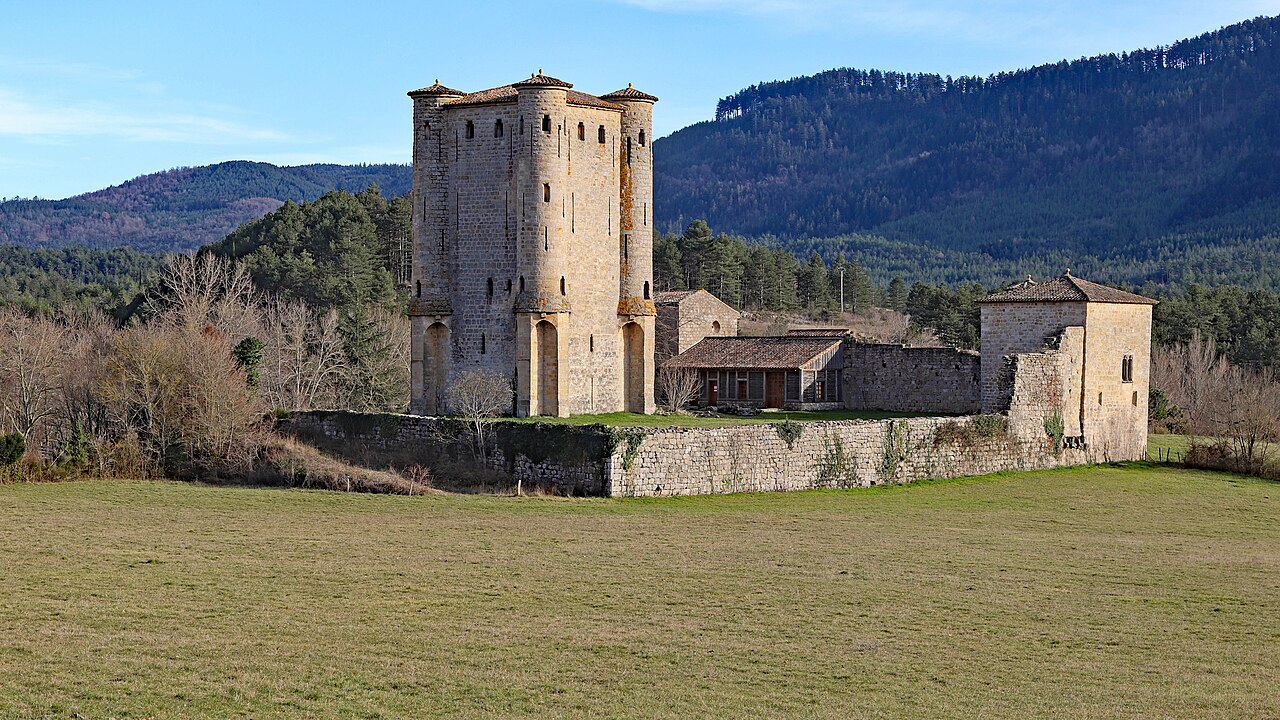
Château des Ducs de Joyeuse
The Château des Ducs de Joyeuse is a remarkable example of a 16th-century Renaissance fortress located in Couiza, within the Hauts-de-France region of France. This hill castle was established between 1540 and 1550 by Jean de Joyeuse, a nobleman whose marriage to Françoise de Voisins in 1518 linked the castle to a lineage of lords dating back to 1231, following the aftermath of the Albigensian Crusade. The château embodies a unique blend of medieval military architecture and Renaissance elegance, reflecting the turbulent historical context of its construction and use.
Historical background and noble lineage
The castle's foundation is intricately tied to the Joyeuse family, who played significant roles in both religious and military spheres during the 16th century. Jean de Joyeuse initiated the château's construction after his marriage, symbolizing the consolidation of noble power in the region. His son, Guillaume de Joyeuse, who served as bishop of Alet and lieutenant general from 1561, expanded the château and fortified its defenses during a period marked by religious conflicts.
In 1577, the château endured a siege and looting by Protestant forces from Alet, a testament to its strategic importance during the French Wars of Religion. Guillaume was forced to flee but returned in 1582 as a marshal, reestablishing his court within the château until his death in 1592. His eldest son, Anne de Joyeuse, a prominent figure who fell at the Battle of Coutras in 1587, left the château incomplete. Subsequent heirs showed little interest in its completion, leading to a gradual decline in the family's direct involvement.
Ownership transitioned in 1649 to Claude de Rebé, connected to the Archbishop of Narbonne, marking a shift in stewardship. The château's role evolved significantly during the French Revolution, when it was confiscated as national property. It served various functions including a military hospital, gendarmerie, and storage facility for a hat-making factory, reflecting the changing socio-political landscape of France.
Architectural features and defensive design
The Château des Ducs de Joyeuse is constructed around a rectangular courtyard, embodying a harmonious balance between defensive strength and Renaissance architectural refinement. The primary building material is fine limestone ashlar, laid in regular, squared blocks that give the château its distinctive tawny hue, typical of the region.
The château's exterior evokes a medieval fortress with its imposing walls, which measure approximately one meter thick along the façades and double to two meters around the circular corner towers. Each of the four corners is anchored by a large round tower capped with gently sloping conical roofs clad in pink tiles, a hallmark of local architectural style prevalent in the Languedoc and Cévennes regions.
These towers were specifically adapted for gunfire defense, featuring gunports designed to accommodate firearms, allowing defenders to cover the surrounding area effectively. The towers connect to the main castle body via chamfered sections that create protected passageways, enabling movement without exposure.
The ground floor windows are notably devoid of openings, emphasizing the château's defensive purpose. In contrast, the two upper stories feature windows with mullions shaped as Latin crosses, adding a refined Renaissance aesthetic while maintaining security with heavy iron bars.
Interior elegance and Renaissance influences
Inside the château, the austere exterior gives way to a contrastingly refined courtyard surrounded by buildings constructed from fine sandstone. The interior spaces exhibit clear Renaissance stylistic elements, including a rustic doorway marked by weathering and surface pitting, indicative of the château's age and history.
The courtyard's design is notably simple and restrained, reflecting the Renaissance preference for harmony and proportion. Each room within the château is adorned with French-style ceilings, showcasing the period's decorative artistry associated with the reign of King Henri II.
The château also houses a chapel dating back to the time of François I, predating much of the main construction and adding a layer of historical depth to the site. This chapel underscores the château's dual role as both a military stronghold and a noble residence.
Preservation and cultural significance
Despite suffering significant damage over the centuries, including the collapse of its roof in 1928, the Château des Ducs de Joyeuse has been the focus of preservation efforts since the mid-20th century. It remains a well-preserved example of regional medieval and Renaissance architecture, with its round towers and finely crafted stonework standing as testaments to its historical importance.
The château has been protected as a historic monument since 1913, with additional protections extended to its surrounding lands in 1944. Today, it offers valuable insights into the architectural and social history of the Hauts-de-France region, attracting scholars and visitors interested in France's noble heritage and military past.
Frequently asked questions (FAQ)
- What is the historical significance of Château des Ducs de Joyeuse?
- Château des Ducs de Joyeuse is a remarkable example of Renaissance architecture in France, built in the late 16th century. It served as a residence for the Dukes of Joyeuse and played a significant role in the region's history, particularly during the Wars of Religion.
- When was Château des Ducs de Joyeuse built?
- Construction of the Château des Ducs de Joyeuse began in 1575 and was completed in 1581. The castle reflects the wealth and power of the Joyeuse family during this period, showcasing intricate designs and elaborate decorations.
- Can I visit Château des Ducs de Joyeuse?
- Yes, visitors are welcome to explore Château des Ducs de Joyeuse. The castle offers guided tours that provide insight into its history and architecture, making it a must-visit for history enthusiasts.
- What are the opening hours for Château des Ducs de Joyeuse?
- Château des Ducs de Joyeuse is typically open to visitors from 10 AM to 6 PM, with extended hours during the peak tourist season. It is advisable to check the official website for any seasonal variations or special closures.
- Is it possible to purchase tickets in advance for Château des Ducs de Joyeuse?
- Yes, advance ticket purchases are available through the Château's official website. This is recommended during peak tourist seasons to ensure your entry, as visitor numbers can be limited.
- What is the best time to visit Château des Ducs de Joyeuse?
- The best time to visit Château des Ducs de Joyeuse is during the spring and early autumn months when the weather is pleasant and the gardens are in full bloom. Additionally, these seasons tend to be less crowded than the peak summer months.
- Are there any nearby attractions to explore after visiting Château des Ducs de Joyeuse?
- Yes, visitors can explore several nearby attractions, including the picturesque village of Couiza and the scenic landscape of the Aude Valley. The region is also known for its historical sites, such as the nearby Rennes-le-Château.
- How do I get to Château des Ducs de Joyeuse?
- Château des Ducs de Joyeuse is easily accessible by car, located just off the D118 road. Public transport options are also available, with the nearest train station in Couiza, followed by a short walk to the castle.
- What are the ticket prices for Château des Ducs de Joyeuse?
- Ticket prices for Château des Ducs de Joyeuse vary depending on age and group size, typically ranging from €8 to €12 for adults. Discounts are often available for students and children, making it an affordable option for families.
Information
Website
Visit websiteSources & official resources
Verify the information above using these authoritative references.
Loading map...
Visitor reviews
No reviews yet. Been here? Write the first review and help other travelers!
Write the first reviewVisited this castle? Share your experience
Your review helps other travelers and adds first-hand knowledge to our encyclopedia.