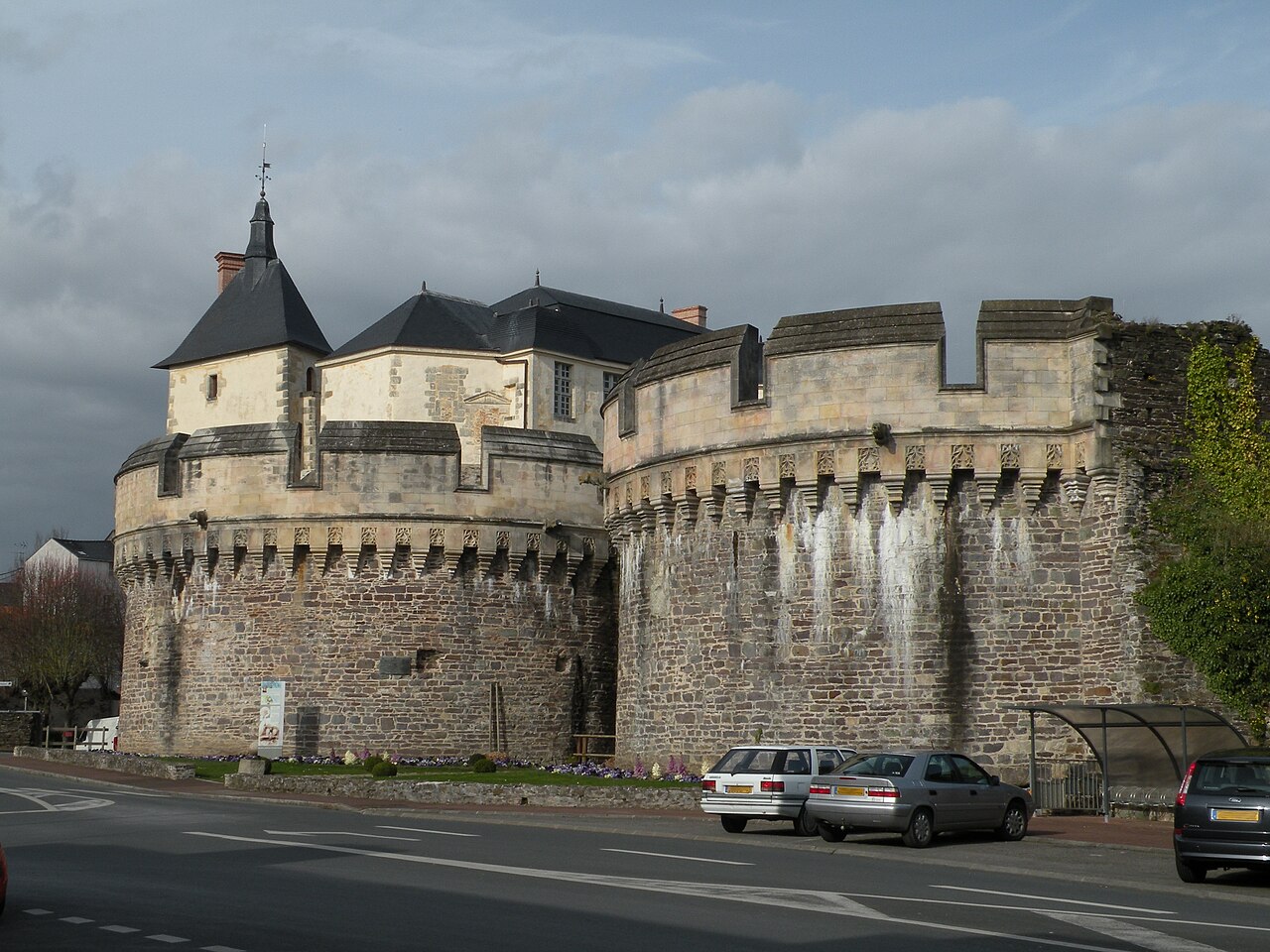
Château d’Oudon
The Château d’Oudon is a remarkable medieval fortress located in the town of Oudon, France, strategically positioned near the confluence of the Loire and Hâvre rivers. Established in the 11th century, this castle played a pivotal role in the defense of the frontier between the Duchy of Brittany and the Kingdom of France. Its commanding location not only controlled vital river routes but also oversaw key land passages between the cities of Nantes and Angers, underscoring its military and political significance throughout the Middle Ages.
Historical significance and medieval conflicts
The castle’s history is deeply intertwined with the turbulent medieval period marked by frequent sieges and power struggles. In 1147, Henry II Plantagenet laid siege to Oudon as part of his expansive campaigns across the region. Later, in 1214, King John of England targeted the fortress during his efforts to assert control over Brittany. The castle also faced assaults by Saint Louis (King Louis IX of France) in 1230 and again in 1234, reflecting its ongoing strategic importance.
Throughout the late 13th century, the castle changed hands through dynastic marriages, notably becoming part of a cadet branch of the House of Châteaugiron. Subsequently, the Malestroit family acquired the castle. In 1392, under the authority of Duke Jean IV of Brittany, Alain de Malestroit was granted permission to replace the older fortifications with a new castle and fortress, initiating a significant rebuilding phase that incorporated the latest advances in military architecture of the period.
The 15th and 16th centuries witnessed further enhancements, including expansions of the defensive walls and the addition of new towers. In 1526, the castle was besieged by forces loyal to King Francis I in response to the criminal activities of its lords. Following this, the crown confiscated the property and transferred it to Raoul du Juch. Ownership later passed through several noble families, including René du Bellay, Anne de Montmorency, and ultimately the House of Condé, who maintained possession until the upheavals of the French Revolution.
Architectural features and structural evolution
The Château d’Oudon is primarily constructed of local schist and gneiss stones, with tuffeau limestone strategically used to reinforce horizontal surfaces and corners, a common technique in Loire Valley fortifications. Its most striking architectural element is the tall donjon (keep), which rises to approximately 32.5 meters. This imposing tower is topped by an octagonal turret measuring about 7.45 meters in height, creating a distinctive silhouette visible from afar.
The donjon’s walls are exceptionally thick, approximately three meters, and feature machicolations—openings in the parapet designed for dropping projectiles on attackers. These machicolations are adorned with trefoil (three-lobed) decorative motifs, reflecting stylistic influences from other Loire Valley castles. The design of the keep bears resemblance to the contemporary fortress of Largoët in Morbihan, evidencing shared architectural influences, particularly those linked to Jean II de Châteaugiron.
The castle retains its original medieval enceinte, or defensive wall, which was expanded in the 15th century with a larger curtain wall featuring two towers guarding a northern entrance. An eastern curtain wall connects this enclosure to the donjon, while a western wall, added later, stands behind a moat and incorporates remnants of the initial 11th-century fortifications in its northern sector.
To the south, the ramparts extend to overlook the Loire River. This area originally included three towers, though only traces of the southwestern tower survive today. The castle was historically accessed via two drawbridges, one to the north and another to the south, allowing for controlled entry across the defensive moats.
Restoration and preservation efforts
During the French Revolution, the castle was seized, divided into parcels, and partially dismantled, with stones repurposed for local construction. However, in 1820, the regional government of Loire-Inférieure acquired the property, recognizing its historical value. It was officially designated a historic monument in 1866 and transferred to state ownership by 1881.
Restoration efforts in the late 19th century and again in the late 20th century focused on stabilizing the structure. Notably, the donjon was reopened to visitors by reconstructing a spiral staircase and installing floors at various levels by 1989. These measures have preserved the castle’s defensive integrity and allowed contemporary visitors to experience its medieval architecture firsthand.
Cultural and heritage importance
The Château d’Oudon stands as a significant example of medieval military architecture in the Loire Valley region. Its well-preserved donjon and enceinte illustrate the evolution of fortress design from the 11th century through the Renaissance. The castle’s history reflects broader themes of feudal power, territorial conflict, and architectural innovation over several centuries.
Today, the castle is a protected monument that attracts visitors interested in medieval history and architecture. Its commanding position overlooking the Loire River continues to highlight its original strategic purpose, while its surviving structures provide valuable insight into the defensive technologies and noble residences of medieval France.
Frequently asked questions (FAQ)
- How do I get to Château d’Oudon?
- Château d’Oudon is conveniently located in Oudon, France, and can be accessed by car or public transport. If you are traveling by car, there are parking facilities available nearby. For public transport, check local bus schedules that connect to Oudon from nearby cities.
- What is the historical significance of Château d’Oudon?
- Château d’Oudon dates back to the 13th century and played a crucial role in the defense of the region during the Middle Ages. It has witnessed numerous historical events and changes in ownership, reflecting the turbulent history of France. The castle's strategic location overlooking the Loire River made it an important military site.
- When was Château d’Oudon built?
- Construction of Château d’Oudon began in the late 12th century and was completed in the 13th century. Over the years, it has undergone various renovations that have preserved its architectural features. The castle's design showcases a blend of medieval military architecture and later Renaissance influences.
- Can I take guided tours of Château d’Oudon?
- Yes, guided tours are available at Château d’Oudon, providing visitors with in-depth insights into its history and architecture. Tours are typically offered in multiple languages, and it's advisable to check the schedule in advance. Audio guides are also available for those who prefer to explore at their own pace.
- Why is Château d’Oudon a popular tourist attraction?
- Château d’Oudon attracts visitors due to its rich history, stunning architecture, and picturesque views of the Loire River. The castle also hosts various cultural events and exhibitions throughout the year, making it a vibrant part of the local community. Its unique blend of history and scenic beauty makes it a must-visit for tourists.
- Is it possible to hold events at Château d’Oudon?
- Yes, Château d’Oudon offers facilities for hosting private events, including weddings and corporate gatherings. The stunning backdrop and historic ambiance of the castle make it a unique venue. Interested parties should contact the castle administration for availability and detailed information on event planning.
- What are the opening hours for Château d’Oudon?
- Château d’Oudon is open to visitors from March to October, typically from 10 AM to 6 PM. During the peak summer months, extended hours may apply. It's recommended to check the official website for any seasonal changes and specific holiday hours.
- What are the ticket prices for visiting Château d’Oudon?
- Ticket prices for Château d’Oudon are generally affordable, with discounts available for students, seniors, and families. Children under a certain age may enter for free. Always check the official website for the most current pricing and any special promotions.
- What is the best time to visit Château d’Oudon?
- The best time to visit Château d’Oudon is during the spring and early autumn months when the weather is mild and pleasant. These seasons also see fewer crowds compared to the summer peak. Additionally, visiting during this time allows you to enjoy the surrounding gardens and landscapes in full bloom.
- Are there any nearby attractions to Château d’Oudon?
- Yes, there are several nearby attractions, including the scenic Loire River and charming local villages. The town of Oudon itself offers quaint shops and restaurants to explore. Visitors can also take advantage of nearby cycling and hiking trails that showcase the beautiful Loire Valley.
Information
Website
Visit websiteSources & official resources
Verify the information above using these authoritative references.
Loading map...
Visitor reviews
No reviews yet. Been here? Write the first review and help other travelers!
Write the first reviewVisited this castle? Share your experience
Your review helps other travelers and adds first-hand knowledge to our encyclopedia.