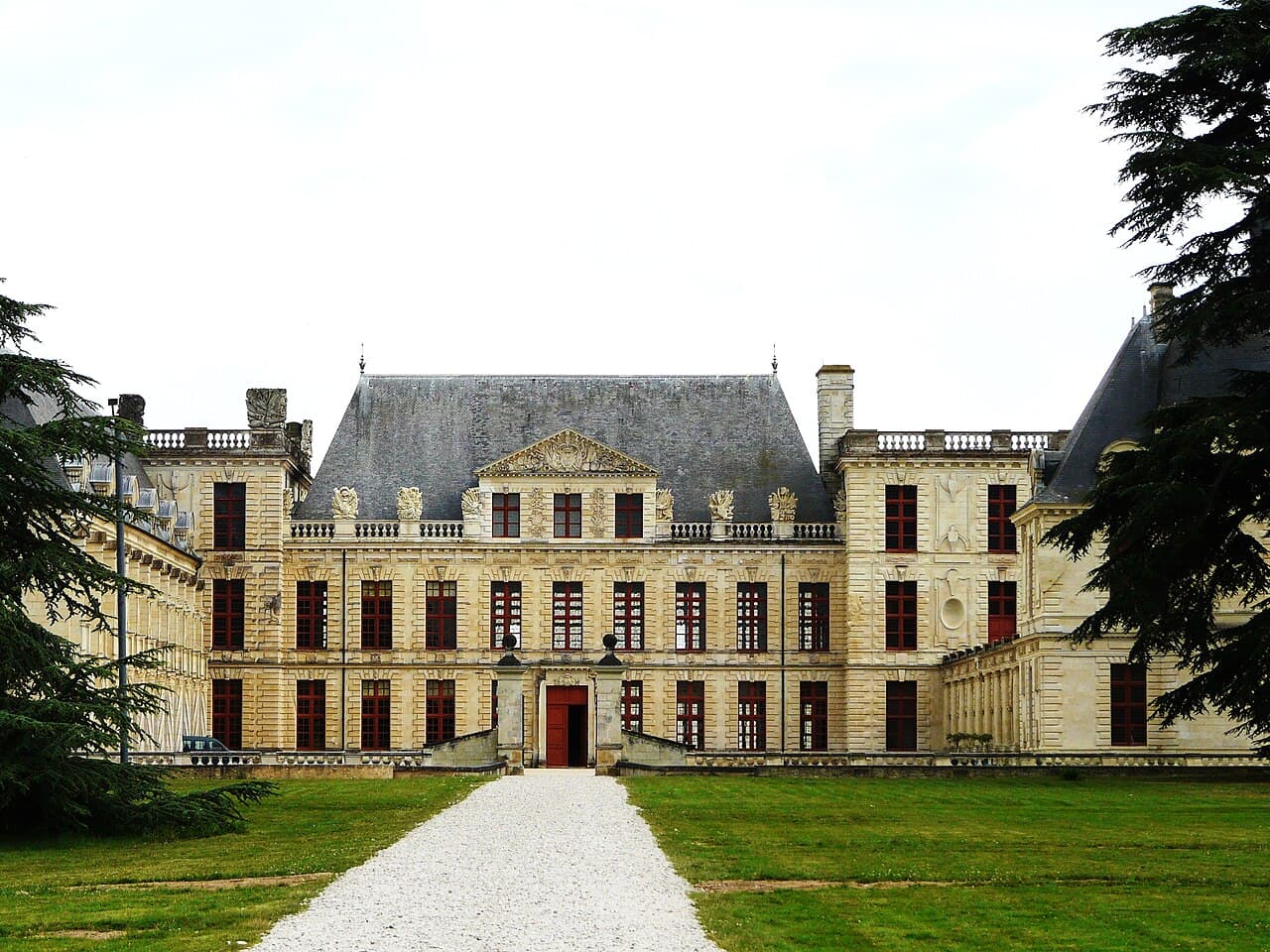
Château d'Oiron
The Château d'Oiron stands as a significant example of French Renaissance architecture with deep roots tracing back to the 15th century. Located in Oiron within the Deux-Sèvres département of western France, this castle was originally constructed during the turbulent period of the Hundred Years' War between France and England. After the French victory, Charles VII granted the domain and the expansive forest of Oiron to Guillaume Gouffier, who served as the governor of Touraine. Gouffier established the initial château, which became a family seat and underwent significant expansions and renovations by his descendants.
Origins and early construction
The château's foundation in the late medieval period reflects the strategic importance of the site, built as a hill castle to oversee and control the surrounding lands. The original fortress was designed for defense but gradually transformed into a more comfortable and prestigious residence as the region stabilized. The Gouffier family played a central role in shaping the château's early character, blending military utility with emerging Renaissance aesthetics.
Renaissance transformation and architectural features
During the 16th century, the château underwent major renovations that introduced Renaissance architectural elements. Notably, in 1538, Helene de Hengest, the daughter-in-law of Guillaume Gouffier, commissioned the construction of a collegiate church adjacent to the château, emphasizing the family's wealth and piety. The château's layout evolved to include a main building flanked by two long projecting wings, one of which was a Renaissance structure built over a former cloister, combining religious and residential functions.
One of the château's galleries houses some of the most prestigious works of art from the French Renaissance, underscoring its cultural significance. The architectural style reflects a transition from fortress to stately home, with ornate windows, elegant façades, and decorative stonework typical of the period.
Notable residents and historical significance
Claude Gouffier, who was granted the title Marquis de Caravaz, hosted King Henry II and his court at Château d'Oiron in 1551, highlighting the château's importance as a noble residence. Claude Gouffier is also believed to have inspired the character of the Marquis de Carabas in Charles Perrault's fairy tale Puss in Boots.
In the early 17th century, another Gouffier was exiled from the royal court by Cardinal Richelieu, reflecting the shifting political fortunes of the family. Later, in the mid-17th century, Charlotte Gouffier became associated with the renowned mathematician and philosopher Blaise Pascal, who spent significant time at the château. After Pascal's death, Charlotte married François d'Aubusson, duc de La Feuillade, who used his wealth and royal connections to further enhance the château.
The château's ownership changed hands several times, including a period when it belonged to Madame de Montespan, the famous mistress of King Louis XIV. She resided there until her death, adding to the château's historical allure.
Decline, restoration, and modern use
Following the sale to the duc de Villeroi in 1736, the château entered a period of decline. It suffered damage and neglect, culminating in being ransacked during the French Revolution in 1793. The château remained largely abandoned for many years, its grandeur fading with time.
In the 20th century, just before World War II, the French government acquired the château and undertook efforts to preserve it. Today, the Château d'Oiron functions as a museum dedicated to contemporary art, attracting visitors interested in both its historical architecture and its modern cultural role.
Architectural highlights and visitor experience
Visitors to Château d'Oiron can explore its combination of late medieval defensive features and Renaissance elegance. The castle's courtyards, galleries, and the adjacent collegiate church offer insights into the evolving tastes and functions of French noble residences over several centuries. The presence of significant artworks enhances the cultural experience, making it a unique destination for those interested in history, art, and architecture.
The château's setting within the Deux-Sèvres region also provides a scenic backdrop, with the surrounding landscape reflecting the historical importance of the site as a territorial stronghold.
Frequently asked questions (FAQ)
- When was Château d'Oiron originally built?
- Château d'Oiron was originally built in the 15th century during the conflict between France and England known as the Hundred Years' War.
- What architectural styles are featured at Château d'Oiron?
- The château features a blend of late medieval defensive architecture and Renaissance style elements introduced during 16th-century renovations.
- Who were some notable historical residents of Château d'Oiron?
- Notable residents include Guillaume Gouffier, Claude Gouffier (Marquis de Caravaz), Madame de Montespan, and connections to Blaise Pascal.
- Is Château d'Oiron open to the public?
- Yes, Château d'Oiron is open to visitors and operates as a museum showcasing contemporary art alongside its historical architecture.
- What is the significance of the collegiate church at Château d'Oiron?
- The collegiate church, built in 1538 by Helene de Hengest, highlights the religious and cultural importance of the château during the Renaissance.
Photo gallery

Information
Website
Visit websiteSources & official resources
Verify the information above using these authoritative references.
Loading map...
Visitor reviews
No reviews yet. Been here? Write the first review and help other travelers!
Write the first reviewVisited this castle? Share your experience
Your review helps other travelers and adds first-hand knowledge to our encyclopedia.


