Château de Wineck
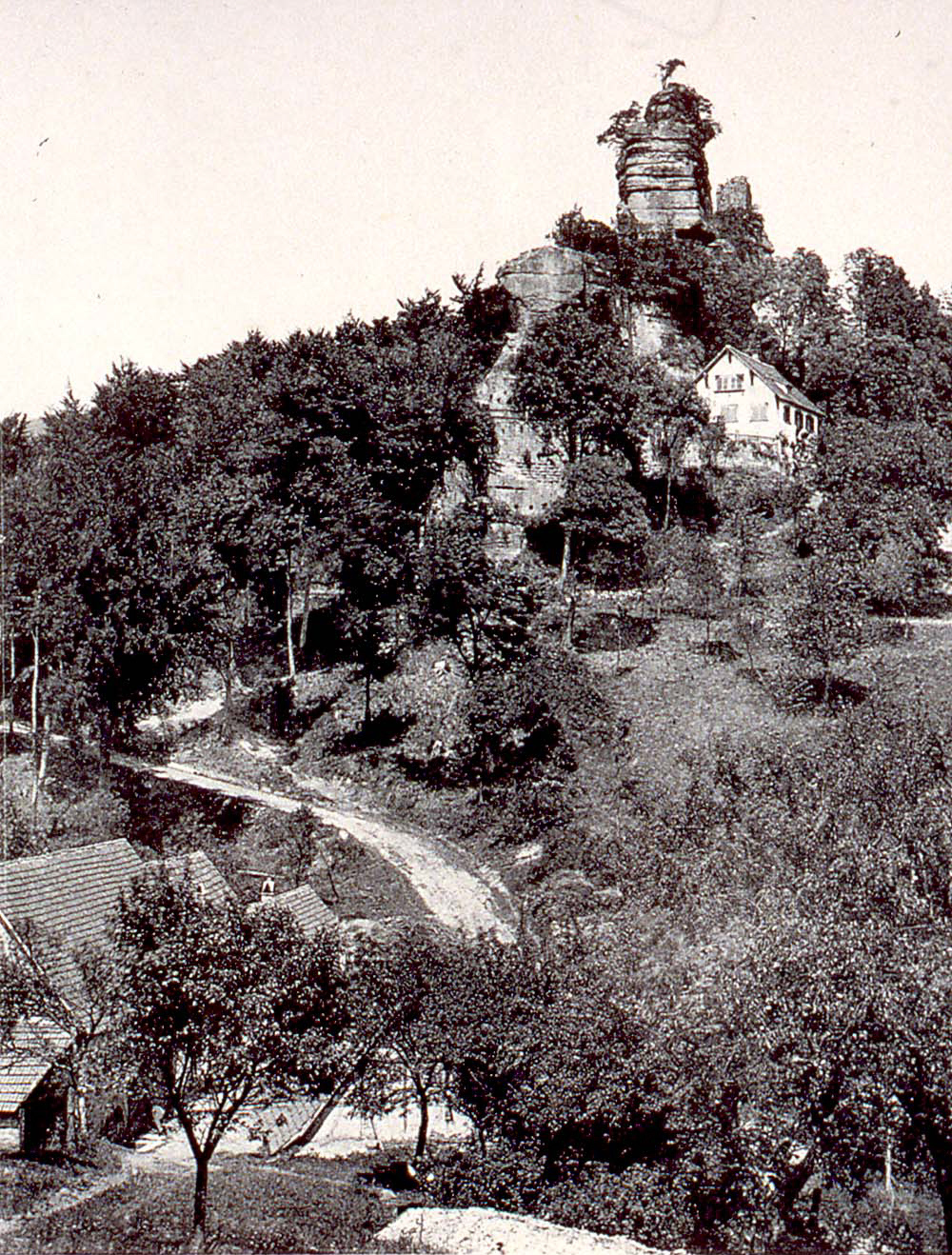
The Château de Wineck stands as a notable example of a late medieval castle located in the commune of Dambach, in the Bas-Rhin département of France. Constructed around 1300 for the Windstein family, this castle was strategically built atop a rocky peak to serve as an observation post complementing the nearby Château de Schœneck. Its primary purpose was to enhance the defensive network of the region, overseeing the surrounding terrain and providing early warning against potential threats.
Historical background and strategic importance
The Château de Wineck was part of a broader system of fortifications during the late medieval period, a time marked by feudal conflicts and the need for vigilant territorial defense. The castle's location on a rocky outcrop offered natural protection and an elevated vantage point, key features for medieval military architecture. The Windstein family, prominent local nobility, commissioned the castle to assert their control and secure their lands.
In the 17th century, the castle was dismantled under the orders of the King of France, reflecting the centralization of royal power and the decline of feudal strongholds. This dismantling was part of a wider policy to reduce the military capabilities of potentially rebellious nobles by destroying their fortresses.
Architectural features and layout
Keep and defensive walls
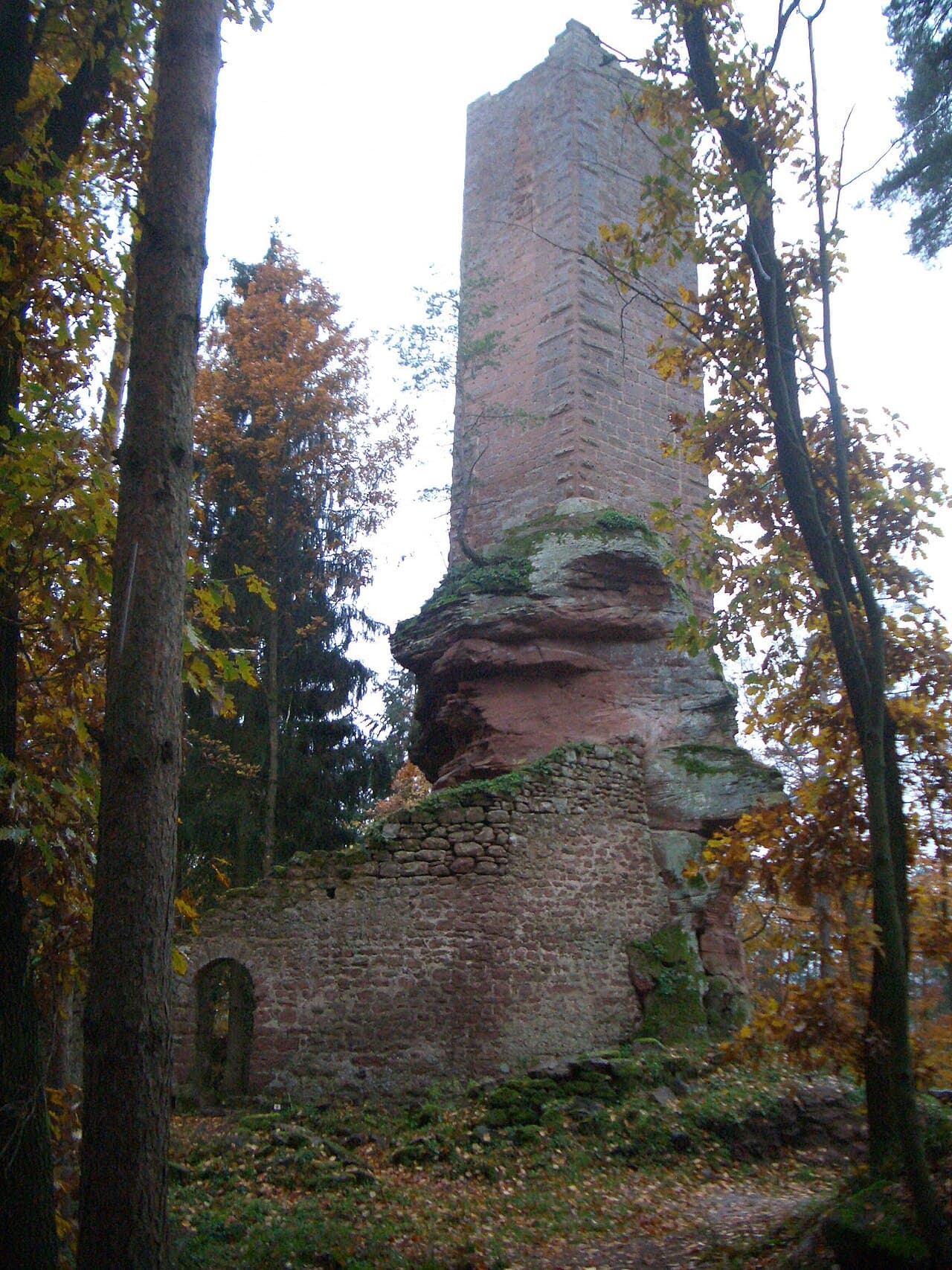
The castle's most prominent surviving feature is the polygonal keep, whose corners remain partially intact. This keep originally protected a modest residential structure, now vanished, that would have housed the lord and his retinue. The polygonal design was a tactical choice, allowing defenders to cover multiple angles and reducing blind spots for attackers.
Gallery and access
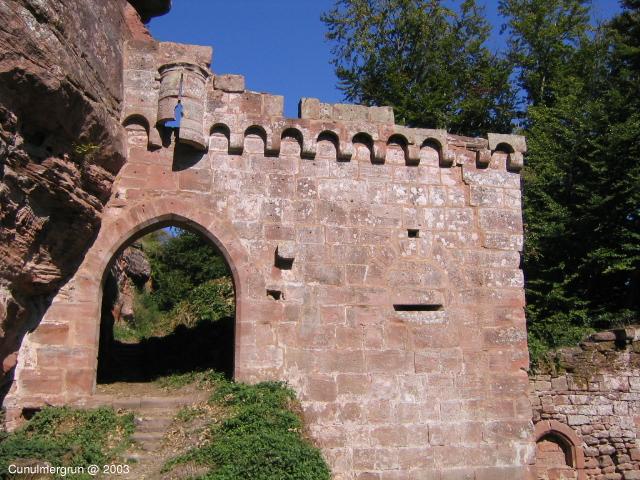
Access to the castle is unique, involving a gallery cut directly into the rock. This narrow passage leads to a door positioned halfway up the cliff face, a defensive measure that limited the approach routes and made the castle difficult to assault. The gallery exemplifies the integration of natural rock formations into the castle's defensive strategy.
Courtyard and enceinte
The lower courtyard lies on the eastern side of the castle and is enclosed by a partly conserved enceinte (defensive wall). This courtyard would have served as a space for daily activities, storage, and possibly the accommodation of soldiers and servants. The enceinte provided an additional layer of defense, enclosing the castle's functional areas.
Current condition and heritage status
Today, the Château de Wineck remains in a state of ruins, with only fragments of the dressed stone walls and the polygonal keep standing. Despite its ruined condition, the castle is a significant cultural and historical monument. It has been officially listed as a monument historique by the French Ministry of Culture since 1985, recognizing its importance in French medieval heritage and its value for archaeological study.
The site attracts visitors interested in medieval architecture and history, offering a glimpse into the defensive strategies of the period and the lifestyle of the regional nobility. The castle's dramatic setting on a rocky peak adds to its appeal, providing panoramic views of the surrounding landscape.
Visiting Château de Wineck
Visitors can explore the castle ruins by following the rock-cut gallery to the entrance. The path and remaining structures provide insight into medieval fortification techniques and the adaptation of architecture to natural terrain. While the castle is in ruins, the preserved elements allow for an appreciation of its original defensive purpose and architectural style.
The castle's location in the Wineckerthal quarter of Dambach situates it within a region rich in history and natural beauty, making it a worthwhile destination for those interested in French medieval castles and the Alsace region's heritage.
Architectural significance and legacy
The polygonal keep of Château de Wineck is a distinctive feature reflecting the evolution of castle design in the late medieval period. Its shape provided enhanced defensive capabilities compared to earlier square keeps. The integration of the castle with the rocky landscape demonstrates medieval builders' skill in utilizing natural features for fortification.
The castle's dismantling in the 17th century marks a historical shift in military architecture and political control, illustrating the transition from feudal fortresses to centralized state power. As a ruin, Château de Wineck offers valuable archaeological insights into construction methods, defensive strategies, and the social history of the region's nobility.
Frequently asked questions (FAQ)
- How do I get to Château de Wineck?
- Château de Wineck is located in Dambach, France, and is easily accessible by car. There are also public transportation options available, including local buses that connect to nearby towns. Be sure to check the latest schedules for the most convenient routes.
- What is the historical significance of Château de Wineck?
- Château de Wineck dates back to the 13th century and is a prime example of medieval military architecture. It played a crucial role in the region's defense strategy during various conflicts over the centuries. The castle's rich history is reflected in its well-preserved structures and surrounding landscapes.
- When was Château de Wineck built?
- Construction of Château de Wineck began in the early 13th century, with significant expansions and modifications made in the following centuries. The castle has witnessed numerous historical events, making it an important landmark in the region. Its architecture showcases the evolution of castle design over centuries.
- Can I take guided tours of Château de Wineck?
- Yes, guided tours are available for visitors interested in learning about the castle's history and architecture. These tours often provide in-depth insights that enhance your experience. It is advisable to book in advance, especially during peak tourist seasons.
- Why is Château de Wineck a popular tourist destination?
- Château de Wineck attracts visitors due to its stunning architecture and panoramic views of the Alsace region. Its historical significance and well-preserved structures offer a fascinating glimpse into the past. Additionally, the castle hosts various cultural events, making it a vibrant part of the local community.
- Is it possible to visit Château de Wineck year-round?
- Château de Wineck is open to visitors throughout the year, although specific opening hours may vary by season. It's best to check the official website or contact the castle directly for the most up-to-date information. Visiting in spring and autumn can provide a particularly picturesque experience.
- What are the ticket prices for Château de Wineck?
- Ticket prices for Château de Wineck vary depending on age and the type of tour chosen. Generally, there are discounts for children, students, and seniors. Special family packages may also be available, making it an affordable option for visitors of all ages.
- What are the best nearby attractions to visit?
- While visiting Château de Wineck, you can explore other nearby attractions such as the charming village of Dambach and the scenic vineyards of the Alsace region. There are also hiking trails that offer beautiful views and opportunities for outdoor activities. Local wineries provide tastings and tours, adding to your experience in the area.
- What are the opening hours for Château de Wineck?
- Château de Wineck typically opens at 10 AM and closes at 6 PM, but these hours may vary based on the season. It's advisable to check the official website for any seasonal changes or special events that may affect visiting times. Planning your visit during off-peak hours can enhance your experience.
Photo gallery

Photo by Michael Münch•Public domain
Information
Loading map...
Visitor reviews
No reviews yet. Been here? Write the first review and help other travelers!
Write the first reviewVisited this castle? Share your experience
Your review helps other travelers and adds first-hand knowledge to our encyclopedia.