Château de Vollore
The Château de Vollore stands as a remarkable example of a hill castle with a rich history spanning from the early medieval period through to the early modern era. Located in the village of Vollore-Ville in France, this fortress has witnessed significant historical events and architectural transformations that reflect the evolving needs and tastes of its noble owners.
The earliest known mention of the site dates back to the 6th century, specifically the year 532, when Thierry I, son of the Frankish king Clovis I, laid siege to the stronghold. This highlights the strategic importance of the location during the period of Frankish expansion and regional power struggles. While the exact nature of the original fortification is not fully documented, it is clear that a defensive structure existed well before the later medieval castle was constructed.
Medieval origins and architectural evolution
The main castle complex as it is recognized today was primarily established in the 12th century by the Vollore family, a powerful noble lineage in the region. The centerpiece of their construction was a robust stone keep, built in the traditional medieval style using local stone materials. This keep served as the primary defensive structure and symbol of feudal authority.
In the following century, the castle complex expanded with the addition of a 13th-century gothic tower. This tower introduced verticality and stylistic elements characteristic of the Gothic architectural style, marking an evolution in the castle's design and reflecting broader trends in medieval fortification architecture.
The castle remained under the control of the Vollore family until the mid-13th century. The last of the family line, Blanche de Vollore, married Étienne de Thiers in 1248, transferring ownership to the Thiers family. This marriage alliance ensured the château's continued prominence in regional noble circles.
Later ownership and 17th-century transformation
Subsequent ownership passed to the Chazeron family, although precise dates are less documented. The most significant architectural changes occurred in the 17th century when the Montmorin family undertook extensive remodeling. This renovation blended the castle's defensive medieval features with the more comfortable and elegant residential styles of the early modern period.
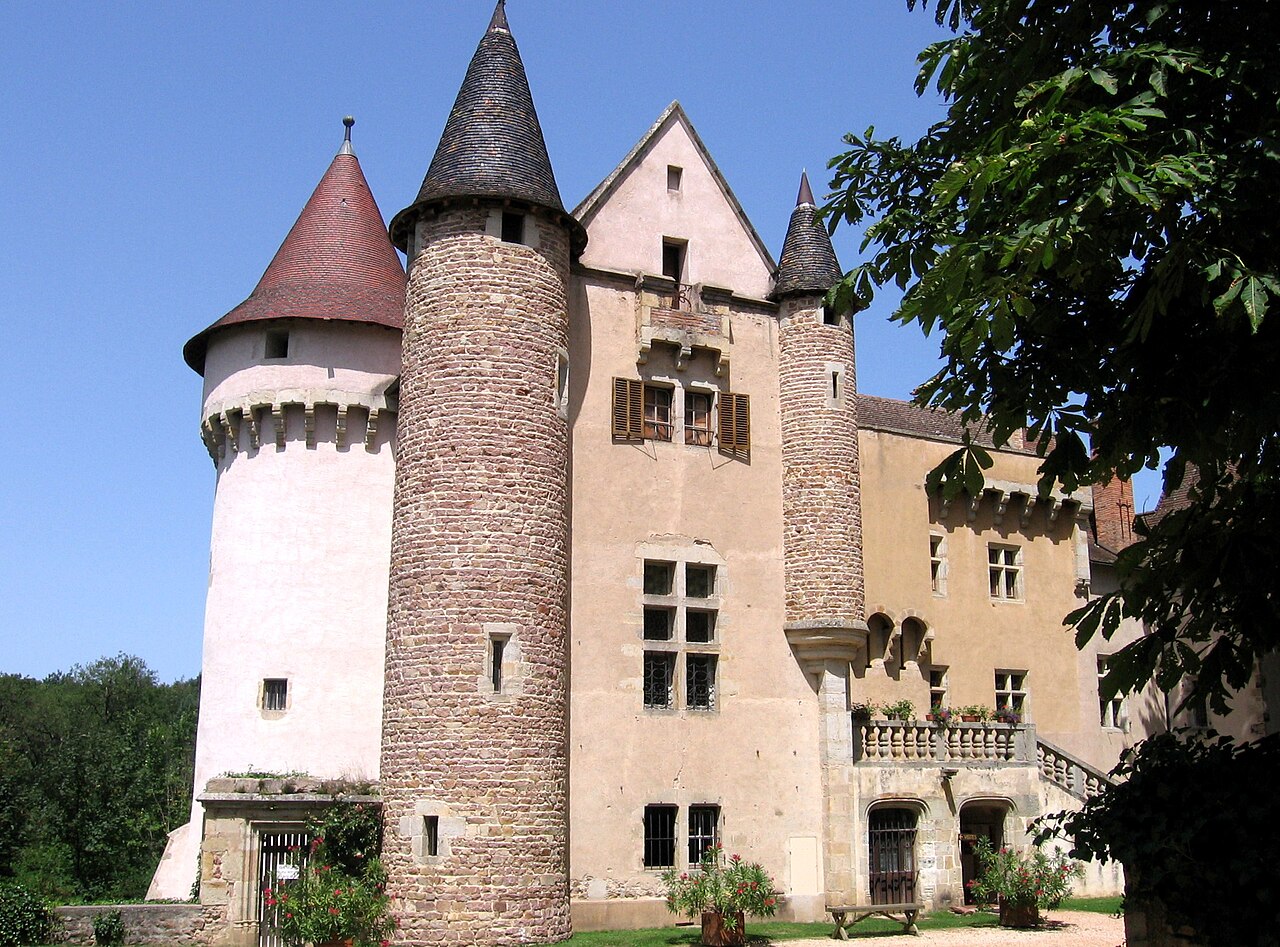
The main residential building from this era reflects the noble tastes of the time, emphasizing comfort and status while maintaining the structural integrity of the older fortress. The Montmorin renovations gave the château much of its current appearance, integrating elements such as larger windows, refined interiors, and landscaped surroundings.
20th-century restoration and cultural significance
In the early 20th century, architect René Moreau led a comprehensive restoration effort aimed at preserving the château's 17th-century character. These restorations were sensitive to the historical fabric of the building, ensuring that the architectural legacy of the Montmorin period remained intact.
Beyond its architectural value, the château houses significant collections and furnishings connected to the La Fayette family and commemorations of the American War of Independence. These artifacts enrich the château’s cultural heritage, linking it to broader historical narratives and highlighting its role as a repository of noble and international history.
Architectural features and site layout
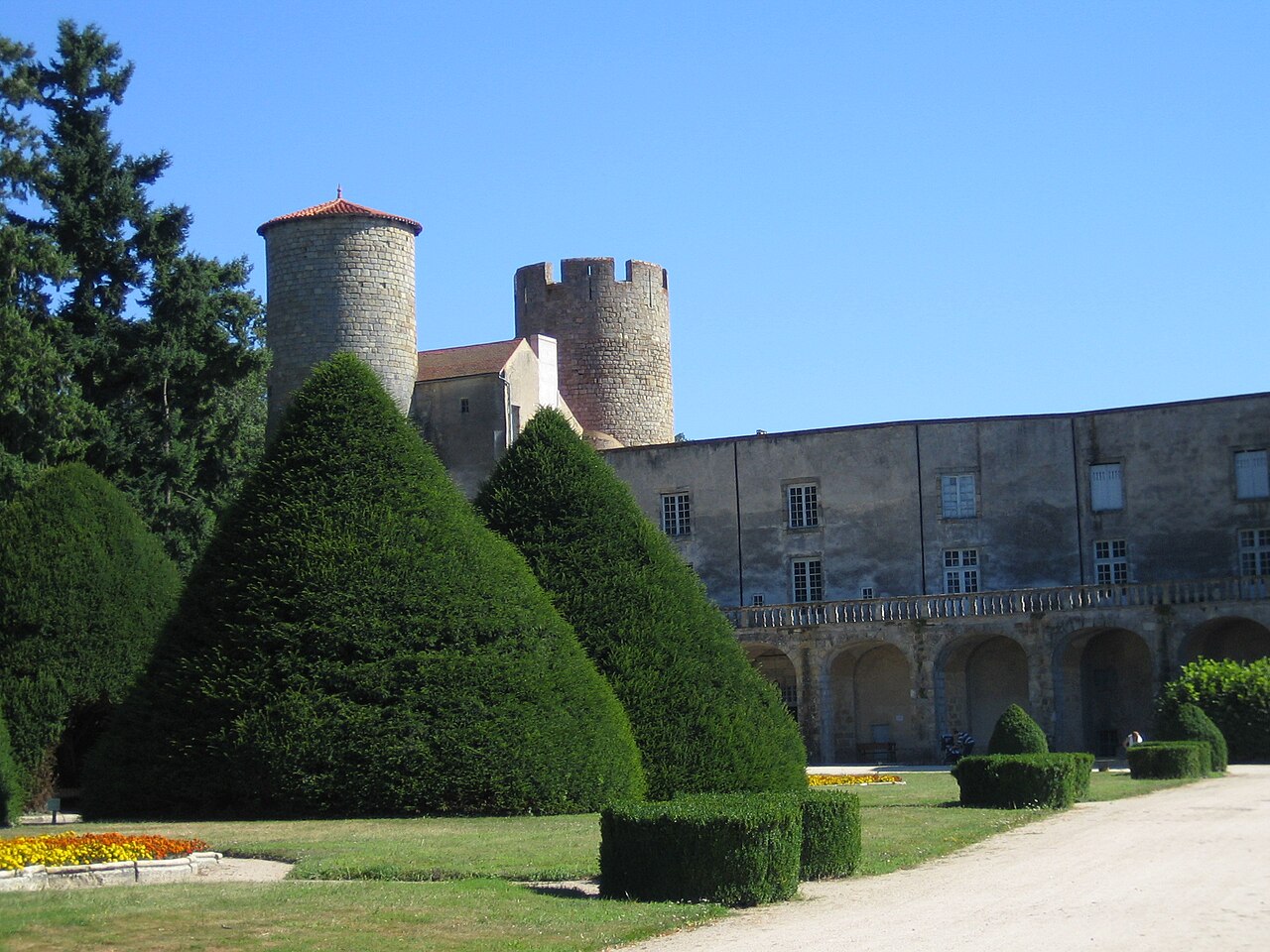
The château's layout is complex and layered, reflecting its long history of construction and modification. The central 12th-century stone keep remains the oldest part of the fortress, serving as a stronghold and symbol of medieval feudal power. Adjacent to this is the 13th-century Gothic tower, which adds architectural diversity and vertical emphasis.
The 17th-century residential buildings occupy a significant portion of the castle complex, showcasing the transition from purely defensive architecture to more comfortable noble living spaces. The castle is strategically positioned on the western edge of the village, separated by terraced parklands that provide both a natural buffer and enhance the site’s prominence.
From its elevated position, visitors can enjoy extensive views over the Auvergne mountains, the expansive Limagne plain, and the Dore river valley. These vistas underscore the château’s strategic location as well as its aesthetic appeal.
Historical importance and legacy
The Château de Vollore’s history is intertwined with the broader regional and national history of France. Its early association with the Frankish kingdom during the 6th century places it within the context of early medieval power struggles. The subsequent medieval and early modern developments reflect the changing nature of noble power, architectural styles, and domestic needs.
Its preservation and restoration efforts in the 20th century have ensured that the château remains a significant cultural landmark. The presence of historical collections related to the La Fayette family and the American War of Independence adds a unique dimension to its heritage, connecting the site to important international historical events.
Today, the Château de Vollore stands as a testament to centuries of architectural evolution, noble lineage, and historical significance, offering visitors a rich experience of French medieval and early modern history.
Frequently asked questions (FAQ)
- How do I get to Château de Vollore?
- Château de Vollore is located in the Auvergne region of France, easily accessible by car from major cities like Clermont-Ferrand. The nearest train station is in Thiers, approximately 20 kilometers away, where you can take a taxi to reach the castle.
- What is the historical significance of Château de Vollore?
- Château de Vollore dates back to the 12th century and has played a crucial role in the region's history, serving as a fortress during the Hundred Years' War. It reflects the architectural evolution of medieval France and provides insights into the feudal society of the time.
- When was Château de Vollore built?
- Construction of Château de Vollore began in the 12th century, with significant modifications made in the following centuries. The castle's design showcases medieval architectural styles, with later additions that illustrate its historical adaptations and restorations.
- Can I visit Château de Vollore?
- Yes, visitors are welcome to explore Château de Vollore. Guided tours are available, allowing you to learn about the castle's rich history and admire its stunning architecture.
- Why is Château de Vollore a popular tourist destination?
- Château de Vollore attracts visitors due to its impressive medieval architecture, beautiful surroundings, and fascinating history. It offers a unique glimpse into France's past, making it a must-see for history enthusiasts and architecture lovers alike.
- Is it possible to access the castle with mobility challenges?
- Château de Vollore is situated on elevated terrain, which may pose challenges for visitors with mobility issues. However, the management is working on providing better accessibility options, so it's advisable to check in advance for any assistance that may be available.
- What are the opening hours of Château de Vollore?
- Château de Vollore is typically open to the public from April to October, with varying hours depending on the season. It’s best to check the official website for the most current opening hours and any special event schedules.
- What are the ticket prices for visiting Château de Vollore?
- Ticket prices for Château de Vollore vary based on age and group size, with discounts available for children and students. Please check the official website for up-to-date pricing and any special offers that may be available during your visit.
- What are some nearby attractions to Château de Vollore?
- Nearby attractions include the picturesque town of Thiers, known for its knife-making heritage, and the beautiful Parc Naturel Régional Livradois-Forez. Both locations offer opportunities for hiking, dining, and exploring the local culture, making it easy to plan a full day of activities around your visit to the castle.
Information
Website
Visit websiteSources & official resources
Verify the information above using these authoritative references.
Loading map...
Visitor reviews
No reviews yet. Been here? Write the first review and help other travelers!
Write the first reviewVisited this castle? Share your experience
Your review helps other travelers and adds first-hand knowledge to our encyclopedia.