Château de Ravel
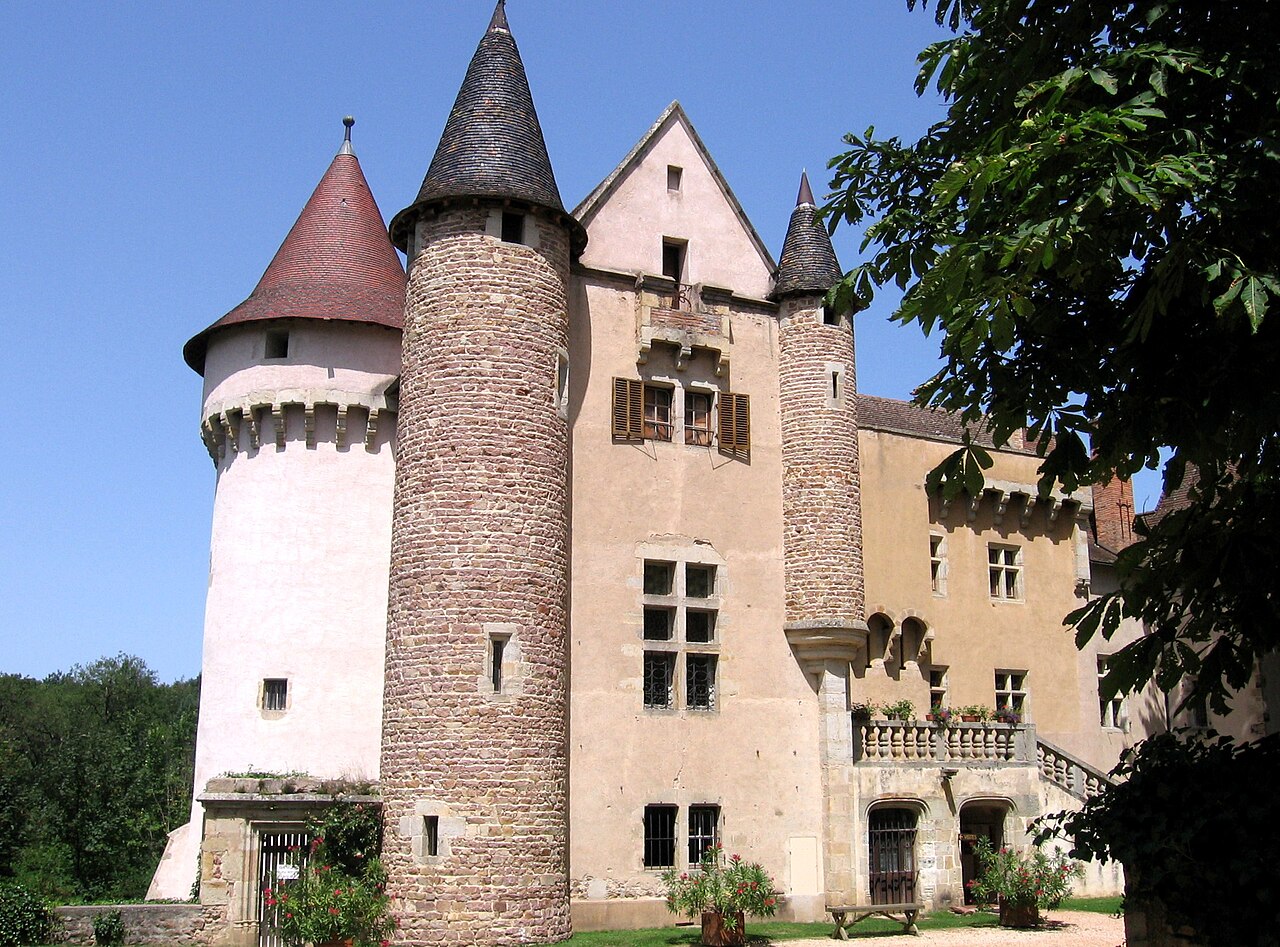
The Château de Ravel is a prominent medieval castle located in the commune of Ravel within the Puy-de-Dôme department of central France. Its origins date back to the 12th century, with the earliest recorded occupant, Pierre de Ravel, documented in 1147. The castle's initial construction phase began notably in 1171 under Bernard de Ravel, the royal administrator of Clermont and Pont-du-Château, establishing the oldest surviving parts of the fortress.
Medieval origins and royal ownership
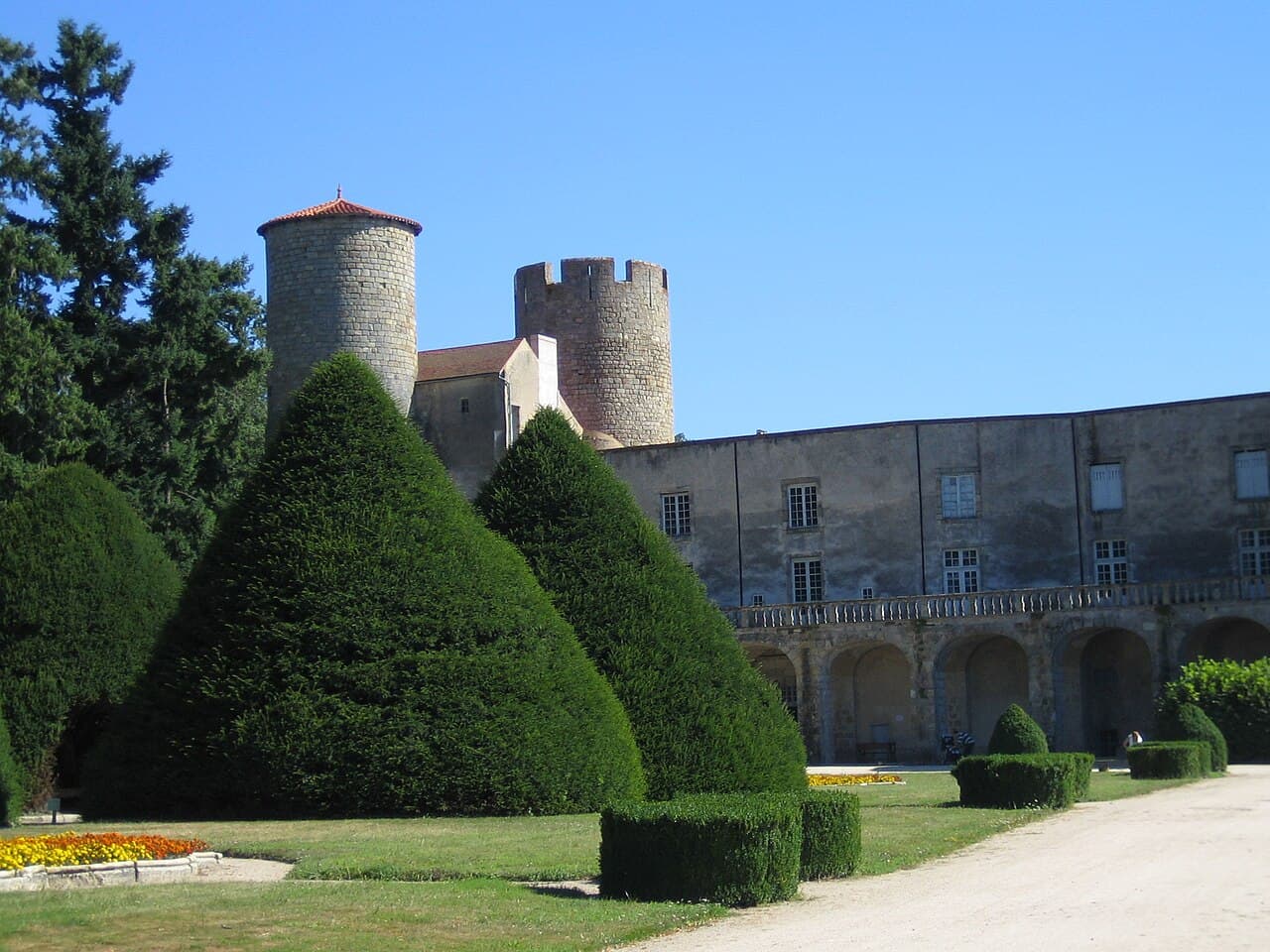
In 1283, the castle entered royal possession when Chatard de Ravel sold it to King Philip III of France. Shortly thereafter, in 1294, it was granted by King Philip IV to Pierre Flote, his future chancellor. Flote undertook significant expansions, adding at least five towers and enclosing a large trapezoidal courtyard, reinforcing the castle's defensive capabilities and residential grandeur. His tenure ended with his death at the Battle of Courtrai in 1302, a notable conflict during the medieval period.
Architectural evolution and noble lineage
Over the centuries, the castle passed through various noble families by inheritance and marriage. In 1647, it became part of the d’Estaing family holdings through the marriage of Marie Comborcier du Terrail to Jean d’Estaing. The d’Estaings initiated major renovations during the 17th and 18th centuries, transforming the medieval fortress into a refined stately home. These renovations respected the original Gothic framework, especially visible in the main courtyard façade, which rests upon medieval towers.
Medieval core and defensive structures
The castle retains a medieval core centered around a 13th-century donjon (fortified tower) and five ancient towers, including an octagonal one. These structures enclose a large trapezoidal courtyard, with eastern walls and towers dating back to the feudal era. The layout reflects the castle’s original defensive purpose, with thick stone walls and battlements designed to withstand sieges.
Classical renovations and interior design
The 18th-century renovations introduced classical-style elements such as an entrance gallery, a grand staircase, and a dining room on the ground floor. On the first floor, a great gallery and a music room were added, the latter adorned with panelling decorated with musical instruments. Despite these updates, the renovations carefully preserved the Gothic character of the castle, blending medieval and classical aesthetics harmoniously.
Notable interior features and family heritage
Inside the castle, the Salle des États stands out as a Gothic hall notable for one of France’s oldest heraldic friezes. This decorative band features 49 coats of arms from the 13th century, accompanied by a terracotta tiled floor displaying heraldic emblems, exemplifying medieval artistry and noble symbolism.
The complex also includes a Gothic chapel and 17th-century stables. The castle houses original furnishings and family memorabilia, including portraits of the d’Estaing family, navigation instruments, ship models, and a series of ten paintings by Lebas depicting naval battles from 1759 to 1760. These artifacts reflect the family's maritime heritage and historical connections, particularly Admiral Charles Henri Théodat d’Estaing, born at the castle in 1729, who fought in the American War of Independence and was executed during the French Revolution.
Landscape and gardens
The castle’s terrace, designed in the 17th century by the renowned landscape architect André Le Nôtre, overlooks the Limagne plain and offers views of the volcanic Chaîne des Puys hills. The gardens comprise a terrace, an independent staircase, a small park with an alley and basin, and a kitchen garden. The terrace, retaining walls, and park are protected as historic monuments, highlighting their cultural and heritage significance.
Historical events and modern preservation
The Château de Ravel experienced military occupations during turbulent periods, including by routiers (mercenary soldiers) in 1377 during the Hundred Years’ War and by Protestant troops in 1589 during the French Wars of Religion. In 1806, the castle was sold to Charles de Riberolles-Beaucène, whose descendants maintained ownership until 2014.
In recent years, decorators Joseph Achkar and Michel Charriere acquired the property and began extensive restoration efforts. The French Ministry of Culture recognized the château’s historical importance by listing it as a monument historique in 1958. Despite a fire in 2016 that destroyed approximately 400 square meters, the château’s fundamental décor and key architectural elements remain intact, allowing visitors to appreciate both its medieval and classical features in their original context.
Cultural significance and media presence
The Château de Ravel is regarded as an interesting example of how a medieval castle was converted into a stately home, preserving its Gothic framework while incorporating classical style elements. It served as a filming location for the 2004 French film Les Choristes, directed by Christophe Barratier, further highlighting its cultural relevance.
Frequently asked questions (FAQ)
- When was the Château de Ravel originally built?
- The Château de Ravel was initially constructed in the 12th century, with the first recorded occupant documented in 1147 and significant building phases around 1171.
- What architectural styles are featured in the Château de Ravel?
- The castle features a blend of medieval Gothic architecture and classical elements introduced during the 17th and 18th-century renovations.
- Can visitors see original furnishings inside the castle?
- Yes, the Château de Ravel houses original furnishings including family portraits, navigation instruments, ship models, and paintings related to the d'Estaing family's maritime history.
- Is the Château de Ravel open to the public?
- The château is privately owned, so public access may be limited or by appointment; visitors should check current visiting options before planning a visit.
- What notable historical events involved the Château de Ravel?
- The castle was occupied by mercenary routiers during the Hundred Years’ War and Protestant troops during the French Wars of Religion. It was also the birthplace of Admiral Charles Henri Théodat d’Estaing, a figure in the American War of Independence.
Photo gallery

Information
Website
Visit websiteSources & official resources
Verify the information above using these authoritative references.
Loading map...
Visitor reviews
No reviews yet. Been here? Write the first review and help other travelers!
Write the first reviewVisited this castle? Share your experience
Your review helps other travelers and adds first-hand knowledge to our encyclopedia.