Château de Troussay
Château de Troussay stands as one of the most intimate and charming Renaissance castles in the Loire Valley, located near the town of Cheverny, France. Despite its modest size, the château boasts a rich history dating back to the mid-15th century, with architectural and cultural significance that reflects the evolution of French aristocratic residences from the Late Medieval period into the Renaissance and beyond. Its compact layout and intricate details offer a unique glimpse into regional history, art, and noble life.
The earliest records place the château's foundation around 1450, initially constructed under the lordship of Robert de Bugy, a notable figure serving as controller of salt storehouses in Blois and a squire to King Francis I. This connection to the French crown situates the château within the political and cultural currents of early 16th-century France. Over the centuries, the château was expanded and renovated, most notably during the 17th century and again in the 19th century, blending architectural styles and preserving elements from various periods.
Architectural evolution and stylistic features
Renaissance origins and 17th-century expansions
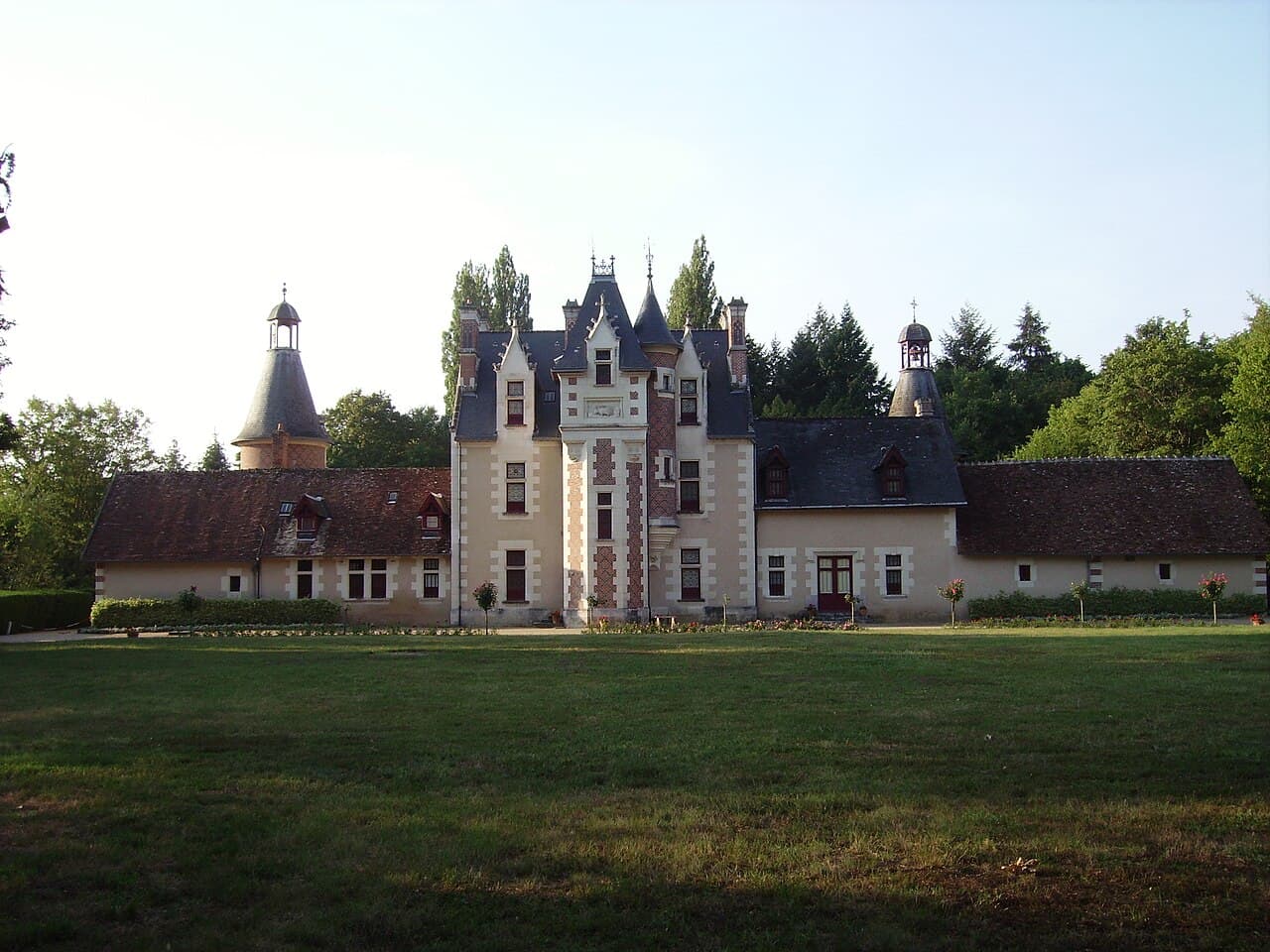
The core of Château de Troussay showcases hallmark features of the Renaissance architectural style, characterized by the elegant François I façade inspired by the grand Château de Chambord. This façade is distinguished by its stone mullioned windows, slate-inserted chimneys, and sculptural decorations including capitals salvaged from other regional châteaux such as Château de Bury. The two wings added in the 17th century extend symmetrically from the central body, each crowned with pinnacled towers that echo Chambord’s design motifs, although the left wing was later raised during 19th-century restorations, creating a subtle asymmetry.
Decorative elements and symbolic motifs
The château’s façades are rich with symbolic and artistic details. The right tower features a sundial inscribed in Latin bearing the phrase “Ultimam time, fuit hora, carpe diem,” a poetic reminder to seize the day. Opposite, the left tower holds a single-hand clock, reflecting earlier timekeeping traditions. The garden-facing façade combines Louis XII style elements, merging late Gothic and early Renaissance influences, with dormer windows topped by stone pediments and window bases carved with linenfold motifs.
A distinctive 19th-century tower on the garden side, inspired by Château de Blois, incorporates ornamental brickwork in red and black lattice patterns. Embedded within this tower is the château’s original main door, adorned with Gothic linenfold carvings and the salamander emblem of King Francis I. Above the door, a Greek inscription attributed to Themistocles reads, “Small is the house, but oh how much happiness, if it is filled with friends,” reflecting the château’s intimate scale and welcoming spirit.
Historical context and notable owners
Early history and political ties
The château's origins under Robert de Bugy link it to the administrative and noble circles of the early Renaissance French court. Ownership passed to the Pelluys family in 1732, a family of notaries from Blois, and later through marriage to the Réméon family, maintaining its private status through centuries, including the turbulent period of the French Revolution, which it remarkably survived intact.
19th-century restoration and cultural significance
In 1828, the estate was inherited by Louis de La Saussaye, a historian specializing in Loire castles and a member of the Institut de France. His passion for preservation led to a comprehensive restoration project in collaboration with architect Jules de La Morandière. This restoration incorporated architectural elements salvaged from other regional châteaux, revitalizing the château’s Renaissance character and enriching its historical narrative. Louis de La Saussaye’s efforts ensured the château’s survival and cultural prominence into the modern era.
Interior features and collections
Ground floor rooms and decorative arts
Visitors today can explore six principal rooms on the ground floor, including the dining room, vestibule, music salon (named after Louis de La Saussaye), a small salon, an oval salon, and an oratory. The flooring predominantly features red and yellow tiles dating from the Louis XII period, well preserved except in the oval salon. The ceilings vary stylistically: the dining room boasts a beamed French-style ceiling inspired by Château de Blois, while the music salon retains a restored original ceiling. The vestibule’s vaulted ceiling echoes Blois’ design, and the small salon is distinguished by Italian-style painted ceilings attributed to the 17th-century Sologne artist Jean Mosnier, depicting a grisaille sarabande dance scene of cupids.
Furnishings and notable artifacts
The château’s furnishings span from the 15th to the 19th centuries, showcasing a diverse collection from across Europe. Highlights include a large Strasbourg armoire dated 1700 and a Louis XIII cabinet inlaid with jasmine flower marquetry. A remarkable artifact is the massive oak chapel door from Château de Bury, intricately carved with scenes from the Passion of Christ along one of its pilasters. The dining room fireplace, dating from the reign of Francis I, retains its original polychrome decoration and is surmounted by a bust of Jean de Morvilliers, a 16th-century cleric connected to the De La Saussaye family, accompanied by a Latin inscription encouraging virtue.
Grounds and gardens
Historical gardens and park evolution
The château’s gardens originally followed a formal French style typical of the 17th century, featuring symmetrical layouts and water features such as a ditch that once served as a moat or ornamental pond. Over time, especially during the 19th century under Louis de La Saussaye’s direction, the gardens were transformed into an English-style park with a more naturalistic landscape. This park contains a variety of ancient trees including an 18th-century Cedar of Lebanon, American sequoias, and a large blue cedar, contributing to its botanical diversity.
Agricultural heritage and museum
The château’s two wings historically accommodated agricultural functions, housing farm workers and animals such as pigs, cattle, horses, and donkeys. Facilities included a winery and bakery. These wings have been repurposed to host the Museum of Sologne, which exhibits 19th-century agricultural tools including a 16th-century screw press, as well as a permanent exhibition on domestic service in the 19th century featuring original documents, liveries, and illustrated tableaux.
Visitor experience and cultural recognition
Today, Château de Troussay remains a privately owned residence but is open to the public, allowing visitors to immerse themselves in its rich history and architectural splendor. The château has been officially recognized as a monument historique since 2000 and received a distinguished cultural label in 2025 honoring the legacy of Louis de La Saussaye. Its combination of Renaissance architecture, historical interiors, and evolving gardens make it a unique destination for those interested in French heritage and château culture.
The château’s intimate scale, artistic details, and historical continuity offer a compelling narrative of aristocratic life in the Loire Valley, bridging the medieval and modern eras. Visitors can appreciate the blend of architectural styles, the preservation of original features, and the cultural significance embedded in every stone and room of Château de Troussay.
Frequently asked questions (FAQ)
- How do I get to Château de Troussay?
- Château de Troussay is located in Cheverny, France, and is easily accessible by car or public transport. If you are traveling by train, the nearest major station is in Blois, from where you can take a taxi or local bus to reach the castle.
- What is the historical significance of Château de Troussay?
- Château de Troussay, built in the 16th century, is a fine example of Renaissance architecture and reflects the rich history of the Loire Valley. It is known for its unique blend of styles and has been preserved to showcase its historical importance in French heritage.
- When was Château de Troussay built?
- Château de Troussay was constructed in the early 16th century, specifically between 1530 and 1540. It was designed as a residence and has stood the test of time, maintaining its charm and historical features for visitors to enjoy today.
- Can I take photos inside Château de Troussay?
- Yes, visitors are allowed to take photos inside Château de Troussay, but it is recommended to be respectful of the artwork and furnishings. Some areas may have restrictions, so it’s best to check for signage or ask staff for guidance.
- Why is Château de Troussay a popular tourist destination?
- Château de Troussay is popular due to its stunning architecture, beautiful gardens, and rich history. Visitors are drawn to its intimate size compared to larger châteaux, allowing for a more personal and immersive experience.
- Is it possible to visit the gardens at Château de Troussay?
- Absolutely! The gardens of Château de Troussay are open to visitors and are a delightful feature of the estate. They showcase a variety of plant species and offer a peaceful setting to enjoy the beauty of the surrounding landscape.
- What are the opening hours for Château de Troussay?
- Château de Troussay typically opens to visitors from April to November, with varying hours throughout the week. It is advisable to check the official website for the most current opening times before planning your visit.
- What are the ticket prices for Château de Troussay?
- Ticket prices for Château de Troussay vary depending on age and season, but generally, adult tickets are around €10. Reduced prices may be available for children, students, and seniors, making it accessible for families and groups.
- When is the best time to visit Château de Troussay?
- The best time to visit Château de Troussay is during the spring and early fall when the weather is mild, and the gardens are in full bloom. Additionally, visiting on weekdays can help avoid larger crowds and enhance your experience.
- Are there any nearby attractions to Château de Troussay?
- Yes, several attractions are located near Château de Troussay, including the famous Château de Cheverny and the beautiful Château de Chambord. These nearby castles provide a wonderful opportunity to explore the rich history and stunning architecture of the Loire Valley.
Photo gallery

Photo by No machine-readable author provided. Calame assumed (based on copyright claims).•Public domain
Information
Website
Visit websiteSources & official resources
Verify the information above using these authoritative references.
Loading map...
Visitor reviews
No reviews yet. Been here? Write the first review and help other travelers!
Write the first reviewVisited this castle? Share your experience
Your review helps other travelers and adds first-hand knowledge to our encyclopedia.